Scrub. Rinse. Clean. Repeat. The relentless lives of app-based house helps
When she was little, Akhila would stand on a footstool to wash dishes in Noida homes. Scrub, rinse, toss. It’s the kind of work she kept doing over the years, what every woman around her did. Her mother, sister, mother-in-law, are all domestic workers.
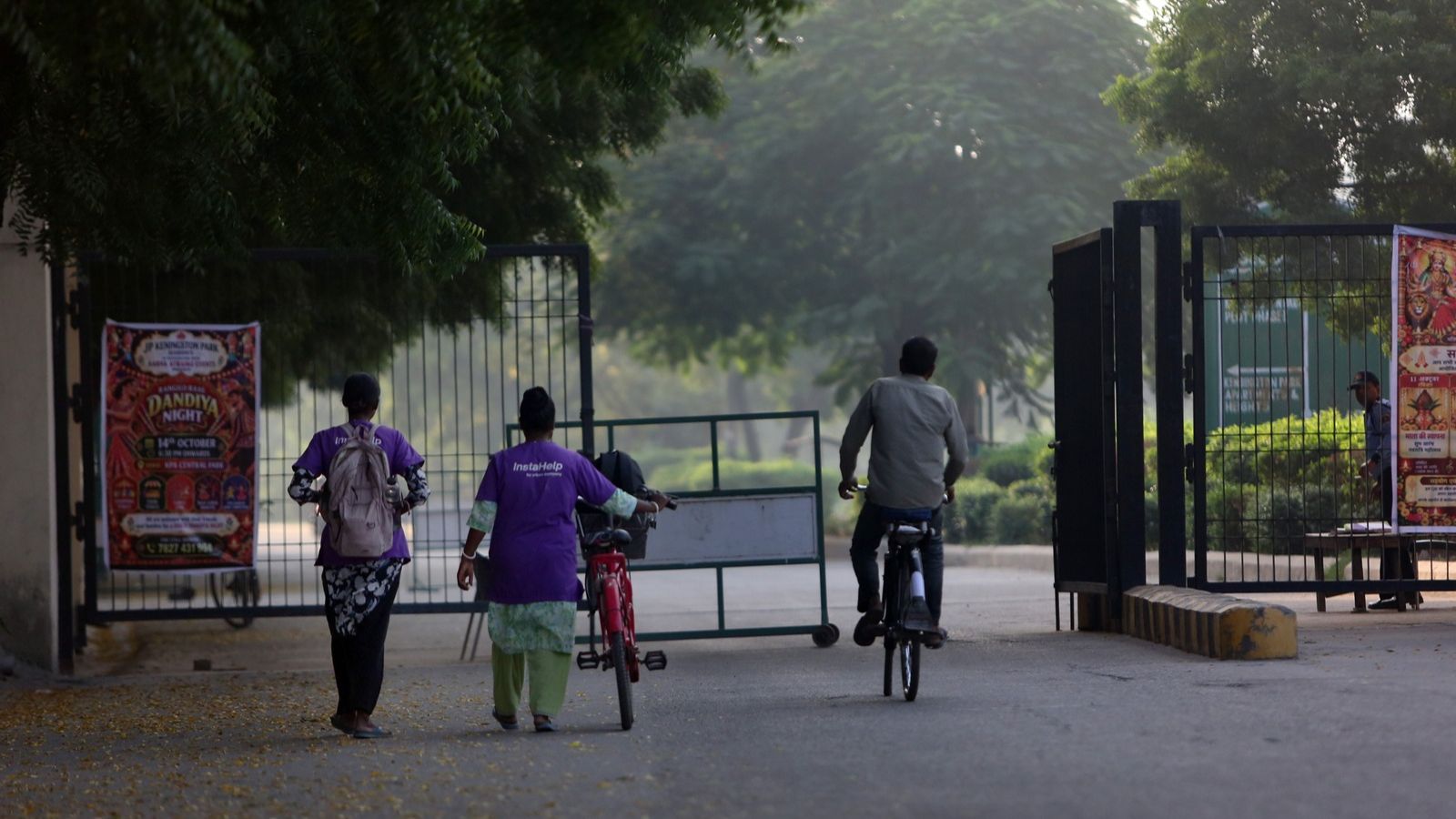
But Akhila is different. Now 31, she works for a “company”. Every morning at 7 am, she and her cousin Kritika leave for work, both wearing purple smocks over their salwar suits, their hair tied back in neat, low buns, bags strapped to their backs. With Akhila sitting pillion, Kritika cycles to a high-rise apartment complex 5 km from their home in Noida’s Gejha gaon.
Akhila is a gig worker with InstaHelp, one of the many app-based platforms that offer the services of domestic workers to households across the National Capital Region, and other major cities in India. She is among the thousands of women, dressed in the pinks, greens and purples of these platforms, who turn up at the doors of their clients, offering to scrub, clean and dust.
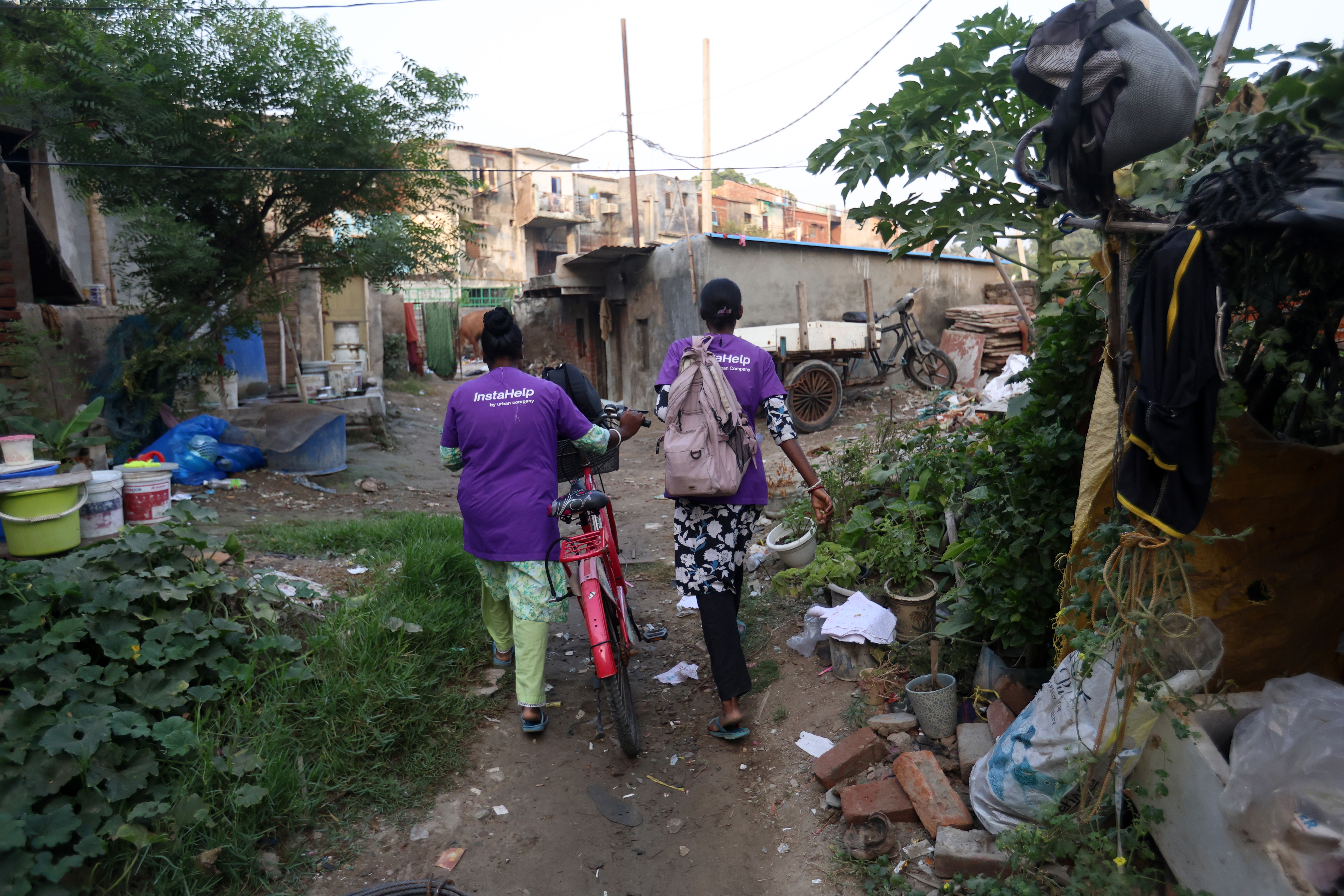 Every morning at 7 am, Akhila and Kritika leave from their home in Noida’s Gejha gaon. (Express Photo by Gajendra Yadav)
Gig workers, a concept that entered Indian markets in the 2010s, were first associated with drivers of ride-hailing apps, followed by food delivery workers, plumbers, repairmen and beauticians, and later, quick commerce delivery workers. Over the last couple of years, this sector has expanded to domestic workers, that quintessentially South Asian, all-pervasive and precarious segment that employs anywhere between 2.8 million (Census 2011) and 50 million women (unofficial estimates).
The entry of domestic helps into the gig economy has disrupted a segment that has for generations run on traditional networks — a referral by a neighbour or a security guard lands the worker a job, which is then sustained by everyday negotiations with the employer.
Pronto, one of the major players in this space, estimates that the number of women engaged on its platform rose from about 1,440 in January 2026 to more than 15,000 by September. Its workers, the platform said, responded to over 1.5 million bookings in August. Another platform, Snabbit, estimated that over 35,000 women are engaged with them and claims that around 10,000 new women join every month.
Akhila, reporting for work
Akhila’s days begin at 5 am.
Story continues below this ad
With her husband and two children still asleep, she fires up the wood-fired stove outside. Over the next hour-and-a-half, as she makes tea and parathas, cleans utensils and packs tiffin-boxes with the soya sabzi-rice that the couple cooked the previous night, she talks about her village in West Bengal, growing up in Noida, how she never went to school, but wants to see her two children educated. Her husband, she says, is frequently out of work and fritters away his slim earnings.
Until earlier this year, Akhila worked as a cook in three Noida homes, earning Rs 21,000 a month. Then, she and her husband went back to their village in West Bengal for a month in June to manage a land dispute. When she returned, finding work again became a struggle. One of her neighbours suggested that she try gig work and she took it up.
“To be honest, when you cook for others, there is too much chik-chik and fussing over personal preferences,” she says, slapping balls of dough into round parathas.
Around 6.30 am, it is time for her to change into her purple uniform that is strewn on a trunk next to their bed. All this while, as she works and gets ready, her six-year-old son’s attention is wrapped around a smartphone that plays tinny jingles and cartoons. She now snaps at him, and takes it back.
Story continues below this ad
 ⠀
Akhila bought the phone for Rs 22,000 on EMI three weeks ago, after she got her first payout — Rs 9,391 for 15 days of work — from InstaHelp. The phone is essential for her work, but she had never handled, let alone owned, one before she entered the gig workforce.
By 7 am, Akhila and her cousin Kritika, who is also her neighbour, leave for work. Outside the gates of the apartment complex that is their assigned ‘workhub’ — where the workers reach before the start of their shift — they log in, take selfies and upload them to a work WhatsApp group to report that they are present for duty. Then, they wait for the bookings to start coming.
Over the past few weeks, Akhila has grown more adept at using the phone, though she cannot read any of the Hindi text on the app. She follows the icons and colours instead. Once her phone begins buzzing with the first booking of the day, she taps on a green icon to accept.
About a dozen women in the uniforms of app-based platforms mill around on the grassy divider on the road outside the society gates as they wait for their bookings or take a break: scrolling through their phones, napping, chatting, eating.
Story continues below this ad
The workhub is almost always outside the society gates. “These kaamwaali (domestic helps) are not allowed to come inside unless it’s time for their booking,” says the guard at the housing society.
Dreaming and surviving in a megapolis
Like Akhila, there’s Sumi, only younger at 23.
She earlier worked in the production line at a phone charger assembling unit in Noida. She had moved from her village in Uttar Pradesh’s Aligarh to tend to an ailing younger brother who died last year. The shift at the charger factory was 12 hours long and she took home around Rs 9,000 a month. “That was just not enough to live in the city,” she says.
Then, in April this year, a woman from Pronto visited the factory. “She distributed pamphlets to the women workers. Most of them threw it away. I was also a little suspicious but I kept the pamphlet and called on the number a few days later,” she says.
Story continues below this ad
A job interview of sorts followed, where she was asked to read as much Hindi as she could, and told to go to one of their centres for a six-day training. Two days after the training, she was assigned work at a high-rise in Noida.
Negotiating the world of apps isn’t easy, though. Sumi recalls bursting into tears in the middle of the road on her first day at work, trying to follow directions on the digital map.
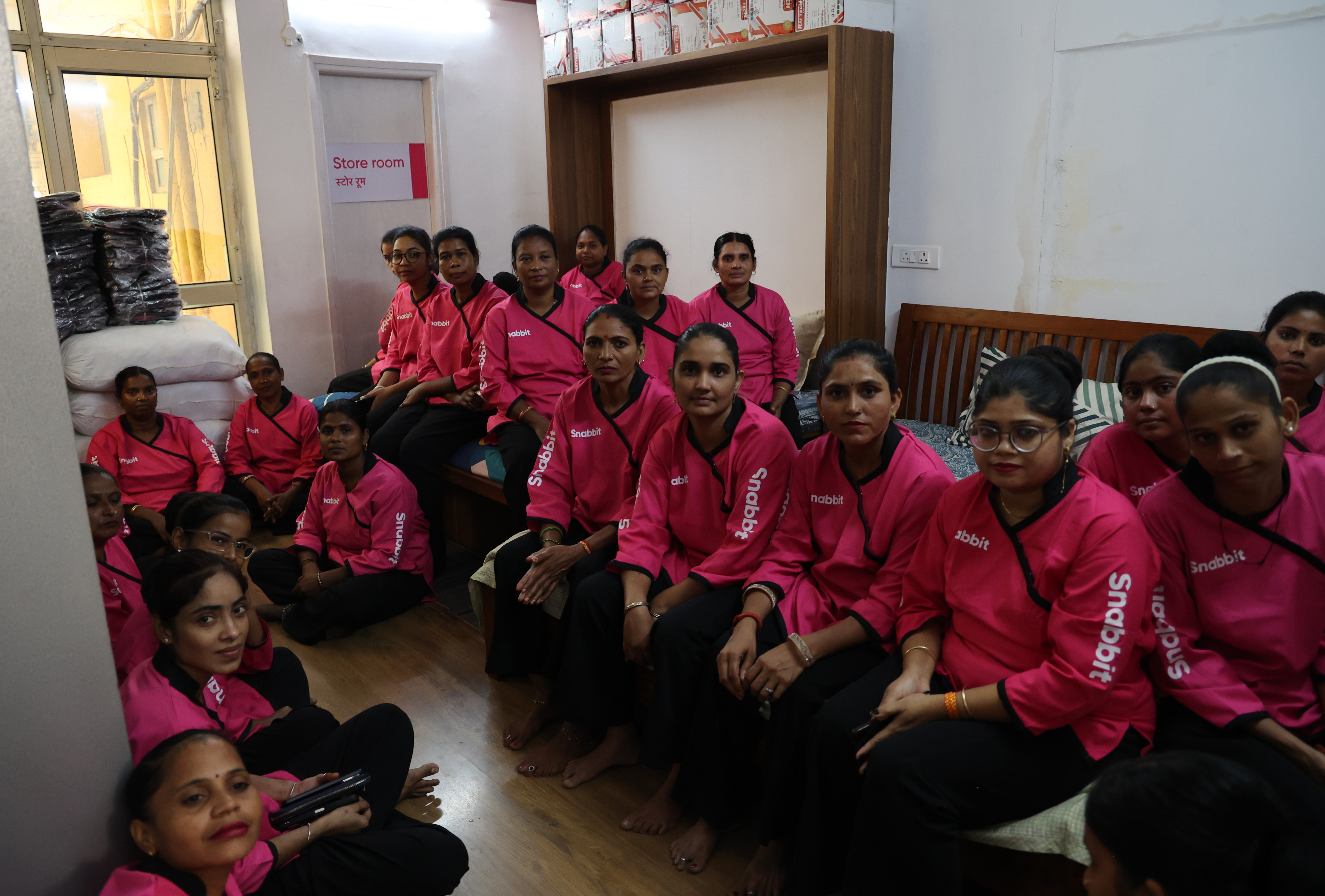
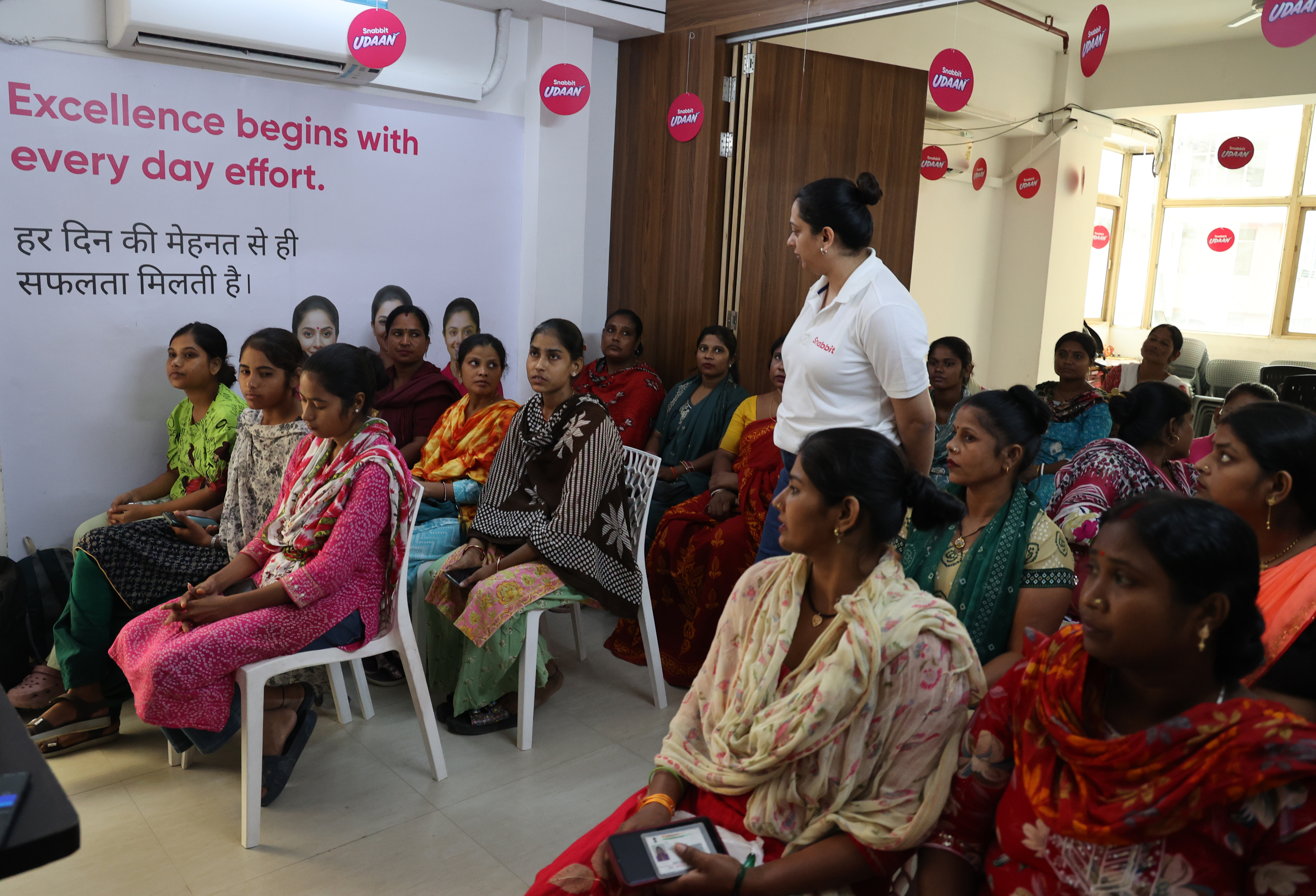 Women at the Snabbit training session before they are inducted as workers (Express Photo by Gajendra Yadav)
“I didn’t tell my family at first about my work… just that I am working for a company. When I finally told my father, he was upset. I told him the pay was good. He finally came around and told me to do whatever makes me happy,” she says.
Sumi says she earns a baseline “salary” of around Rs 24,000 after working 10-12 hour shifts everyday, with a two-day break a month, and that this goes up with bonuses and incentives. Some months, she says, she gets around Rs 35,000.
Story continues below this ad
The pay, along with the nature of the job that gives it a formal structure — the uniforms, training, customer ratings — are what many gig workers cite as their main draw.
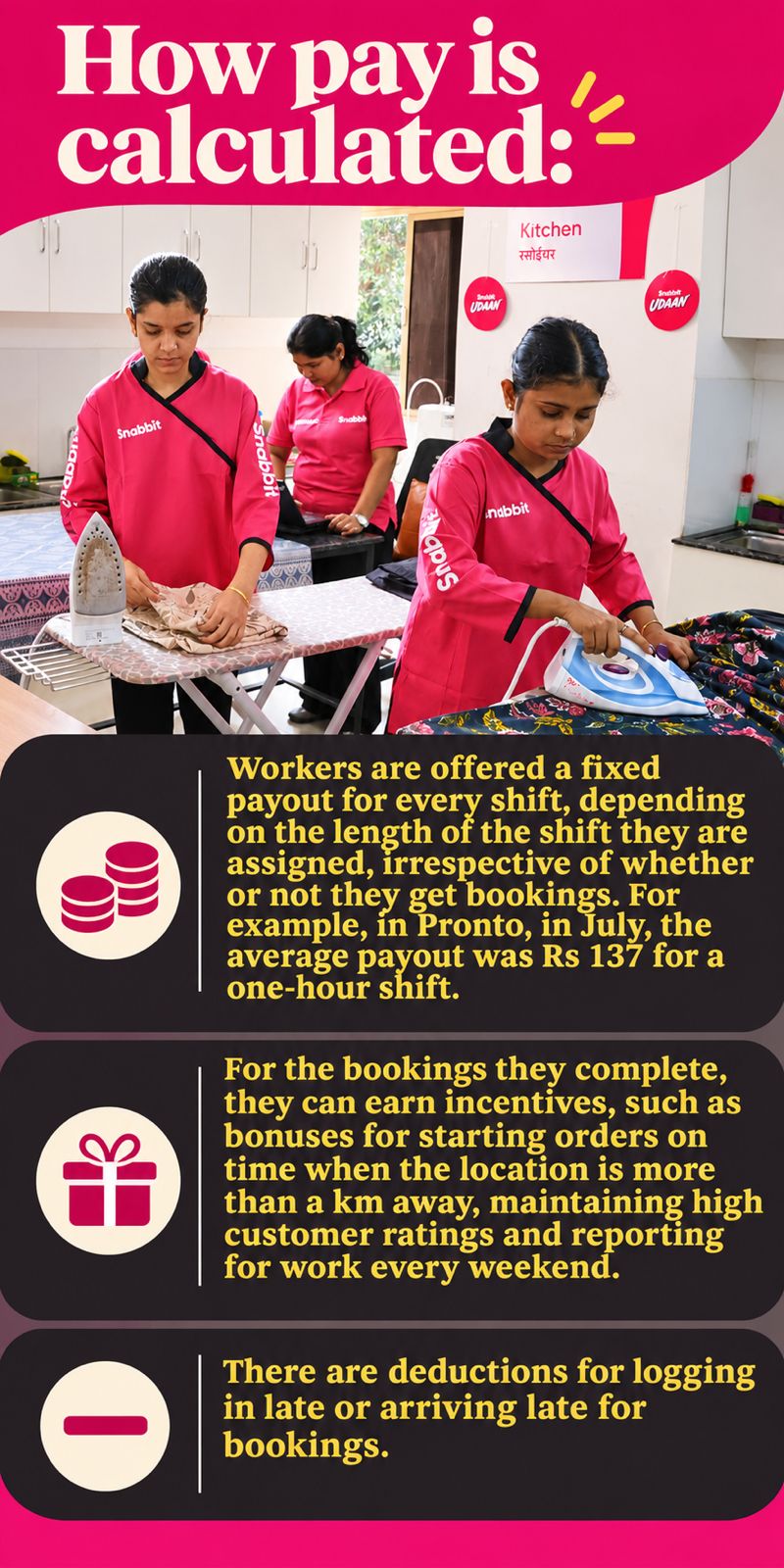
What they call “salary” is a guaranteed amount for each shift they clock in, linked to the hours in that shift, whether or not they get any bookings during the shift.
An email from Pronto attributed to the company spokesperson reads, “She isn’t promised a monthly figure, because she decides how many days and hours she works, and what she earns in a month follows from that… In July, the average fixed payout was about Rs 137 an hour worked, and about Rs 179 an hour, including incentives. On a daily basis, that was about Rs 667 fixed and about Rs 874 including incentives, before special bonuses.”
But there are also stiff ‘disincentives’ or penalties for logging in late, being late for a booking, etc. One of the platforms, for instance, issues ‘red cards’ when “a rule is broken”. On this platform, a 10-minute delay in starting work leads to the worker being issued a card, which results in a penalty of Rs 35. Being absent on a weekend, when demand for services is at its highest, earns the worker 20 red cards and a penalty of Rs 700 (20×35).
Story continues below this ad
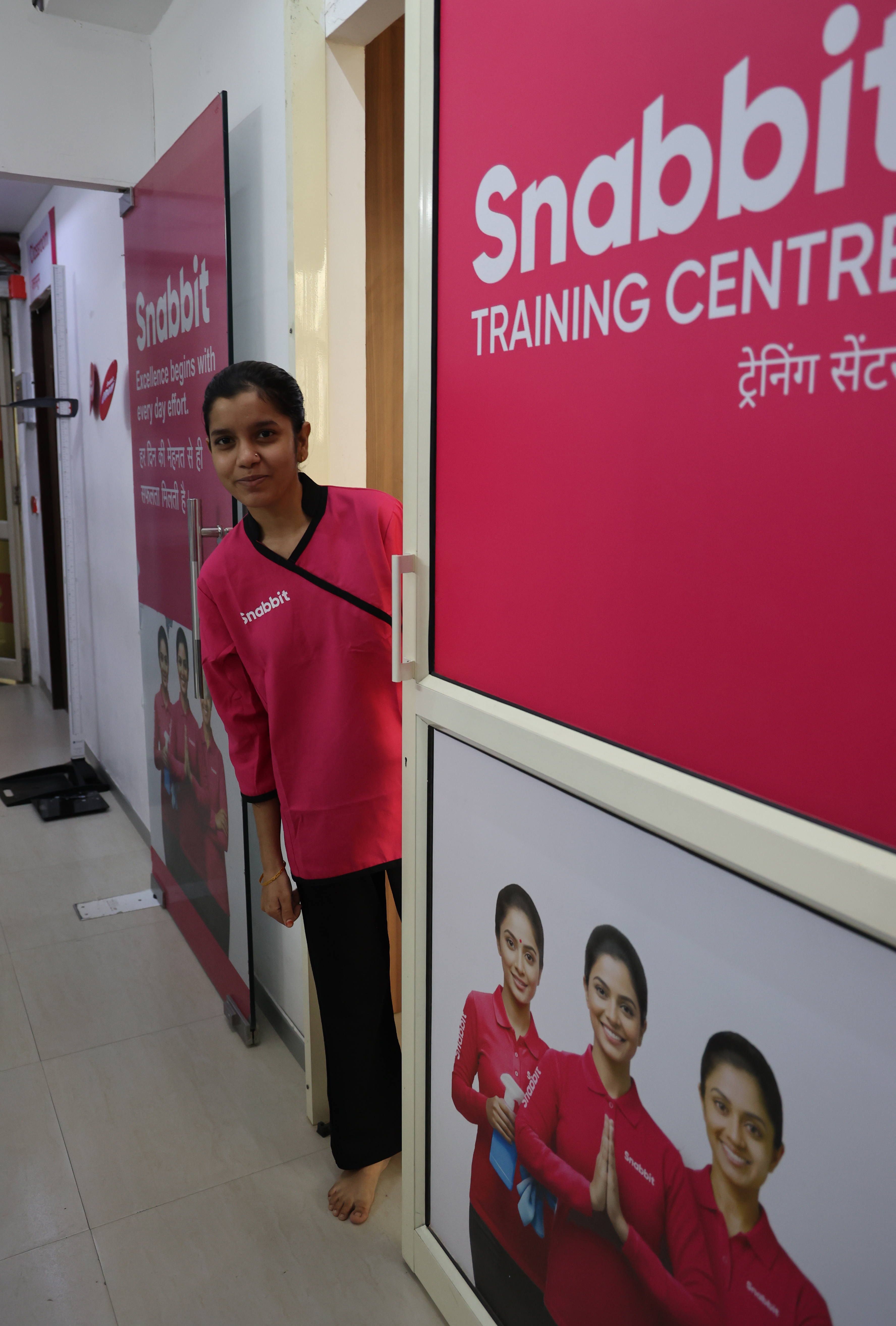 The pay, along with the formal structure of the job — the uniforms, training, customer ratings — is the main draw (Express Photo by Gajendra Yadav)
But these are fine-prints most workers struggle to understand.
When she joined, says Sumi, her supervisor told her that there was only one thing for her to understand: “Apne haathon ke speed ko badhana (Increase the speed at which you work).”
“We need to work jaldi, jaldi (fast). So that we can finish off all the work during the booking time, the customer is happy and they rate us well. Most of the time, the next booking comes even before I start walking out of the door,” she says.
It’s a hectic pace, but Sumi likes what it gives her. “I always thought I would just be in the village, looking after my family. But look at me now. I am working in a company. I have a good salary. I haven’t thought of what’s ahead but I’m starting to think that I don’t want to get married,” she says.
Story continues below this ad
Like Sumi, Priya, 22, had another job before she joined Snabbit. She was a saleswoman in a clothes shop in Gurgaon, but found herself without work after she took a break to visit her husband’s village in Lucknow district. She learned about the gig work from a pamphlet she saw at the vegetable market and landed the job.
So far, none of her relatives know. “We are Thakurs. People from my caste don’t work so much in other people’s homes. More than anything, I fear my family will taunt my husband for not being able to provide for me. So I just tell my father that I work in a shop and earn good money,” she says.
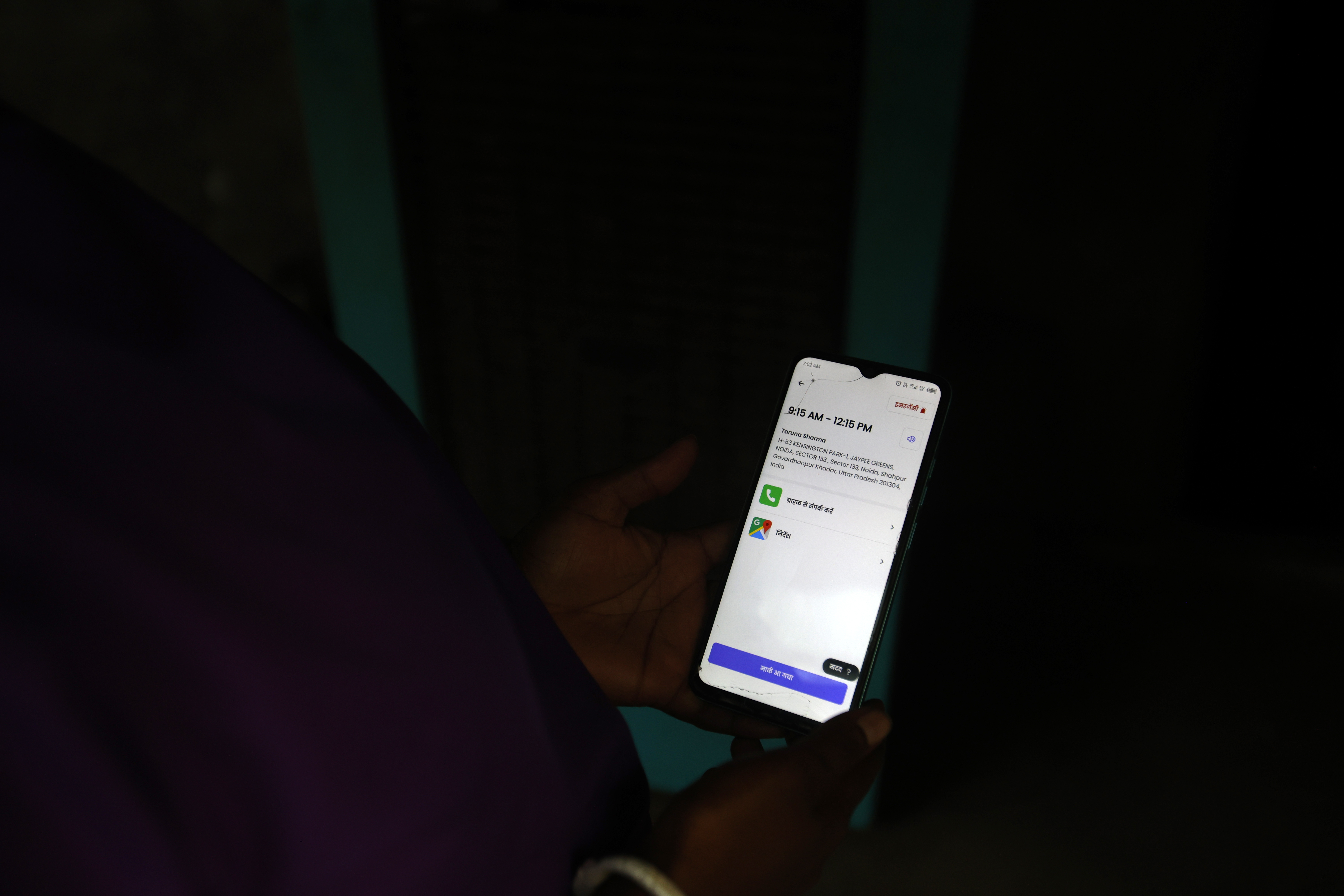 A worker in Noida accepting a booking. (Express Photo by Gajendra Yadav)
Priya says she has had people offering to hire her for a fixed monthly pay. But she says would rather not be attached to a household. “I don’t think I’m comfortable working at the same house everyday and them being my ‘employer’. I don’t like that set-up,” she says.
She wants to continue working for a few years before planning a baby. She works so that she and her husband can have a life together in Gurgaon, away from the meddling and conflict of their families. Someday, she hopes, she and her husband can build a separate house for themselves in his village.
‘When to block a customer’
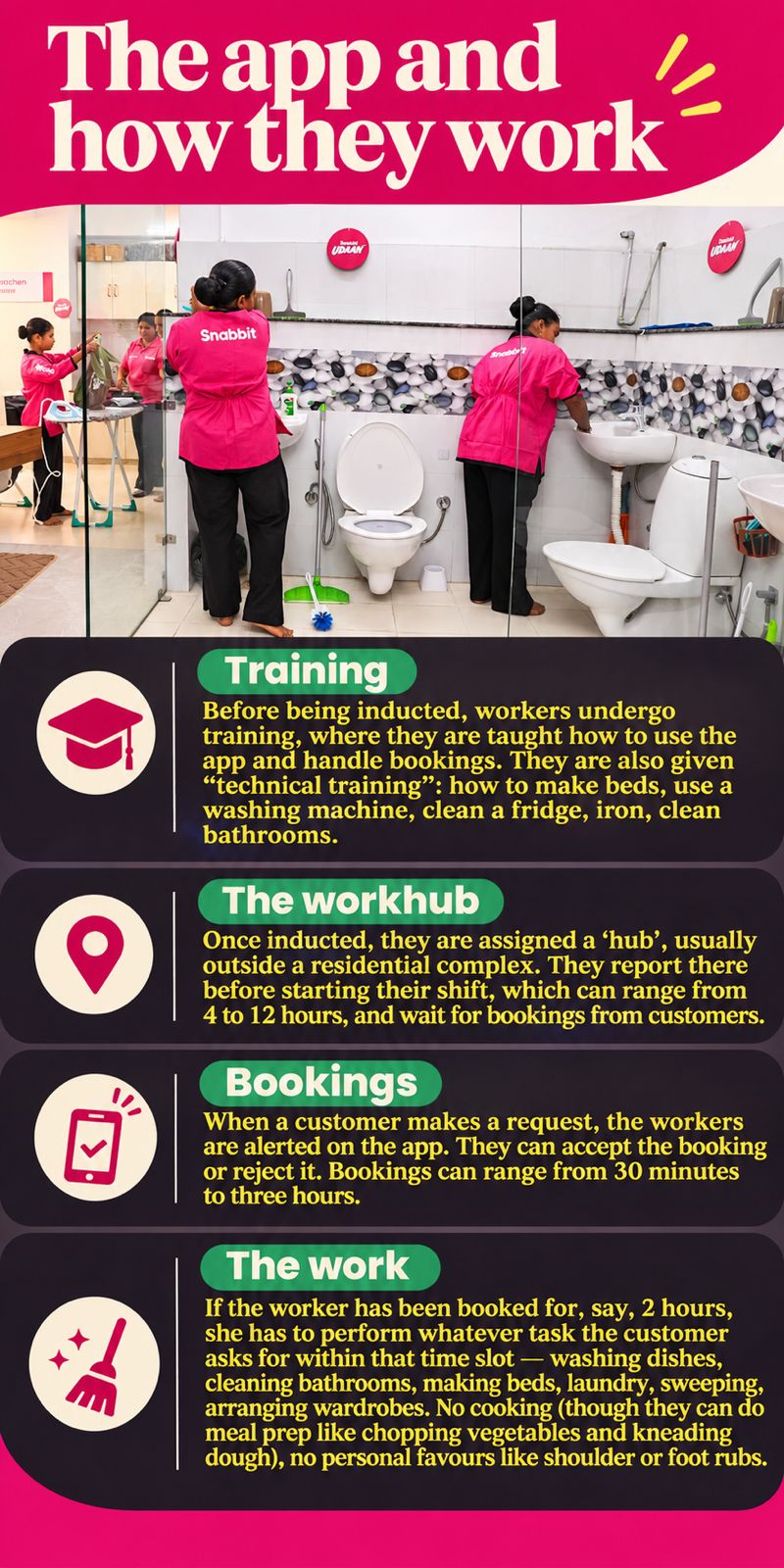
On a Tuesday morning, 23 women wearing pink Snabbit uniforms sit in an AC room in a building in Gurgaon, watching a video on a screen — a woman explaining to them about the red ‘SOS’ feature on their apps, which they can tap if they feel unsafe while on duty.
“We care about your safety the way your family does,” says the trainer conducting the session — the first of a two-day training for the women before they are inducted as Snabbit “experts”.
The training also has sessions on how to use the app; pay, incentives and disincentives; safety and social security features; grooming for the job; and a warning against stealing.
 ⠀
The trainer takes the women through the option of blocking a customer — “not more than five customers”.
The training centre occupies a floor in a building in Gurgaon’s Sector 44. One room on the floor is the classroom where the women are undergoing their orientation. The rest of it is modelled as a mock apartment. One of the rooms has a washroom set-up with two sinks, two toilets and cleaning paraphernalia. Two washing machines are in a corridor, and beyond it is a room with an ironing board, two kitchen sinks, appliances and a row of cabinets. Women in pink Snabbit uniforms are at work here, ironing clothes and washing dishes — part of the “technical training” on Day 2.
At the end of this, says Bhoomika Saigal, head of training at Snabbit, the training associates determine if they are ready to join work. If not, the workers are called back for a third day.
While the training helped, says Sumi, she recalls how she froze on her first day at work, when the owner allegedly verbally abused her and threatened her with physical assault.
“We had been told what to do in this situation, but I was so scared that I didn’t remember anything then. So I stood there quietly. But a few days ago, when I got assigned to the same house, I blocked the customer on the app. Apart from that incident, the rest of the people I have met have been nice,” she says.
 The training centre occupies a floor in a building in Gurgaon’s Sector 44 (Express Photo by Gajendra Yadav)
Snabbit founder Aayush Agarwal, however, argues that the platform brings in some mediation in the unregulated world of domestic work.
“I would say the presence of a platform, by design, significantly reduces the risks that these women face, because there is a tech-enabled ecosystem that acts as an intermediary layer between the customer and the expert, something that is almost entirely missing in the offline world,” he says, referring to the SOS feature on the app. Pronto and InstaHelp, too, have similar SOS buttons on their app.
‘Look, my skin has turned dark’
Despite these assurances, vulnerabilities remain.
Vandana Vasudevan, author of OTP Please: Online Buyers, Sellers and Gig Workers in South Asia, says, “Platforms are offering a range of possibilities to women, making it flexible for them to enter the workforce. You can log in and log off. If you want to attend a marriage in your village, if your child is sick, you don’t have to login… That, I think, is quite remarkable in itself because the biggest barrier for poorer women to enter the workforce has been the need to manage homes and be the primary caregiver.”
However, Vandana says, she is concerned about the lack of designated spaces for workers to rest or wait between bookings, calling it a “huge lacuna.”
“Almost everyone on the platform is a woman, and we are aware of the safety situation. There must be discussion about some kind of set-up for them to wait, otherwise this is just abandoning them on the streets,” she says.
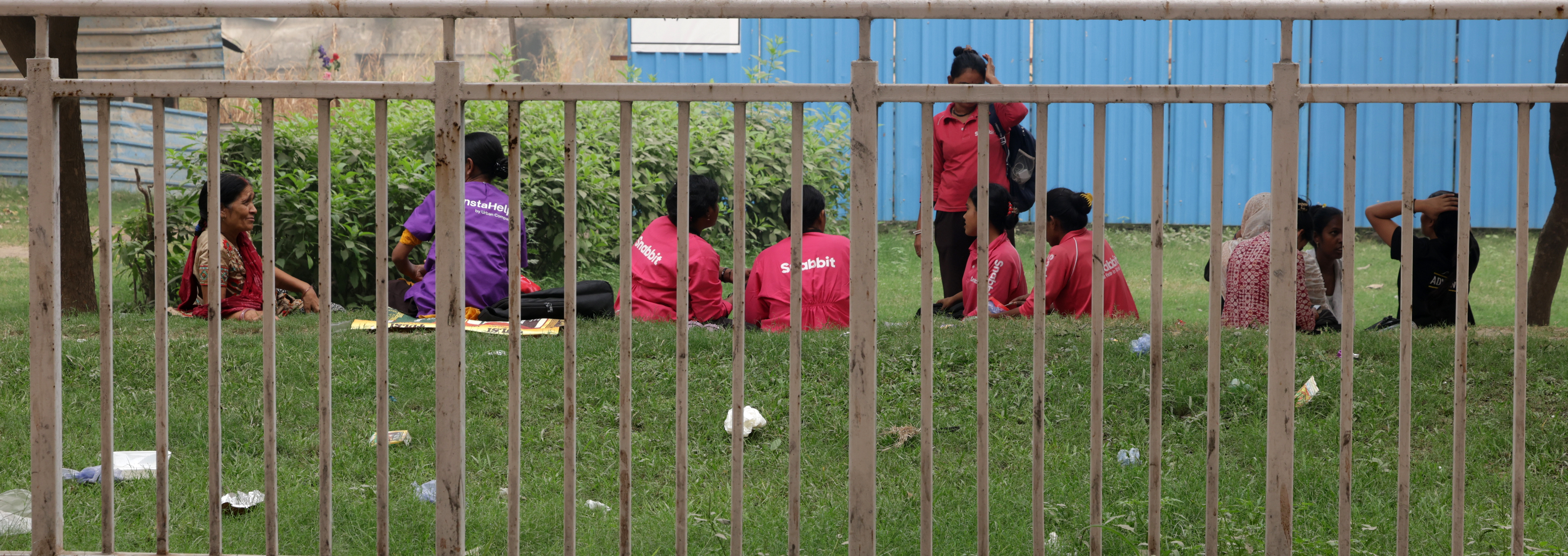 Workers rest during their break. One of the issues they face is the lack of designated spaces to recharge between bookings (Express Photo by Gajendra Yadav)
On a Friday, 40-year-old Nasreen turns up at her workhub near a Noida high-rise, but not in her pink company uniform. She has a different aim today: to ask around for houses that want to engage a domestic worker on a regular basis.
She is unhappy because she has now been assigned to a new workhub, farther away from her home. “I can’t walk all that way. Anyway, I hated waiting on the road all day. Dekho, mai kaali pad gayi hoon (Look, my skin has turned dark).”
Anita Juneja, convener of the Delhi Gharelu Kamgar Sangathan, a labour union that works for domestic workers, says many of their members have signed up on these platforms this year. “A lot of women who didn’t have regular work shifted to these platforms since there is assured work, and even if there is no work assigned, they will get paid for their shift,” she says.
She has noticed, however, that fatigue starts to sink in soon, because the platforms lack flexibility.
“Things like penalties for being late, the pressure of ratings, not being able to take a day off beyond the fixed two days…And then the lack of a place to rest between bookings. They get tired, and there is little scope to rest and recover,” she says.
After four months of being on the platform, Akhila, too, is wondering if she should look for regular engagements.
“When I worked as a cook, I used to come home in the afternoons, pick my children from school and feed them before going again in the evening. The 11-hour shift is too much for me. I’ve been asking the company for a shorter shift, but I haven’t got it yet. I also lost my pay on days I missed work… It is starting to get difficult,” she says.
(Names have been changed to protect the identity of the gig workers)
KioskNews shows a cleaned-up reading view extracted from the publisher’s page — the original always lives on their site, not ours.