29 Years Later, Charlie Brown's Best Quote On Grief Proves Just How Deep Peanuts Really Is

An experienced Editor representing Canada via ScreenRant's Team Anime, J.R. has been reading manga since the first printing of Shonen Jump in North America. This passion drove him to write about anime, manga, and manhwa since 2022, having recently served as Lead Anime Editor for ComicBook.com.
His favorite moments in media coverage include reviewing the series premieres of Zom 100 and Bleach: TYBW Part 2 back-to-back and briefly meeting Junji Ito at a VIZ gallery event in 2023.
Sign in to your ScreenRant account
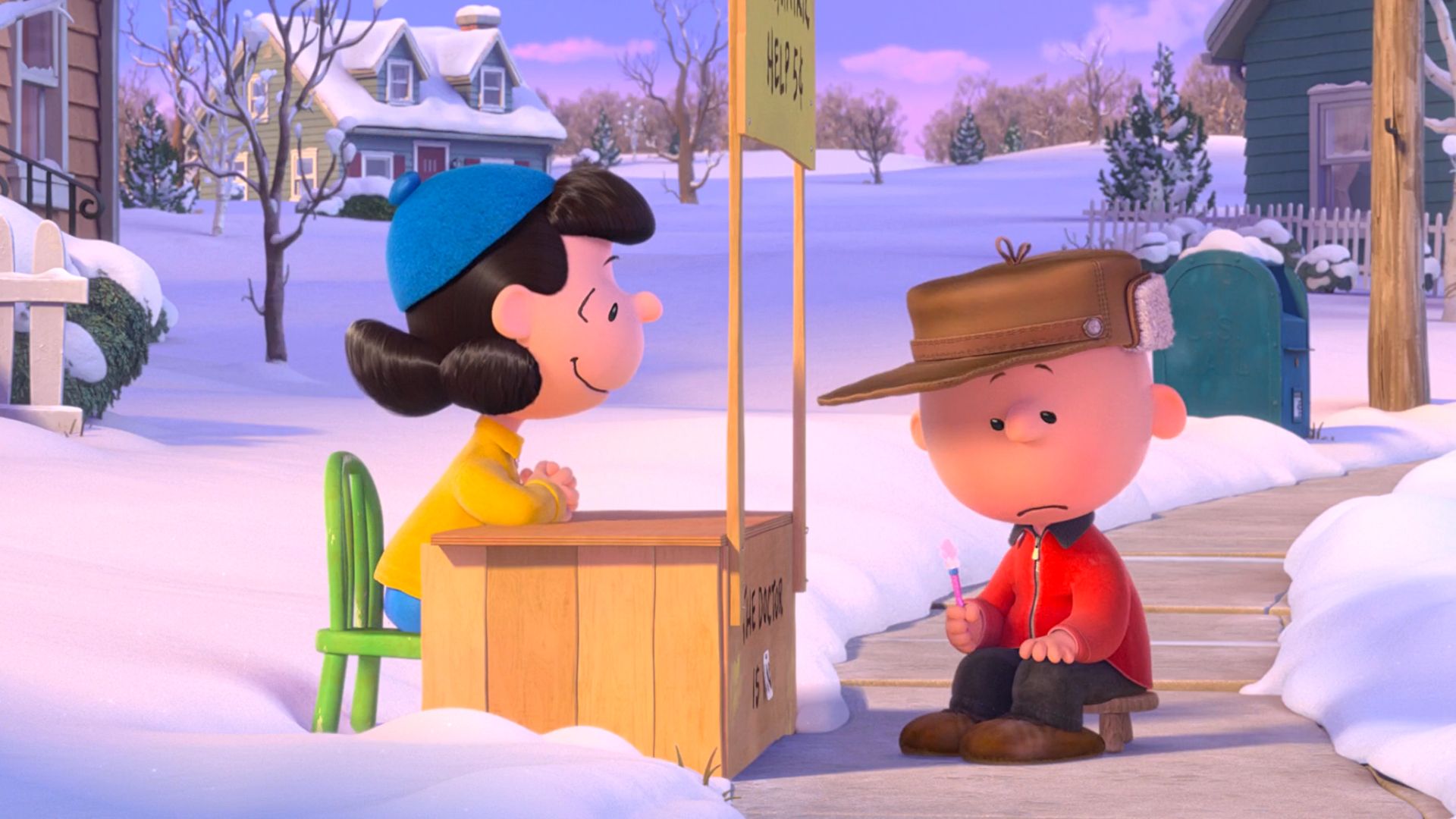
Charlie Brown is easily the biggest downer out of anyone in the entire Peanuts gang, and there's really no competition. That is, of course, by design and following careful revision to his simpler earlier persona. He has plenty of reason to be loaded with anxiety and melancholy tendencies, with plenty of factors, from a perpetually dysfunctional baseball team to a voracious tree eager to devour his every kite, but much of Charlie Brown's emotional predicament is a self-fulfilling prophecy. While decades of Peanuts touched on this topic, one particularly fun example came out of the June 15, 1997 strip in which he paid another visit to Lucy van Pelt's psychiatric help booth.
It was a visit like any other, in which Charlie Brown earnestly seeks Lucy's advice on everything that troubles him. This time, he brings up some "wisdom" imparted by his grandmother about processing grief and sadness, before showing how he has interpreted and adopted it into his daily life. It's all a setup for a simple gag at the end, but it's also an interesting gaze into what Charlie Brown believes to have helped form his personal philosophy, and how flawed it can be when put to the immediate test.
One Peanuts Quote Hinted At Why Charlie Brown's A Downer, And It Explains A Lot

Charlie Brown's discussions with Lucy at her booth often involve big questions about life, and Lucy's confident-yet-obvious answers to his problems. In this case, he brings up his grandmother's frequent use of an old folk proverb, "laugh at the dinner table, cry before bed." Various versions of this exist largely as a warning to not be so overly happy as to be complacent, as one might be left unprepared for when things get worse. But from the proverb's use over time and its changed wording such as here, it can be warped into an almost superstitious avoidance of joy, influencing Charlie Brown to co-opt the philosophy, turning his misery into a self-fulfilling prophecy.
Whenever you get too happy, something bad always happens.
This line of Charlie Brown's is, of course, a false correlation, but as Lucy then asks him if he's happy, and he states he thinks he is, his stool tips over and he falls. Lucy, of course, was dismissive of the grandmother's advice, giving the usual unhelpful advice of "I don't know...Grammas say some strange things..." It may not do much to change Charlie Brown's mind, but it does allow him to expand on what he took from her wisdom.
While the grandmother's spin on the classic "laugh before breakfast, cry before supper" proverb is more about joy being a way to tempt fate and cautioning others not to let their guard down, in Charlie Brown's case, it can be turned into an excuse to perpetually avoid happiness. It allows him to exist in his grief bubble in Peanuts, while giving him confirmation bias whenever something goes wrong if he steps out of it, even if those bad things happen either way. The stool could have just as easily fallen if Charlie Brown was sitting on it in a worse mood, after all.
Peanuts Celebrates Vulnerability Instead Of Hiding It

Despite Peanuts being entirely about children and a small set of animals as opposed to adults, the series is famously, deeply philosophical compared to its more gag-heavy cohort of comic strips. Much of this is the result of creator Charles M. Schulz writing his own personal struggles into each character, creating the wishy-washy Charlie Brown, with Lucy as an outlet for his sarcasm and Linus for his more intellectual side. It's also a way for him to express his deep-seated feelings of longing and unrequited love, such as Charlie Brown's crush on the Little Red-Haired Girl. Vulnerability can be found in all of these characters, from Lucy's single greatest quote, to Charlie Brown's anxieties having anxieties.
October 2, 1950 – February 13, 2000 · 17,897 Strips How Well Do You Know Peanuts? “Good grief!”
⚾Charlie BrownGood Ol’ Chuck
🐕SnoopyThe Flying Ace
🧣LinusSecurity Blanket
🏈LucyPsychiatric Help
🐥WoodstockBest Friend
01
Before Peanuts launched in 1950, Charles M. Schulz drew a weekly cartoon panel for the St. Paul Pioneer Press. What was it called?
✓ Correct! Li’l Folks ran from 1947 to 1950. When the syndicate renamed the new strip “Peanuts,” Schulz hated the title for the rest of his life.
✗ Not quite! It was Li’l Folks — and Schulz never forgave United Feature for rechristening his strip “Peanuts.”
02
Which member of the gang is almost never seen without his security blanket — and waits every year in the pumpkin patch for the Great Pumpkin?
✓ Correct! Linus — Lucy’s little brother, the strip’s resident theologian, and the reason “security blanket” entered the dictionary.
✗ Not quite! It’s Linus van Pelt, whose blanket gave the English language the term “security blanket.”
03
Schroeder hammers away at his toy piano in devotion to a single composer — whose bust sits on top of it. Who?
✓ Correct! Beethoven. Schroeder even observes Beethoven’s birthday every December 16 — while ignoring Lucy entirely.
✗ Not quite! It’s Beethoven — the one thing in the world Schroeder loves more than tuning out Lucy.
04
When Snoopy climbs onto his doghouse in goggles and a scarf, he becomes the World War I Flying Ace — forever hunting which nemesis?
✓ Correct! The Red Baron — and the Sopwith Camel doghouse always goes down in flames, sending the Ace off to curse him in a French café.
✗ Not quite! It’s the Red Baron. Snoopy’s doghouse is a Sopwith Camel, and it never once wins the dogfight.
05
Lucy runs a curbside psychiatric help booth out of a lemonade stand. What does she charge per session?
✓ Correct! Five cents, please. The nickel never went up in 50 years — and the advice was never once worth it.
✗ Not quite! It’s 5¢ — “The doctor is in.” Lucy held that price for half a century.
06
Snoopy’s tiny yellow best friend went unnamed for years before Schulz finally christened him. What was he named after?
✓ Correct! Woodstock got his name in 1970, borrowed straight from the music festival held the summer before.
✗ Not quite! He’s named for the 1969 Woodstock festival — Schulz gave the bird the name in 1970, years after he first appeared.
07
The jazz score for A Charlie Brown Christmas — including the immortal “Linus and Lucy” — was written by which musician?
✓ Correct! Pianist Vince Guaraldi scored the 1965 special, and network executives were sure the jazz soundtrack would sink it. It became a permanent holiday fixture.
✗ Not quite! It’s Vince Guaraldi, whose trio gave Peanuts its unmistakable sound.
08
Schulz drew every Peanuts strip himself for nearly 50 years. What made the final original Sunday strip — February 13, 2000 — so haunting?
✓ Correct! Schulz died the evening of February 12, 2000 — and his farewell strip, signed off with “Charlie Brown, Snoopy, Linus, Lucy... how can I ever forget them,” appeared in papers the very next morning.
✗ Not quite! Schulz died on February 12, 2000 — hours before his own farewell strip ran in the Sunday papers.
The Doctor Is In · Five Cents, Please Your Peanuts Report Card
⚾
/ 8
Good grief — or good ol’ Charlie Brown? Either way, the football is still there. Wanna try again?
But even with this latest twist of elderly wisdom, Charlie Brown as a character has lived in defiance of such claims. It's specifically his optimism and openness to others that, while consistently exploited, flies in the face of hiding those vulnerabilities. Lucy will always succeed in tricking Charlie Brown into trying to kick the football because he, perhaps foolishly, believes the outcome could be different. The answer to keeping one's guard up against sources of grief can't be to shield oneself from happiness for fear of something worse getting in; that just creates more grief in the long run, and even has a name: cherophobia. Peanuts may be the most melancholy classic comic strip ever made, but it still ultimately teaches people to seek happiness, and not to wallow in grief.
- TV Show(s)
- The Snoopy Show, Peanuts by Schulz
- First Film
- The Peanuts Movie
- Cast
- Christopher Shea, Kathy Steinberg, Bill Melendez, Sally Dryer, Peter Robbins, Noah Schnapp, Hadley Belle Miller, Mariel Sheets, Lisa DeFaria, Venus Omega Schultheis
- Created by
- Charles M. Schulz
- Movie(s)
- The Peanuts Movie, A Charlie Brown Christmas, A Boy Named Charlie Brown, Charlie Brown's All Stars!, A Charlie Brown Thanksgiving, It's the Great Pumpkin, Charlie Brown, It's the Easter Beagle, Charlie Brown
- Character(s)
- Charlie Brown, Snoopy, Lucy van Pelt, Linus van Pelt, Sally Brown, Pig-Pen, Marcie (Peanuts), Peppermint Patty, Woodstock
KioskNews shows a cleaned-up reading view extracted from the publisher’s page — the original always lives on their site, not ours.