‘India a power in middle with 1.4bn people, $4 tn economy’: External affairs minister Jaishankar
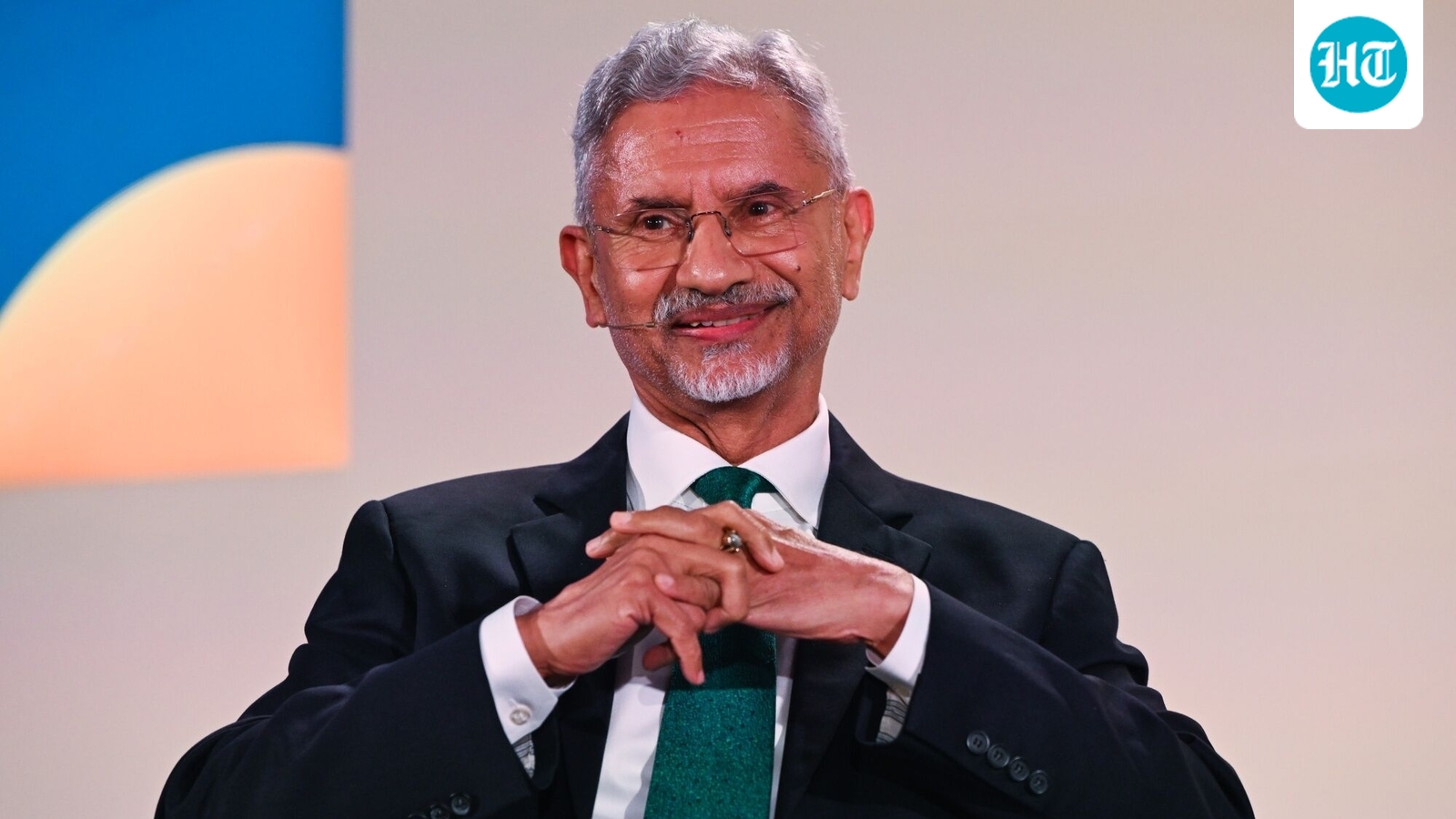
Countries with shared interests are coming together to fashion a new world order in which they will have a greater say in global governance and decision-making at a time of geopolitical uncertainty, external affairs minister S Jaishankar said on Wednesday.
Participating in a discussion on the theme of “Is this the middle power moment” at the Bloomberg New Economy Forum along with his Canadian counterpart Anita Anand, Jaishankar argued that India was “a power in the middle” because of its population of 1.4 billion and $4 trillion economy.
Canadian Prime Minister Mark Carney’s call for middle powers to unite to defend multilateralism during a speech at the World Economic Forum in Davos in January has triggered a debate about emerging economies working together amid the turmoil triggered by the economic policies of the US.
Also read: Canadian FM meets Modi, Jaishankar; stresses ‘valuable’ ties
Quad, IMEC cited as examples of cooperation
Referring to groupings such as Quad and the India-Middle East-Europe Economic Corridor (IMEC), Jaishankar said: “The middle powers would now each apply their own mind, stake out their own interests, figure out their own policies, and then reach agreements with each other.”
He also spoke about the realignment and rebalancing happening around the world and said, “What we now are heading towards is a different kind of order, an order where the shareholding is changing, the board of directors is expanding, there is a much more active shareholders’ discussion about where the company called Planet Earth is going and there is a new understanding or a different understanding.”
He said Carney’s comments at Davos were more about the predicament of countries that are part of alliances and now find that they “have to often take decisions on their own or go on paths which are divergent from that of US, or only partly overlapping”.
Carney was “really arguing for the fact that the powers in the middle now need to be directed, need to deal more with each other and figure out a way of moving the needle on issues of interest to them”, Jaishankar said.
Also read: India, US ironing out differences on trade deal; nearing 'landing point': Jaishankar
Anand urges middle powers to take leadership role
Anand said middle powers have to decide whether to be passive observers or take a leadership role in crafting the new international order at a time of “the erasure of rules and principles upon which the world order has been operating since the end of World War II”.
Canada, she said, has opted for a proactive role through 15 trade agreements, some 20 security agreements and multilateral arrangements such as the G7 buyers club for stabilising supply chains for critical minerals. “The idea is to work with other countries for the benefit not only of our strategic autonomy but for shared values,” Anand said. “The idea is coordinated leverage, making sure that we have that ability to work together for domestic economic resilience and to uphold international rules.”
KioskNews shows a cleaned-up reading view extracted from the publisher’s page — the original always lives on their site, not ours.