Hillsborough law ‘could leave families without vital legal funding after a death’

The current draft of the Hillsborough law will leave families without funding in the early stages following a death when legal advice and support are critical, ministers have been warned.
The public office (accountability) bill, for which families of victims of the Hillsborough disaster have long campaigned, puts a duty of candour on public officials and is intended to address the inequality of arms between bereaved people and the public bodies from whom they are seeking answers.
Under the bill, legal aid will only be available to families when a coroner presiding over an inquest designates a body as an interested person – a status that can apply to a person or organisation involved in the death – which often takes place long after an individual’s death, even when state involvement is clear.
Families and campaigners say this denies families early access to representation when they may need advice on matters such as securing a postmortem or data preservation notices.
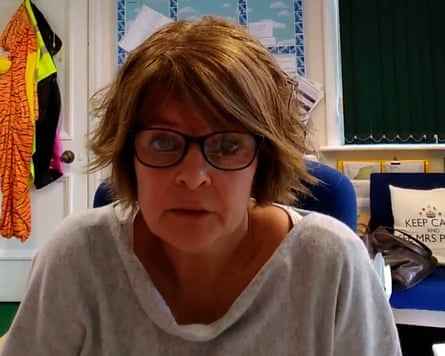
Prof Julia Waters, the sister of Ruth Perry, a headteacher who killed herself after Ofsted inspectors told her they planned to downgrade her school to inadequate, said the family had to crowdfund to cover legal costs after being denied legal aid, adding: “Why should families have to navigate this alien system on their own at their lowest point?
“Surely the government must be aware of how urgent and vital early access to legal aid is for bereaved people? It’s a kick in the teeth to be denied that early access when we know the same restrictions won’t exist for state bodies.
“I don’t want another family to have to be put in the position of not having access to legal aid when they really need it. Nothing can bring Ruth back but the lessons from her death could help save other lives.”
Before interested parties are determined, there can be pre-inquest review hearings for bereaved families to navigate as well as other investigative processes. For example, deaths in custody are subject to independent investigation and cases involving the NHS or a local authority may result in a local or independent review.
Moira Durdy, the mother of Jess Durdy, who died in a crisis house centre in Bristol in 2020, said she was horrified at being confronted by many public bodies with state-funded legal teams “intent on deflecting blame for what happened”.
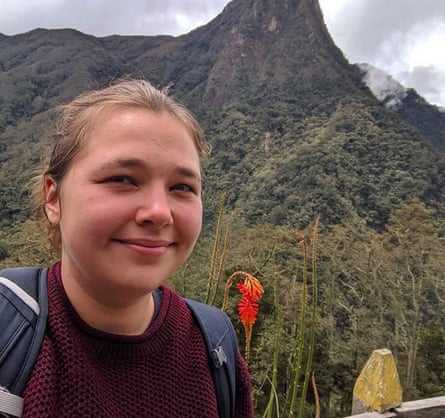
She said: “In those early weeks, amid all the bewilderment and devastation of our loss, we found ourselves having to navigate a lengthy legal process we knew nothing about.
“Thankfully we found lawyers who were willing to work pro bono to help us prepare. Other families would not necessarily have found such dedicated lawyers. Having access to legal advice and assistance in the initial period following the loss of your loved one is so crucial. If we were left to go through the early stages on our own we would have been at a real disadvantage.”
The bill will return to the House of Lords next month when peers will consider an amendment by Lady Goudie and Lord Bach that would provide for legal aid for bereaved family members where a public authority is likely to be an interested person at an inquest. Funding would cease if it was not designated as such.
Deborah Coles, the executive director of the charity Inquest, said: “Simply put, if families are not entitled to legal aid in the early stages following the death of their loved one, then there is not equality of arms. Government have been presented with a simple and workable fix and we sincerely hope they adopt it to avoid further delays and injustices for families.”
A Ministry of Justice spokesperson said the bill would represent the largest expansion of legal aid in a decade, adding: “The lord chancellor has met with campaigners and we’ll continue working closely with them on the bill. Together, we’ll make sure legislation can change the balance of power so the state can never hide from the people it is supposed to serve.”
Year-end fundraiser
$0 of $2,000,000 goal
A moment full of possibility – and risk
We hope you appreciated this article. Before you close this tab, can we ask you to support the Guardian at this crucial time for democracy in the US? With Black Friday approaching, our most impactful monthly support option is just $7.50 a month for six months.
In the last two years alone, Donald Trump has eroded many of the pillars of US democracy – slashing funds for universities, undermining science, shutting down arts institutions, and attacking the free press as an “enemy of the American people” and “a threat to our national security”. While he and his allies have enriched themselves and spread lies, federal forces have harassed and imprisoned innocent people and violated the constitutional rights of many Americans.
Now, in a sweeping change election, the American people have spoken: Donald Trump, Pete Hegseth, RFK Jr, Elon Musk and the tech oligarchs may finally be held to account. A majority of American voters have demanded an end to the costly and immoral wars, the flagrant profiteering, and the corrosive attacks on communities and democratic institutions.
It’s a moment full of possibility, with more stories than we can possibly cover. New leaders are emerging from Texas and Michigan to Iowa and South Carolina – and heading to Washington to fight for affordability, against wealth inequality, and for human survival in the face of AI and the climate crisis.
These new leaders will be facing a cornered Trump and his hardline chief of staff, Stephen Miller, who have nothing left to lose. The next few years are critical for the future of the country. Journalism that covers the epic clash between these forces has a vital role to play right now.
Investigative journalism provides a fact-based paper trail for an emboldened Congress to follow. Members of Congress – and the American public – often rely on our in-depth reporting to inform the tough questions, to connect the dots and to pursue accountability for wrongdoing.
At the Guardian, our newsroom is devoted to uncovering the truth and conveying it to as many people as possible. We’re not alone in this mission, but this kind of journalism faces unprecedented hurdles: big tech threatening our financial stability and stealing our work for AI, billionaire owners telling journalists what to publish, and a hostile executive branch intent on suppressing our reporting.
The Guardian is free to dig deep without fear because we’re funded by our readers. Our readers hold us to account, and we hold the powerful to account.
However, this only works when enough of our readers contribute. Against the advice of most industry analysts, we’ve refused to put up a paywall – we believe good journalism should be freely available to all people, regardless of ability to pay. If you’re counting on our reporting, and you can’t afford to pay, please stop reading this message and go back to our articles.
If you can afford to contribute, please know that your support is not only helping yourself – from voters in Kansas to immigrants in Minnesota and families in Gaza, your generosity is bringing factual news to people around the globe.
Today is among our most important fundraising days of the year. To sustain our unique financial model, our goal is to raise $2,000,000 before the new Congress is seated on 3 January. More than 19,000 people have contributed already. All gifts are gratefully received, but for the next several days only, our most impactful monthly support option is $7.50 a month for the first six months. If you can afford 37 seconds, please join our ranks – and show your support for the rekindling of democracy in the US and around the world.
KioskNews shows a cleaned-up reading view extracted from the publisher’s page — the original always lives on their site, not ours.