Rajnath Singh Calls For Integrated Civil-Military Aerospace Ecosystem
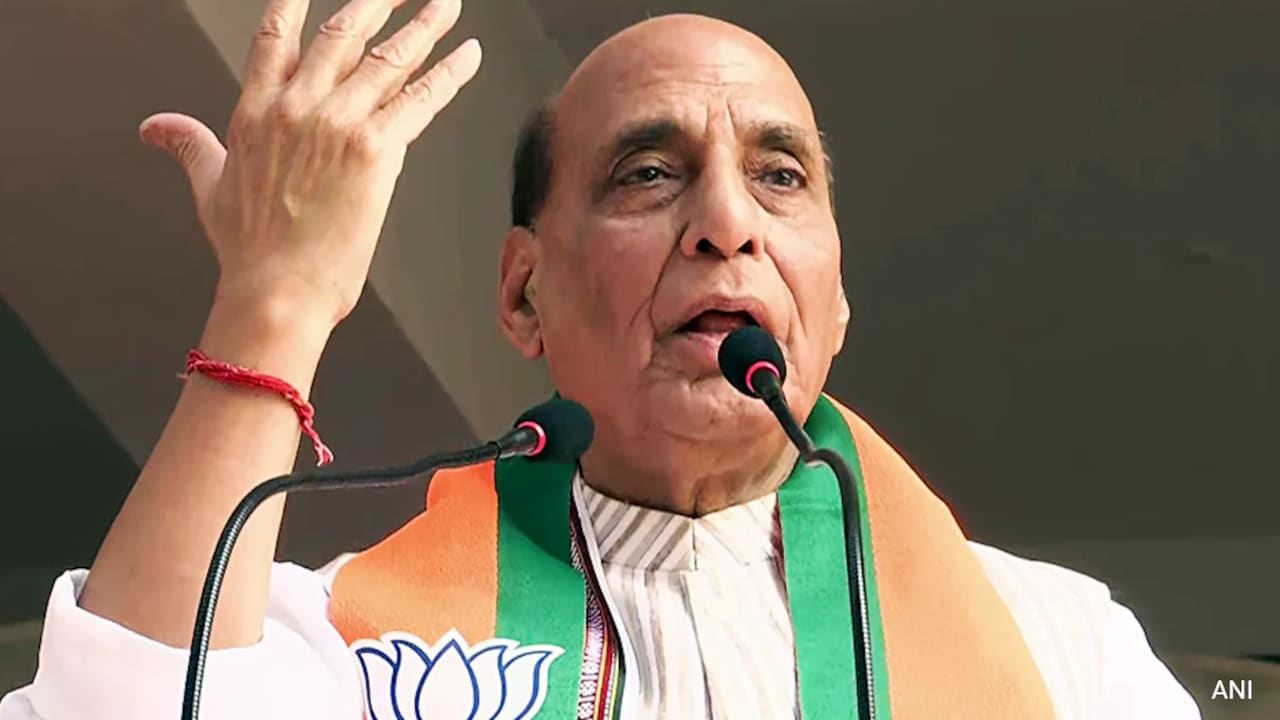
Defence Minister Rajnath Singh on Friday called for an integrated ecosystem catering to the needs of both civil and military aviation. He also flagged delays in defence technology projects, saying they need to be taken seriously as they can create gaps in crucial defence requirements and lead to cost escalation.
"There are some issues on which we need to work. One very important issue is that of delays. For various reasons, including technological reasons, many of our technical projects that are under way also face delays. We will have to take these delays seriously," Singh said.
He said there were instances where, by the time a particular technology or equipment was developed and produced, better technology had emerged elsewhere, making the earlier technology outdated.
Project timelines, therefore, need to be kept realistic, Singh said.
"We need to develop an ecosystem that can effectively address the requirements of both the civil and military aviation sectors," Singh said during a ceremony at Hindustan Aeronautics Limited to hand over Light Combat Aircraft Tejas twin-seater trainers and Hindustan Turbo Trainer-40 basic trainer aircraft to the Indian Air Force and Dhruv Next Generation helicopters to Pawan Hans Limited.
"Developing technologies indigenously is the need of the hour for India, as the nature of warfare is changing rapidly," he said.
He underlined that the public and private sectors should not be viewed as competitors but as organisations that complement each other.
"Let us not view the public and private sectors as competitors...There is a need for enhanced public-private synergy to build next-gen indigenous aerospace capabilities. By working together, we can accelerate the growth of India's aerospace sector," he said.
Singh stressed the need to prepare for the sector's transformation through AI, autonomous and unmanned systems, electronic warfare, cyber technologies and next-generation propulsion, with a focus on their indigenous development and integration.
Highlighting the need for cutting-edge innovation and describing research and development as a crucial priority area, he urged scientists, engineers, designers, test pilots and technicians to develop technologies that do not exist today to meet future defence requirements.
He called upon them to develop capabilities that would secure a leading position for India in the global aerospace technology landscape over the coming decade.
Singh described the handover as a significant milestone in the nation's progress towards indigenous aerospace capability, technological self-confidence and self-reliance.
"Our aim is to make India capable, self-reliant and globally competitive in meeting its aerospace requirements," he said.
According to him, India is moving systematically towards Aatmanirbharta in defence, with the country manufacturing state-of-the-art equipment indigenously since the Narendra Modi-led government began pursuing the core mantra of self-reliance.
"We've taken steps to not only provide the opportunity to Defence Public Sector Undertakings to advance in the defence sector, but also encourage the private industry, ensuring a level playing field," he added, while listing the steps taken by the Ministry of Defence to promote self-reliance.
Singh stressed the need to advance systematically in the aerospace sector, terming self-reliance in the domain the need of the hour.
"There can be no sudden big bang in the development of aerospace systems," he said, noting that it was a vast and gradual process involving a wide range of components.
"All the products and components involved represent small rungs on a long ladder; we must move forward one step at a time," Singh said.
He pointed out that there would be challenges, but said they needed to be viewed as milestones on a larger roadmap to achieve progress in a sector as complex and crucial as aerospace.
He termed the event a symbol of the growing synergy between civil aviation and defence aerospace capabilities, emphasising that the development of a robust aerospace industry should not be limited merely to meeting defence requirements.
"When capabilities such as aircraft design, avionics, propulsion, composite materials, flight control systems, manufacturing and certification are developed within the country, they benefit the entire aerospace sector," he said.
Singh said an integrated aerospace ecosystem must be built to achieve self-reliance across every domain.
"I am confident of achieving this endeavour through our collective strength," he said.
He asserted that the nature of warfare was rapidly evolving and that future air operations would be information-intensive and technology-driven.
Singh underscored the importance of developing complex systems indigenously, stating that combat effectiveness could only be ensured through a combination of well-trained personnel, advanced technology, integrated systems and rapid decision-making.
He expressed confidence that the LCA FOC Trainer would play a crucial role in preparing pilots for this demanding operational environment.
"While the Dhruv-NG exemplifies our indigenous civil aerospace prowess, LCA FOC Trainer stands as a symbol of indigenous military aerospace capability and the maturity of its fighter aircraft ecosystem," he added.
On the HTT-40, Singh said India had, for years, relied on imported aircraft to meet its basic training requirements, but HAL was now indigenously manufacturing the HTT-40 to cater to the needs of the IAF.
(This story has not been edited by NDTV staff and is auto-generated from a syndicated feed.)
KioskNews shows a cleaned-up reading view extracted from the publisher’s page — the original always lives on their site, not ours.