Red Fort blast, a year on: Doctor who wanted Sharia rule, and a plot born after a failed Afghanistan move
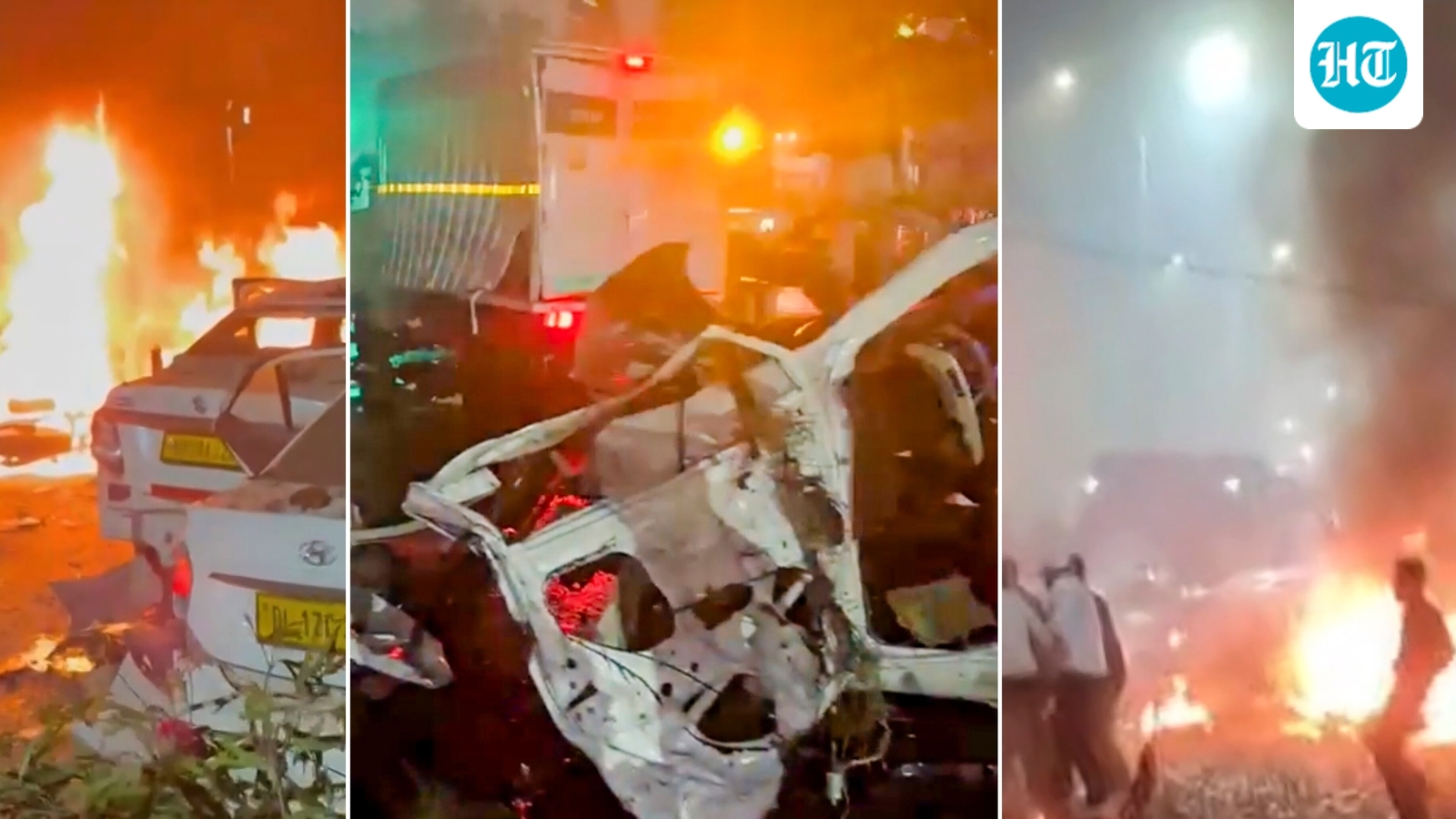
As India marks a year since the suicide bombing near Delhi's Red Fort, investigators have pieced together how a Kashmiri doctor and his accomplices planned the deadly attack after failing to leave for Afghanistan to support pan-Islamic causes.
Investigators believe that the prime accused, Dr Umar un Nabi, who drove an explosive-laden vehicle that blew up in the crowded Red Fort-Chandni Chowk area on November 10 last year, and his associates wanted to move to Sharia-governed Afghanistan, driven by a sense of Muslim victimhood.
Also Read | Red Fort blast a year on: Families still waiting for justice and closure
Failed attempt to reach Afghanistan preceded Red Fort attack
Officials privy to the probe also believe that Nabi, an assistant professor at Haryana's Al Falah University, and fellow doctors Muzamil Shakeel and Adeel Ahmad Rather, all self-radicalised, had links to al-Qaeda in the Indian Subcontinent (AQIS). They do not believe the group was in touch with Pakistan-based terror groups.
According to investigators, Nabi and his accomplices felt Islamabad was pursuing a political agenda in Jammu and Kashmir, and their path was different. Their aim was to overthrow the government in New Delhi and impose Sharia law in India.
According to the officials, the decision to carry out the suicide bombing under an operation code-named "Heavenly Hind" was taken in Srinagar in 2022, after the group's attempts to reach Afghanistan via Turkey failed.
In a charge sheet filed on May 14 this year, the National Investigation Agency (NIA) named nine people, including Nabi, as accused in the blast, which killed 12 people.
Inspired by the ideology of Kashmir-based Ansar Ghazwat-ul-Hind, an offshoot of AQIS, Nabi turned his vehicle into an explosive device using highly unstable triacetone triperoxide (TATP), and blew himself up at a traffic signal.
With several possible targets nearby, including a police post, the Gauri Shankar Mandir and a Jain temple, investigators still cannot say whether the explosion in the congested area was planned or accidental.
Also Read | NIA names absconding doctor as key conspirator in Red Fort car bomb blast case
Probe raises concerns over self-radicalised terror modules in India
Because the car was destroyed, investigators recovered no forensic evidence of how the device was built, including the type of timer used.
While officials believe Nabi's module was self-radicalised, its members are suspected to have been in touch with one person in Afghanistan through an al-Qaeda channel.
That a motley group of nine accused could aspire to overthrow the government in Delhi and impose Sharia law has set off alarm bells in security circles, as similar self-radicalised modules could exist in other parts of India.
KioskNews shows a cleaned-up reading view extracted from the publisher’s page — the original always lives on their site, not ours.