Lessons for the Philippines: AI content surge bypassed Brazil’s election rules — report

- Brazil's 2026 presidential election revealed significant use of AI-generated political content, with 60% of analyzed posts being deepfakes and many lacking transparency labels.
- Despite regulations from Brazil's Superior Electoral Court banning deepfakes and requiring disclosure for AI content, enforcement remains weak, allowing for widespread misuse and disinformation.
- The situation in Brazil serves as a cautionary tale for the Philippines as it prepares for its 2028 elections, highlighting the need for effective enforcement of electoral regulations to combat AI-driven disinformation.
This is AI-generated. Read the article for full context. Report any errors.
Political maneuvering for the 2028 Philippine polls is expected to begin early next year, and Brazil’s 2026 presidential election offers a look ahead at the digital threat landscape.
During the first round of Brazil’s race, AI political content appeared in feeds nearly once per hour, according to fact-checking agency Agência Lupa.
Through its VigIA project, Lupa confirmed that 920 of 1,941 election-related posts were AI-generated from August 16 to September 28. Over half (60%) were deepfakes, which are synthetic media depicting real people doing something they never did.
Brazil’s Superior Electoral Court (TSE) has regulated AI in elections since 2024, banning deepfakes while requiring disclosure labels for other AI campaign materials. However, the court ruled in September that the deepfake ban applies to content characterized as electoral propaganda.
The ruling came after the TSE voted not to penalize presidential candidate Senator Flávio Bolsonaro for showing AI-generated images of his imprisoned father, former president Jair Bolsonaro, endorsing him during a private Liberal Party (PL) convention. The court determined the photo was intended for a private event, not for public broadcast.
The senior Bolsonaro is facing a 27-year sentence after plotting a coup following his 2022 defeat to President Luiz Inácio Lula da Silva.
Unlabeled AI content dominates
Lupa found that 60% of analyzed AI posts lacked transparency labels from post authors.
Even among the 40% of the posts showing disclosures, transparency was rarely voluntary. Nearly 60% of the labeled content were tagged by platforms, while native watermarks from AI tools like Google Gemini appeared in only 20 posts.
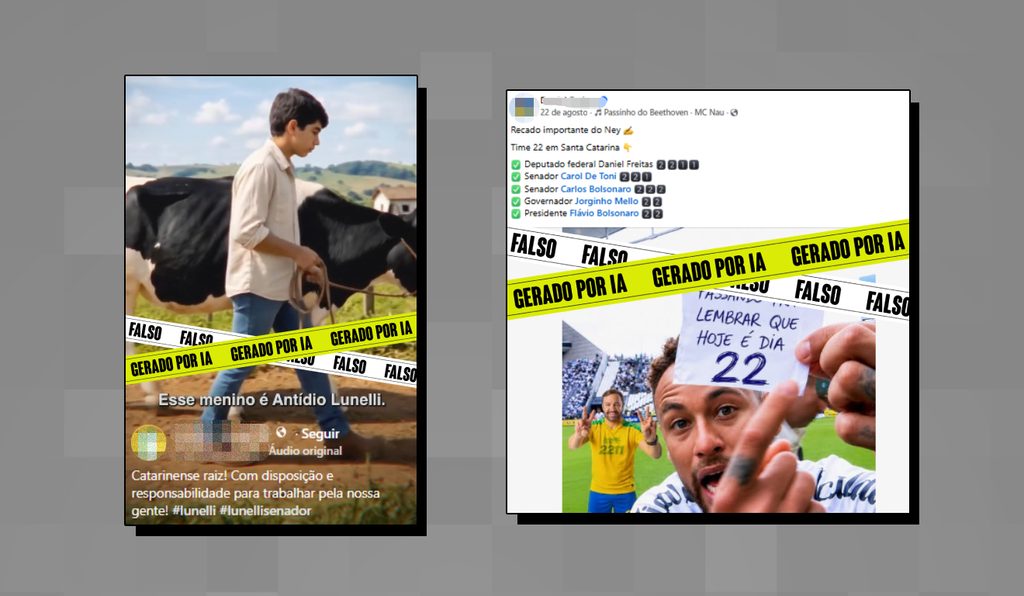
Under TSE’s rules, candidates and parties must declare if campaign materials use AI. But Lupa discovered that almost half (47%) of synthetic media originated from voters operating outside candidate disclosure rules.
Official candidate accounts comprised only 24.5% of the analyzed AI content, while 27% came from anonymous profiles.
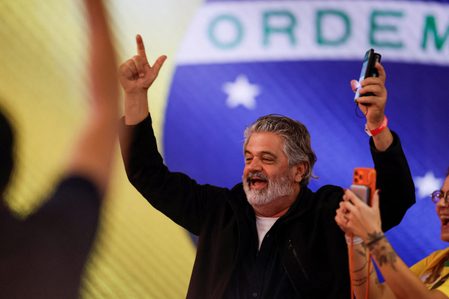
Agência Lupa founder Cristina Tardáguila emphasized that this lack of disclosure exposes how easily rules are bypassed.
“What we have seen so far is nobody cares about these rules. They are not being truly respected. And the norms, they are not being enforced,” Tardáguila told Rappler.
Promoting candidates, attacking rivals
Lupa reported that 45% of analyzed AI content aimed to promote candidates in Brazil’s elections. Humorous or satirical posts comprised 27%, a category Tardáguila described as particularly dangerous for information integrity.
“As a fact-checker, you cannot fact-check humor,” Tardáguila shared. Humor is playing a big role here because what we’re seeing is that the politician’s supporters, if they want to play with a scenario that accuses the other candidate of doing something, they just appeal to humor.”

Direct attacks on candidates accounted for 24.6% of posts, while nearly 3% were neutral voter guides.
President Lula of the Workers’ Party (PT) was the politician most portrayed in synthetic media. He was depicted in humorous contexts in 39% of his cases, while 34% were personal attacks and criticisms of his administration. Only about 25% featuring Lula was promotional.

His opponent, Senator Bolsonaro, trailed in second. Unlike Lula, 40% of AI content featuring Bolsonaro aimed to boost his campaign. Humorous posts made up 28% of his cases, while 27% were smear campaigns.
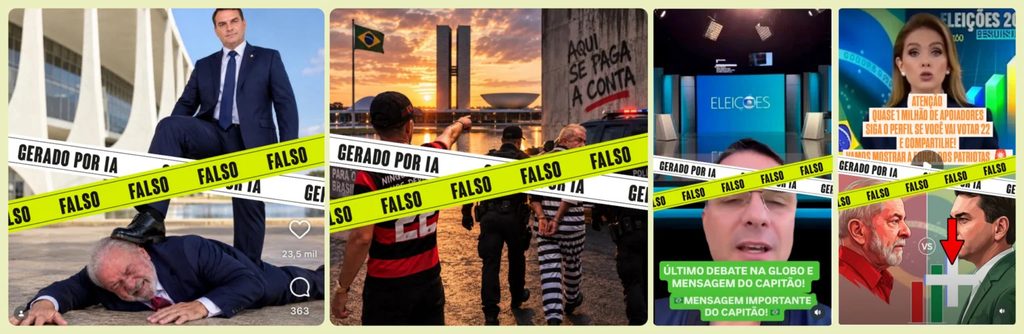
Beyond political figures, Lupa identified journalists as deepfake targets, with synthetic videos showing news anchors reporting false survey polls or fake election outcomes.

Old tactics now driven by AI
Disinformation is not new to Brazil.
During the 2022 race, the Carter Center documented disinformation networks targeting the voting process and candidates, with Lula bearing the majority of the attacks.
Research by #ShePersisted and The Nerve in 2024 similarly highlighted gender-based attacks against female political figures during Jair Bolsonaro’s term.
What sets 2026 apart is how AI reinforced those tactics, triggering what Lupa’s initial VigIA report described as “an avalanche of content generated by artificial intelligence.”
Lupa recorded 64 election-related AI-generated posts published between October 1 and 5, a mandatory campaign blackout period set by TSE before the first round.
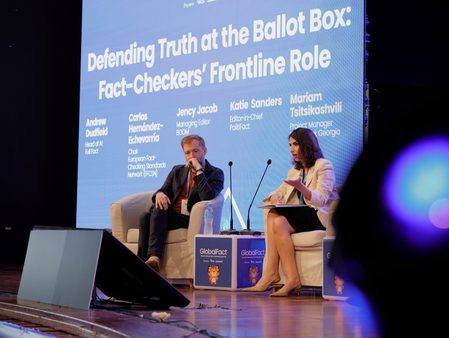
Tardáguila noted that while Lupa actively works with electoral courts to monitor synthetic content and alert platforms, a challenge remains.
“We have clear rules from the justice system, clear rules from the social media platforms. They are being fully and truly disrespected by all stakeholders,” she stated, adding that the “biggest loophole is the lack of [law] enforcement.”
Senator Flávio Bolsonaro led the first round with 47% of the votes last October 4. But President Lula won his reelection after securing more than 51% of the votes in Brazil’s runoff election on October 25.
A warning for the Philippines’ upcoming polls
Brazil’s struggle with AI political content offers a critical lesson for the Philippines, a country with a similar digital threat landscape.

Investigations into global propaganda networks, such as Cambridge Analytica’s operations in both countries, show how microtargeting and coordinated campaigns take hold not long before voters cast their ballots.
In response to these issues and the rise of generative AI, the Commission on Elections issued Resolution No. 11064 to regulate AI use in campaigns, requiring transparency disclosures.
But findings from the fact-checking initiative Tsek.ph revealed that deepfakes were still weaponized during the 2025 midterm elections to red-tag political figures and fabricate endorsements, alongside the spread of shallowfakes. Rappler also observed that deepfakes became a major disinformation tool in the Philippines last year.

Brazil’s experience gives a reality check for the Philippines: electoral regulations are only the first step. Without enforcement and accountability, the rampant spread of AI content will continue to bypass election guardrails, leaving voters to navigate an increasingly manipulated digital landscape. – Rappler.com
KioskNews shows a cleaned-up reading view extracted from the publisher’s page — the original always lives on their site, not ours.