‘Widow’s Bay’ Creator Katie Dippold Has One Big Goal for Season 2
- Collider's Steven Weintraub moderates our Showrunners on Showrunning panel at SDCC 2026.
- Damon Lindelof, Greg Daniels, and Katie Dippold hit the stage to share what it means to be a showrunner.
- The trio discusses The Office, Lost, Widow's Bay, and more, highlighting collaboration, lessons learned over the years, and what it really takes to be a showrunner.
One particular series swept at this year's Emmy Awards, taking home a whopping 14 wins out of 19 and breaking records. That was, of course, Apple TV's Widow's Bay, from first-time series showrunner Katie Dippold, who also took home an award for Outstanding Writing. In celebration of the show's massive success, and in case you missed us at this year's San Diego Comic-Con, we're proud to offer an opportunity to watch it all now!
Behind every successful show is a strong-willed showrunner. SDCC may be the hottest event for all things comic books, TV, and movies, but the pop culture convention is also the perfect place for aspiring creatives to learn what it's like to work behind the camera in showbiz, especially from a showrunner's perspective. Three of the most celebrated minds behind some of television's biggest series — Widow's Bay's Dippold, Lost's Damon Lindelof, and The Office's Greg Daniels — gathered for the "Showrunners on Showrunning" panel, moderated by Collider's Steven Weintraub.
The trio of showrunners shared what actually goes into leading a writers' room and bringing a show to life. Dippold, who celebrated the massive success of Widow's Bay's 19 Emmy nominations, admitted it took time before she realized audiences were truly connecting with the series. Having created hit comedies like The Office and Parks and Recreation, Daniels reflected on his own intense workload during the height of his career — at one point, he was producing more than 50 episodes in a single year. Known for shows like Lost and The Leftovers, Lindelof emphasized that a writers' room isn't about one person having the perfect idea immediately, but about many people contributing until the strongest version emerges.
For aspiring writers, you're in for a treat. It's not every day that these seasoned showrunners share insider advice, and this panel has a whole lot of it. The showrunners offer several practical insights into what can help you break into the industry. From continuously pitching bad ideas until a great one comes along, to offering thoughtful criticism instead of blind praise, and making your opening pages count in a sea of writing samples, the panel is full of priceless takeaways. Cape Fear showrunner Nick Antosca even poses a question of his own about the difference between writing for yourself and writing for an audience, helping frame the way future projects are developed.
Watch the full video or read the full transcript below to hear Dippold, Lindelof, and Daniels discuss the realities of showrunning, the importance of collaboration, their biggest lessons from past projects, and what they look for when bringing new writers into their rooms.
Katie Dippold on 'Widow’s Bay' Becoming an Emmy-Nominated Hit
Writing for Season 2 continues for the next 20 weeks.

COLLIDER: Katie, I'm going to start with you, if you don't mind. I need to give you a huge, huge congratulations for Widow’s Bay — 19 Emmy nominations. It is one of the most nominated new series of the year, the most nominated Apple TV series. You were nominated for everything, including Outstanding Comedy Series. Congratulations. But when did you realize, “Wait, people love this show?”
KATIE DIPPOLD: Man, it took a long time because I would look online when the show first came out or in like the weeks coming up to it, and I never go on Reddit. Like, I'm terrified of it, but I have visited. I'm not saying I've never looked. I’ve looked often. I'm on it all the time, okay? But in the beginning, I looked, and there's a Widow's Bay thread, and it had, like, 12 residents. I'm like, “Okay. Alright. We have 12 people.”
And then, after a couple of weeks of the show, I just saw that number going up and up, and that was like, “Oh wow, this is exciting!” Then I stopped going. I felt like I was lurking in someone's living room, and it's not meant for me. But, yeah. I think seeing that was really shocking.
I love the show, just like everyone here on stage and just like all of you out there. We know that there is a Season 2. Where are you in the writing process? How early on did you know that you were getting a Season 2 before they had announced it?
DIPPOLD: It was pretty close to when they announced it that it became official, but I was still always hoping and thinking about it. The writers’ room started this week, and it's a great room. Then we're going to be writing for the next 20 weeks.
For people that want to know, the goal is filming early next year?
DIPPOLD: Yes, exactly.
The Brutal Reality of Being a TV Showrunner
"It's stunningly terrifying and tough."

For all three of you, after everything you have learned, would you recommend showrunning to someone you like?
DAMON LINDELOF: No.
DIPPOLD: I mean, I'm sort of shell-shocked at how much it is. It really is. It's stunningly terrifying and tough. So I would say buckle up. That’s the only thing I could say. Greg? You keep doing it! These two keep doing it.
GREG DANIELS: Katie is someone I like, and I want to just say it's staggering how mature the show running feels on Widow's Bay. To get that tone so specifically, and to cast it the way you casted it, everything about it is like you've been doing it for 30 years. So impressive.
DIPPOLD: Well, I got to watch a great showrunner in my first job, so thank you.
Katie, if people aren't aware, you spent years in the Parks and Rec room with Greg before branching out into massive feature films and showrunning. Greg, you've mentored a generation of comedy royalty. What is the single most important unwritten rule of a writers' room that you both swear by?
DIPPOLD: One for me, I feel like, is trying not to be negative on an idea or direction unless you have another pitch to suggest instead. Now, that said, that's easier said than done, because sometimes you feel like if you're a writer on staff, you see a bus going off a cliff and you want to stop it, but then if you don't have the suggestion, it's tricky. But in general, you want to pitch an alternative to the thing you don't like.
DANIELS: That was exactly what I was going to say. And also, you kind of earn the right to be negative about an idea if you've pitched, like, 10 fixes before you say your negative thing. So, there's no way to be more unpopular than if you just start off going, “I don't like that. And what he said, I don't like that either. And her idea kind of is iffy.”
Katie, what is a piece of advice or a specific note Greg gave you early in your career that you hated at the time, but now find yourself giving to your own writers?
DIPPOLD: Oh, it's so funny, and now I understand why so well, but I remember when we first started, I was very, very quiet, and then I started with two other writers that were also very quiet. And you very kindly said, “Listen, it's a safe space. I need you guys to talk because it helps me think about what is right and wrong for the show. So whatever you say is fine.” But I remember I was like, “Okay, okay,” and like 20 minutes later, I pitched something and the room was unanimously like, “No, no, no, no, no.”
DANIELS: Yeah, we tricked you. And then you became a screenwriter and worked by yourself for years and years and years.
Great Shows Are Built Over Time and Conversation
Not all ideas come from a singular, eureka moment.

Katie, Widow’s Bay started as a Parks and Rec interview spec script before anyone bought it, and you said the heart of it never changed, even as the tone did. Greg and Damon, do you each have a similar, always-in-the-drawer idea that you're waiting to do?
LINDELOF: I'm 53 years old. The drawer is empty at this point. It's all come out. I've done some feature stuff, but the reason that I love television so much is the collaboration and is the space around the writers’ room table, and the idea that I really can't manifest ideas or generate passion or excitement around ideas unless they're coming through that collaborative conversation.
So, this idea of, like, people will say, “Where did you get an idea from?” And there is this romanticized idea of, like, “I was in the shower” or “I was walking down the street and suddenly, eureka, Blade Runner,” but it doesn't work that way. It happens over a series of time and conversations. So, there's literally nothing that I have on the back burner that I haven't manifested into reality. I know that's a boring answer, but it's the truth.
DIPPOLD: Can I actually say something? It actually goes back to an earlier question of what I would tell a showrunner. That's the scariest part of TV to me, that thing you just described. With features, for better or worse, you know how it's going to end. Maybe that's bad, honestly, but I feel like in TV, there's so much trust in the process that you're going to figure it out with these certain people, which is very scary.
LINDELOF: Yeah. You don't have to worry about the endings at all in TV. That's been my personal… Don't put any energy into that at all. Just keep your eye on what's right in front of you.
DANIELS: I still have stuff in the trunk. I think it's very tricky, because sometimes the longer it sits there, the more versions of yourself read it, because you change, and then you read it again, and then you change, and you read it again, and it gets richer. But then also, if you leave it sitting there too long, some other show will come along and do the essence of it. So, it's a little bit of a balancing act, as is so much.
The Difference Between Writing for Yourself vs. Writing for an Audience
Plus a special apperance from 'Cape Fear' creator Nick Antosca.

I have one video question that was sent in. It's from a fan named Nick.
NICK ANTOSCA: Hi, Comic-Con, this is Nick Antosca. I'm the creator of Cape Fear on Apple TV. I'm a huge fan of all the panelists. Love all your work and your shows. I'm curious, when you sit down to write, who are you writing for? Are you writing for yourself? Are you writing for an imaginary audience? Are you writing for a specific audience? Who do you write for?
LINDELOF: Where is Nick Antosca?
DIPPOLD: [Laughs] He sent a helicopter.
LINDELOF: Is he about to go ziplining?
DANIELS: Beautiful. I want to be there. I could answer that. It's interesting because I am now working on two things that grew out of other things. So when I think about this King of the Hill reboot or The Paper, which is a spin-off of The Office, you're kind of thinking about, alright, well, you’ve got to take into account that those properties have fans. I imagine Cape Fear may be another one of those examples. You're thinking they're going to see this differently than someone who is coming completely new to it.
But I think the best thing is to write for an idealized group of your childhood friends that, in my case, would make jokes about Monty Python with me. I'm kind of pleasing that same group that I was trying to please when I was 12.
DIPPOLD: For me, to be honest, I feel like I'm writing for myself. Like, what's the thing I wish I could watch? And just hope that that connects with people, that they also want to see that thing.
LINDELOF: I feel like I have moved around a lot on that question. I think that what what Greg and Katie just said, I completely and totally agree with because the only one who knows if they like an idea or if they think something is funny or interesting or worth pursuing are the people that are immediately in that room at that time.
But then, once you're working on a continuing show and it goes out into the world and everyone else starts watching it, you'll start to hear, “This is what the audience thinks,” or “The audience loves this,” and you're like, “Oh, cool, we loved that too. That's how it got to you.” But you can kind of go off the cliff of starting to feel a certain level of panic in a writers’ room, particularly.
We were experiencing this on Lost, where the first season that we were making it, it was just being made by the people who are making it, and it didn't exist outside of that room. And then suddenly, there were just millions and millions of people who were watching it, too, who invested in it very deeply and had a real profound attachment to it. They were the audience. And we would, in that writers’ room, start to say, “They might not like this,” or “They may not follow us here. They may think this is too weird.”
And I think over time, the idea that all of the people in this room right now are an audience, but every single one of you has different tastes and is drawn to different things, you're not a monolith by any stretch of the imagination. So, when you start solving for that idea of the audience, I think you're kind of doomed to failure, which leaves you to say, not necessarily “I'm just writing this for myself,” just keep a diary if you're writing it for yourself, but if you're writing for a medium where you want a lot of people to see it and connect to it, you kind of have to anticipate what it is you're trying to connect to.
The Biggest Difference Between Comedy and Drama Writers Rooms
It's all in the laughs and the gasps.

If you guys traded writers’ rooms for one week, what do you think would surprise you most?
LINDELOF: I'm really curious about comedy writers’ rooms. I know that, obviously, in the case of Widow’s Bay in particular, there's a strong comedic vibe to it, but more for The Paper, Parks and Rec, or King of the Hill. How much of the conversations are dominated by just pitching jokes or making each other laugh or trying to find the joke? Because I think that I'd be quite bad at that.
DANIELS: I feel like there was a time when The Office and Lost were on the air when we talked about switching writers’ rooms, didn't we? What was that? Was that for a magazine article or something?
LINDELOF: Yeah.
DANIELS: There's a lot of trying to make each other laugh, but you can make each other laugh with story elements and character choices as well as lines. So, I'm not sure I understand how you make each other drama or whatever. [Laughs]
DIPPOLD: You make the room gasp.
DANIELS: Yes, you have to make people gasp consistently.
LINDELOF: We just get each other to say horrible things about our parents.
DANIELS: And you have to do both, Katie.
DIPPOLD: Sometimes, in the Widow’s Bay room, there's a mix of different kinds of writers, so someone will pitch something that's very serious and dark, but then it weirdly makes it easier to pitch a joke on it. You know what I mean? Because you have a grounded setup, then it's easier to find that unusual, surprising thing. Sometimes that's when it pays off.
DANIELS: Do the dark ones get kind of miffed when people score a joke off their pitch?
DIPPOLD: [Laughs] You know, they have great senses of humor, so they actually had funny pitches, too. And then the comedy writers, too, actually had some great dark pitches. So, it was a good mix.
Behind Every Great Story Is a Bunch of Bad Ideas
"When you're pitching an idea, you're running full speed at a wall."

How do you create a writers’ room where people feel comfortable pitching bad ideas, knowing that a bad idea can sometimes lead to the best one?
DIPPOLD: I just stare at them coldly. No, I don't know. I've never really figured it out. I guess I'm still figuring it out. I don't know why I started talking first when I don't have an answer.
DANIELS: That’s good. We accept that. We like that you're talking. I've been urging you to talk since 2006.
LINDELOF: And we can think about what we're going to say while you talk. I think that the short answer is that you have to sort of lead by example, in that I would say that, percentage-wise, by a multiple of a thousand, the bad ideas that are being pitched in the room are being pitched by me. I think that when everybody else in the writers’ room says, “Oh, wow, he is catastrophically bad at this, and if he has ascended to the level that he has, maybe it's a little bit less frightening for me to do so.”
I think that what will happen is, and I want to do this to you, like, 50 million times, is like, “Where did this idea come from? How did you come up with this? What was the genesis of this?” because I'm very process-oriented. But very often, if something connects, I'll be doing an interview or a fan of the show will say, “Whose idea was this?” and what I'll say is, “Oh, it was this writer. That was Stacy’s idea.” But before Stacy pitched it, we were talking for about three hours in the room.
The way that I describe it, at least emotionally, is that when you're pitching an idea, you're running full speed at a wall, and you smash into it so hard that you break your neck and you fall, and then the next person goes. But pretty soon, there's a pile of bodies, and the last idea can go running up the pile of bodies and get over the wall, and that's Stacy. She's the one who had the idea. And I try to say there's just as much glory in being one of the broken bodies that forms the wall that the idea gets over. It's not entirely true, but there are all those guys in Private Ryan who had to get shot so that Tom Hanks could make it, and they're great, too, Steve.
DANIELS: That's such a drama room thing. Like seeing inside your brain, that is so weird that that's how you think about it. [Laughs] I thought you were going to go for, like, a Platform 9¾, or whatever it is in Harry Potter, analogy, that somebody is going to magically pass through the wall. But no, there's a trail of broken bodies.
DIPPOLD: I have to say, once you realize what someone does when they don't like something, like the bosses or directors, it's the worst once you know it. Like — oh, God, he's going to kill me — but Paul Feig, the loveliest man in the world, so polite, I know when he doesn't like something. He’s very, very polite.
Can I ask, does he loosen the tie?
DIPPOLD: [Laughs] It's not that. It's something he says that’s encouraging, but I’m like, “Goddamn it, he hated it.” That happens every time.
Damon Lindelof Looks Back on 'Lost' and Its Legacy
The showrunner recalls feeling "90% panic" after Season 2 was greenlit.

Who is most comfortable not knowing how a major storyline will end?
LINDELOF: [Laughs] I've actually gotten quite comfortable with it, to be honest.
It actually wasn't aimed at you, but sure.
DIPPOLD: Can I ask you, when Season 2 was renewed, how panicked versus relieved did you feel?
LINDELOF: Of Lost? When we got to the end of Season 1, and they were like, “There's going to be a Season 2?” In all honesty, it was like 90/10 panic to relief. I think certainly at that point, we were really excited and proud of the work that we were doing, but we made 25 episodes in the first season, inclusive of the two-hour pilot. So, from the moment that I first sat down with J.J. [Abrams], which was at the end of January, to us delivering the finale, which was the last week of April of the following year, and then they said to us, “We're picking you up for a second season,” we got eight days off, and I went and got married. Then, we were back in the writers’ room.
So, I think panic was definitely the pervasive… I think I'm still a little bit panicked now, all these years later. And, yes, parenthetically, it’s the idea of, “Now people really, really like it, and I don't want to disappoint them.” I think that what I would say is we are showrunners, but I think I probably speak for Greg and Katie when I say we identify as writers. The showrunning came later, and I think that we're sensitive people. So, the worst thing that I can imagine is disappointing people.
So, the panic transcends failure because it goes into this sort of idea of, like, “Oh my God, the worst face is the Paul Feig.” That's the worst feeling in the world is letting someone down. But you’re going to do great.
DANIELS: You are! You are crushing it.
LINDELOF: It's going to be amazing. You should be worried about the bar lowering because you're the one who sets where the bar is, and it's very high.
DANIELS: It's very weird because stories have a beginning, middle, and end, and in the days of many seasons, a show's going 100 episodes or whatever, you have the beginning as the pilot, then you'd be in the middle for years. You couldn't really think of the end too early because you want to be in the middle and you want to keep going in the middle for as long as you possibly can. But it seems different now because it's kind of like you're doing a series of movies or something when you're doing these eight, 10 episodes. You kind of have to think of the end at least.
Not that I'm a writer, but it's different if you're doing the eight episodes versus the 22 if you're a network. Like The Office, it's hard to think about where I would imagine the end is because you're making it, and it's only in the final season that maybe you're thinking about, “Hey, how are we going to end this?”
DANIELS: Well, the other thing is, at first you're just struggling to survive. When you get to be successful, then you're like, “Maybe they'll give me an ending,” you know? Because in the beginning, you don't think you're going to get one. You’ve just got to get a Season 2, or whatever it is.
DIPPOLD: I remember when you were doing The Office and Parks and Rec at the same time, and you’d be driven back and forth. I remember, I think you used to have a coat over you to edit in the background with your laptop, which is crazy.
DANIELS: The two sets were 22 minutes apart by car, so I would get in the back seat, and I'd throw a blanket over me with a little portable DVD player, and I'd watch a cut in between so I didn't waste any time. I think it was over 50 episodes produced in that year. And then I was, like, broken for several years. [Laughs]
I didn't realize that. That is effing insane.
DANIELS: Yes. That was insane. Yes.
What was the first moment on one of your shows when you realized, “Oh, everyone is looking at me to make the decision?”
DIPPOLD: I feel like my soul is that of writing a movie and standing by craft services and having snacks, and that's not what this job is. So, it's an interesting job. It's like if you went into writing because you're a creative introvert, and you just like being alone and imagining things in your notebook, and then it's a job that's very different. You're managing this entire show and talking to people and expressing what you want. It's such a different thing. It's such a crazy job that requires so many different things.
LINDELOF: Most of the showrunners that I've talked to articulated very similarly to the way that you just did, Katie. I would say that before I did the job, and not even when I was a writer in service of other showrunners’ visions, but also when I was just a fan and watching shows, there was always a part of my brain that was like, “I want to be in charge. I want to drive the car. I want to make all these decisions.”
I definitely remember on Lost, which was the first show that I ran, my understanding was that J.J. and I were going to run it collaboratively, but I had been a huge fan of his from Felicity and Alias, and never met him before. Then suddenly, we were partners in the space of two hours, like just a single meeting that we had. Then, as we finished shooting the pilot, we had to edit this two-hour pilot in four days. So we came back to L.A., and we were basically taking turns sleeping on a couch, and we had a couple of different editors working on it. Then I went home to take a shower and came back in on a Sunday, and Tom Cruise was sitting in the editing room with J.J., and he was like, “Hi, Tom Cruise.” And I was like, “What the fuck is happening?” And J.J. was like, “Tom, this is Damon. He's going to run the show.” And I was like, “I am?” But I'm not going to make a scene in front of Tom Cruise.
That was the moment where I realized that J.J. had just broken up with me in a very kind of wonderful way. He announced that he was going to direct Mission: Impossible 3 the following week. So I was showrunning Lost, and then just began to feel the massive Rod Serling effect of all those Twilight Zone episodes. You're Burgess Meredith, and you're just wishing for time to read, and then your fucking glasses break. That's kind of what the next year of my life was.
But I don't want this to come off any other way. To say that I'm extremely grateful and appreciative for it is a profound understatement. I'm literally living my dream tenfold. For all the misery that we're describing in terms of the managerial aspects, underneath that coat is joy, too, right? I would imagine if you're going to do 50 episodes a year, you have to really love your job.
DANIELS: This might be good for the Comic-Con audience. I used to describe it as having an Iron Man suit. Like, you're still doing what a writer does, but your powers are magnified because when you're trying to pitch a joke, if you can't find it right away, there are 10 writers and they are pitching possibilities, and you can put it right into the script. You don't necessarily know how to edit, but you're telling the editors, “Do this, more that, do that,” and you can not know anything about music and give notes to a composer and be like, “It's mushy. It has to be ahh!” or whatever, and then they have to interpret it. So you get to do all the same things, but there are all these other people who are helping you.
DIPPOLD: I feel like the first season is hard because everything you're doing for the first time, like, every step of the way. So I feel like in the very beginning, I was like, “Okay, project confidence. Something will come up. Yes, of course.” And then, like, call a friend who had done it before and be like, “What the fuck does that mean?” So, that happened a lot.
But then eventually, you realize you're surrounded by people who are experts, like Greg said, in every department, and then you just embrace the collaboration, and then it's a joy.
The Hardest Problems Showrunners Face Behind the Scenes
No matter what happens, "you have to be honest at all times."

How transparent should a showrunner be with the cast and crew when there are problems behind the scenes?
LINDELOF: As you can tell by the 30 seconds that just elapsed, I think that you have to be honest at all times, but also, you don't want to frighten anybody. I think inside of something that feels like a crisis, at a certain point, you build the institutional experience to understand that there's going to be a light at the end of the tunnel, or you're going to get on the other side of it, and you try to project yourself into that reality as you communicate to other people about it.
Then there are other times where people can sense it, and it can be very scary. I'm a parent. My son is now off to college, but there were times when my wife and I would say, like, “Okay, we have no fucking idea what we're doing, but we probably shouldn't let him know that. We need to project some level of fundamental confidence as to what's happening right now.” And that isn't to infantilize actors, but let's be honest… No, they're great, but you want them to be focused on the incredible work that they're doing, and part of that, I think, is shielding them, to some degree, from the insanity of budget battles, or you just watched a cut that makes you literally want to vomit, and it's because your writing was so bad. When they come up to you and say, “How is Episode 3?” Don't tell them that. They don't need to hear that. You need to say, “We're figuring some things out.”
DIPPOLD: Right, right, right. Matthew Rhys is an executive producer on the show, and he's wonderful, but he's also really great at knowing how much he wants to know. So, sometimes he’ll ask, and I'll be very straightforward with him, and then sometimes you could tell he’s just like, “I don't need to know.” He knows himself.
DANIELS: I'm just thinking that the biggest crisis that I can remember that I had was we were filming the first episode of Season 2 of The Office, and it was at a Chili's. Chili's gave us free decoration from one of their Chili's, which was nice. Anyway, we shot three days with the free decoration from Chili's — God, I don't know if I'm gonna get in trouble for this — and then we find out that the Chili's lawyers want to change on the script.
Basically, Pam had gotten very drunk in our version, and fell off a stool, and they said, “Well, Chili's doesn't overserve its customers, so you can't have that.” We went to the head of production, and we said, “What does the agreement say over the Chili's stuff?” And they said, “Oh, we didn't get an agreement.” So, when you realize that, they basically would have been able to say, “You have to throw out those three days of filming.” And that was Episode 1 of Season 2. We were nowhere near in a position to be able to lose three days of filming. It might have been the end of the show, and I just melted down. I just had an absolute meltdown.
I told Steve Carell about where we were, because I didn't know what to do, and Steve Carell taught improv. Improv is his religion. You trust yourself in improv. You trust your creativity. You're an amazing improver. And I absolutely couldn't think of anything out of this. I just was like, “Well, there goes the show,” and he said, “Well, what if the show interviews the manager at Chili's, and he says that Chili's has a policy against overserving, and Pam is banned for life from Chili's?” And then that fixed it. So, it was really good that I shared with him.
Katie, this is for you, and I'm asking because you just wrapped your first season showrunning. What were the big lessons that you learned from the making of Season 1 of Widow’s Bay that you're now taking with you now that you're starting up on Season 2?
DIPPOLD: God, great question. There's stuff I learned pretty quickly making it, like the actors, as funny as they are, and they're all so naturally funny and have perfect comedic timing, they're playing it like a drama. Do you know what I mean? And in a way, that makes it much funnier.
When Matthew, in Episode 9, grabs a painting off the wall and struggles with it, it's only funny because he's in the most dramatic moment of his life doing it. So throughout the process, it was making sure everything served that. And so that's top of mind going into Season 2.
I also think the scripts were longer and pretty dense. I spent a lot of time in Season 1 having to make cuts, last-minute cuts, and budget cuts for time, and so I'll just be more mindful of that, because we didn't need that much. In the edit, I could see, “Oh, you actually didn't need any of this stuff anyway.” So I think I learned a lot about what we don't need and getting to things quicker. Those are the two things that come to mind.
The thing I learned watching the show is that Matthew is an amazing physical comedian, and I do hope that you lean more into that in Season 2.
DIPPOLD: [Laughs] Okay. Good to know. Great.
LINDELOF: It was amazing for all of us to laugh when you were talking about the painting, because I literally remember it. It goes on for, like, three minutes.
DIPPOLD: It's so long, yes.
How Streaming Changed Television Forever
Streaming has given showrunners more creative control over a story, but has also made audiences less patient.

Streaming has changed episode counts, season length, and how shows get discovered. How has that changed the actual craft of building a season, not just the business side?
LINDELOF: I mean, I think that the first and most obvious answer is that you have a lot more control when you are doing a limited series, for example, which is on the table, which is we're going to do 8–10 episodes, and then that's it.
But then, I came up in broadcast television, and on the shows that I was working on before I got to run a show, we would do 22 episodes a season, and the whole plan was to perpetuate it. You could have character arcs and relationship arcs, but the show wasn't moving towards what we would call a specific ending, particularly if it was a procedural. Grey's Anatomy, which started the same year that Lost and Desperate Housewives did, is still on right now. It's still running because there's not going to be an episode where they're like, “We fixed everybody. We've run out of patients. There are no more injuries.”
But I think that on the show that I'm working on right now, I'm doing a show called The Chain for HBO that's going to be a limited series, and we're doing nine episodes. You basically just say, “Okay, we know what the pilot is. Let's start talking about Episode 9 right now. Let's talk about the destination and where we want everybody to end up.” And that's the end of the show because it's a limited series.
I would imagine, at this point, even if you're continuing a show that has lore and mythology, like Stranger Things, that the showrunners have more control to say, “We would like this to be four seasons long or five seasons long,” and you can start to have conversations about how much middle there's going to be, where it's sort of like, “Okay, Season 1 is the launch and Seasons 2 and 3 are in the middle, and then Season 4 is the resolution.” That wasn't even something that was on the table before the age of streaming.
The business was always to get people to watch it, get people to keep watching it, and then when they stop watching it, we’ll cancel it. Unless you're doing a show like Seinfeld or Friends or The Office, where you've been doing it long enough, and all the people who are doing it are saying, “We don't want to do this anymore, and we want to say goodbye to it in a way where it doesn't run out of creative steam, and people stop watching it.”
But ultimately, the age of streaming has allowed you to have a lot more control over the duration of the story, and you can have things like Fleabag that are just basically two seasons long, and they're perfect. And that isn't to say that Phoebe [Waller-Bridge] shouldn't have done a third or fourth season, but it's sort of like you get those episodes and nothing more, and it's incredible.
DANIELS: Another thing that kind of bugs me about the age of streaming is that people just are going to go right through the order of the episodes, and in the old days, if you had maybe not such a great episode, too, people were just still hearing about the show. It didn't really matter. A lot of them would come in and start on Episode 4 or 6, or they started at all different places, so they all had different experiences of what the show was. But now it feels like if you, for whatever reason, screwed up Episode 2, that's it. Nobody's going to go to Episode 3 because they all hit Episode 2 and were turned off, and that's a little scary to me.
DIPPOLD: I agree. It's very true. Even as an audience member, I feel like I stop most shows after Episode 2, and then people tell me, “No, it's the greatest show ever.” And I’m like, “Alright, I'll give it another shot,” and then it's my favorite show. So, I just think it's a real thing.
LINDELOF: I think that goes part and parcel, too, with binging. I'll start hearing, with Widow's Bay, for example, which was dropping episodes weekly, but I would say to people, “You've got to watch this,” and they'd say, “I'm going to wait until they're all available, and then I'll binge it.” And that's the way that they want to experience it. I do feel like I'm the old man shouting at the clouds to say, like, there is this idea of I want to be like Chili's and say, “We don't want to overserve episodes.” We should titrate a little bit and enjoy it in that way.
But I do feel like, inside of that, there's a fickleness around the launch. People will still say that about the first season of The Wire, which takes four or five episodes to teach you how to watch it, and it's inarguably one of the greatest television shows ever made, if not the greatest. Thank you, Wire fans. What's cool about it is it's not designed in its first two or three episodes to welcome the audience. It's just dropping you into Baltimore on your head, and you don't know how anything works and what the particular language of it is.
DANIELS: I feel like I do most of my work in a genre I would call “character comedy,” which probably had its roots in cartoons running in newspapers or something. Every week there'd be the guys of Blondie; Dagwood would make a sandwich or whatever it is. You kind of got to know who the characters were, and it was character-first. I think if you're doing something where it's all about the character, you want people to have a volume to learn the characters, and I think at a certain point when they do learn the characters, it becomes a very long-running thing because they were very happy to see the characters do all different adventures.
But it's harder with streaming, I think, to get that volume under the belt so that everybody learns, “Okay, sometimes they do this, but then they do this. This is who they are.” You have to have seen them in a number of adventures before you really figure out those rules, and if you're not willing to sit through a bunch of episodes to get to that space, then you can't get to the other side where all the fun of a really long-standing relationship with the characters is. So, I don't know what the answer is. It's an interesting thing.
It's so interesting because, on Collider, we see the people that want to read about the show each week and dissect things, and the problem with binge is that you don't know where everyone is and you can't really talk about it because you don't know if someone's on Episode 2 or 8, or whatever.
LINDELOF: I'll just say, until streaming, binge was never a word that you associated with something that was positive. It was basically like, “I just binged four canisters of Pringles.” Obviously, as someone, in all seriousness, who does binge, and especially if I slept on a show or I keep hearing something was awesome, and you want to catch up on it, you watch an episode, and you're hooked. So, I don't have the discipline when it says “next episode starts in eight seconds” to do anything other than just let it wash over me.
But I will say on something like Widow's Bay, I loved finding the community. We were in a writers’ room while your episodes were dropping, and so that feeling of, I think they were available on Wednesdays, but there was just a fundamental understanding that you wouldn't fucking show your face in the room the next day if you weren't ready to talk about Widow's Bay, and I think that's really cool and exciting. You can't do that when you're bingeing.
I see how Damon runs a writers’ room: Watch Widow's Bay or get the F out.
Damon, if Lost was being made today in the era of streaming, how different would it be if you had only eight or 10 episodes a season versus the 20-something you needed to produce every year? Because I remember talking to you back in the day, and it was like you were struggling with the network to end it and not have to make 20 episodes a year. Am I completely misremembering things?
LINDELOF: No, you're remembering things accurately. I think that, from a broadly philosophical standpoint, there's a contextual framework to that question around regret. That is to say, not just about life decisions that one may have made in their life, but I think part of being an artist, when you get to be a certain age, there are all sorts of things that I have written that I am not particularly fond of or proud of, and if the question was basically, “Would you like to erase those from the record so that everyone would look at you and say everything that that person ever generated was excellent, and they never, ever failed and never messed up?” I think that my answer in my 20s or 30s probably would have been yes, I would love to bat a thousand.
But I think at this point in my career, my feeling is I wish that I hadn't had failures, and I can't tell the difference. I was just as passionate about the failures as I was about the successes. I invest a lot of energy into them, and if you graph that onto the idea of Lost, yeah, it would have been great if we didn't have to make 120 episodes of that show, or 25 episodes in the first season and 24 in the second season, and 23 in the third. Then there was a writers’ strike, and we were able to do fewer episodes, but only because we were on strike.
But I also feel like there are episodes in that first and second season that would never have gotten made that I love and I'm really proud of. So, I think that I have to look at the totality of it all and say, “I'm glad that it exists exactly as it does.” And if I had a time machine, I would not use it to go back and tell myself to do anything differently. I would, of course, use it to kill baby Hitler. I mean, that's what you do. That's the first thing you have to do. But I think it all should have happened exactly as it happened. Although I can't look you in the eye and say that the result couldn't have been better. You can always be better.
DIPPOLD: But the feat of writing and making that many episodes, and all of them great, is insane. It's amazing. It's the craziest thing.
By the way, just to be very clear, I have a Tyler Stout Lost poster framed on my wall. I love Lost. That show is fucking great.
DIPPOLD: The John Locke episode with his dad, I have that score on my phone, and if it comes up and I'm jogging and it comes up, it's the wrong energy, and I just want to weep. But it's incredible, man.
What is the most absurd problem you have had to solve as a showrunner?
LINDELOF: I think that all the problems are absurd on some level because they feel so weighty at times. But I don't want to devalue…
Oh, I have plenty of other questions.
LINDELOF: Please, I'll think absurd–
DIPPOLD: You know, in season one, we had to shoot out of order. And for something... That was a real—that really drove my brain nuts. Like trying to remember, "Wait, when did this happen?” That was truly… Would make one lose their mind.
Advice for the Next Generation of TV Writers
Solve problems one day at a time, and never be afraid to challenge the story.

So imagine a first-time showrunner is backstage or here in the audience watching this panel is starting production on Monday of next week. What's a single piece of advice each of you would give them?
LINDELOF: Well, first off, I think that, probability-wise, I don't know how many people are in this room, but it's a lot. There is probably someone in this room who is going to run a show one day. I mean, I started coming to San Diego Comic-Con in the early '90s as a fan. And then the first time that I had a microphone in front of my face was 2004. And so I think if you're here and you're like, "That's my ambition and that's my desire," I'm here to tell you I'm living proof that that is probable and possible. And I'm not just pumping you up. It can be done.
I guess that I would say that, although there's a tremendous amount of pressure and it is actually your job as a showrunner to think about the future, to avoid catastrophe, the majority of the job is basically being as focused as you can on the present time. And that is to say, like, if you have a story problem in the room, that's the thing that needs to get solved today, because if you don't solve it today, it's going to create a problem in the edit in about two and a half months.
So don't punt on the issues that need to be solved in the now. Just basically really, really focus and trust your gut on what you need to accomplish on any given day, because it can get quite overwhelming. You can just be overwhelmed by the worry of, "Oh my God, we're falling behind on drafts, and we're in the midst of budget battles, and there was inclement weather and we weren't able to shoot today." Ultimately, it all just boils down to what problems need to be solved right now.
DIPPOLD: I forgot my answer because I was hanging on every word, like, "Okay, I need this, and I need this advice." I think for me, I think one thing I would say, if you're anything like me, you can get caught up in, "Oh, what should I do?" Or like, "Oh, what's the right answer here?" It's important to trust your gut because, especially if it's a show that you've created and you've spent a lot of time thinking about, you know how you want it to feel. And so, trust that gut rather than overthinking what the rules are.
Perfect. I think we're almost out of time. So this is probably my last question, but I'm imagining that there are a number of people in this room, or who will be seeing this online, that want to be writers and want to be writers that work for you guys. And so, what is it like meeting writers who are potential writers to join your writers' room? What are you looking for when you're meeting these writers? And, like, what are the kinds of questions that you ask them? What is that actually like?
DIPPOLD: So I just went through this process. One piece of advice I have to give, because if a showrunner has a season coming up, they're going to get sent so many samples. I hope this doesn't sound cynical, but make sure those first couple pages are great. I really mean it. Because they're going to see so much stuff, so you just want to kind of—I don't even mean hook them with a big twist or anything right off the bat, but just make sure it's sharp.
And the other thing I would say, when you're meeting with writers, you've read their script, you like their work, and then you're talking to them. One, you're just making sure this is someone you'd want to spend a lot of time in a room with. And two, it's hard because it's very hard to pitch on someone else's show before you really know it and you're in it. But just being able to sort of—I don't know, I don't know how to say—if a show has already come out and you're... I don't know, being able to show that you can be thoughtful about story. Does that make sense? That's not really practical advice.
I think the practical advice is make sure your first few pages are awesome.
DIPPOLD: You're very right. I do think that helps a great deal, if I’m being honest.
LINDELOF: I guess that I would say… If I were a young or new writer, or a writer with less experience, and I was interviewing for a job on Widow's Bay, I think that the challenge is, particularly because there's a season of it now and that person has watched it, but they didn't make it, and they're coming aboard the ship, is that you have to kind of find a way to express your fandom, that is to say, like, "I love your show." And you also have to be able to express that you're capable of being critical of it without shitting on season one or saying, like, "But I think that this..."
For me, once Lost was up and running and people were interviewing for it, or this happened on The Leftovers or Watchmen, I would read their sample and I would love it, and they would come in and they would just talk about how much they loved Lost or The Leftovers. And I'd be like, "I can't hire you." And if someone came in and was basically like, "You're a piece of shit and there's room for improvement," I'd be like, "You've got the job." And, like, maybe that's more about my psychology than it is about the writer's decisions, but I think that you have to find a way to basically demonstrate, in what's like 45 minutes or an hour of sitting down with someone, that you're not afraid to tell them how you really feel. Because you can't make good stuff in a room full of sycophants. But you have to make it in a room where you can be really hard on the story, but it never feels like you're being hard on each other.
DIPPOLD: Maybe one other practical way to do it is pointing out something that you liked. Say if you had a note on Widow's Bay, like you thought there wasn't enough Jeff Hiller, which is a legit thing because fun fact...
You ever have enough, Jeff Hiller?
DIPPOLD: But, so fun fact. He's like an old improv friend, and that part was supposed to be small. And I called him, and I'm like, "Listen, this is a very small part. And your character is supposed to die this season, but do you want to do it?" And he was like, "Sure, why not?"
But then as we're filming, he was so wonderful that I was like, "Okay, we have to completely rewrite now just for him," so getting him in as much as possible. Anyways, but let's say a writer thought that he was criminally underused. They could say, "You know, I really love that character. I would love to see more of him." And you can frame it in a positive way. And then the showrunner could be like, "Oh, I could use that." Like, I could really use that help. Does that make sense?
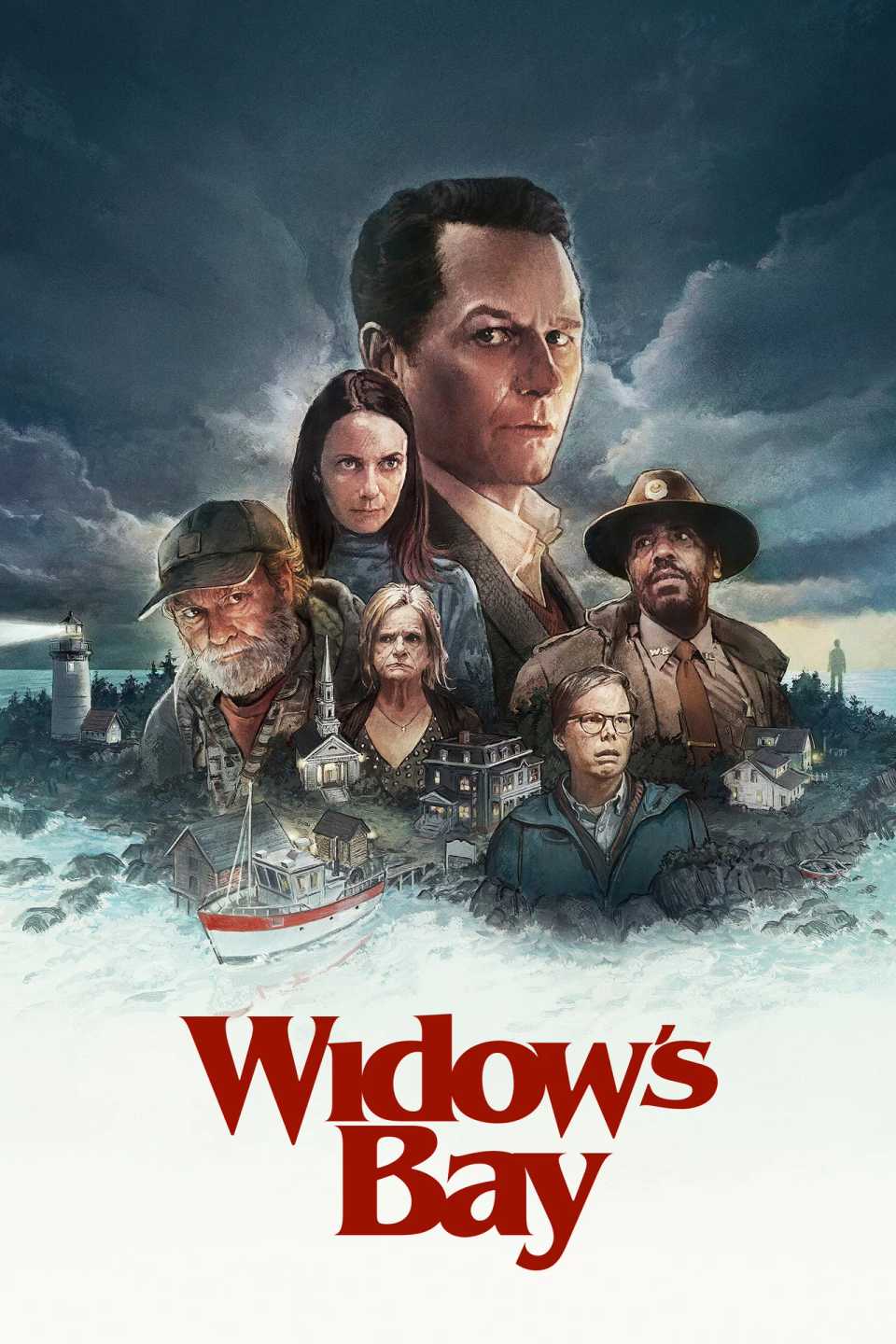
- Release Date
- April 28, 2026
- Network
- Apple TV
- Showrunner
- Katie Dippold
- Directors
- Sam Donovan, Andrew DeYoung, Hiro Murai, Ti West
- Writers
- Alberto Roldán, Neil Casey, Kelly Galuska, Colton Dunn, Dave Harris, Katie Dippold, Mackenzie Dohr
KioskNews shows a cleaned-up reading view extracted from the publisher’s page — the original always lives on their site, not ours.