Gibran's exit as Indonesia's VP: A turning point in Prabowo and Jokowi's political relationship?
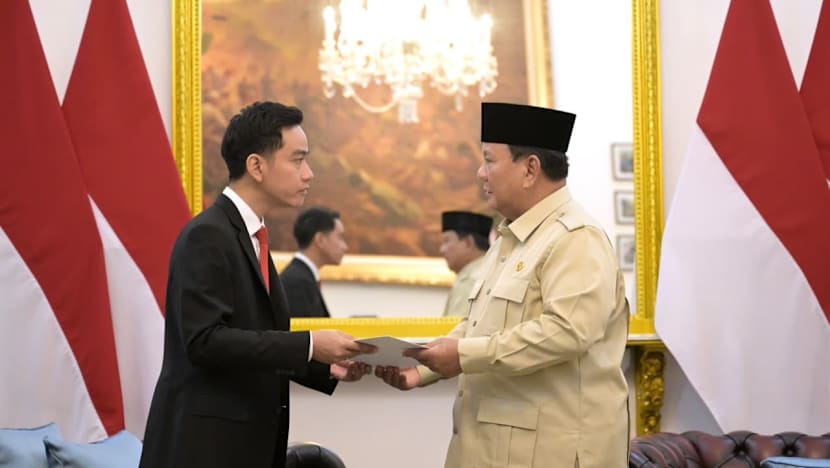
Analysts told CNA the resignation could let President Prabowo further consolidate his influence while complicating ex-leader Jokowi's efforts to preserve his family's political standing.
New: You can now listen to articles.

This audio is generated by an AI tool.

12 Nov 2026 06:55PM
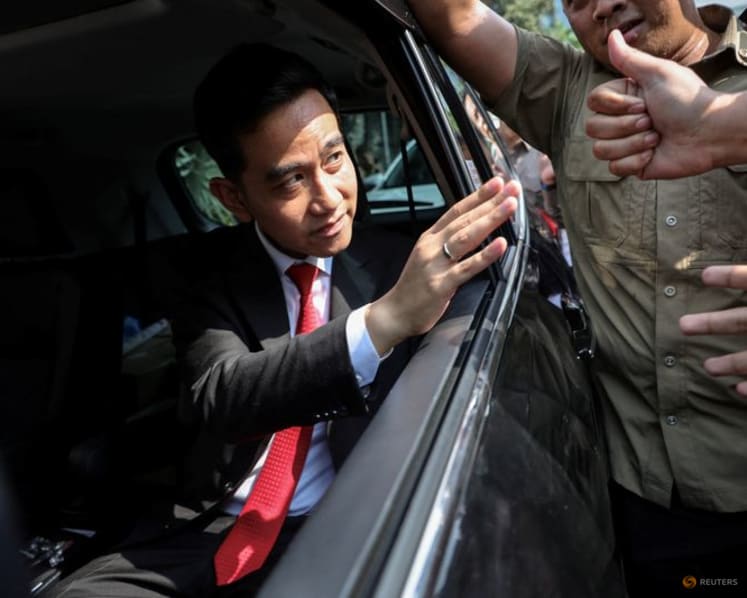
JAKARTA: Gibran Rakabuming Raka's resignation as Indonesia's vice-president on Thursday (Nov 12) has raised questions about his political future and what his departure means for the relationship between President Prabowo Subianto and his predecessor Joko Widodo.
Gibran, 39, stepped down amid mounting pressure over his educational qualifications after the Supreme Court annulled his overseas high school education equivalency certificate on Oct 30.
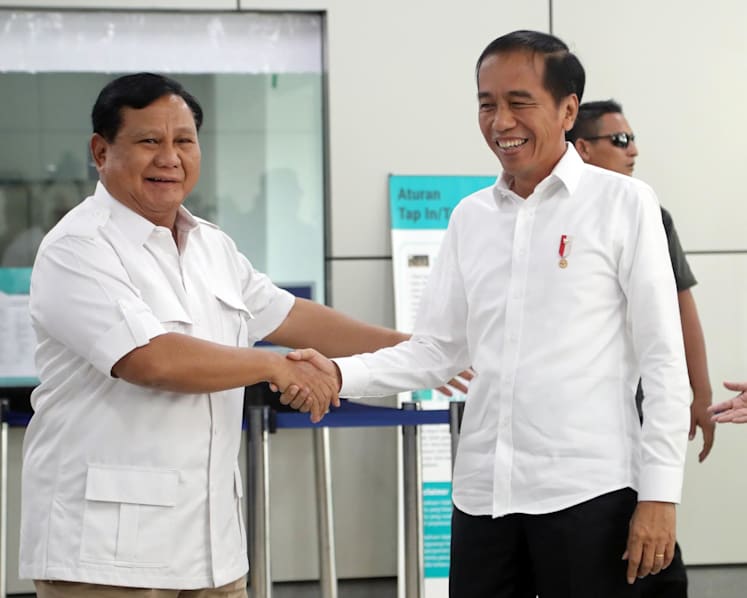
His departure comes amid signs of growing tensions between Prabowo and Jokowi, as the former president is popularly known, whose support was instrumental in securing the Prabowo-Gibran ticket's victory in the 2024 election.
Analysts say the resignation could let Prabowo further consolidate his influence while raising fresh questions about the political future of Jokowi and his family.
Sana Jaffrey, a political expert from the Australian National University, said there had long been indications that the political relationship between Prabowo and Jokowi was heading towards a split.
Jaffrey is a research fellow at ANU's Department of Political and Social Change and has more than 15 years of experience researching political violence in Indonesia. She previously served as director of the Jakarta-based Institute for Policy Analysis of Conflict (IPAC) from 2021 to 2022.
She said the move on Wednesday by 120 lawmakers to initiate impeachment proceedings against Gibran appeared to have increased pressure on the vice-president to step aside rather than face a potentially lengthy and public process.
“In that sense, Prabowo has achieved this split without publicly demanding a resignation or even looking like he's the one who was behind the move in the first place,” said Jaffrey on CNA’s Asia First programme.
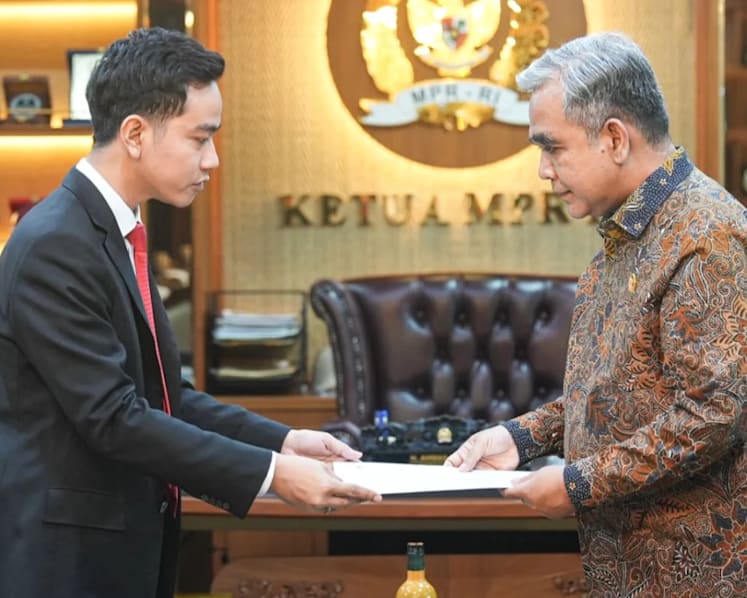
While Gibran submitted his resignation letter to the People’s Consultative Assembly (MPR) in Jakarta, Jokowi told reporters in his hometown Solo that he would continue backing Prabowo's government despite his son's departure.
“Public office is temporary. And we will continue to support Mr Prabowo's administration, especially regarding programmes that serve the interests of the broader public,” he said.
WHAT HAPPENS AFTER GIBRAN'S RESIGNATION?
Under Indonesia's constitutional process, after the vice-president submits a resignation notice to the president or the People's Consultative Assembly (MPR), the president must nominate two candidates to the MPR, which must convene a special session within 60 days of the vice-presidential position officially becoming vacant.
The candidate who secures a majority vote among MPR members is appointed to serve the remainder of the term.
Aditya Perdana, a political lecturer at the University of Indonesia, said selecting a new vice-president could open another round of political bargaining among parties in Prabowo's governing coalition.
“Would the political parties simply agree to whoever Prabowo proposes? Would they just follow his instructions, or would they want to have a say too?” Aditya asked.
The process could therefore test Prabowo's ability to maintain unity within his coalition while strengthening his administration's political position.
Jaffrey noted that lawmakers from all eight parliamentary factions had supported the impeachment proposal, which she saw as a sign of the president's considerable influence over the political establishment.
She, Aditya, and political expert Wawan Mas’udi from Gadjah Mada University also suggested that Prabowo could broaden his parliamentary support by bringing in the Indonesian Democratic Party of Struggle (PDI-P), which has remained outside his governing coalition.
Chaired by former President Megawati Soekarnoputri, PDI-P is the largest party in parliament and was the party Gibran belonged to before he decided to run with Prabowo in 2024, going against PDI-P’s pair.
Analysts said the party's opposition to Gibran's selection as vice-president had been one of the issues complicating its relationship with the administration.
“Megawati and Prabowo have met a few times (after the 2024 election), and it seems that PDI-P wants to join (Prabowo’s camp) but was reluctant due to the presence of Gibran,” said Wawan.
But Prabowo could ultimately also appoint someone outside the political sphere to keep all parties happy.
“For example, since the country is facing economic challenges, Prabowo could appoint a technocrat with a strong economic background,” said Nicky Fahrizal, a political expert from the Centre for Strategic and International Studies (CSIS) in Indonesia.
IS GIBRAN'S POLITICAL CAREER OVER?
While Gibran's resignation marks an abrupt end to his vice-presidency, analysts are divided over how much lasting damage it could do to his political career.
Wawan from Gadjah Mada University said stepping down voluntarily could allow Gibran to preserve more of his political legitimacy than if he had been removed through impeachment.
Such a decision could be presented as an act of political responsibility, potentially leaving the door open for a comeback in the 2029 or 2034 elections.
“His political legitimacy will not be completely destroyed, and he can rebuild it in the future,” Wawan told CNA, adding that if Gibran had been impeached, it would be much harder for him to recover politically.
Jaffrey was more cautious about Gibran's prospects, pointing to controversies over his eligibility for the vice-presidency and public demonstrations demanding his resignation.
She noted that opposition to Gibran had emerged from several quarters, including Islamist groups that had also been critical of his father.
Nevertheless, she said Jokowi still enjoyed support among significant sections of Indonesian society, making it premature to write off Gibran's political future.
"It's hard to say if this is the end of his career," she said.
Aditya similarly cautioned against assuming Gibran's departure would end Jokowi's political ambitions.
"I still believe that the political struggle will continue. I don't think there is such a thing as a full stop in Jokowi's political calculations," Aditya told CNA.
"Jokowi is a smart and strategic political actor."
Nicky from CSIS said Gibran could even enrol in a Senior High School Equivalency Programme, known locally as the C Package, which would pave the way for him to run again in 2029.
"At the end of the day, Jokowi is trying to safeguard his political dynasty through Gibran, Kaesang in PSI, and Bobby, who is now the governor of North Sumatra," said Nicky.
Jokowi remains politically active as a member of the Indonesian Solidarity Party (PSI), led by his younger son, Kaesang Pangarep.
Bobby Nasution is his son-in-law.
A DEEPENING RIFT BETWEEN PRABOWO AND JOKOWI?
Analysts say the relationship between Prabowo and Jokowi has become increasingly complicated since the former took office in October 2024.
Jokowi's endorsement was crucial to Prabowo's electoral victory, while Gibran's presence on the ticket ensured that the former president's family retained a prominent place in national politics.
But Jaffrey said questions about the durability of their alliance had existed from the outset.
She pointed to previous Cabinet reshuffles in which ministers regarded as Jokowi loyalists were removed, as well as the continuing controversy surrounding Gibran's educational qualifications.
An alleged wiretapping case involving former police chief Listyo Sigit Prabowo, who was arrested last week in connection with the case, has also attracted attention because of his longstanding ties to Jokowi.
However, no evidence has emerged linking Jokowi to the alleged wiretapping.
Jaffrey said these developments suggested that tensions between the two political camps had been building over time, although the immediate factors behind Gibran's resignation remained unclear.
Nicky shared similar views and even suggested that Gibran’s resignation marked the end of Prabowo-Jokowi’s alliance.
He added that Prabowo now clearly has the upper hand. As president, leader of the Gerindra Party, and a dominant figure in the governing coalition, Prabowo holds the institutional advantage
Meanwhile, Aditya viewed the developments as part of broader political bargaining between Prabowo and Jokowi over how much influence the former president could retain without complicating Prabowo's efforts to consolidate his administration through 2029.
Still, analysts cautioned against interpreting Gibran's departure as evidence that Jokowi had lost all political leverage.
Several PSI figures resigned from the party on Monday, adding to questions about the strength of the former president's political network.
Nicky said that some departures could reflect individual politicians' efforts to protect their government positions, while Wawan saw them as potentially driven by political pragmatism rather than a fundamental realignment of loyalties.
Neither considered the resignations conclusive evidence that Jokowi's political network was collapsing.
Wawan said Gibran's decision to resign could also suggest the two political camps had discussed a new political settlement between Prabowo and Jokowi.
“What that settlement entails is something we can only understand as events unfold,” said Wawan.
COULD PRABOWO EMERGE WITH GREATER INFLUENCE?
Beyond the implications for Jokowi's family, analysts said Gibran's resignation raises broader questions about the concentration of political power under Prabowo.
Jaffrey said the participation of lawmakers from all eight parliamentary factions in the impeachment proposal was particularly significant.
She linked the developments to reported changes in Indonesia's police leadership and the possibility of further military reshuffles, which she viewed as signs of efforts to consolidate institutional power.
“You can see that there is an attempt to consolidate institutional power,” she said.
However, she cautioned that stronger political control would not necessarily lead to more effective governance, and that Gibran's departure would not resolve the underlying problems.
As the immediate political consequences of Gibran's resignation become clearer, analysts said the power play between Prabowo and Jokowi remains far from settled.
“The resignation is a pause to regroup and restrategise," said Nicky from CSIS.
KioskNews shows a cleaned-up reading view extracted from the publisher’s page — the original always lives on their site, not ours.