10 Near-Perfect Fantasy Books That Everyone Must Read at Least Once

Luc Haasbroek is a writer and videographer from Durban, South Africa. He has been writing professionally about pop culture for eight years. Luc's areas of interest are broad: he's just as passionate about psychology and history as he is about movies and TV. He's especially drawn to the places where these topics overlap.
Luc is also an avid producer of video essays and looks forward to expanding his writing career. When not writing, he can be found hiking, playing Dungeons & Dragons, hanging out with his cats, and doing deep dives on whatever topic happens to have captured his interest that week.
Sign in to your Collider account
Calling any novel "near-perfect" is subjective, but the books on this list represent fantasy operating close to the height of its powers. Some of these groundbreaking projects reinvented the genre's traditions, while others remain so singular that even their imitators haven't quite reproduced their singular magic.
Indeed, the titles on this list cover the whole spectrum of fantasy, ranging from intimate character studies to the most epic ensemble fantasy ever, as well as fairytale subversions and colorful invented histories. Together, they show just how many different things a great fantasy novel can be. Anyone who has a true appreciation for the genre should undoubtedly read them at least once in their lifetime.
'Warbreaker' (2009)

"My life to yours. My Breath become yours." Uber-prolific author Brandon Sanderson may be more well-known for Mistborn and the Stormlight Archive, but one of his most entertaining novels is this less famous standalone gem. Here, the kingdoms of Idris and Hallandren exist in an uneasy political relationship, and Idris princess Siri is unexpectedly sent to marry Susebron, the God King of Hallandren. Her sister Vivenna, who spent her life preparing for that marriage, follows with plans of rescuing her.
Neither woman finds anything resembling what she expected. Along the way, we discover one of the author's most interesting magic systems. In Warbreaker, people possess a magical Breath that can be transferred between individuals, accumulated to achieve superhuman abilities, or used to Awaken objects by issuing Commands. The result is a system tied directly to wealth and inequality: the rich can literally acquire pieces of other people's life force.
'The Once and Future King' (1958)

"The best thing for being sad is to learn something." This classic collection (beginning with The Sword in the Stone) takes the familiar legends of Arthur, Merlin, Guinevere, Lancelot, and Camelot and turns them into something simultaneously whimsical, tragic, philosophical, and deeply human. It begins with the young Arthur, AKA the Wart, receiving a thoroughly unconventional education from Merlin. From here, the tale expands massively, eventually encompassing the rise and destruction of an idealistic political project.
The tonal transformation is remarkable. Early chapters are playful; later sections are full-on explorations of serious themes like war and justice. Indeed, the storytelling is psychologically and philosophically complex, simultaneously cementing and subverting many Arthurian tropes. For instance, rather than being archetypes of good and evil, the major characters here are all flawed, tragic, and multidimensional. This approach was hugely influential, shaping a lot of fantasy writing that followed.
'The Fifth Season' (2015)
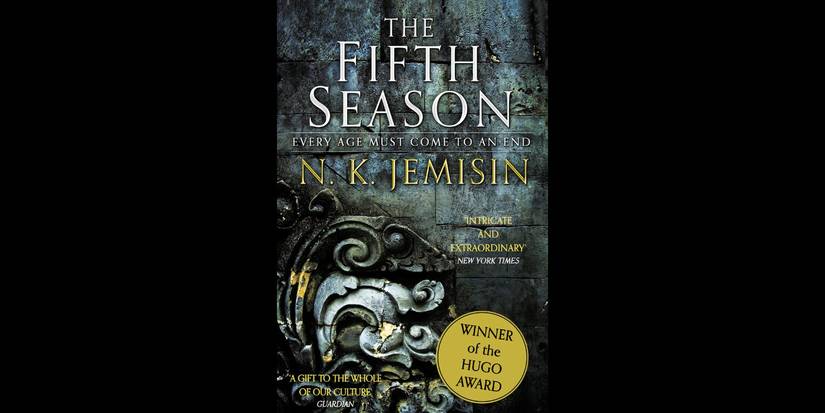
"Let's start with the end of the world, why don't we?" The Stillness is a continent periodically devastated by geological catastrophes known as Fifth Seasons. Civilization has therefore developed around the assumption that sooner or later everything will collapse again. Communities stockpile resources, and powerful orogenes capable of manipulating seismic energy are simultaneously indispensable... and brutally oppressed. We follow three of them: Essun, Damaya, and Syenite, all living very different lives.
Most strikingly, the worldbuilding in The Fifth Season is fundamental to the story itself, rather than merely decorative. The Stillness's constant tectonic instability has shaped its politics, architecture, prejudices, and even language. In this environment, orogenes possess terrifying power while remaining vulnerable to a society determined to control them, creating an interesting tension. Ultimately, N.K. Kemisin uses epic fantasy to examine systems of exploitation without reducing her characters to symbols.
'The Blade Itself' (2006)
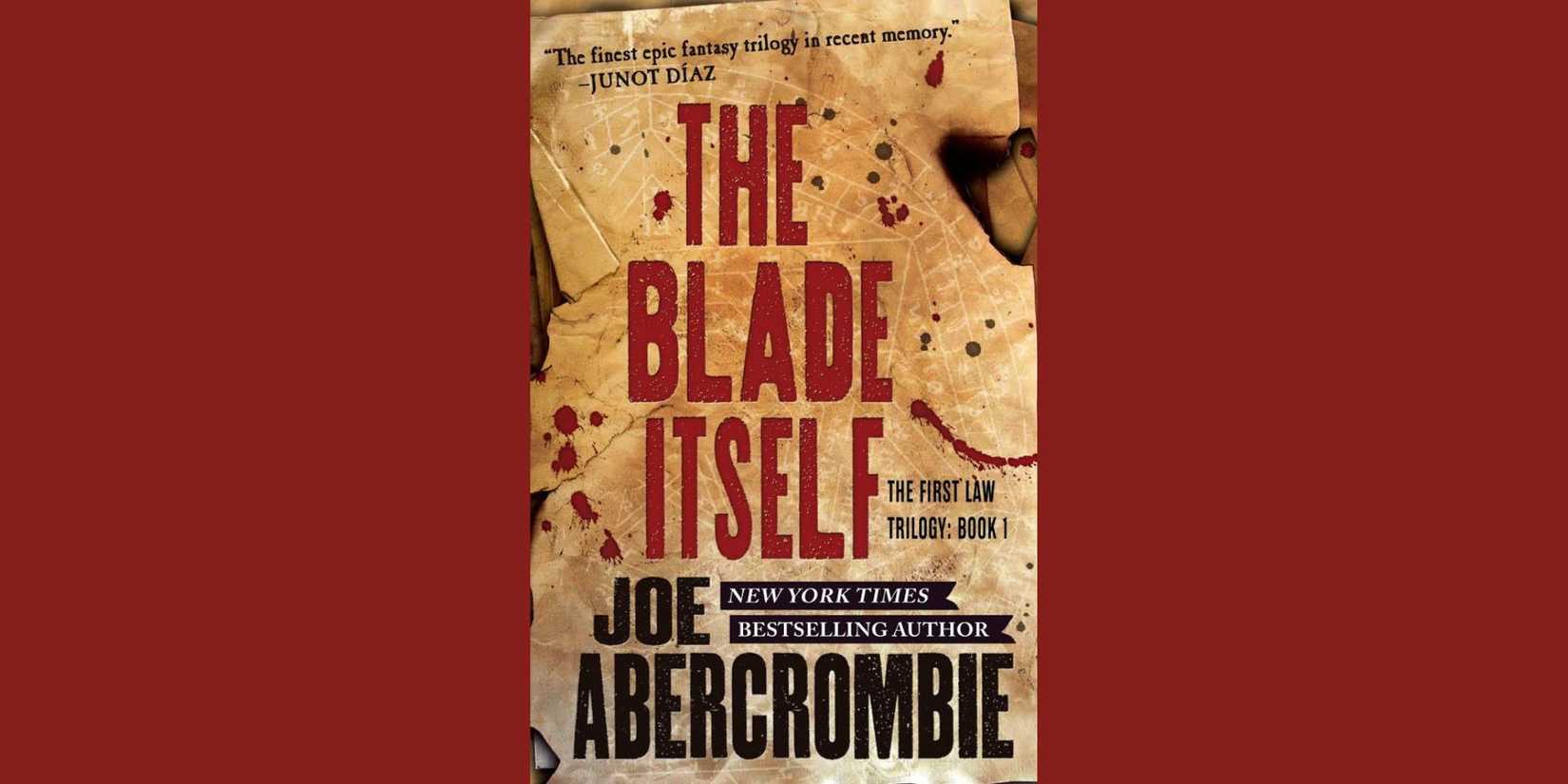
"Once you've got a task to do, it's better to do it than live with the fear of it." Very little actually goes according to the traditional epic-fantasy playbook in The Blade Itself. Joe Abercrombie introduces the pieces readers might expect, like a legendary warrior, a dashing young nobleman, and an ancient wizard gathering companions for an important mission, but then gives them an unusually layered, character-focused treatment, almost rendering the quest plotline secondary.
Indeed, the lead characters here rank among the most fascinating in all of 2000s fantasy. Logen Ninefingers is a feared barbarian trying, with limited success, to become a better person. Jezal dan Luthar is handsome, privileged, talented, and insufferably self-absorbed. Finally, Sand dan Glokta may be the book's triumph: a former war hero left permanently disabled by torture who now works as a torturer himself.
'Beyond the Deepwoods' (1998)
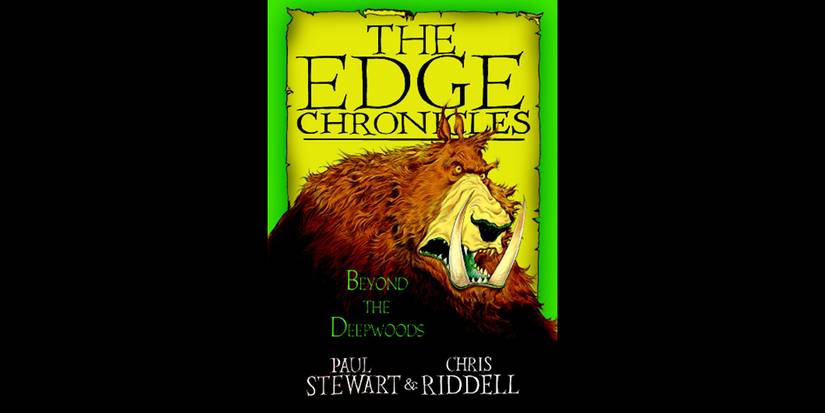
"Take care, Twig. Take great care. And whatever you do, don't stray from the path." This is the first installment in the brilliant Edge Chronicles series by writer Paul Stewart and illustrator Chris Riddell. While not as complex or ambitious as many of the books that would follow, Beyond the Deepwoods is still a potent and economical fantasy adventure, jam-packed with color and quirkiness. At its heart is the likable Twig, a boy raised by woodtrolls in a vast, dangerous forest.
After discovering that he isn't truly one of them, our young hero sets out on a journey that takes him progressively deeper into a world populated by slaughterers, hover worms, banderbears, wig-wigs, termagant trogs, gyle goblins, and creatures that can switch from ridiculous to horrifying remarkably quickly. Riddell's intricate illustrations are inseparable from the experience, giving the Edge Chronicles a visual identity unlike anything else in the genre.
Collider Exclusive · 8 Questions · 2 Minutes What Fantasy World Do You Belong To? Middle-earth · Grand Line · The Continent · Camp Half-Blood
Pick your magic, your crew, where you want to wake up and who you would rather be fighting, and we will tell you which world you actually belong in. Four are open to you: an ancient kingdom living through its last good age, an endless sea full of pirates, a continent that pays people to kill monsters, and a summer camp where the Greek gods are extremely real and mostly a nuisance.
💍Middle-earth(Rings of Power)
👒Grand Line(One Piece)
🐺The Continent(The Witcher)
🔱Camp Half-Blood(Percy Jackson)
01
What kind of power do you want? Every one of these worlds runs on a completely different sort of magic.
02
Who is travelling with you? Nobody gets through any of these stories entirely on their own.
03
Where do you want to wake up tomorrow? The best fantasy is usually just somewhere you would genuinely like to live.
04
How are you making a living out there? Even in fantasy somebody has to pay for the horse.
05
There is something in the woods. What do you do about it? All four of these worlds keep something unpleasant out there in the dark.
06
Who is the villain of your story? The enemy tells you far more about a world than the hero ever does.
07
What do you actually believe in out there? Every world hands its heroes one rule and asks them to hold onto it.
08
A thousand years from now, how are you remembered? Eight questions in, this is the one that decides your world.
The Map Is Drawn Your World Is…
Four worlds and four completely different ideas of what a good life looks like. This is where you belong, what it would ask of you, and what you would get back in return.
Middle-earth
You belong somewhere old enough that the mountains have names and somebody can still tell you who gave them. Middle-earth is for people who think the right thing is worth doing even when it will not be finished in their lifetime.
- This is the only world on the list where doing good is understood as a very long defeat, fought anyway, by people who will never see how it ends.
- You are drawn to grandeur, to white cities and deep forges and the sense that almost everything you touch is older than your entire family line.
- The Rings of Power is set in the last good age before it all goes wrong, which gives every quiet scene in it a slightly unbearable weight.
- You would take the hard road, and you would take it on foot.
The Grand Line
You want the sea, a crew, and absolutely nobody telling you where you are allowed to go. The Grand Line is the world for people whose main ambition in life is finding out what is over there.
- One Piece has run for decades on one very simple engine, which is a group of people who each want something impossible and have decided to go and get it together.
- You collect people. Your ideal crew is a set of misfits who were each written off somewhere else before you turned up and offered them a better idea.
- The world is enormous and deliberately ridiculous, and the emotional gut punches land harder because of that rather than in spite of it.
- You would set sail knowing the map runs out, which is more or less the entire point of it.
The Continent
You would rather be feared and useful than liked and useless. The Continent is a world where the monsters are the straightforward part of the job and the people are where it all gets complicated.
- Witchers get paid to do what nobody else will and resented for existing at all, which is a trade most people would refuse and you would probably accept.
- You have no real illusions about which side is the good one, largely because on the Continent that question tends to have a disappointing answer.
- The best of these stories are not about the fighting. They are about somebody with a rigid code being repeatedly cornered into caring about people.
- You would take the coin, finish the job properly, and be out of town before the story got told wrong.
Camp Half-Blood
You want the myths to be real and loose in the actual world, and you want to find out at about thirteen that you were never anywhere near as ordinary as everybody kept telling you.
- Percy Jackson takes the oldest stories we have and drops them into car parks and diners, which makes the gods considerably funnier and a great deal worse.
- You would be the kid every school gave up on, who turns out to have been built for something nobody thought to test for.
- The series is genuinely about friendship rather than destiny, and it says so out loud every time a prophecy tries to get in the way.
- Camp Half-Blood is the real fantasy here: a place where the thing that made you difficult everywhere else is the thing that makes you belong.
'Gardens of the Moon' (1999)

"Now these ashes have grown cold, we open the old book." This is the opening entry in the colossal Malazan Book of the Fallen series, a saga that follows literally hundreds of characters across millennia (and roughly 11, 000 total pages). Gardens of the Moon drops us into the middle of an enormous imperial conflict involving the Malazan Empire, rebellious cities, ancient races, assassins, gods, mages, soldiers, and powers whose histories stretch back hundreds of thousands of years.
Author Steven Erikson never holds our hand or drowns us in info-dumps. Instead, he trusts us to figure things out for ourselves as the story rolls along. Terms and names arrive before their significance is clear. Events that initially seem incidental turn out to belong to conflicts far larger than the characters witnessing them. It's all notoriously demanding, but also tremendously rewarding, particularly for hardcore fantasy fans.
'The Name of the Wind' (2007)
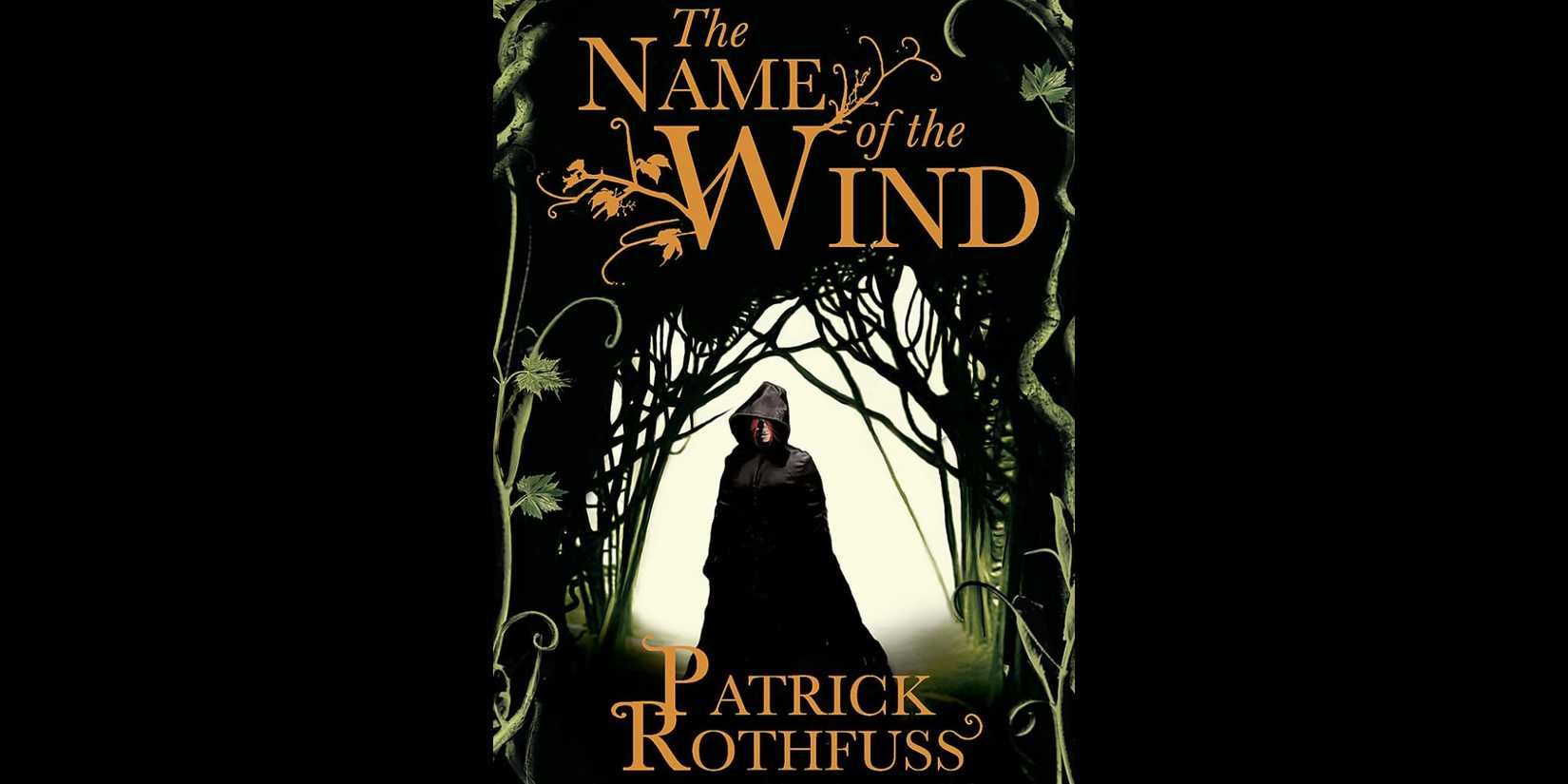
"My name is Kvothe, pronounced nearly the same as 'quothe.'" For all its magic, monsters, and legends, The Name of the Wind is fundamentally a character study. Patrick Rothfuss introduces protagonist Kvothe after the adventures that supposedly made him famous are already over. Now living anonymously as an innkeeper, he agrees to tell the Chronicler the truth about his life, beginning with his childhood among the traveling Edema Ruh and following him through tragedy, poverty, and eventually his studies at the magical University.
Kvothe is simultaneously an irresistible narrator and somebody readers should be careful about trusting. He's brilliant at music, magic, languages, and getting himself into situations his intelligence should have helped him avoid, and he certainly knows how to spin a good yarn. The book's prose is fittingly lyrical and lovingly crafted, making The Name of the Wind one of the most beautiful fantasy novels of its decade. Be warned, though: the series is infamously incomplete.
'Tehanu' (1990)

"After all, he was only a man." Almost two decades after completing the original Earthsea trilogy, Ursula K. Le Guin returned to the archipelago and began questioning some of the assumptions beneath her own creation. For instance, the main characters of Tehanu aren't setting out to master magic or save the world. Tenar is now a middle-aged widow, Ged has lost the power that once defined him, and much of the story concerns their care for Therru, a severely burned and traumatized girl.
That smaller scale is precisely what makes Tehanu so powerful. Through it, Le Guin looks at themes of domestic labor, gender, aging, abuse, and the lives of people whom traditional heroic fantasy tends to leave outside the story. None of this means she abandons the genre that saw her rise to the peak of success, however. Dragons, enchantment, and the deeper mysteries of Earthsea remain essential, but they're viewed from a radically different angle.
'The Last Unicorn' (1968)

"The unicorn lived in a lilac wood, and she lived all alone." While the stellar animated film adaptation is perhaps more famous, the original Last Unicorn novel is still very much worth checking out. It begins with a unicorn who overhears two hunters suggesting that she may be the last of her kind. She leaves the safety of her forest to discover what happened to the others, eventually joining the incompetent magician Schmendrick and the formidable Molly Grue on a journey toward King Haggard's castle.
This is a meta-fantasy, where the characters are consciously aware that they are trapped within a fairy tale and must follow its structural rules. That said, Peter S. Beagle's prose may be the real magic. Here, his sentences can be playful one moment and unexpectedly devastating the next, giving the book a sadness that's rare in children's literature.
'Jonathan Strange & Mr Norrell' (2004)
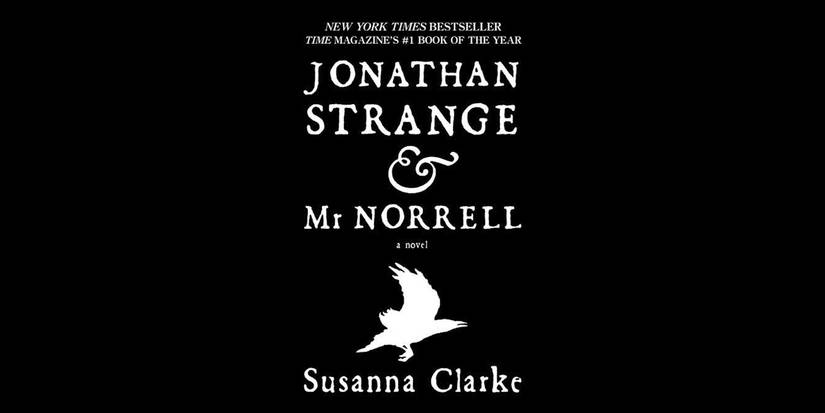
"Some years ago there was in the city of York a society of magicians." This one was also adapted for the screen, but the book is far superior. This gem centers on two very different men: the scholarly, cautious Gilbert Norrell and his charismatic, reckless pupil (and later rival) Jonathan Strange. They are the only two men who can perform magic, but begin to disagree vehemently over how this power should be used.
The tale unfolds in a fantastical version of Britain during the Napoleonic era, richly realized through writing modeled on classic authors like Jane Austen and Charles Dickens. To add to the immersion, author Susanna Clarke throws in footnotes explaining magical scholarship, forgotten kings, and obscure historical incidents. In the end, she concocts a truly unique mix of ideas, themes, and genres: comedy of manners, alternate history, war story, Gothic horror, fairy tale, and academic satire, all without making the combination feel forced.
KioskNews shows a cleaned-up reading view extracted from the publisher’s page — the original always lives on their site, not ours.