Why Hilsa Breeding Grounds Are Shifting From Bengal To Gujarat
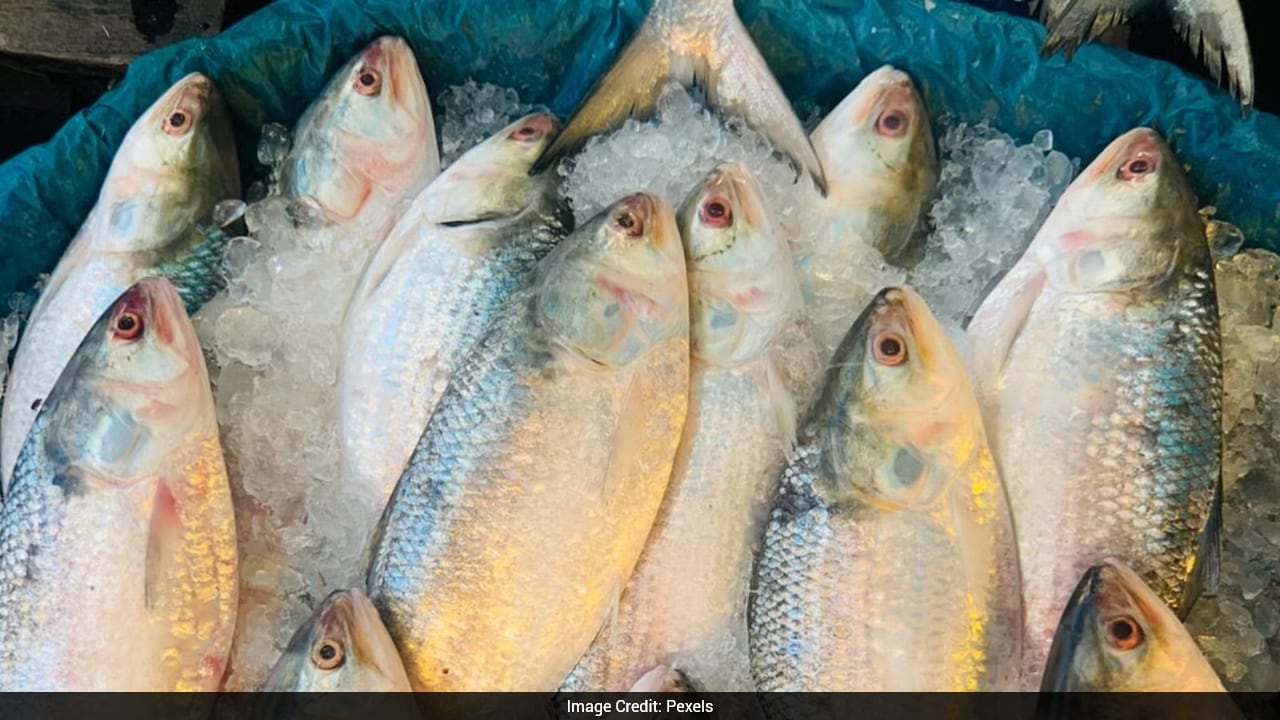
West Bengal's prized hilsa has found a new home in the waters of Gujarat amid shifting environmental currents and favourable monsoon conditions, sparking an unprecedented catch in the Narmada river.
Changing environment, mainly during the monsoon when nutrient-rich water flows into the sea, is one of the reasons. Additionally, the ideal mixing of fresh and salt water in the estuary near Bharuch along the lower stretch of the Narmada has created perfect conditions for the fish to shift towards Gujarat.
"Hilsa is an anadromous migratory fish that spends most of its life in the sea but migrates towards the freshwater of rivers for breeding," explained RB Vala and AM Parmar, assistant professors at the College of Fisheries Science, Kamdhenu University, Gandhinagar.
"The Ganga-Hooghly river system of Bangladesh and West Bengal was previously among the primary breeding grounds for hilsa. However, over time, conditions such as the Farakka Barrage, increasing construction on rivers, changes in river depth, pollution, and climate change have affected the traditional migration and breeding areas of hilsa," the experts noted.
Total hilsa production in the western state reached 14,587.72 metric tonnes in 2025-26, breaking a four-year record.
"In 2022-23, the state recorded a production of 14,198.98 metric tonnes of hilsa. Following that, it declined to 8,209.48 metric tonnes in 2023-24 and stood at 8,535.75 metric tonnes in 2024-25," said Gujarat Fisheries Industry commissioner Vijay Kharadi.
Production sharply increased in 2025-26. Inland hilsa production surged from a mere 123.62 metric tonnes in 2024-25 to 4,645.99 metric tonnes in 2025-26.
In 2025-26, Bharuch recorded a total hilsa production of 7,410.09 metric tonnes, comprising 2,949.76 metric tonnes of marine hilsa and 4,460.33 metric tonnes of inland hilsa. The district accounted for nearly 51 per cent of the state's total hilsa production.
The increase in production also serves as a vital employment lifeline for more than 25,000 fishermen.
According to Dhaval Machhi, a fisherman from Bhadbhut village, fishermen living in villages along the Narmada rely on the four-month hilsa season during monsoons. Good catches are reported from the Hansot, Dahej, and Bhadbhut areas.
"We have never seen a seasonal catch like this in the Narmada. Finding such a high volume of hilsa right here at our doorstep in Bhadbhut has brought immense relief to our families and made all our hard work out on the water completely worth it," said Ramesh Machhi, a fisherman from Bharuch.
"The demand from markets like Kolkata has given us a massive economic boost this season. Selling our catch at strong market prices has significantly raised our household income and brought financial security back to our fishing community," shared Suresh Machhi, another fisherman from a neighbouring village.
Traders mention that during this season, around 250 tonnes of hilsa are sent from Bharuch district to markets like Kolkata and Howrah due to limited demand in the local market.
While hilsa holds national fish status in Bangladesh and stands as the state fish in West Bengal, its rising presence in the Narmada river points to a shift linked to the river's ecosystem, fishermen's livelihoods, and sustainable fisheries management.
KioskNews shows a cleaned-up reading view extracted from the publisher’s page — the original always lives on their site, not ours.