‘What I eat in a day’ videos landed Amelia in hospital. Now they are landing Meta in court
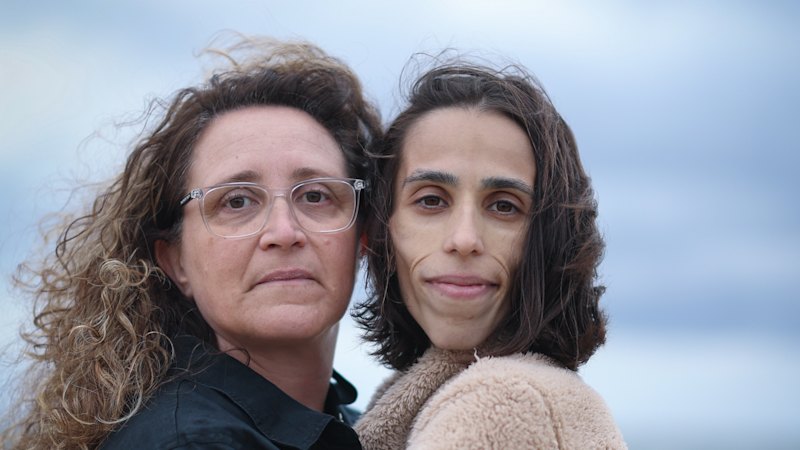
Amelia Luca clutches a football, looking for a pass. She’s 16, strong, playing with the Sandringham Dragons, and hoping for a career in medicine.
That was six years ago.
It was during COVID-19 lockdowns in Victoria that she began tracking her fitness and comparing her food intake with others on social media.
The Cheltenham student, now aged 22, says her algorithm served her a diet of inescapable pro-anorexia content, teaching her how to hide her food, to exercise throughout the night, and eventually how to live without eating at all.
“It’s a slow suicide,” says her mother, Lyn Luca.
During year 12, Amelia’s illness got worse. Other than schoolwork, she’d spend all of her time on social media watching what people eat in a day, what exercises they do, how to cut out food, and following other people with eating disorders.
“I was at school. I was going in for only two periods a day, getting Ubers to and from school because I was medically unfit,” Amelia said.
She’s been hospitalised multiple times but is too unwell to go to an eating disorder clinic because her weight is too low.
Amelia and her mother say Instagram and Facebook need to be held accountable for their role in her illness.
“Social media is teaching and then feeding this illness,” Lyn said.
Lyn and Amelia have signed on with Shine Lawyers, which is investigating potential legal action against Meta and other social media companies over alleged harms linked to social media addiction and platform design.
The investigation comes as Meta agreed to landmark US settlements with nearly every state and territory, in which it agreed to pay up to $US18 billion ($26 billion) over 10 years to settle claims that Facebook and Instagram were harming children.
Meta also agreed to major changes for young users including time limits, stronger parental controls, age checks and limits on features alleged to fuel compulsive use. As part of the settlement, Meta denied any wrongdoing.
It’s one of multiple legal actions Meta has settled in recent months.
Shine’s head of class actions, Craig Allsopp, said the US developments were significant for families in Australia who had raised concerns about the impact of social media on children and young people.
“If Australian families have been affected, they deserve answers,” he said.
Another law firm, MinterEllison, lodged a separate statement of claim for a class action against Meta Platforms and its related entities in the Federal Court of Australia on October 9. The claim is on behalf of children and teenagers who suffered harm as a result of addictive design features and exposure to harmful content while under the age of 18.
MinterEllison seeks to recover compensation for current and former users, acting on behalf of eight lead plaintiffs across Australia, whose details and the statement of claim are suppressed. The first case management hearing is on November 3.
The Age contacted Meta for comment but did not receive a response. A Meta spokesperson told Reuters the company was aware of the claim and would “defend ourselves vigorously”.
Litigation Lending Services is funding MinterEllison’s fight, with chief executive officer Susan Wynne saying the size, wealth and global reach of big technology companies should not shield them from scrutiny or accountability.
LLS is encouraging affected young people to contact the service and has been working on this case well before the landmark US Meta settlement.
“Our hope is that this case achieves something much bigger and that is driving meaningful change in how major technology companies prioritise the safety and wellbeing of young people and ultimately helping to protect future generations from the potential harms of social media,” Wynne said.
The Australia government was the first to ban social media for children under 16 in 2025, but eSafety Commission data shows 42 per cent of children aged 10 to 15 still have a social media account.
Communications Minister Anika Wells introduced a Digital Duty of Care Bill into parliament in October. If passed, it would mean companies face heavy fines for breaches.
The Butterfly Foundation’s Mel Wilton says since 2012, there has been a 21 per cent rise in people with eating disorders in Australia, with young people disproportionately impacted.
She said there was never one cause of an eating disorder, but she regularly hears from the community about social media content that perpetuates harmful beauty and body ideals, pushes diet culture and fatphobia, and encourages disordered relationships with food, eating and exercise, such as “what I eat in a day” content.
While platforms have guidelines that prohibit this content, she said more needed to be done, and she supports the government’s suggestion to name disordered eating as a harm that platforms must prevent.
Lyn said social media companies needed to better moderate content to ensure it wasn’t teaching people to harm themselves.
“What am I hoping for? Well, Amelia’s life will never be the same again, and social media will still be there,” Lyn said.
“But if it means that it can save other children from getting caught up in all of this ... then I feel that would be an amazing thing to do.”
For support, contact Butterfly National Helpline on 1800 33 4673 or www.butterfly.org.au to chat online or email.
Start the day with a summary of the day’s most important and interesting stories, analysis and insights. Sign up for our Morning Edition newsletter.
KioskNews shows a cleaned-up reading view extracted from the publisher’s page — the original always lives on their site, not ours.