Two years of Prabowo: Indonesia's push for real energy sovereignty
Jakarta (ANTARA) - Entering the second year of the Prabowo Subianto administration, Indonesia is accelerating its push toward total energy sovereignty.
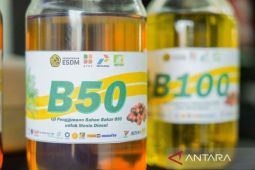
The mid-July 2026 launch of the 50 percent biodiesel (B50) mandate marked a decisive milestone in this effort.
President Prabowo emphasized that the rollout was far more than a technological achievement; it served as tangible proof of the nation's determination to exercise full control over its critical energy needs.
President Prabowo has consistently maintained that true national sovereignty hinges on the capacity to independently fulfill strategic requirements, with energy at the absolute forefront.
Since taking office, his administration has prioritized energy self-sufficiency, framing it as an essential foundation for eradicating domestic poverty and propelling Indonesia into the ranks of modern, developed nations.
The President remains firm in his optimism that complete energy independence can be secured within five years through a clear, measurable roadmap.
That optimism rests on the country’s vast natural wealth, which spans geothermal systems, coal, natural gas and immense renewable potential across the archipelago.
In his view, energy security stands alongside food security as a non-negotiable pillar of national survival amidst shifting global dynamics.
For a country as large as Indonesia, self-reliance is not merely an option, but an imperative to maintain autonomy on the global stage.
SOEs commitment
State-owned energy giant PT Pertamina (Persero) has pledged its complete alignment with this presidential vision.
Through its operating subsidiaries, including PT Pertamina Hulu Energi (PHE), the national enterprise continues to optimize upstream and downstream oil and gas management for public welfare—fulfilling its constitutional mandate.
Pertamina President Director Simon Aloysius Mantiri recently called on all company personnel, known internally as Perwira, to view national energy security and the provision of affordable energy as a solemn duty.
Pertamina’s strategic trajectory aligns directly with the Asta Cita framework outlined by the Prabowo administration.
In his address to the House of Representatives (DPR RI) in mid-August 2026, President Prabowo reiterated that boosting domestic oil and gas production while expanding renewables is key to protecting the economy from external shocks.
Under Asta Cita, energy is treated not just as fuel for infrastructure, but as a strategic tool to drive industrial growth and end foreign dependency.
This shift comes at a crucial moment in global history, as geopolitical competition increasingly moves away from traditional fossil fuels toward batteries, critical minerals and green power.
While Indonesia boasts an estimated new and renewable energy (NRE) potential of up to 3,700 gigawatts (GW), current installed capacity remains below 20 GW.
Bridging this gap requires a long-term energy sovereignty masterplan encompassing an orderly transition roadmap, mineral downstreaming, energy diplomacy and grid modernization.
Support from Danantara
To turn this potential into reality, Indonesia’s newly created sovereign wealth fund, Daya Anagata Nusantara (Danantara), is playing a pivotal role.
With a mandate that includes supporting Indonesia’s target of achieving net-zero emissions by 2060, Danantara provides financing mechanisms for large-scale energy projects.
Its investment strategy focuses on three core pillars: improving the performance of state-owned enterprises, making direct strategic investments in low-carbon sectors, and managing global portfolios to generate public value.
Danantara Chief Operating Officer Dony Oskaria highlighted the benefits of the B50 program, particularly its role in reducing costly diesel imports.
Building on this momentum, the fund is preparing to finance an expansion of sugarcane-based bioethanol production to reduce gasoline imports significantly.
Plans are underway to prepare up to two million hectares of land to secure the necessary feedstock, paving the way for bioethanol blending targets ranging from E20 to E50.
Financial support for these large-scale green initiatives is also being reinforced through fiscal policy.
Finance Minister Suahasil Nazara confirmed that dividends generated by state-owned enterprises managed under the Danantara Investment Management Agency (BPI Danantara) would not be transferred to the 2026 or 2027 state budgets.
Instead, the earnings would be retained and reinvested in sustainable energy infrastructure and future industrial development.
By directing state-owned enterprise earnings toward priority energy projects, the government aims to keep the central budget focused on social safety nets, basic infrastructure, and public services.
At the same time, Danantara’s independent management model is intended to attract additional investment from domestic and international private-sector players.
Together, these policy initiatives reflect a coordinated national effort to build an energy-independent Indonesia capable of charting its own economic future.
KioskNews shows a cleaned-up reading view extracted from the publisher’s page — the original always lives on their site, not ours.