US ‘super-emitters’ of planet heating methane identified by satellite analysis
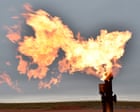
Down a short gravel track in a largely nondescript corner of Louisiana sits a gas processing facility, operated by a company whose chief executive is a major donor to Donald Trump. It may be the largest emitter of methane in the US.
The Energy Transfer site, located near the city of Shreveport, is named as the biggest single “super emitter” in new rankings of US oil and gas operations for the largest releases of methane, a powerful greenhouse gas that is rapidly overheating our planet, according to a new UCLA study, which is based on satellite data.
From January 2025 to June this year, the Shreveport facility spewed out methane at an average emission rate of 1.56 tonnes an hour, which is 15 times larger than the threshold defined in a Biden era program by the US Environmental Protection Agency (EPA) as a super emitter event, according to the study. The Trump administration has put implementation of that program on hold but climate experts and advocates say reducing methane emissions is vital to limit the climate crisis.
The new rankings combine satellite data and public records to indicate a “potentially responsible operator” for each of the largest methane plumes, researchers at UCLA’s Emmett Institute say. Such a task can be complicated by a lack of official records naming sites with large methane emissions as well as ascertaining ownership of pollution coming from tight clusters of differing oil and gas leases.
Dallas-based Energy Transfer oversees a huge network of pipelines and processing properties in the US and is linked to four of the 15 sites highlighted in the new rankings, with the company responsible for 75 methane plumes in total over the study period – three times as much as the next operator. Other major corporate methane producers include Enterprise Products, Targa Resources and Enlink.
Kelcy Warren, Energy Transfer’s billionaire chief executive, donated millions of dollars to Trump’s last election campaign and has previously described as an “insanity” when asked what he thought about a newspaper editorial that said net-zero carbon emissions policies would ultimately mean oil was no longer needed.
Energy Transfer did not respond to questions on what it is doing to stem methane from its facilities or whether the Shreveport site has been intentionally venting the gas or has experienced some sort of leak. The company has previously described efforts it was taking to reduce methane emissions in company reports including optical gas imaging inspections across hundreds of its facilites.
“Many of these sites are repeat offenders linked to not one but multiple mega plumes,” said Cara Horowitz, executive director of the UCLA Emmett Institute and author of the new report. “As America’s oil and gas industry ramps up production, it can no longer ignore what can only be described as super-sized pollution events seen from space.”
Horowitz said that the satellite record is “spotty but important”, as it shows emissions “that used to be frankly invisible and historically undercounted. Now they are plainly visible, they deserve public and regulatory attention. These numbers are unacceptably large, these emissions seem very wasteful and very inefficient.”
The new report draws upon data from the Tanager-1 satellite, compiled by the non-profit Carbon Mapper, of spotted plumes in the Permian, Appalachian and Haynesville-Bossier basins, resource-rich hotspots which span several states and account for about two-thirds of US gas production.
A total of 1,097 methane plumes were detected from oil and gas sources in these regions between January 2025 and June this year. The UCLA team was able to assign an operator responsible for a plume in around a third of these cases, using publicly available data. Horowitz said, though, it is “a real cause for concern when it comes to transparency” that so few operators can be identified as responsible for this pollution.
While satellites have helped reveal previously unknown methane emissions, such pollution is still vastly underreported, with researchers recently estimating actual US oil and gas methane emissions are around 64% higher than official EPA figures.
Activists have long argued that drilling sites and pipelines often experience regular, sometimes dangerous, leaks or purposely vent methane into the air, to release the pressure of gas build-up in equipment, with little reporting or oversight. Even satellites are unable to capture the full extent of these emissions when they are obscured on cloudy days. It is not illegal to release methane in these ways and operators face no penalizing regulations for doing so.
“I’ve been in the Permian basin and seen methane blowdowns happening everywhere for days but nothing got picked up on the satellites because it was overcast,” said Sharon Wilson, director of Oilfield Witness, an advocacy and monitoring group.
Wilson, a former fossil fuel industry worker, has spent the last 14 years acting as a “methane hunter” by filming oil and gas sites with a special camera that makes methane emissions visible. In 2024 she documented a Energy Transfer facility in Pecos county, Texas, that is fifth on UCLA’s top 10 producers list. The video from her visit shows gusts of methane, resembling smoke, spiraling from the site.
“Just a fraction of what is happening is being reported,” Wilson said. “I don’t see any improvement from the industry, what I see is just continued expansion. I have been to a lot of Energy Transfer sites and they are by far, in my opinion, the worst midstream operator I’ve seen. They always have massive methane plumes.”
The UCLA researchers chose to focus on the three large oil and gas basins, rather than every single emitter in the US, as they are the fulcrum of a booming liquified natural gas (or LNG) export industry. The US has leapfrogged other countries in recent years to become the world’s leading exporter of LNG, constructing a slew of vast terminals where gas is chilled and then shipped overseas. Trump has sought to fast-track the growth of this industry.
Proponents of LNG exports contend burning gas is cleaner than coal, although the repeated expulsion of methane during the export process can in fact make it even worse than coal for the climate, research has found.
“While US industry players often talk about reductions in methane intensity, this analysis reveals a concerning number of super-emitter events from the regions that ship LNG overseas,” said Mary Nichols, former chair of the California air resources board and now distinguished counsel for the UCLA Emmett Institute.
Methane is a potent greenhouse gas, trapping around 80 times more heat than carbon dioxide over a 20-year period, and is responsible for nearly a third of the global heating that has occurred since the industrial revolution. It is released via oil and gas drilling and transportation, as well as from landfills and agriculture.
There has been a “scary” surge in global methane emissions since 2007, according to scientists, although the gas doesn’t linger in the atmosphere as long as CO2. This means that reducing methane emissions from leaky pipes, venting and burning gas as a fuel can act as a rapid “emergency brake” amid a climate crisis that is dangerously barreling past safe limits.
Some progress can be achieved by identifying unseen methane leaks and fixing them, as has occurred recently in Turkmenistan. The country was previously releasing more methane than the entire emissions of the UK, a situation described as “mind-boggling” and “infuriating”, but has since started to plug some of the leaks emanating from its aging oil and gas infrastructure.
Such remedial work has been happening in some instances in the US, too, with the industry claiming a recent “profound shift” in pinpointing and dealing with leaks. In the UCLA study, three of the top 10 methane producers, including the first and second placed sites, had no methane plumes detected in their most recent satellite observations, suggesting some improvements may have taken place.
“The goal of shining a light on these emissions is to prompt action, which may already be under way at a few of these sites,” said Horowitz.
But critics argue that leaks of methane will continue for as long as the oil and gas industry faces little financial or regulatory pressure to change its ways, or until it is eclipsed entirely by clean energy.
Trump has set about eliminating enforcement, reporting requirements and fees aimed at driving down US methane emissions, with his EPA pushing ahead with the rollback of Joe Biden-era rules aimed at slashing this pollution. Lee Zeldin, the EPA administrator, has previously said these requirements “weaponized environmental regulations to regulate the oil and gas industry out of existence”.
Wilson said the only way to force down methane emissions is to stop issuing new permits to the fossil fuel industry. “We have all these emissions blasting into the air and no one even knows about it,” she said.
“We’ve gone so far past trying to rein in the industry. We don’t need oil and gas to energize our world anymore, it’s silly. Ironically Donald Trump has helped everyone realize the need to move on from oil and gas because of this (Iran) war. Gas isn’t energy security, it’s a vulnerability.”
All of the companies named in UCLA’s top 10 sites and among those responsible for the largest number of plumes were contacted for comment. None of them provided a response for the story apart from Boardwalk Pipeline Partners, which said it has reduced emissions in recent years from the 10th placed site, a gas storage facility which is also near Shreveport, Louisiana.
“Natural gas storage facilities require periodic inspections, testing, and maintenance activities to help ensure safe and reliable operations,” said a company spokeswoman.
“During some of these activities, natural gas may be released to safely reduce pressure before work can be performed. This is part of the safe operation and maintenance of the facility and is not necessarily indicative of equipment leaks.
“The Bistineau Storage Station operates in full compliance with all state and federal regulations. While there is more work to do, our emission reduction journey reflects Boardwalk’s ongoing commitment to responsible operations and continuous improvement.”
KioskNews shows a cleaned-up reading view extracted from the publisher’s page — the original always lives on their site, not ours.