Could potential US tariffs put the US-China trade truce at risk?
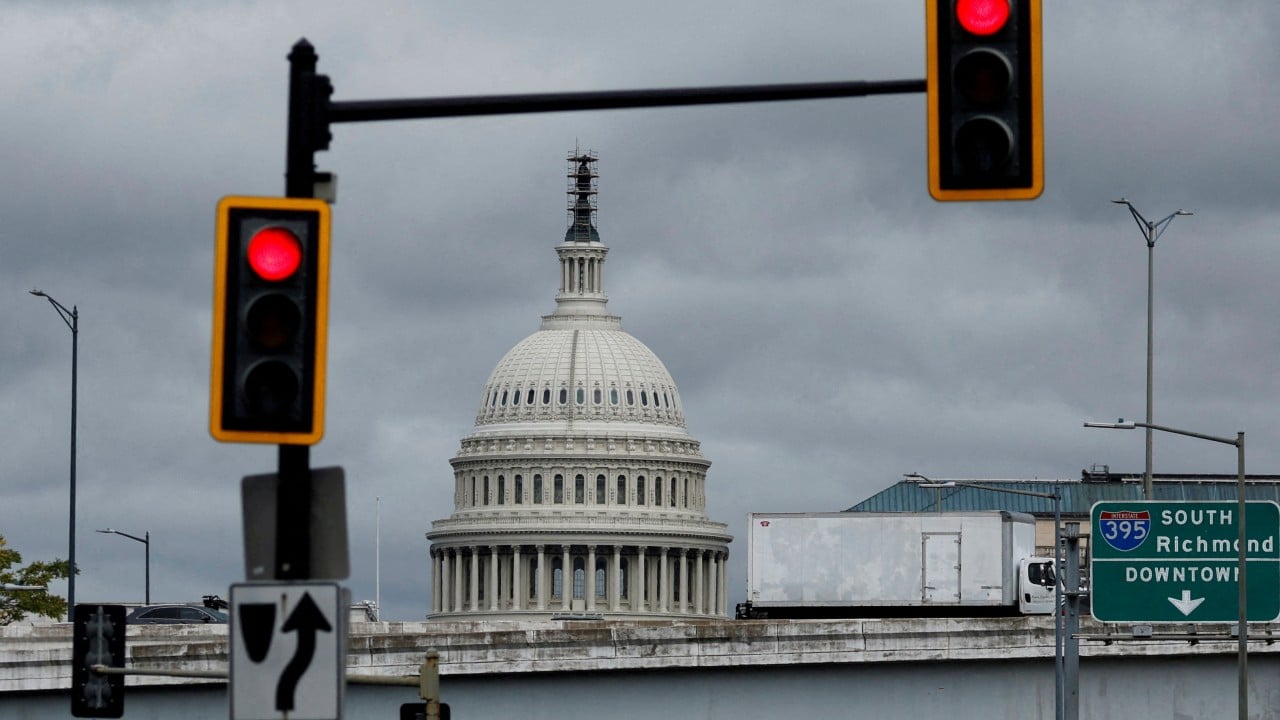
The United States could be paving the way for fresh tariffs on imports from 16 economies, including China and the EU, as it prepares to release the findings of a months-long investigation into excess industrial capacity.
Higher tariffs could be announced as early as this week, the Wall Street Journal reported on Tuesday, citing people familiar with the plans.
We examine the potential duties, the investigation behind them and what they could mean for Washington’s fragile trade truce with Beijing.
What is the investigation about?
The Office of the United States Trade Representative (USTR) investigation under Section 301 of the 1974 Trade Act examines whether foreign government practices contribute to excess industrial capacity in ways that harm US commerce.
The probe covers 16 economies: China, the European Union, Singapore, Switzerland, Norway, Indonesia, Malaysia, Cambodia, Thailand, South Korea, Vietnam, Taiwan, Bangladesh, Mexico, Japan and India.
Launched in March, the investigation forms part of the Trump administration’s efforts to rebuild its global tariff agenda after the US Supreme Court struck down its broad “Liberation Day” duties in February. The probe joined a separate Section 301 investigation into forced labour practices in 60 economies.
Any new tariffs are expected to be added to those announced in July from the forced labour probe, which imposed levies of 10 per cent or 12.5 per cent on goods from the targeted economies.
How would new US tariffs add to existing duties on China?
The US imposed a 12.5 per cent tariff on Chinese imports under the forced labour investigation. Beijing has previously said Washington agreed during bilateral talks to cap any replacement tariffs on China at 20 per cent.
The two sides have successfully maintained a fragile trade truce, extended last month to run until January 10, though Washington tightened restrictions on advanced chip exports last week amid scrutiny of the administration’s failure to curb China’s access to advanced Nvidia chips through data centres in third countries.
China’s commerce ministry has voiced “strong dissatisfaction” with Washington’s new chip restrictions, though Beijing has so far held off on broad retaliation. On Tuesday, the ministry extended a waiver on export restrictions of critical minerals to the US by two months, including shipments of gallium, germanium and antimony, as part of a broader cooling of tensions between the world’s two largest economies.
Could new tariffs derail bilateral ties?
Xu Tianchen, a senior economist at the Economist Intelligence Unit, expects any new Section 301 tariffs against China to be “capped firmly within 7.5 per cent”.
“Otherwise, Trump will immediately lose China’s trust for breaking one of the underpinnings of the truce,” Xu said.
Beijing might not welcome the new tariffs, but the combined duties would be unlikely to provoke retaliation so long as they remained within the 20 per cent cap, he added.
President Xi Jinping is also expected to meet Trump at the Group of 20 summit in Miami in December, which would mark their fourth meeting this year following talks in Shenzhen last week. “The two sides definitely want to keep their ties on track” ahead of the meeting, especially as the January expiry for the trade truce draws closer, Xu noted.
Hui Shan, Goldman Sachs chief China economist, said the number of times the two leaders had met in 2026 had made the year “highly unusual”.
“It is unlikely that there will be such frequent engagement next year,” Shan added, warning that economic uncertainties in the bilateral relationship could increase.
SCMP Plus is a new premium news platform that gives you an
all-inclusive edge to stay ahead on China news.
To access our exclusive content you’ll need to subscribe.
Already a subscriber?
LOG IN
In a Wednesday note, ING senior economist Inga Fechner also wrote that the Democratic Party could try to dismantle Trump’s tariff regime when it takes control of Congress in January. But the president retaining executive power would make that difficult, Fechner added.
On Wednesday, China’s foreign ministry said tariffs were not in the interest of either Beijing or Washington. “The so-called ‘overcapacity’ is a false proposition, and China opposes using it as a pretext for political manoeuvring,” spokesman Guo Jiakun said.
“Both China and the US should work together to implement the important consensus reached by the two heads of state and safeguard the stable development of China-US economic and trade relations,” Guo added.
KioskNews shows a cleaned-up reading view extracted from the publisher’s page — the original always lives on their site, not ours.