AI, Smartphones And Mobility: Global Tech Leaders Discuss India's Next Growth Phase At NDTV World Summit
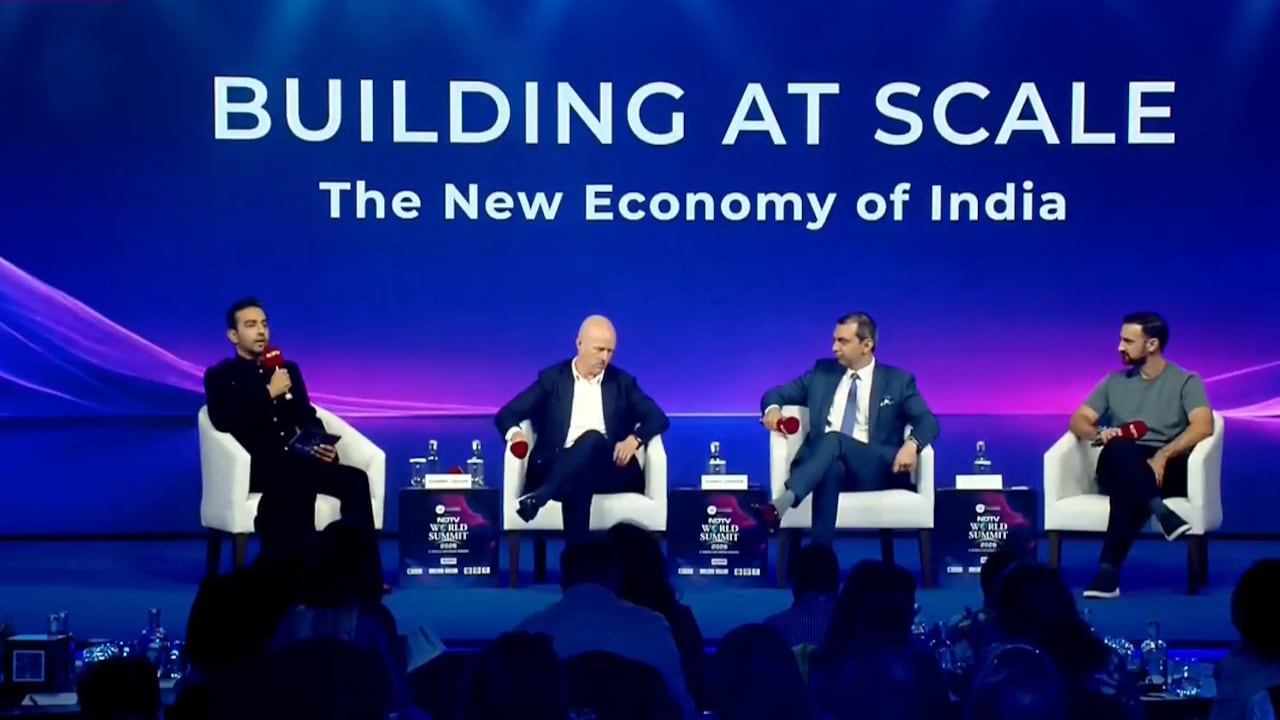
Indian industry may be entering a new phase, with the focus shifting from manufacturing products to developing tech, research and software within the country. At the NDTV World Summit 2026, leaders from Microsoft, Nothing and Uber discussed how India's growing market, technical talent and digital infrastructure could shape their next phase of growth.
Puneet Chandok, President of Microsoft India and South Asia; Akis Evangelidis, co-founder of Nothing; and Dominic Taylor, Uber's regional head of rides in Asia-Pacific, were part of the panel. They discussed AI, research and development (R&D), affordable transport and the opportunities for technology companies in India.
#NDTVWorldSummit2026 | Building At Scale: The New Economy of India On the panel with @aayush_a6: @puneetck, Dominic Taylor, @AkisEvangelidis https://t.co/PZu7s95Bbb
— NDTV (@ndtv) October 23, 2026
Microsoft Says AI Models Are No Longer The Biggest Advantage
Chandok said businesses should not depend on a single AI model as new models continue to enter the market. He noted that Microsoft Foundry had 11,000 models available and 30 new models had been launched in the first nine months of the year.
According to him, the growing availability of models means companies need to focus on how they apply AI to their own businesses. “What your moat is, is your context, your judgment, your intelligence in your own context, your ability to make that work for your business. So again, I would just go back to saying don't bet the farm on one model,” he said.
Chandok also said India's priority should be to make AI accessible to people at scale. He pointed to the country's digital public infrastructure as an advantage and said AI could be used to bring services such as tutoring, healthcare and business support to people across the country. He cited the possibility of an AI tutor for children in villages, a doctor for every village and a chief financial officer for small neighbourhood shops as examples of how the technology could be applied.
Nothing Wants To Expand R&D And Software Development In India
For Nothing, India has been an important market since the company began operations. Evangelidis said the country's strong interest in technology and consumers' knowledge of smartphone specifications helped the brand gain support early on.
He said India had also become a major manufacturing base, with 99% of smartphones sold in the country being manufactured locally. The next step, in his view, is to build more research and development capabilities in India.
Evangelidis said Nothing's existing operations are spread across different locations, with its design studio in London, engineering in China and manufacturing in India. The company now sees an opportunity to develop more of its value chain within India.
He identified hardware, digital design and software as areas where the company is looking at R&D opportunities. Nothing is also planning to develop its own software from India, he said.
On AI, Evangelidis said smartphones would continue to play a central role even as more AI-powered devices enter the market. "So basically your phone will be almost that gateway that will enable you to enable a lot more of those agents," he said.
He added that India has the talent, consumer demand and government support needed to develop technology for wider markets. “So we're actually in the planning phase of bringing our own software out of India because, again, the government, the talent is here, the demand is here. So yeah, all the foundations are here. So now we just need to put our hearts down and build,” he added.
Uber Focuses On Affordable Rides
Taylor said Uber's growth in India has depended on adapting its services to the needs and budgets of local consumers. He explained that the company began in India with four-wheel car rides, but that this format could reach only a limited section of the population because of its price. Uber subsequently expanded to include auto-rickshaws and motorbikes, helping make rides more affordable.
The company has also integrated its services with major metro systems across large cities, Taylor said. These changes are intended to make it easier for more people to travel between locations, including those who may not use conventional car-based ride-hailing services.
“We need to provide a reliable service that is priced at the right point for the consumer in the local market that works within the local regulations and is safe. And for the driver who's completing the trip, we need to make sure that we're paying a fair income relative to other jobs in the market,” he said.
Uber's Autonomous Vehicle Plans For India Remain Unclear
On autonomous vehicles, Taylor said Uber had more than 20 partners working on autonomous technology around the world, with deployments already operating in parts of the United States and the Middle East.
He said the company planned to begin its first autonomous vehicle initiative in the Asia-Pacific region in Tokyo in the coming weeks. However, he did not give a timeline for when the technology could be introduced in India, saying it might still take some time.
Microsoft's $20.5 Billion India Investment Includes AI Skills
Chandok said Microsoft's planned investment of $20.5 billion in India was not limited to infrastructure and buildings. He described the investment as having three components: building AI infrastructure, developing skills and bringing advanced technology to India.
He said Microsoft had committed to training 20 million people in India in AI by 2030, with 10 million already trained. Chandok also said 125,000 people trained in AI through the company had either found new jobs or started entrepreneurial ventures.
“I think that's a big part of doing this. And then finally, bringing sovereign solutions to India. I think, of course, there's a real conversation on make in India, build in India,” he said.
KioskNews shows a cleaned-up reading view extracted from the publisher’s page — the original always lives on their site, not ours.