Delivery drones are coming. For some with PTSD, that's a terrifying prospect.
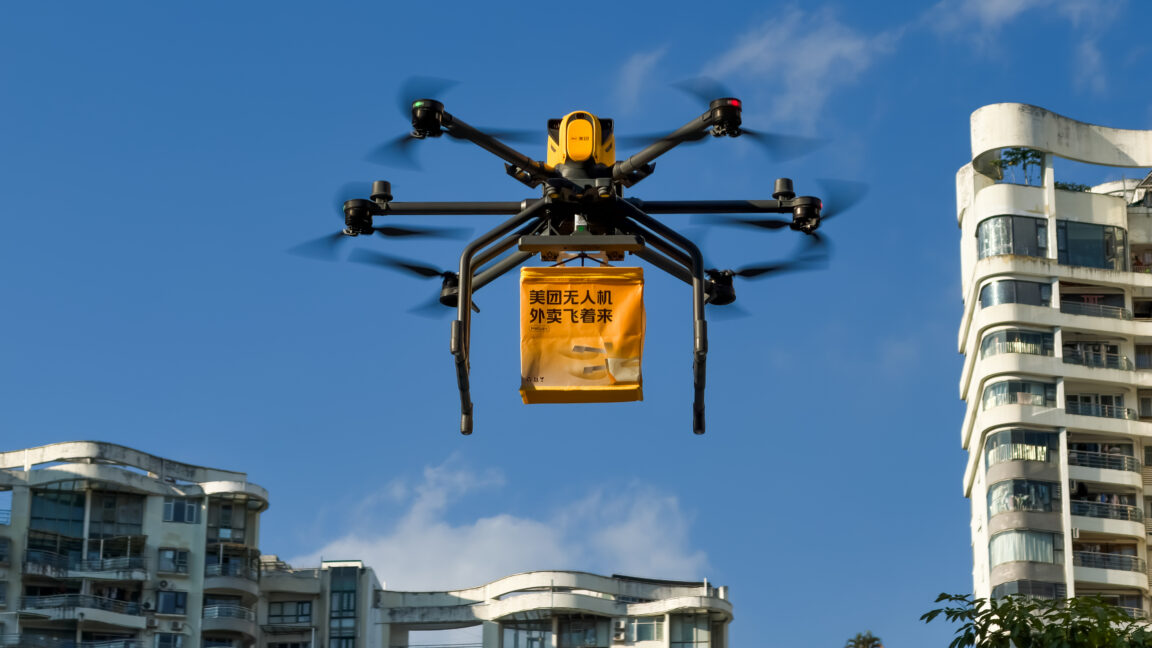
In August, Amazon announced plans to expand its Prime Air delivery drone program to “nearly 500 cities and towns by the end of 2026.” Combined with similar uncrewed aerial delivery programs from DoorDash and Zipline (in partnership with Uber and Walmart), the expansion suggests that flying robots dropping their payloads onto suburban lawns will soon be commonplace.
For many people, delivery drones will be little more than a novelty, occasionally good for a laugh when one does something ridiculous. For others, though, their growing use could be a nightmare. As the instant delivery industry clears the last FAA hurdles to rapid deliveries beyond an operator’s line of sight, an increasing number of people worldwide are living with post-traumatic stress disorder or other anxiety-related disorders triggered by drones.
The use of all manner of weaponized drones in the ongoing war in Ukraine and in Israeli attacks on Lebanon and Gaza has already produced an epidemic of what some mental health professionals have dubbed “dronophobia.” And while relatively few US troops have been targeted by drones flown by Iran, ISIS, and Iran-backed militias throughout the Middle East, even those who have not directly been attacked may experience anxiety simply because of the ample video footage of attacks circulating in news and social media.
Combined with broader anxiety about surveillance technologies, artificial intelligence, and things generally falling from the sky, the resulting hypervigilance could result in some unintended deliveries from those Prime Air flying robots.
Heralds of destruction

The aftermath of an Israeli airstrike in Gaza City on October 9, 2023, leaving widespread destruction in the Rimal area.
The aftermath of an Israeli airstrike in Gaza City on October 9, 2023, leaving widespread destruction in the Rimal area. Credit: CC BY-SA 3.0
Drones have been a part of the battlefield in some form since the late 1980s, when the Israeli Defense Forces began using them. From the beginning, they have had a psychological impact on both those in the sights of drone operators and the operators themselves.
The first military use of drones was for intelligence, surveillance, and reconnaissance. I witnessed the development of naval drone operations aboard USS Iowa in 1986 and 1987, and for many on the ship at the time, the drones were a curiosity—or, at worst, an annoyance. Our crews spent hours standing by a boat, ready to retrieve crashed drones from the water. But we were helping develop a capability that would eventually lead to Iraqi troops surrendering to the USS Wisconsin‘s drone during the Gulf War. Back then, drones were merely heralds of destruction, acting as forward observers for the Air Force ordnance fired or launched from elsewhere.
Iraqi troops on Faylaka Island associated the Pioneer RPV with the bombardment they had just experienced from the USS Missouri. When the Wisconsin’s drone flew in to assess the damage, their morale was broken.
Over southern Lebanon, the same kinds of drones were part of what amounted, for some residents, to sonic psychological warfare—the hum of lawnmower-like engines overhead was a reminder of constant surveillance and the ever-present threat of artillery or air strikes. The resulting anxiety intensified as drones began carrying their own weapons and “loitering munitions,” one-way drones designed to fly into targets and explode.
Dronophobia
Israel’s continued fight against Hezbollah in Lebanon, along with the US wars in Afghanistan and Iraq, accelerated the evolution of drone warfare and expanded the population experiencing its psychological effects. A Stanford Law study in 2012 of the impact of US drones in Pakistan (PDF) highlighted how drones were destroying the fabric of communities in northwest Pakistan:
Drones hover twenty-four hours a day over communities in northwest Pakistan, striking homes, vehicles, and public spaces without warning. Their presence terrorizes men, women, and children, giving rise to anxiety and psychological trauma among civilian communities. Those living under drones have to face the constant worry that a deadly strike may be fired at any moment and the knowledge that they are powerless to protect themselves.
That experience has been repeated and amplified in current conflicts in Gaza, Lebanon, and Ukraine. A team of US and Ukrainian psychiatrists has reported that Ukrainian military personnel and civilians who have experienced a drone attack, particularly those injured in one, “are at heightened risk for developing persistent psychological symptoms, a vulnerability intensified by the ongoing threat of repeated attacks.”
Those symptoms—a “unique hypervigilance behavior with corresponding hyperarousal and avoidance behaviors”—are now referred to by some Ukrainian doctors as “dronophobia.”
“The distinct hum of an approaching drone, often likened to the swarming of hornets, has itself become a psychological weapon,” noted the team led by Dr. Joseph L. Bonvie of Massachusetts General Hospital. “The escalating pitch as a drone draws near elicits fear and helplessness even before an attack.”
Similar symptoms have been reported in women and children in Gaza, where Israeli drone strikes have been persistent. In consultations with 19 patients in Gaza, “all patients reported an intense phobic reaction to the acoustic signature of drones (the ‘zannana’), associated with imminent bombing and death, manifesting as full-blown panic attacks,” wrote Dr. Mohammad Abu Slaih, a Jordanian psychiatrist, in an article for European Psychiatry. “Three children developed a specific fear of looking at the sky. “
The Iranian drone attacks on Gulf states, while hardly comparable to what Gaza has endured, have had a broad impact on civilians in the United Arab Emirates and other countries in the region, disrupting sleep, causing fatigue, and fueling anticipatory anxiety as people wait for the next drone to strike.
That anxiety is common across populations exposed to drone warfare. The US Army Training and Doctrine Command (TRADOC) has compared drones’ potential to induce PTSD to the “shell shock” of World War I and the “battle fatigue” of World War II, noting that the “fear and stress from (the sound of) near-persistent drone presence creates anticipatory anxiety… Fears can persist beyond the drone’s presence, enhancing a soldier’s anxiety even when out of harm’s way.”
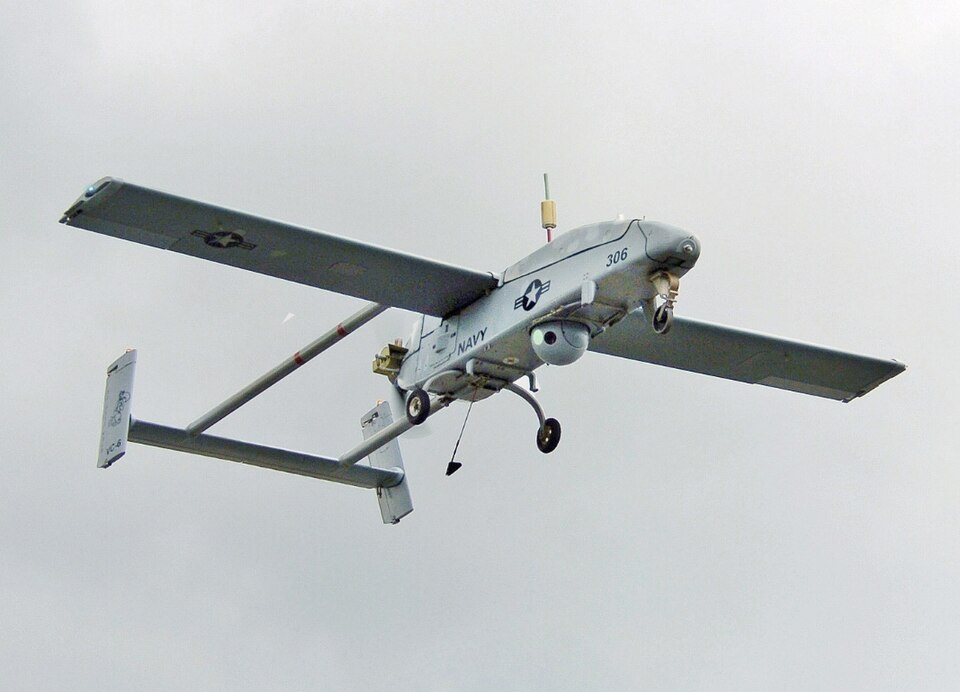
An RQ-2 Pioneer UAV, developed jointly by AAI Corporation and Israel Aircraft Industries.
An RQ-2 Pioneer UAV, developed jointly by AAI Corporation and Israel Aircraft Industries. Credit: US Navy

The use of drone video by both Russia and Ukraine as a psychological warfare tool extends the impact of drones beyond those who experience attacks firsthand. Footage of attacks on individual soldiers has been posted on social media to spread anxiety among opposing forces, sometimes going viral and exposing thousands of other people to the attacks. Ukrainian military units often publish first-person-view videos of drones chasing down Russian soldiers, complete with horror-film-styled soundtracks.
According to Neda Gould, an associate professor of psychiatry and behavioral sciences at Johns Hopkins School of Medicine, that aspect sets drone-induced PTSD apart from other types of the disorder. In an interview with Psychiatry Online, Gould said social media could amplify trauma because “not only does the soldier have to grapple with the PTSD-related consequences of the attack itself, but they may also relive the experience in a way that is completely out of their control,” especially when social media comments express support for the attacks.
Reversal of misfortune
The US military has grappled with drone-induced PTSD and other mental health symptoms over the past 15 years. The first signs of stress for American troops, however, came from drone operators themselves.
In 2014, a team of researchers led by a US Air Force psychologist found that 4.3 percent of Air Force drone operators displayed “a pattern of symptoms of moderate to extreme level of severity” associated with PTSD. More recent studies have found that drone operators are just as likely to experience PTSD symptoms as members of aircrews deployed to war zones. Differences in how crews operate between manned combat aircraft and unmanned systems crews may even put drone operators at greater risk of psychological impact.
According to the latter study:
- Drone missions generally involve days or weeks of surveillance of targets before launching strikes
- Operators have a constant feed of imagery and radio communications from the area of operations for long periods, including imagery of their targets
- Operators do not have transit time to and from the area of operation and may not experience “the adrenaline rush or thrill of accomplishing the mission”
- Since operators have more time to study their targets, errors are not as easily shrugged off
- Unlike their counterparts sitting in a pilot seat aboard a warplane, drone operators continue observation after the strikes to assess the extent of damage and are more likely to be exposed to disturbing imagery of the death and destruction resulting from their handwork
The dual psychological impact of drone warfare was aptly demonstrated by Killbox, a video artwork and “game” that presents two perspectives: those of a drone operator and a child on the ground. Playing it leaves many people deeply saddened, offering a glimpse of the moral injury some drone operators have experienced after their missions.
US troops are no longer just the ones behind the screens, however. Beginning with operations against ISIS, US troops have faced increasingly sophisticated drone warfare, starting with grenades dropped by ISIS-operated consumer quadcopter drones in 2017. Since then, Iranian-built drones, some based on reverse-engineered technology from downed US drones, have been used against US troops and ships by Iran and Iranian-backed militias in Yemen and Iraq. Among these is the Shahed, a long-range attack drone that Iran has sold in large numbers to Russia for its war on Ukraine.
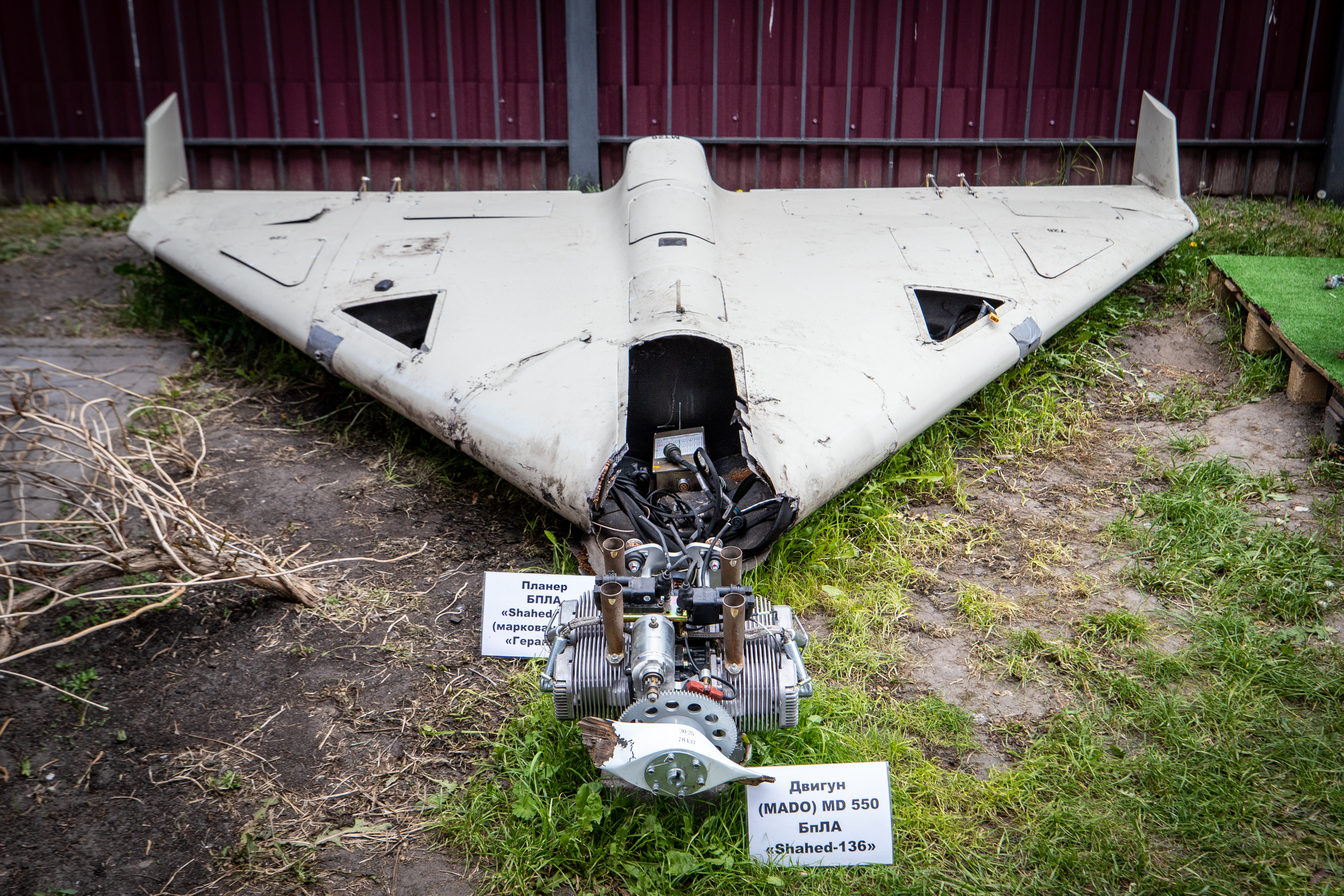
Remains of a Shahed 136 drone at an exhibition showing missiles and drones Russia used to attack Kyiv, Ukraine.
Credit: Oleksii Samsonov/Global Images Ukraine/Getty Images
Remains of a Shahed 136 drone at an exhibition showing missiles and drones Russia used to attack Kyiv, Ukraine. Credit: Oleksii Samsonov/Global Images Ukraine/Getty Images
The US Army TRADOC report also recognized that the psychological effects of drone attacks can reach further than those wounded in attacks, and even beyond the units that encounter them, saying:
Drones amplify the uncertainties of war because rear areas are less secure as long-range drones extend danger zones beyond that of artillery and rockets. The feeling of nowhere being safe exacerbates anxiety even when drones are not present.
While little public data is available on drone-induced PTSD among US veterans, evidence suggests that drones could also affect people with PTSD stemming from other kinds of trauma. The sound of a drone, its shadow, a glimpse of one in peripheral vision, or other stimuli from drones could trigger hypervigilance because of their unexpectedness, their similarity to other triggering stimuli, or a range of other factors.
Even for those who have not experienced drone attacks, the presence of an uncrewed aircraft can cause anxiety. Drones purportedly operated by the Department of Homeland Security in Minneapolis earlier this year appeared to be used not just for surveillance of targets of Immigration and Customs Enforcement but also to intimidate individuals who had been tracking ICE activity.
The expanding use of drones by law enforcement organizations in the US as part of “drone first responder” programs has exposed an increasing number of Americans to drone surveillance, with over 1,000 agencies applying for FAA waivers for drone operations as of February 2026, based on data from the Electronic Frontier Foundation. Combined with news reports about drone attacks and foreign governments’ use of drones, the disquiet of drone propeller noises and blinking lights in the sky has already created a War of the Worlds level of dronophobia.
Drones and rumors of drones
Over the past two years, several drone incidents have been linked, or suspected of being linked, to state-actor espionage, with a surge in reports in November and December of 2024. Three occurred in Southern California, including a drone flyover of Vandenberg Air Force Base as a National Reconnaissance Office payload was being loaded ont0 a SpaceX rocket. A Chinese national was charged in the case and arrested while attempting to leave the country. Other cases in the US were officially downplayed as posing no security threat.
In November 2024, incidents in the UK centered on multiple air bases used by the US, including incursions near RAF Fairford, the base recently allegedly targeted in a plot that the British government attributed to the Islamic Revolutionary Guard Corps. Similar incursions occurred in Germany.
Around the same time, a rash of civilian “drone sightings” across the US emerged, particularly in New Jersey. Anxiety grew further after a Republican New Jersey congressman claimed there was an “Iranian drone mothership.” Segments of the population were ready to shoot down drones themselves.
Many of these sightings turned out to be crewed aircraft or helicopters, toy drones, or, in very few cases, authorized commercial drone flights. Former Maryland Governor Larry Hogan even reported seeing dozens of large drones above his house, only for others to quickly point out that the objects were actually the constellation Orion.
The unfriendly skies
PTSD is a treatable condition, and coping strategies can help people manage triggers. But severe PTSD can be extremely debilitating, and research into the effects of drones on PTSD remains limited. It’s still unclear how well survivors of drone attacks will be able to process the fears and traumatic memories associated with drones, especially if the aircraft become a pervasive part of daily life.
I, for one, won’t be placing any Prime Air orders anytime soon.
KioskNews shows a cleaned-up reading view extracted from the publisher’s page — the original always lives on their site, not ours.