6 Most Influential Mystery Books of All Time, Ranked

Sign in to your Collider account
There are plenty of great, thrilling mystery books out there, but very few are important enough to change what comes after them. Everyone knows that the genre has its recognizable beats, from missing persons to grumpy detectives and unpredictable twists.
However, so many of these ideas have become familiar because certain books did them well enough for everyone else to start borrowing from them. The six novels on this list helped create some of the biggest conventions in the genre and, in a few cases, completely rewrote them to become the most influential mystery books of all time.
6 ‘And Then There Were None’ (1939)

Agatha Christie’s And Then There Were None might not have invented the whodunit, but it definitely popularized the format for generations of writers that followed. The story takes one of the simplest mystery setups imaginable, and shows why it’s so effective. The book begins with 10 strangers being invited to an isolated island by hosts nobody seems to know personally. Shortly after they arrive, a recording accuses each guest of being responsible for someone’s death. Then one of them dies. Another follows soon after, and the group realizes that the murders are following the pattern of a nursery rhyme displayed inside the house. The weather has cut the group off from the mainland, and there is no one else on the island. This means that the killer has to be one of them.
Now, Christie fully commits to this closed-circle setup. Every surviving character has something to hide, so the reader can never fully trust anyone. Each new death makes the list of possible suspects smaller while somehow making the mystery harder to solve. This storytelling structure has become so familiar that modern readers may not even realize how much later mystery and horror fiction borrowed from it. However, what keeps And Then There Were None from feeling dated is how efficient it still is. Every death changes the group dynamic, and by the final stretch, the mystery thrives on pure fear and suspicion instead of flashy twists or unnecessary complications.
5 ‘The Woman in White’ (1860)

Wilkie Collins’s The Woman in White is a classic that begins with one of the most iconic openings in mystery fiction. The story opens with drawing teacher Walter Hartright walking alone at night when a frightened woman dressed entirely in white suddenly appears on the road. Soon after, Walter takes a job teaching Laura Fairlie and her half-sister Marian Halcombe, only to realize that Laura bears a strange resemblance to the woman he met that night. From there, the story spirals into a web of secret identities and the increasingly sinister presence of Count Fosco. The mystery here is relatively straightforward, but the way Collins told it made the novel special.
Instead of relying on one narrator, he builds the story through Walter’s account, Marian’s diary, letters, statements, and testimony from other characters. Collins explicitly designed the structure like a court case, where different witnesses provide pieces of the truth. That forces the reader to do some of the detective work themselves, compare accounts, and decide which details paint the real picture. The book became one of the defining works of Victorian sensation fiction and helped popularize the idea that a mystery didn’t always need an all-knowing narrator. More than 160 years later, The Woman in White is still a blueprint for mystery stories, all thanks to Collins’s then-experimental approach to the genre.
Collider Exclusive · 8 Questions · 2 Minutes Which Coen Brothers Movie Would You Thrive In? Lebowski · O Brother · Fargo · No Country
Nobody writes people like the Coen brothers. The decent ones. The talkers. The ones who stopped trying years ago. And the ones who can already see how bad this is going to get. Four films, four completely different ways of handling trouble. Eight questions decide which one you would actually walk out of.
🎳Lebowski(1998)
🎸O Brother(2000)
❄️Fargo(1996)
🪙No Country(2007)
01
A bag of money lands in your lap. What happens next? Every Coen film starts roughly here. It never goes smoothly.
02
Somebody is being completely unreasonable with you. How does it go? Coen dialogue is mostly people failing to understand each other.
03
What is your actual relationship with work? Everyone in these films is either working far too hard or not at all.
04
Long drive, bad weather, nobody else on the road. How are you? There is always a drive in these films. It is never a good drive.
05
You are offered a shortcut that is not quite legal. This is the moment where the Coens find out who you really are.
06
The plan has fallen apart completely. What is your move? In a Coen film the plan always falls apart. That is the genre.
07
Which of these sounds most like something you would say? Nobody writes a line quite like the Coens. Which one is yours?
08
How does your film end? Eight questions in, this is the one that decides your movie.
The Verdict Is In Your Coen Film Is…
Four films, four completely different ways of handling money, trouble and other people. This is the one you would survive, why it suits you, and what it would cost you to be there.
The Big Lebowski
You have quietly arranged your life so that very little can get to you, and a surprising number of people find that infuriating. You would be completely at home here.
- The Dude is the only person in the film with no ambition, and the only one who comes out the other side undamaged. That is not an accident.
- You do not chase things. You let situations arrive and you deal with them at your own pace, which is a genuine skill however lazy it looks.
- This is a full crime plot happening around a man who mostly wants his rug back, and that is exactly the energy you would bring to it.
- Everything goes wrong. You abide. The film ends.
O Brother
You talk your way through life and it works far more often than it should. Give you a bad situation and an audience and you will find a way out of both at once.
- Everett never has a plan that survives contact with reality. He has something better, which is the ability to keep talking until a new one turns up.
- You are the optimist in the group, the one who makes a ridiculous idea sound reasonable at two in the morning.
- This is the warmest film the Coens have made. It is a chase, a comedy and a musical at once, and nobody in it is quite beyond saving.
- You would end up famous entirely by accident, and act like you planned it all along.
Fargo
You would survive Fargo because you are the only kind of person who does: patient, decent, and completely unimpressed by anybody trying to be clever.
- Marge Gunderson solves the whole case by being polite, thorough and unhurried while everybody around her panics. That is the entire argument of the film.
- You do the boring parts of the job, which is precisely why you would notice the thing everyone else walked straight past.
- Fargo is about ordinary greed causing enormous damage, and about one person who simply refuses to be corrupted by any of it.
- You would go home at the end of it, have dinner, and sleep perfectly well.
No Country
You do not expect the world to be fair and you stopped being surprised about it a long time ago. That clear-eyed quality is exactly what this film asks for.
- No Country is the Coens at their coldest: a film where being smart, fast and careful might still not be anywhere near enough.
- You plan for the worst, you keep your own counsel, and some part of you is already working out the exit.
- Llewelyn Moss is competent, prepared and resourceful, and the film is honest about whether any of that is ever sufficient.
- You would see it coming. Whether that helps is the one question the film refuses to answer.
4 ‘Gone Girl’ (2012)
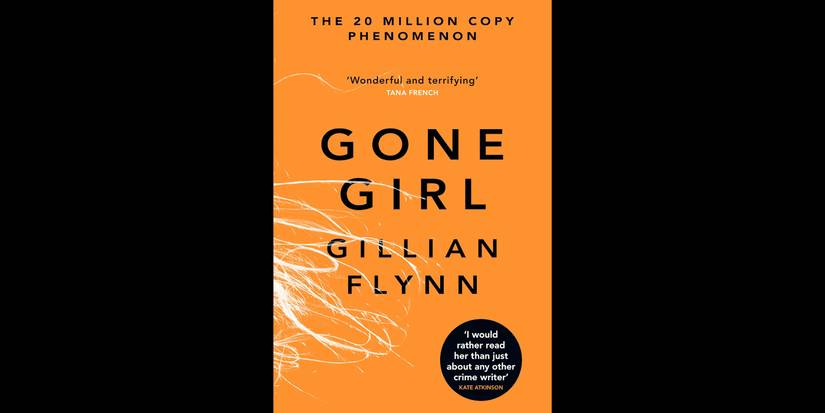
Gone Girl is a relatively newer mystery book on this list, but its impact is already impossible to ignore. Gillian Flynn’s novel begins on Nick and Amy Dunne’s fifth wedding anniversary, when Amy suddenly disappears from their Missouri home. Now, because there are signs of a struggle, the suspicion immediately lands on Nick, whose strange behavior doesn’t do him any favors. At the same time, the story takes the readers through chapters from Amy’s diary that slowly reveal how her and Nick’s seemingly perfect marriage had been falling apart long before she disappeared. The narrative gives the readers every reason to suspect Nick. Then, halfway through the book, Flynn makes the choice that defines Gone Girl.
Instead of saving the truth about what happened to Amy for the finale, she reveals it right in the middle. That big reveal is what makes Gone Girl such an unconventional thriller. The book’s big twist doesn’t drain it of suspense, but completely changes what the suspense is all about. Suddenly, Nick and Amy turn into two people who know exactly how to exploit each other's weaknesses, while also making the reader complicit in their manipulation. Gone Girl inspired a wave of psychological thrillers built around unreliable narrators and toxic relationships. Yet, the novel’s most impressive achievement lies in how effectively it subverted the traditional pacing of mystery thrillers.
3 ‘The Big Sleep’ (1939)

The Big Sleep reinvented the hard-boiled detective and gave the archetype one of its defining voices. Raymond Chandler’s first novel introduces private investigator Philip Marlowe, who is hired by dying millionaire General Sternwood to deal with a blackmailer targeting his daughter Carmen. The job looks pretty simple until it drags Marlowe through pornography rings, missing people, murder, and the increasingly complicated affairs of the Sternwood family. The case becomes so tangled that keeping track of every crime almost stops being the point. What matters is following Marlowe through all the chaos where almost everyone he meets is hiding something.
That is exactly where Chandler changed detective fiction. Marlowe is one of the most fascinating detectives in literature. He knows Los Angeles is full of people willing to lie, cheat, and buy their way out of trouble, but he still holds onto a personal sense of right and wrong. That makes him feel like a real person trying to stay decent in a world that keeps giving him reasons not to. The Big Sleep helped define the image of the modern private detective and turned crime fiction into something much bigger than pulp entertainment. It’s safe to say that mystery stories have been borrowing from Philip Marlowe ever since.
2 ‘The Tokyo Zodiac Murders’ (1981)

The Tokyo Zodiac Murders is essentially a puzzle book disguised as a novel. Soji Shimada begins the story with the death of eccentric artist Heikichi Umezawa, who is found murdered inside a locked room in 1936. Before his death, Heikichi had written about an elaborate plan involving astrology, alchemy, and the creation of what he called the perfect woman from the bodies of several women in his family. The problem is that after his death, someone carries out this exact plan. Decades later, amateur detective Kiyoshi Mitarai and his friend Kazumi Ishioka take another look at the unsolved case and try to put the puzzle pieces together. The book’s real genius is how immersive it is.
Shimada gives readers maps, timelines, diagrams, and essentially all the same information available to Mitarai. He even stops the story and directly challenges the audience to solve the murders before the final explanation. That confidence completely changes the reading experience because every strange detail suddenly feels like something worth paying attention to. That approach became extremely important to Japanese mystery fiction and proved that sometimes, the most satisfying mystery comes from hiding the biggest clues in plain sight.
1 ‘The Silence of the Lambs’ (1988)
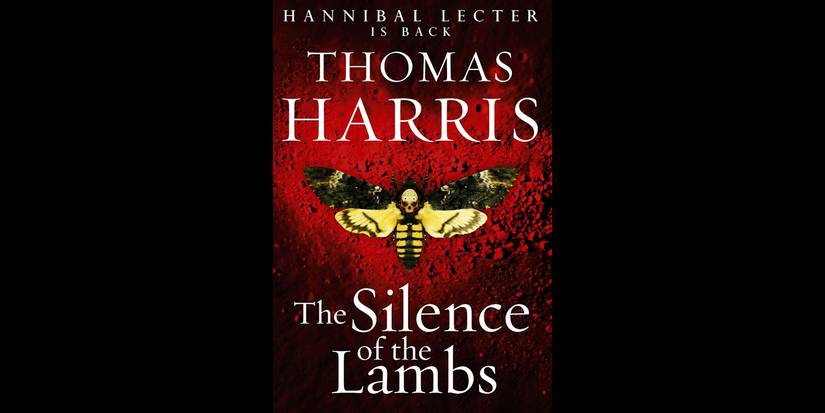
The Silence of the Lambs by Thomas Harris changed mystery fiction by putting the reader in close contact with the killer. The book follows FBI trainee Clarice Starling, who is sent to interview imprisoned psychiatrist and serial killer Hannibal Lecter while the Bureau hunts another murderer known as Buffalo Bill. Lecter may know enough to help identify him, but he refuses to simply hand Clarice the answers. Instead, he trades information for details about her childhood, fears, and ambitions. This turns every conversation between them into a strange exchange where Clarice is investigating Lecter while Lecter is trying to get under her skin. That relationship pushes the novel beyond a straightforward manhunt.
Buffalo Bill creates the immediate danger, especially once another woman is abducted, but Lecter becomes the unpredictable third person inside the investigation. At the same time, Harris never lets him completely take over the novel. Clarice remains the person driving the investigation, and her willingness to keep walking into rooms where people underestimate her makes her an incredibly compelling protagonist. Harris had already explored criminal profiling and the brilliant incarcerated killer in Red Dragon, but The Silence of the Lambs helped turn that combination into one of the defining formulas of modern serial-killer fiction.
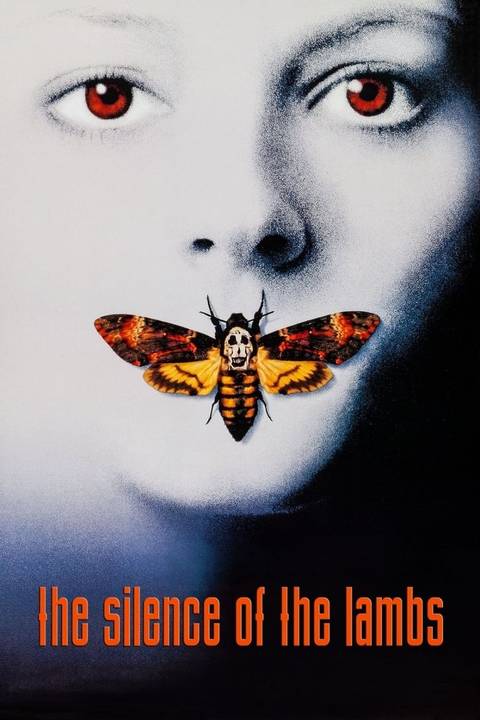
- Release Date
- February 14, 1991
- Runtime
- 119 minutes
- Director
- Jonathan Demme
- Writers
- Ted Tally, Thomas Harris
- Producers
- Edward Saxon, Kenneth Utt
KioskNews shows a cleaned-up reading view extracted from the publisher’s page — the original always lives on their site, not ours.