Ibon: Gov’t poverty standard ‘outdated,’ ‘unrealistic’
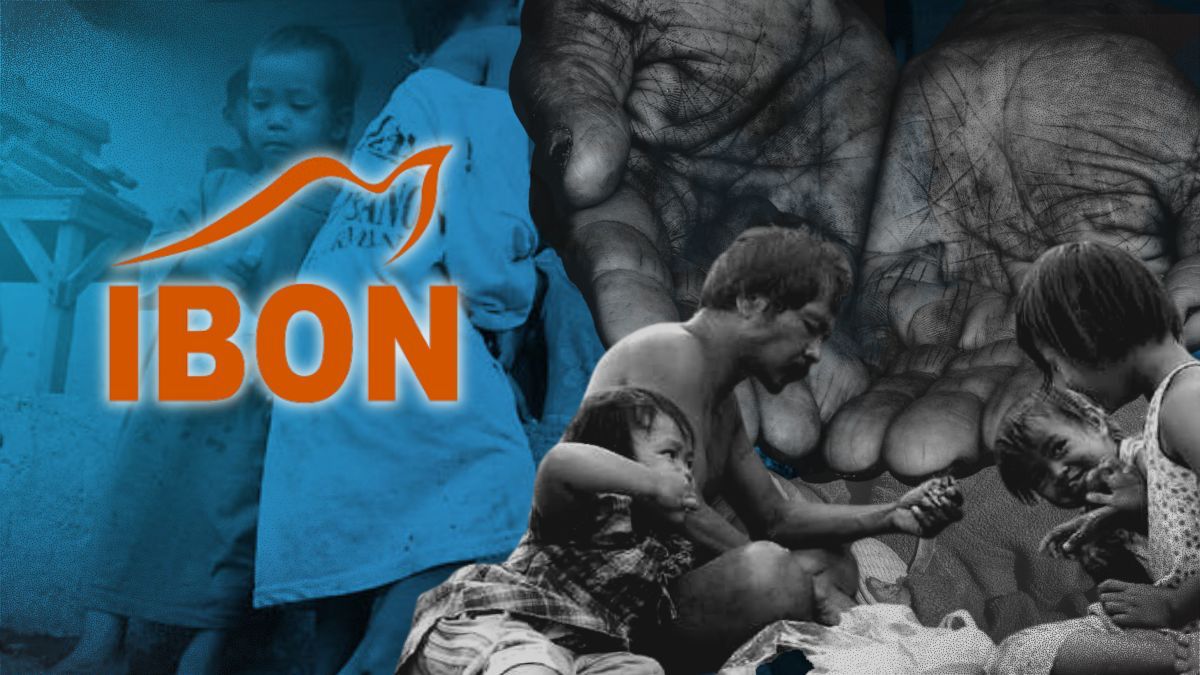

MANILA, Philippines — Those who spend more than P96.22 a day, or a family of five with an income slightly higher than P14,634 a month, are not considered poor based on the government’s own statistics.
The Philippines recorded its lowest poverty incidence at 9.7% in 2025, bringing the share of Filipinos living below the official poverty threshold to a single-digit rate, the Philippine Statistics Authority (PSA) said.
Article continues after this advertisement
The latest figures translate to 11.1 million people, down from 17.5 million, or 15.5%, in 2023 and 19.9 million, or 18.1%, in 2021, the year before President Ferdinand Marcos Jr. said he wanted to end his six-year presidency with a 9% poverty incidence.
FEATURED STORIES
NEWSINFO
NEWSINFO
NEWSINFO
Economic Planning Secretary Arsenio Balisacan said, “Reaching this milestone ahead of schedule demonstrates that expanding economic opportunities, complemented by effective social protection, can make a meaningful difference in people’s lives.”
READ: PSA: PH poverty hit lowest, single-digit level in 2025
Balisacan said that for the first time, fewer than one in 10 Filipinos are living below the poverty threshold, which the government set at P14,634 a month for a family of five in 2025, up from P13,873 in 2023 and P11,998 in 2021.
Outdated standard
But local think tank Ibon Foundation said the government’s celebration of the “decline” “ignores how flawed poverty standards discount the millions of Filipinos struggling to escape economic hardship or to attain a decent standard of living.”
Article continues after this advertisement
RELATED STORY: Gov’t poverty metrics: You’re not poor if you spend P21 per meal
Ibon Foundation said the government’s standard for defining who is poor is “problematic, outdated, and very unrealistic,” adding that the official methodology “understates poverty because its food threshold is based on a bare-minimum, least-cost basket.”
Article continues after this advertisement
Nonfood needs, meanwhile, are not directly and adequately costed.
The 2025 annual per capita poverty threshold is only P35,121, or P96.22 per person a day. For a family of five, this translates to P14,634 a month.
“This means a family earning even slightly more than this is officially considered non-poor,” Ibon Foundation said.
For the think tank, the high cost of food, housing, electricity, transportation, education, health care and other basic expenses should always be considered when setting the threshold for determining who is poor.
“By ignoring the reality of widespread poverty, the Marcos Jr. administration justifies merely carrying out band-aid solutions rather than truly resolving the structural roots of poverty,” Ibon Foundation said.
Living wage
Ibon Foundation said the gap becomes even clearer when measured against what families really need for a decent life, estimating the family living wage (FLW) at P1,277 a day for a family of five and P1,533 a day for a family of six.
“Yet the Philippine average minimum wage is only P512 a day. Thus, the average minimum wage covers only around 40% of the FLW for a family of five and just a third for a family of six. Millions of workers are still unable to afford a decent standard of living,” the think tank said.
It said that while the government’s targeted poverty alleviation programs are “important safety nets,” “relying heavily on dole-outs to move people above an already low poverty threshold only treats the symptoms rather than the structural roots of poverty.”
READ: DSWD: Drop in poverty affirms gov’t programs
“Poverty reduction should not mean merely keeping people barely above a statistical line,” Ibon Foundation said.
“The government must create the conditions for sustained and broad-based improvements in living standards by strengthening the domestic economy and developing engines of growth that generate stable, decent-paying jobs.”
For the think tank, beyond raising workers’ wages, this means developing Filipino industries and agriculture and strengthening public services, as these build an economy capable of generating sufficient and decent livelihoods for millions of Filipinos in poverty.
Your subscription could not be saved. Please try again.
Your subscription has been successful.
“Genuine poverty reduction will be measured not simply by how many Filipinos cross a very low poverty line, but by how many can actually afford a secure life with decent work and adequate incomes,” Ibon Foundation said. /dm
KioskNews shows a cleaned-up reading view extracted from the publisher’s page — the original always lives on their site, not ours.