Echoes of Rome in ancient China? What Beijing’s 1,800-year-old ship find reveals
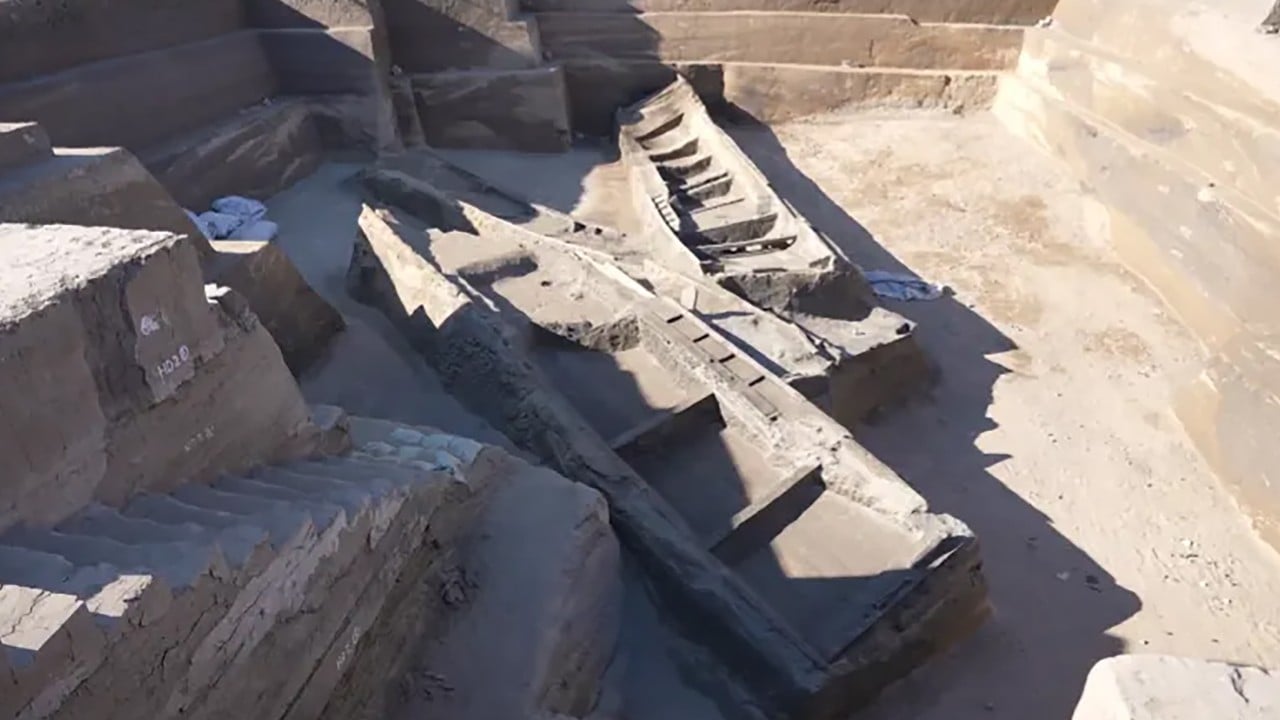
Three ancient wooden boats unearthed in Beijing and dating back about 1,800 years offer new evidence of shipbuilding technology and cultural exchanges between ancient China and the rest of the world, according to researchers.
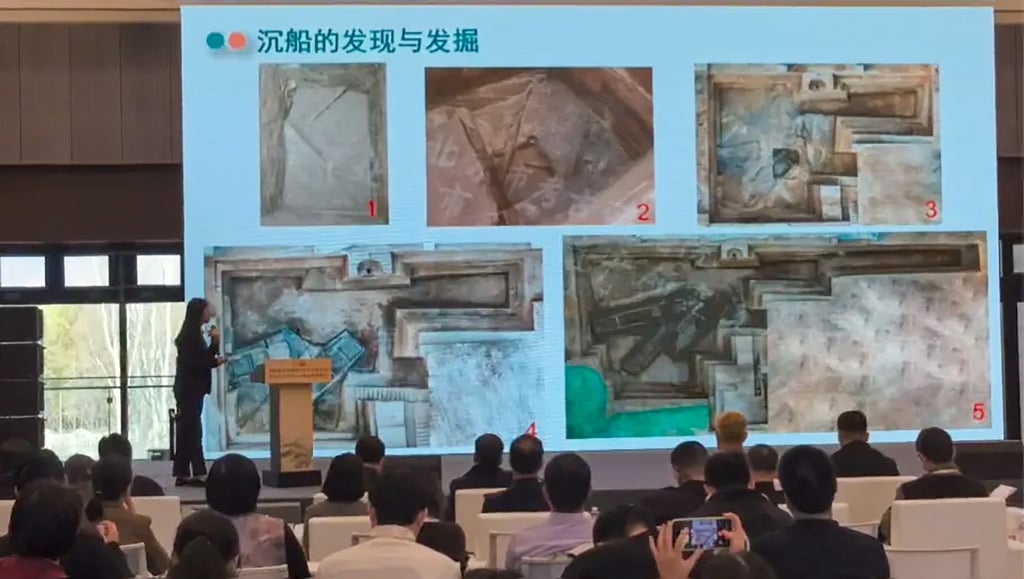
The researchers unveiled details of “the first physical evidence of ancient inland water transport” in the Chinese capital at the closing ceremony of the 2026 Beijing Public Archaeology Season on Saturday, according to an official social media account of the Beijing Municipal Cultural Heritage Bureau.
The three flat-bottomed boats, dating to the Han to Wei-Jin dynasties (206BC-AD420), were the largest and most structurally intact inland vessels of their period ever found in northern China, state news agency Xinhua reported.
The vessels were discovered in an ancient river channel along the former course of the Yongding River in Beijing’s Fengtai district in late 2025.
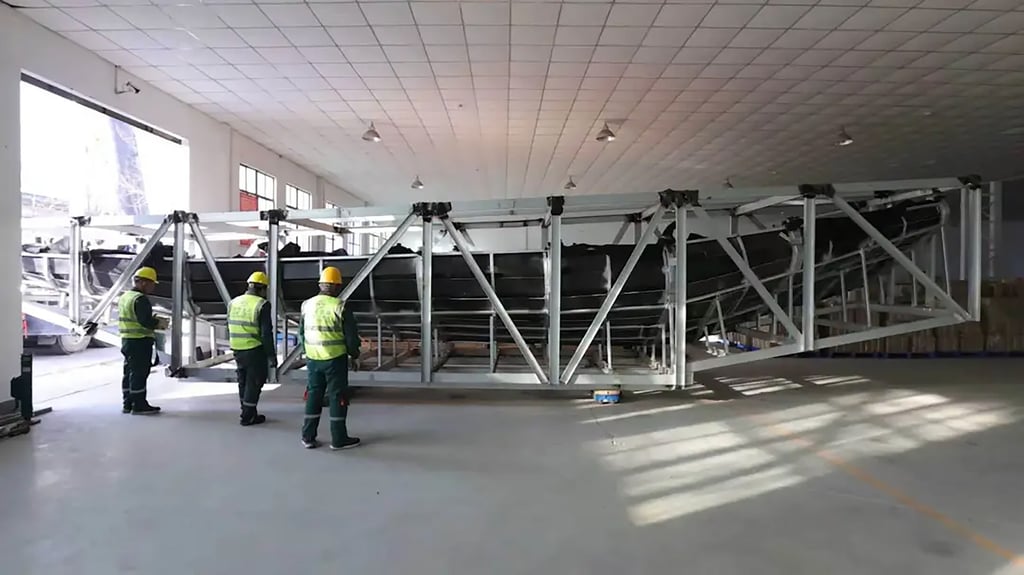
The largest of the three measures 14 metres (46 feet) long. Archaeologists found Chinese characters meaning “official” stamped on its wooden components, indicating state-managed transport.
The boats show sophisticated shipbuilding techniques for the period, some of which may be linked to practices used in the Mediterranean during the Roman era, according to the municipal Communist Party newspaper Beijing Daily.
A combination of interlocking wooden joints and pegs held the boats’ hulls together. Builders cut matching shapes into the edges of the planks forming the bottom, fitted them together and secured the joints with wooden pegs to keep them firmly in place.
The technique was widely used in Roman-era shipbuilding in the Mediterranean – roughly from the 1st century BC to the 5th century AD – but has rarely been documented elsewhere, according to the researchers.
The newly discovered vessels offered “fresh evidence of cultural and technological exchanges between East and West”, Beijing Daily reported.
Archaeologists first found a similar structure in East Asia in 2014, when they excavated a Han dynasty wooden boat, known as Silk Road No 1, in the ancient Chinese capital Xian in northwestern Shaanxi province.
“[Silk Road No 1] provides physical evidence of cultural exchanges between [the] Han dynasty [capital] Changan and Rome,” Peng Wen, curator of the boat’s exhibition, told Xinhua in a 2024 interview.
The Han dynasty marked an important period in the expansion of China’s contacts with the outside world.
In 138BC, Han dynasty emperor Wu sent envoy Zhang Qian westward to seek an alliance with the Da Yuezhi people against the Xiongnu. The Da Yuezhi declined the alliance, but Zhang brought back valuable information about the western regions that extended to the vast area of Central Asia.
Over the following decades, the trade routes expanded, carrying Chinese silk and other goods westward, bringing back horses, grapes and other products.
These networks also connected China with the Roman world through intermediaries including the Parthian Empire, which dominated ancient Iran and Mesopotamia.
In AD97, the Han dynasty sent an envoy, Gan Ying, on a mission to Da Qin, the Chinese name for the Roman Empire, seeking to establish direct contact. Gan reached the Persian Gulf but did not complete the journey.
In AD166, people claiming to be Roman envoys arrived at the Han court by sea via present-day central Vietnam, bringing goods including ivory, according to the Book of the Later Han. But historians have questioned whether they were official envoys or merchants.
And although there is no conclusive evidence of direct diplomatic ties between China and Rome, Han dynasty silk has been found in the Mediterranean region, while Western glassware has been unearthed in China.
KioskNews shows a cleaned-up reading view extracted from the publisher’s page — the original always lives on their site, not ours.