After midterms upheaval, US ag exporters call for stability in China trade
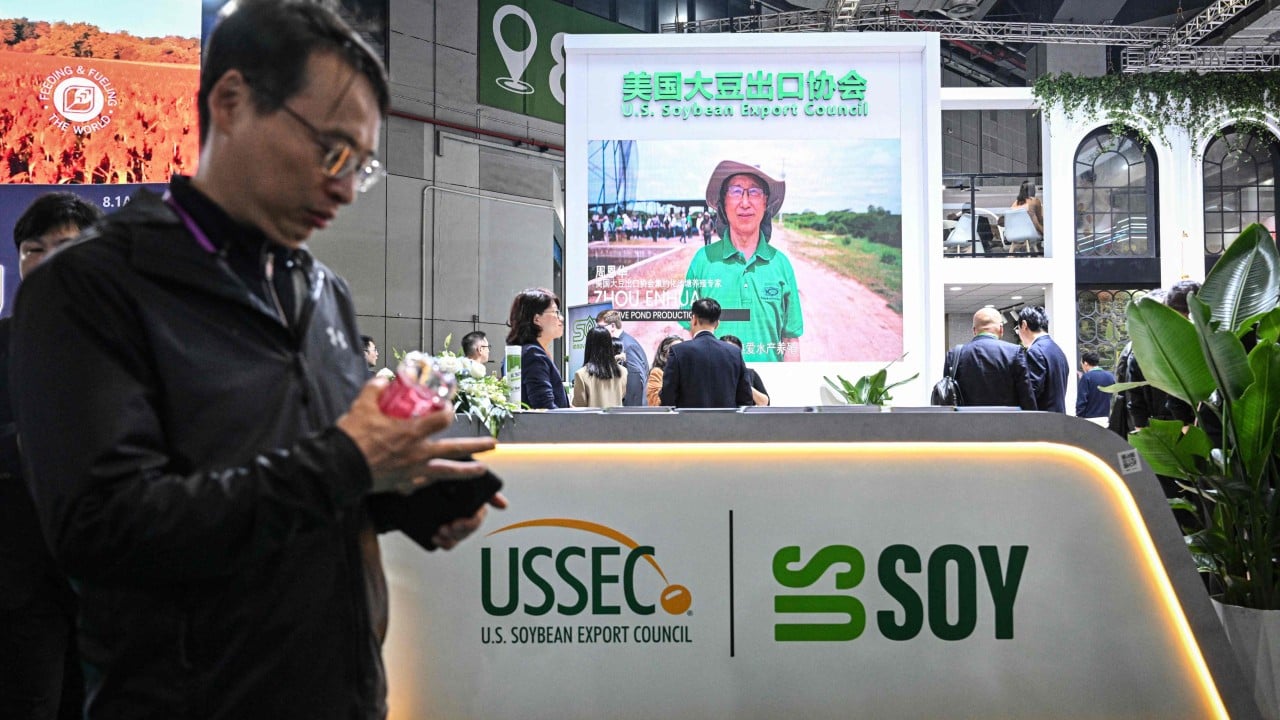
As the midterm “blue wave” threatens to further complicate US-China relations, American agricultural exporters are calling on Washington to focus on delivering the trade deals already agreed with Beijing and ending a period of damaging policy uncertainty.
With shipments of key products such as soybeans needing to be planned months – or sometimes an entire year – ahead, US farmers are in need of stability after last year’s trade war.
“Agriculture is ... an industry with long production cycles, so many things need to be planned well in advance,” said Frank Zhou, managing director of Cargill China, the Chinese arm of US agribusiness group Cargill.
“Greater certainty in the industrial policies of both countries would therefore be a huge boon for everyone involved in the supply chain.”
Zhou’s comments, made during an event on the sidelines of the China International Import Expo in Shanghai on Friday, came amid renewed discussion over the fate of the deals struck between the United States and China earlier this year.
China’s Ministry of Commerce said on Thursday that Beijing remained open to buying more US agricultural products, provided that reciprocal tariff cuts worth US$30 billion on each side were implemented first under the US-China Board of Trade.
The comment came a day after the Democrats’ landslide victory in the US midterm elections, which analysts said could complicate trade talks between Beijing and Washington by raising questions about the Donald Trump administration’s ability to honour its commitments.

At the event on Friday, Cao Derong, president of the China Chamber of Commerce of Import and Export of Foodstuffs, Native Produce and Animal By-products, called on both governments to “speed up the implementation” of the tariff-cutting framework, including by finalising the product lists and timeline as soon as possible.
Mollie Buckler, senior director of grower and international relations at the USA Rice Federation, said the US rice industry had yet to receive any orders from China under the agricultural purchase commitment, adding that everything was “still very much in negotiation”.
Buckler welcomed rice being included in the ongoing US$17 billion agricultural purchase discussions, adding that the federation looked forward to the agricultural working group meeting by the end of the year.
“I hope to see continuity in the conversation,” she said.
According to statements released by the White House in May and last November, China has committed to buying at least 25 million tonnes of US soybeans annually through 2028, as well as an additional US$17 billion per year of other American agricultural products, adjusted proportionally for 2026.
SCMP Plus is a new premium news platform that gives you an
all-inclusive edge to stay ahead on China news.
To access our exclusive content you’ll need to subscribe.
Already a subscriber?
LOG IN
Following the latest round of trade talks in September, the US and China agreed to establish an agricultural working group to address market access and regulatory issues, according to the Chinese commerce ministry.
US exporters said they were keen to see a return to stability in bilateral trade relations, as the trade war had taken a heavy toll on their business with China.
Vinod Shishodia, business head for Asia-Pacific at US nut company Valley Pride Ag, said the company’s direct business with China had fallen to about 10 per cent of its previous level, citing higher tariffs as a major factor.
Taking almonds as an example, he said tariffs had risen to around 35 per cent, from 5 to 10 per cent before the trade tensions.
“We are hoping that the tariffs will go back to the levels they were earlier,” he said at the expo.
“We are hoping that we can engage a lot more customers, and once their tariffs are reduced, then we can actually do a lot of business. We want to be ready for that opportunity, and that is why we are here.”
KioskNews shows a cleaned-up reading view extracted from the publisher’s page — the original always lives on their site, not ours.