[OPINION] Slowly but surely, Washington drifts away from Asia
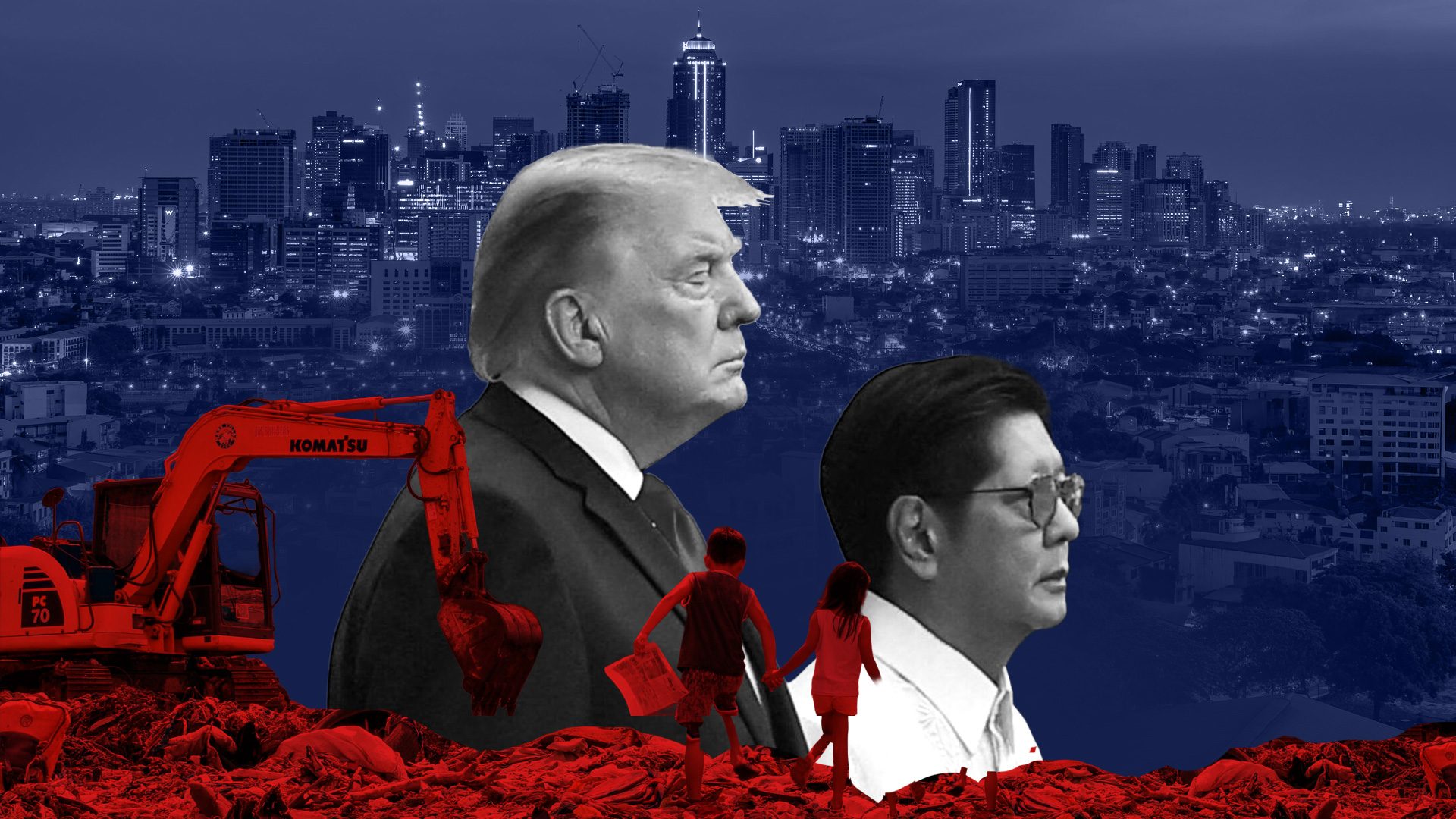
When he made his whirlwind trip to Kuala Lumpur to attend the Association of Southeast Asian Nations (ASEAN) summit in late October 2025, Donald Trump had Asian leaders bowing and scraping before him like feudal vassals. He had imposed punitive tariffs on all the countries of East Asia, and none of their leaders dared to complain lest he take umbrage and raise the tariffs several notches higher.
Cambodian President Hun Manet told Trump he would nominate him for the Nobel Peace Prize for “ending” his country’s border war with Thailand, and Malaysian Prime Minister Anwar Ibrahim, who had done the heavy lifting to bring Cambodia and Thailand to the table, graciously let him to take center stage and take all the glory for the fragile success of the negotiations.
Returning a year later, Trump was a significantly diminished figure.
He met briefly with ASEAN heads of state in Manila last week, the most significant news out of which were his announcing the conclusion of a controversial bilateral trade agreement with Thailand that was, in fact, still being negotiated — as well as his praise for the late president Ferdinand Marcos, the father and namesake of the incumbent president and the dictator who ruled the country from 1966 to 1986, saying the contemporary Marcos had “good genetics.”
Instead of cheers, Trump’s coming evoked jeers, with student-led mass demonstrations against the plan to include the Philippines in the US State Department initiative Pax Silica, which would incorporate the country into an artificial intelligence global supply chain aimed at countering a parallel initiative by Beijing.
There was no bowing and scraping this time. The assembled leaders probably smiled with secret satisfaction that the US Supreme Court had ruled in February of this year that Trump’s punitive tariffs against ASEAN and other countries were illegal; that he was trapped in a “forever war” with Iran; and that he had been dealt a massive blow by the results of the November elections, which saw the Democrats gain control of the Senate and House by very large margins, effectively rendering him a lame-duck president.
China’s shadow in Manila
As in previous years, China was a massive but unseen presence at the ASEAN summit. China has long been the number one trading partner of the Southeast Asian countries, its trade with ASEAN surpassing $1 trillion in 2025, with ASEAN being in deficit by $244 billion.
It has, however, trailed the US in terms of investments. Cumulative investment from the US in ASEAN hit $557 billion in 2025, while that of China was $199 billion.
However, while China’s economic relations with the region have remained relatively stable, things have been very rocky between ASEAN and the US under Trump. There is, for one, the administration’s push to impose punitive tariffs, motivated partly by strong suspicion that China has been using some countries, like Vietnam, as platforms to export Chinese goods to the US. Then, there is Washington’s drive to get information technology firms such as Taiwan’s TSMC and Korea’s Samsung to invest in facilities in the US owing to their being currently located in geopolitically vulnerable areas.
The pressure on IT companies to locate away from East Asia can only increase with the fallout from Nvidia CEO Jensen Huang ‘s marital scandal, with the claim of US intelligence agencies that the Singapore-based cloud computing provider Megaspeed, of which Alice Huang was the CEO, has been a source of unauthorized shipments of advanced Nvidia chips to Beijing that had been banned by the US.
Trump’s ambivalent vibes
The US security relationship with the region has also come under stress. The Philippines has been the US’s main ally in the region, yet Filipino officials have been dissatisfied with what they consider Washington’s purely rhetorical denunciations of clashes between the Chinese and Philippine coast guard vessels in the South China Sea. Southeast Asian governments have also noticed how the Trump administration has not given clear signs of coming to Taiwan’s defense in the event of a China-Taiwan clash, in contrast to the Biden administration’s explicit commitment.
Also noted was Trump’s failure to back Japanese Prime Minister Sanae Takaichi when she asserted Japan would be involved in defending Taiwan in event of hostilities breaking out between Taipei and Beijing. In fact, there’s been a sharp decline in US warships transiting through the Taiwan Straits, with the number falling by some 56% from transits during the Biden administration, leading the rightwing Heritage Foundation to anxiously assert that “there is a real risk that American allies and partners — let alone Beijing — could misinterpret the Trump administration’s strategy as a retreat on American commitments. Perceptions of that kind, once formed, can become difficult to reverse.”
It has also not escaped Southeast Asia’s governments that Trump has been eager to have a meeting with North Korean leader Kim Jong Un to lower tensions on the Korean peninsula, and that, despite the geoeconomic rivalry between Washington and Beijing, Trump wants to establish a friendly personal relationship with Chinese President Xi Jin Ping. During Xi’s visit to Washington last September, Trump pulled out all the stops to butter up the Chinese leader, just as Xi gave him full honors during his visit to Shenzen to attend the Asia Pacific Economic Cooperation leaders’ last week.
Many commentators have said that unlike his predecessors, Trump’s attitude towards ASEAN and other Asian states has been “transactional” instead of being anchored on longstanding ideological and security considerations, pointing to his levying punitive tariffs on friends and foes alike as well as to his hectoring countries hosting US bases to raise their contribution to their defense to five per cent of GDP.
The triple whammy
What many observers fail to note is that rather than just stemming from a businessman’s whims, Trump’s attitude is rooted in the reality that the American economic and military presence in the Asia Pacific is becoming structurally unsustainable for the US.
A legacy of the US drive to defeat Japan during the Second World War, the US bases from Korea to the Philippines were repurposed during the Cold War to contain China and the Soviet Union. In return for their political loyalty in the struggle against Communism, the US not only provided security but also gave Japan first and later South Korea and Taiwan, very liberal entry for their goods into the US market while allowing them to maintain high levels of tariff and non-tariff protection against US products, allowing all three to achieve high-speed industrial growth.
In the late eighties and early nineties, the so-called “tiger cubs” of Malaysia, Thailand, Indonesia, and Singapore took advantage of the same liberal access to the US market while maintaining tariff walls against US products. From the early nineties on, China took the same route, eventually displacing its Asian neighbors as the source of cheap manufactures for the US market.
But China took the so-called Asian export-industrialization model one step further: it encouraged US manufacturers to relocate to China to take advantage of labor that was five per cent of its price in the US. It was an offer that many of America’s big name corporations could not resist, with Apple leading the way, contracting most it manufacturing operations to Foxconn and other firms based in Shenzen. By 2017, Apple admitted to creating 4.8 million jobs in China, or double the number it had created in the US.
Thus, before Trump’s first term in office, the US was suffering a triple whammy in its relations with East Asia.
First, it was running massive trade deficits with almost all the East Asian countries. Second, it was being deindustrialized as US firms moved their labor-intensive operations to China, even as cheap Chinese-made goods flooded the US market and rendered those firms that had not relocated non-competitive. And, third, it was spending over $11 billion a year to maintain its massive base structure in Japan, Korea, the Philippines, and Singapore. It was largely this unsustainable economic and military deficit that lay behind the radical reorientation of US strategic policy represented by the National Security Strategy 2025 that was released late last year.
A new grand strategy
In the 80 years prior to NSS 2025, Washington’s “Grand Strategy” was to meet challenges anywhere in the world that posed a threat to the national interest of the United States, and towards this end, it built a formidable military machine and system of forward bases, most of which were in the Asia Pacific. In the four decades between the late forties and late eighties, the strategy was justified by the ideology of containing Communism and supposedly promoting democracy in Washington’s client states.
The fall of the Soviet Union, followed by the dynamic ascent of East Asia, the rapid deindustrialization of the US economy, and the 2008 Global Financial Crisis made the old Cold War image of the US being Atlas carrying the world on his shoulders increasingly anachronistic to many Americans. Even as the Republicans and Democratic party elites remained stuck in a time warp, committed to the old Containment strategy in post-Containment times, Trump was able to seize on a large section of the population’s feeling that the US could no longer shoulder the costs of a dated strategy and wield it as a militant slogan that had popular resonance: that US allies in Asia and Europe had “taken advantage of US generosity” to build robust economies and saw the US military umbrella as a great excuse to spend very little for their own security.
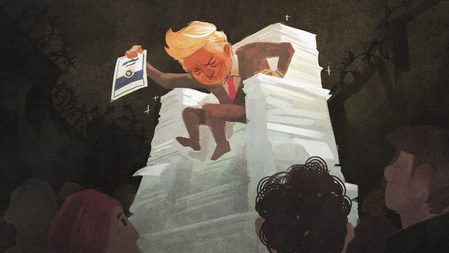
The trenchant introduction of NSS 2025 was definitely one-sided, but it also contained a great deal of truth:
After the end of the Cold War, American foreign policy elites convinced themselves that permanent American domination of the entire world was in the best interests of our country. Yet the affairs of other countries are our concern only if their activities directly threaten our interests…Our elites badly miscalculated America’s willingness to shoulder forever global burdens to which the American people saw no connection to the national interest. They overestimated America’s ability to fund, simultaneously, a massive welfare-regulatory-administrative state alongside a massive military, diplomatic, intelligence, and foreign aid complex. They placed hugely misguided and destructive bets on globalism and so-called “free trade” that hollowed out the very middle class and industrial base on which American economic and military preeminence depend. They allowed allies and partners to offload the cost of their defense onto the American people, and sometimes to suck us into conflicts and controversies central to their interests but peripheral or irrelevant to our own. And they lashed American policy to a network of international institutions, some of which are driven by outright anti-Americanism and many by a transnationalism that explicitly seeks to dissolve individual state sovereignty. In sum, not only did our elites pursue a fundamentally undesirable and impossible goal, in doing so they undermined the very means necessary to achieve that goal: the character of our nation upon which its power, wealth, and decency were built.
NSS 2025 made it clear that under Trump, building a bastion of economic and military power in the western hemisphere would be Washington’s priority, and this was underlined by his brazen words about annexing Greenland, his implicit threat to take over the Panama Canal, and his kidnaping in broad daylight of Venezuelan President Francisco Maduro early this year.
While the NSS did say the US had a strong stake in the Asia Pacific, the stress was on reversing past policies towards China that were based on wrong economic assumptions by four successive administrations — assumptions that led to policies that has turned China into a “near peer competitor” of the United States. The priority was to “rebalance America’s economic relationship with China, prioritizing reciprocity and fairness to restore American economic independence.” Keeping the status quo on Taiwan is mentioned as is keeping the sea lanes in the South China Sea open, but it is formulaic. As for Southeast Asia, there is no mention at all of mainland and island Southeast Asia as a specific area of interest.
Will the Legions Sail Home?
Most Southeast Asian elites have taken very seriously NSS 2025’s message that their region is now of secondary, if not marginal, interest to Washington, and the Japanese and Korean establishments now have very serious doubts about the solidity of the US commitment to their defense if they are not seen as making progress in meeting Washington’s demand that they spend at least five per cent of their GDP on their defense and defray most of the costs of maintaining the US bases they host.
The realization is seeping in among the elites of the region that relying on the naval power and offshore bases of a power some 7000 miles away to provide protection is unsustainable in the long run, if not in the medium term. That the legions of America will eventually go home, as did Rome’s legions in Britain in the third century CE, is no longer dismissed as improbable.
Contributing to the apprehensions of the Asian elites has been Washington’s failure to subdue Iran after nine months of warfare. If a small country like Iran could successfully resist a massive joint US-Israeli to overthrow the their government, would not a bigger power be much more difficult for the US to take on? Also, the Asian elites know that the war has hardened the opposition of the American right, middle, and left to armed US intervention anywhere in the world. In other words, their staying power is no longer guaranteed by American military power.
In contrast, Asian elites have seen how simply by standing aloof from the Iran conflict, and allowing the US to expend its military resources and legitimacy in a war that has served mainly Israel’s interests, China has seen its status grow throughout the region. Winning the battle for influence without a fight might be an exaggerated way of putting it, but that is essentially what China has derived out of Trump’s ill-advised adventure in Iran. For Asia’s elites, the lesson is clear: China, not the US, is here to stay, so it is best to come to terms with this reality.
A revived ASEAN Regional Forum?
Here, it might be useful for Asian governments to look three decades back. There was a time, the 1990’s, when the governments of ASEAN, led by Malaysia’s Mohammad Mahathir, promoted the ASEAN Regional Forum (ARF) as a site where conflicts among countries in the region could be settled via diplomacy and not by force. It had its flaws, but the ARF was a step in the direction of a collective security system.
Yet the US boycotted the founding meeting of the ARF in Bangkok in July 1994 to register Washington’s disapproval of ASEAN’s ambitions. Then President Bill Clinton, in fact, explicitly denigrated the ARF and other multilateral security initiatives, saying they “are a way to supplement our alliances and forward military presence, not supplant them.” When the Asian Financial Crisis hit the region in 1997, Washington used it not only to try to resubordinate the ASEAN economies but also to delegitimize the ARF.
Today, with the US’s retreat from Asia, the ASEAN Regional Forum might be an idea whose time has finally come. The question is, does the current crop of ASEAN leaders have the courage and imagination to seize this opportunity to create what could eventually become a collective security order where governments from all over East Asia can come together to settle their differences?
Trump as today’s Nixon
And the US? For all his contradictions, haphazard behavior, and narcissistic tendencies, Donald Trump’s influence on the direction of the relationship between East Asia and the US must not be underestimated. His retreat from the region, justified and promoted by NSS 2025, may one day lead historians to compare him to Richard Nixon, the unlikely Cold Warrior who made peace with China and brought it into the mainstream of global politics and eventually into the global economy.
Trump dumped an obsolete Grand Strategy of global hegemony that the US could no longer sustain but which continued to command the adherence of both the fossilized Republican and Democratic Party elites, like Dick Cheney and Joe Biden, who knew what toll it was taking but lacked the nerve to abandon it. Indeed, the interminable war on Iran to which Trump was maneuvered by Israeli Prime Minister Netanyahu simply confirmed for his MAGA base the correctness of the isolationist thrust of NSS 2025.
But what if a Democrat is elected president in 2028? Would they not bring back the old Grand Strategy? I’m very sure they won’t. In fact, the Cold War Democrats owe Trump the favor of doing the dirty work of cutting off a diseased organ that they did not have the guts to hack off. – Rappler.com
Walden Bello is co-chair of the Board of the Bangkok-based Focus on the Global South and co-editor, with Don Kalb, of Backlash: The Global Rise of the Radical Right (Pluto: 2026).
KioskNews shows a cleaned-up reading view extracted from the publisher’s page — the original always lives on their site, not ours.