Can or not? 2 migrant workers in Singapore using recycling machine sparks debate
The refund is small – 10 Singapore cents (8 US cents) per bottle – for each return under Singapore’s Beverage Container Return Scheme (BCRS). But the uproar is big.
Since BCRS reverse vending machines became fully operational on October 1, Singapore’s social media has been flooded with videos and posts criticising people for raiding bins and holding up others by returning containers by the bag-load.
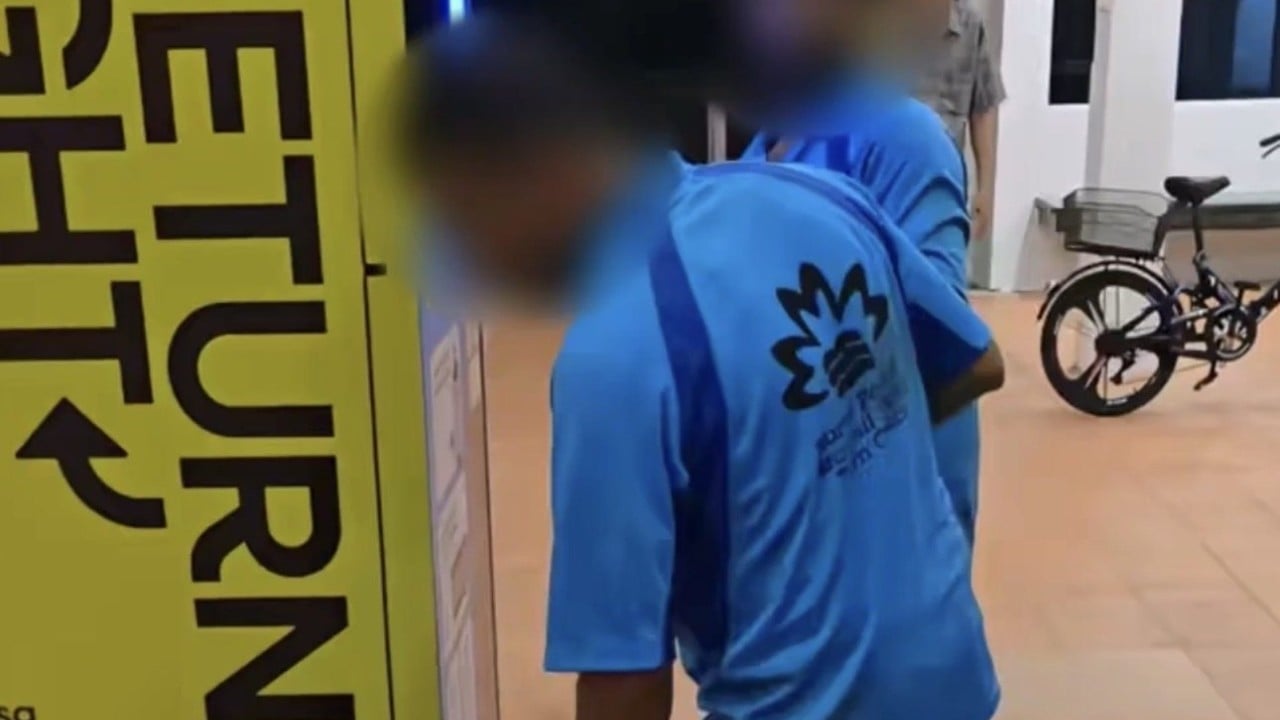
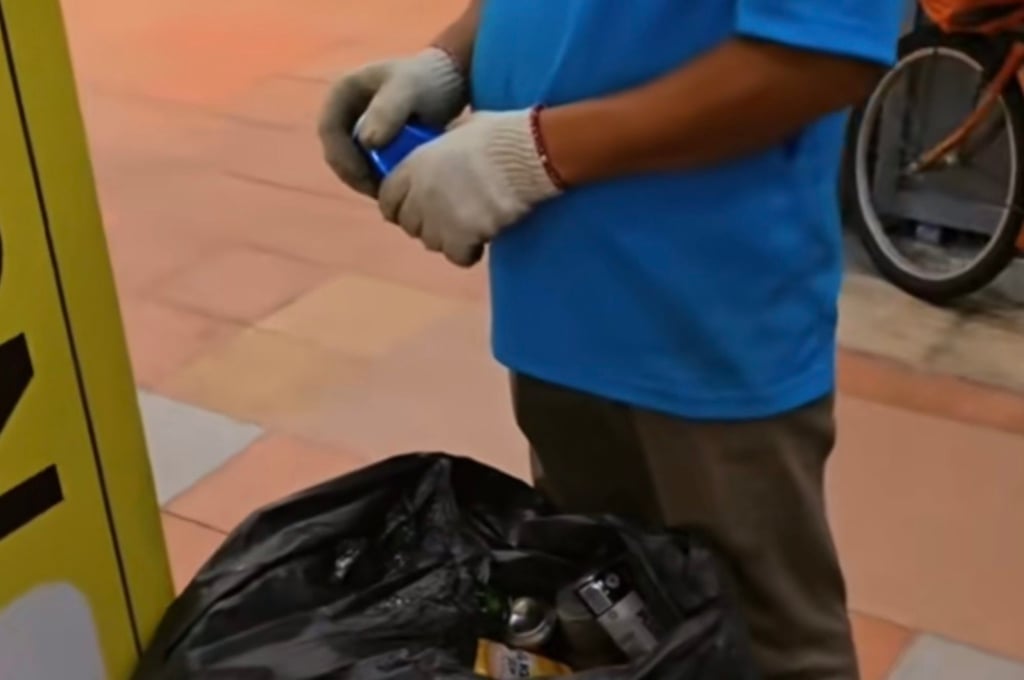
A recent controversy was sparked by a post on October 28 showing two town council workers returning empty drink cans at a BCRS machine.
The post was captioned: “Why the govt say old ppl cannot take cans from rubbish bins but the town council ppl can? They r taking salary from the govt yet they take the refund money from the cans taken from the rubbish bins!! That’s mean they r taking double salary?”
Social media users defended the two migrant workers, calling the TikTokker “kaypoh” or busybody, and telling him to “leave them alone”.
“Bro, they only make a couple of bucks for that whole bag,” one wrote.
On Sunday, the two men’s employer, Marine Parade-Braddell Heights Town Council, defended them in a social media post.
“The workers were depositing containers from their own purchases, with some also given to them directly by residents. They were also doing so after their working hours,” the council said.
“Our workers are not permitted to rummage through refuse or recycling bins to retrieve such items. We emphasised this requirement to all conservancy workers since the scheme began,” it added.
“In light of the recent incident, we have also reminded them to follow the town council’s operational guidelines and advised them not to wear their work uniforms when carrying out personal BCRS activities outside working hours, to avoid any misunderstanding.”
On Tuesday, Minister for Sustainability and the Environment Grace Fu said members of the public were discouraged from rummaging through refuse bins for empty drink containers, AsiaOne news website reported.
“Apart from the potential disamenities to the wider community, there are also hygiene and safety concerns for the individuals doing so,” the minister explained in a written parliamentary reply.
Depending on how much mess they made, those caught rummaging through bins could be issued with advisories or fined. Under Singapore’s public health regulations, people convicted of combing through a refuse bin or removing items from it can be fined up to S$1,000 for a first offence, with a further S$100 for each day the offence continues.
“Where individuals are found rummaging through public refuse bins without leaving litter on the ground, our officers may provide an advisory,” Fu said.
If the scavengers are assessed to be vulnerable individuals, they could be referred to social welfare agencies.
The BCRS, launched on April 1, is “designed to spark behavioural change by encouraging more sustainable consumption habits and enabling the transition towards a circular economy”, according to the official website.
A 10 Singapore cent deposit is included in the price of recyclable beverage containers, which can be claimed back at designated return points and reverse vending machines.
As of September 27, over 48 million containers had been collected, the National Environment Agency said on October 1. The average number per transaction increased from 2.8 in April to 8.2 in September.
Around 55 per cent of materials collected are plastics, while the remaining 45 per cent are metal.
KioskNews shows a cleaned-up reading view extracted from the publisher’s page — the original always lives on their site, not ours.