PLA overhauls joint training after drills expose coordination gaps
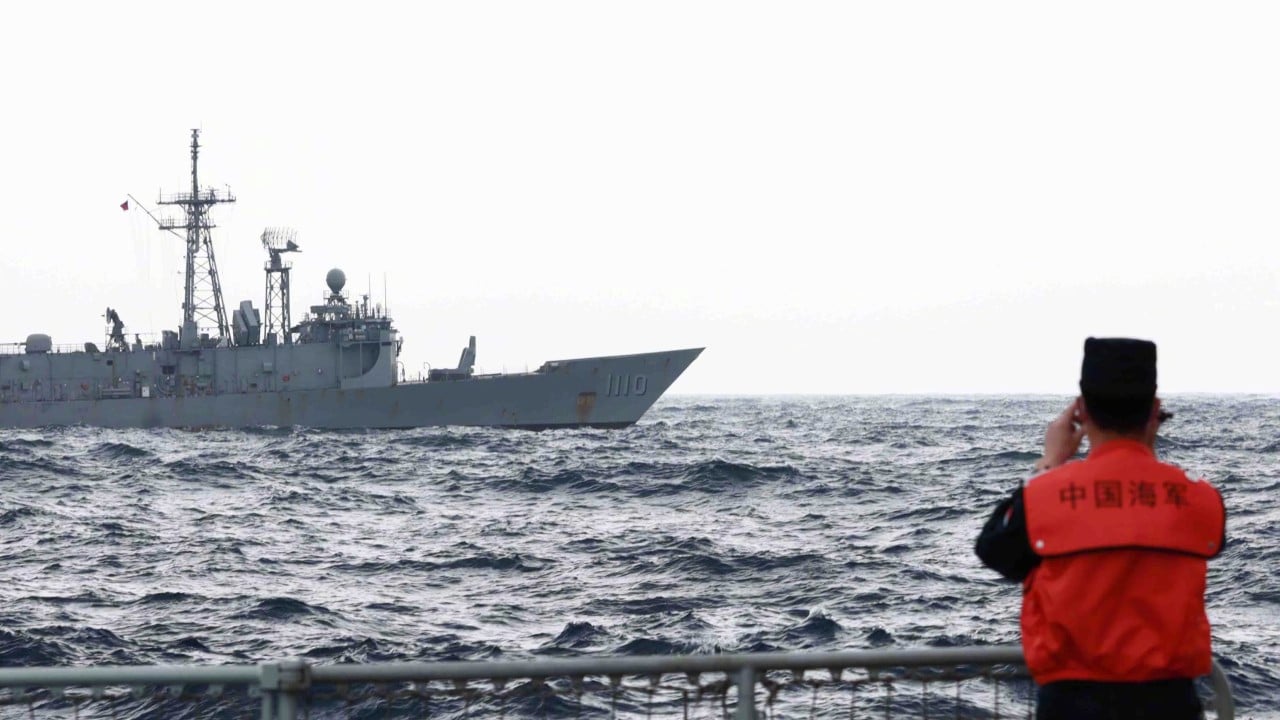
China’s military is overhauling how its different services train together as joint exercises continue to expose shortcomings in the People’s Liberation Army’s ability to fight as an integrated force.
The latest example came as a navy destroyer flotilla under the PLA’s Eastern Theatre Command changed how it trains with other services following drills in which airforce jets were twice judged to have been “shot down” by friendly forces.
A PLA Rocket Force unit also struggled to guide strikes against moving targets at sea during the manoeuvres, according to a report on Monday by the Chinese military newspaper PLA Daily.
Under revised training arrangements, the flotilla now shares its training waters and targets with other services and designs joint exercises around their training requirements.
The changes also include regular cross-service personnel exchanges, with one recent exercise plan calling for warships to use information from other services to provide terminal guidance for long-range strikes.
The initiatives reflect Beijing’s push to translate a decade of military reforms and rapid weapons modernisation into joint combat capabilities. Analysts say overcoming barriers to cross-service integration will be crucial to China’s ability to fully exploit its growing arsenal of advanced warships, aircraft and missiles in a major conflict.
China has long recognised the need to improve coordination between its military services. The 1991 Gulf War helped spur extensive PLA research into joint operations, with Beijing advocating greater integration from the mid-2000s.
These efforts culminated in a major restructuring of the PLA’s operational command system in 2016, when Beijing replaced seven military regions with five joint theatre commands responsible for directing cross-service operations.
Under the revised structure, services became mainly responsible for developing capabilities, while permanent joint command organisations were established at national and theatre levels to direct operations in peacetime and wartime.
02:21
Satellite images reveal massive Chinese warplane build-up across 11 western airbases
Developing joint combat capabilities was “equal in importance to introducing new weapons and equipment, developing new doctrine and conducting training”, said Dennis Blasko, a former US military attache in Beijing.
Alongside those structural changes, Beijing has more recently sought to overhaul how its services train together, with the PLA leadership calling in May last year for greater sharing of training facilities and resources to support integrated joint training.
By October, PLA Daily was reporting growing cross-service cooperation and the shared use of training facilities. In January, the newspaper described how a naval flotilla had been sharing its training waters with airforce and rocket force units since last year.
Monday’s report described how the Eastern Theatre Command flotilla’s initial efforts to share training facilities exposed further problems. In one instance, conflicting airspace requirements forced participating units to make last-minute adjustments, disrupting training for much of the day.
“The problem of de-conflicting airspace and avoiding fratricide (among their own naval, air and missile forces) especially at sea is a new challenge for the PLA,” Blasko said.
The flotilla subsequently incorporated its annual training plan into a higher-level joint training programme, with resources allocated centrally according to individual units’ requirements.
Other services can now request access to the flotilla’s training resources, with a dedicated naval team incorporating their requirements into joint exercise plans, according to PLA Daily.
The changes also extend to information sharing. In one exercise, an airforce early warning aircraft transmitted target data and threat assessments to a warship via a data link.
In a separate joint exercise, the time between orders being issued and forces deploying was cut by nearly a third, according to PLA Daily.
Chinese military commentator Song Zhongping said jointly designing exercises and sharing training facilities were essential because future wars could not be won by a single branch of the military alone and would require all branches to work together as a system.
The PLA would therefore pursue additional ways of integrating its combat capabilities, with particular emphasis on developing information technology and intelligent systems, Song added.
Christian Wirth, a researcher at the German Institute for International and Security Affairs, said the PLA had made considerable progress since broader military reforms began in 2015, citing repeated large-scale exercises around Taiwan since 2022.
Even so, cross-service integration still appears to be a work in progress, with a report published last week by the Centre for Strategic and International Studies (CSIS) finding that the PLA’s ability to conduct joint operations remained uneven. The authors found that the PLA appeared better prepared for joint operations that could be extensively planned in advance than for those requiring rapid, decentralised coordination at the tactical level.
Besides training and procedural adjustments, Wirth said achieving jointness required changes in mindset “of a kind that military leaders gain only from serving in different services, including as commanders with responsibilities for joint operations, from early on in their careers”.
Beijing appears to be aware of that need. In a separate report on Wednesday, PLA Daily said the National Defence University’s Joint Operations College had recently organised war games involving mixed teams of students from army, navy and airforce command colleges.
The participants had to integrate the operational thinking of different services into a single operational plan. The newspaper said cross-service study visits and on-site instruction had recorded nearly 20,000 attendances this year.
KioskNews shows a cleaned-up reading view extracted from the publisher’s page — the original always lives on their site, not ours.