'Riesgo pais': Argentina's country risk tops 1,000 points as bonds slump
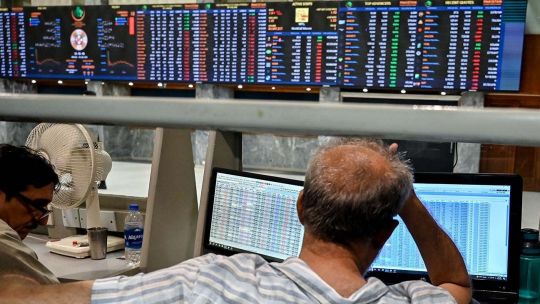
Argentina's country risk indicator climbed above 1,000 points on Friday, reaching 1,025 as government bonds fell sharply, extending a downturn in the country's financial markets.
The breach of the 1,000-point threshold is significant for investors and highlights renewed concerns about Argentina's ability to meet its future debt obligations and the cost of borrowing on international markets.
Country risk, known locally as riesgo país locally and tracked by JP Morgan, measures the additional interest rate investors demand to hold a country's sovereign debt compared with US Treasury bonds, which are considered a benchmark for low-risk investments.
Argentine public debt securities fell by more than three percent, while the indicator briefly reached 1,038 points. The Merval stock index initially dropped more than two percent before recovering to trade 0.4 percent higher. Argentine companies listed in the United States remained in negative territory.
Economist Santiago Casas attributed the bond sell-off partly to political uncertainty ahead of the 2027 presidential election, while financial analyst Javier Timerman pointed to a significant external shock in global markets.
Investor concerns over the future profitability of artificial intelligence companies have also contributed to international market volatility.
The official dollar exchange rate at state-owned Banco Nación approached 1,600 pesos, selling at 1,595 pesos, while the informal 'blue' dollar rate traded at 1,650 pesos.
KioskNews shows a cleaned-up reading view extracted from the publisher’s page — the original always lives on their site, not ours.