THE MISSING VOTERS: The invisible winner: SA counted the votes — who’s counting the absent?
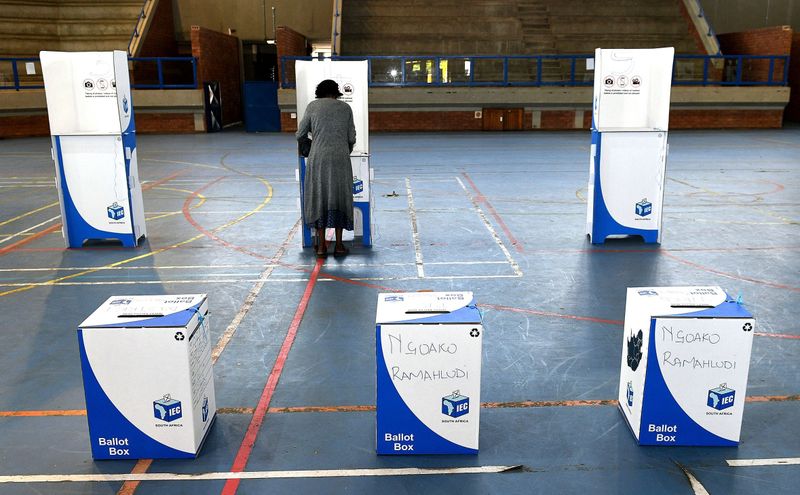
The most uncomfortable finding of the 2026 local government elections lies beyond the party rankings. According to the estimates used in our analysis, roughly twice as many eligible South Africans did not vote as voted.
That should interrupt the celebrations.

An election can be successfully administered while revealing a profound weakness in political participation. A party can improve its share of the vote while remaining disconnected from much of the public. A council can acquire the authority to govern without securing the active endorsement of most eligible residents.
These realities belong in the same conversation as the results.
The improvement that conceals the gap
The Political Campaigns Resource Hub(PCRH) defines the “missing voter” as an eligible citizen who is either unregistered or registered, but does not vote.
Using PCRH’s estimate of 45.5 million eligible citizens, a register of about 29.2 million and reported participation of about 14.9 million, the picture is stark:
About 16.3 million eligible citizens were outside the voters’ roll.
About 14.3 million registered citizens did not vote.
Together, about 30.6 million eligible citizens were missing from the election.
These are estimates, dependent on the underlying population methodology and final participation figures. Their implication nevertheless deserves serious scrutiny: participation may have improved while the number excluded or disengaged remained enormous.
Our comparison with 2021 suggests that the registered population who did not vote barely changed, from about 14.2 million to 14.3 million. Meanwhile, the estimated unregistered population increased.
More people voting is progress. But progress must also be measured against the population democracy is supposed to include.
A rising turnout percentage cannot, on its own, tell us whether the participation gap is closing.
A lawful mandate carries a wider responsibility
Low participation does not invalidate an election. Those who voted made consequential choices, and the resulting councils have a responsibility to govern.
But winning office and earning broad public confidence are different achievements.
The first is established through electoral rules. The second must be demonstrated through responsive government, credible leadership and sustained engagement.
National participation figures cannot describe every municipality. Some communities participated more strongly than others. Yet the national pattern raises a question every incoming administration should confront:
How will you govern for residents whose voices were absent from the result?
The obligation to provide water, maintain roads, collect refuse and account for public money extends to everyone. It does not depend on whether someone registered, voted or supported the winning party.
Absence has more than one meaning
The missing voter is a useful analytical category. It is not a single political constituency.
Some people deliberately abstained. Others wanted to participate, but encountered practical barriers. Some distrust the available choices. Others feel disconnected from politics altogether.
We should resist the temptation to turn millions of different experiences into one convenient explanation.
Non-participation does not automatically mean apathy. Equally, it does not automatically constitute a conscious protest.
An empty place in the voting queue tells us that someone was absent. It does not tell us why.
This is where research matters. Participation figures reveal the scale and geography of absence. Understanding its causes requires listening to people and testing explanations against evidence.
The distinction between unregistered citizens and registered non-voters is equally important. One group did not enter the electoral process; the other entered it but did not complete it. Their circumstances may overlap, but the barriers cannot simply be assumed to be identical.
The missing voter needs to be heard
Public debate too often responds to non-voters with a lecture.
They are accused of surrendering their voice, enabling bad government or forfeiting the right to complain.
That response may express the frustration of those who participated. It does little to explain why others stayed away.
Consider the resident who has voted repeatedly and still lives with unreliable water, sewage in the street and unanswered complaints. Another appeal to civic duty may encounter a harder question: what changed after the last vote?
That question deserves an answer.
Voting matters because it helps determine who exercises public power. But the case for participation becomes harder to sustain when the experience of government repeatedly disappoints.
Political engagement cannot be reduced to asking people to believe again whenever an election approaches. Credibility develops through what happens between elections: whether commitments are honoured, failures acknowledged and residents treated as people whose concerns deserve a response.
What the results cannot tell us
The scale of non-participation invites dramatic counterfactuals. Would greater turnout have changed the leading party? Produced fewer hung councils? Strengthened smaller parties?
The honest answer is that the totals alone cannot tell us.
Missing voters do not share a single preference. Their participation could have changed outcomes in different directions across different municipalities.
Nor can aggregate election results establish that a particular party’s former supporters stayed home. A declining vote total can reflect abstention, switching, population movement or several factors together.
Strong analysis must distinguish what the numbers demonstrate from what they invite us to investigate.
The missing voter deserves more than being recruited into whichever explanation suits the speaker.
Campaigns must confront the credibility question
For the study of political campaigns, this election raises a fundamental issue: what does campaign success mean when public engagement remains so limited?
Rallies, advertising and digital visibility show that political activity took place. They cannot, by themselves, establish that citizens felt heard, trusted the promises or believed participation would matter.
Campaign analysis should therefore examine the quality of engagement alongside its reach. Did citizens have opportunities to question candidates? Were local concerns answered? Were promises specific enough to be assessed after the election?
These questions connect campaigning to accountability.
They also challenge the habit of treating the public as an audience that becomes relevant only when votes are required.
The result beyond the results board
We call the missing voter the “invisible winner” to expose the scale of absence, not to suggest that abstention delivered a collective victory.
Those who stayed away won no common programme. Their reasons were not counted. Their interests will still be affected by the councils others elected.
That is precisely the concern.
South Africa must be able to recognise electoral progress while confronting the distance that remains between its institutions and millions of eligible citizens.
The next democratic achievement should be measured not only in a well-run election, but in stronger reasons and fairer opportunities to participate.
The seats have been allocated. The responsibility is much larger.
The votes determine who governs. The missing voters remind us how much work remains to earn public confidence. DM
Nyasha McBride Mpani is executive lead, Shikamo Political Campaign & Advisory Services, and Glen Mpani is group lead, International Centre for Political Campaigns.
KioskNews shows a cleaned-up reading view extracted from the publisher’s page — the original always lives on their site, not ours.