What prolonged extreme heat means for Malaysia’s poultry: Growth slows, eggs dip, but no automatic shortage
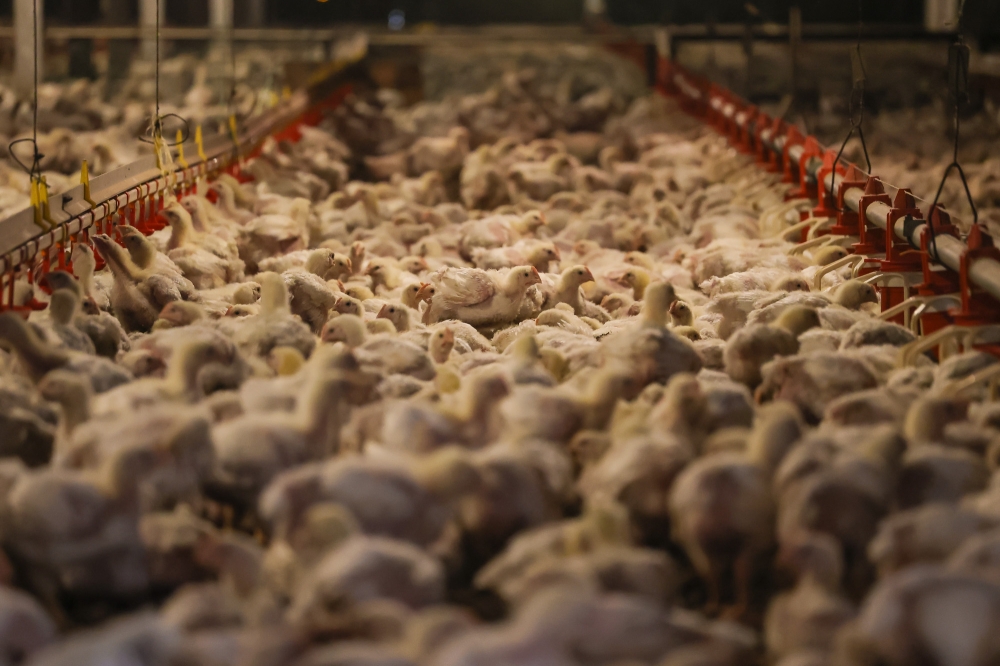

Broiler chickens face slower growth, higher mortality and lower egg yields in prolonged heat, though experts stress Malaysia’s national supply is not automatically at risk. — Picture by Yusof Isa
By Muhammad Yusry
First Published: Thursday, 24 Sep 2026 7:00 AM MYT
KUALA LUMPUR, Sept 24 — With Malaysia bracing for an intensification of El Niño conditions, prolonged extreme heat could affect the country’s poultry production, particularly if high temperatures persist for days or weeks.
The effects could include slower growth in broiler chickens, higher mortality and lower egg production, potentially putting pressure on Malaysia’s chicken and egg supply.
However, experts and poultry farmers caution that extreme heat will not automatically lead to a national shortage.
Professor Datuk Zulkifli Idrus, director of the Institute of Tropical Agriculture and Food Security at Universiti Putra Malaysia, said the severity and duration of the heat, as well as how well farms are prepared, would determine the impact on production.
“A short heatwave is not likely to seriously disrupt national supply.
“It’s the prolonged, widespread extreme heat that worries people, but how much depends on farm preparedness.
“A Super El Niño wouldn’t necessarily lead to a national chicken or egg shortage,” he said.
How could heat affect chicken production?
Broiler chickens consume less feed during hot weather because digestion and metabolism generate additional body heat.
As a result, heat-stressed birds can grow more slowly and become less efficient at converting feed into body weight.
“Heat stress also increases the release of stress hormones, particularly corticosterone, which can alter metabolism, reduce growth, harm gut health and impair feed efficiency,” Zulkifli said.
Modern broilers are particularly vulnerable because they grow rapidly and generate considerable body heat.
Heavier birds nearing market weight can have greater difficulty shedding excess heat, making them more susceptible during prolonged periods of high temperatures.
Severe or prolonged heat stress can also increase mortality.
Zulkifli said deaths could occur within hours during a severe heat event, particularly among heavier birds, if the chickens are unable to dissipate enough body heat.
However, he said there was no single estimate for how much mortality could increase across Malaysia because losses would vary between farms.
Factors such as housing, ventilation, cooling, stocking density, bird age, water supply and farm management would all influence the outcome.
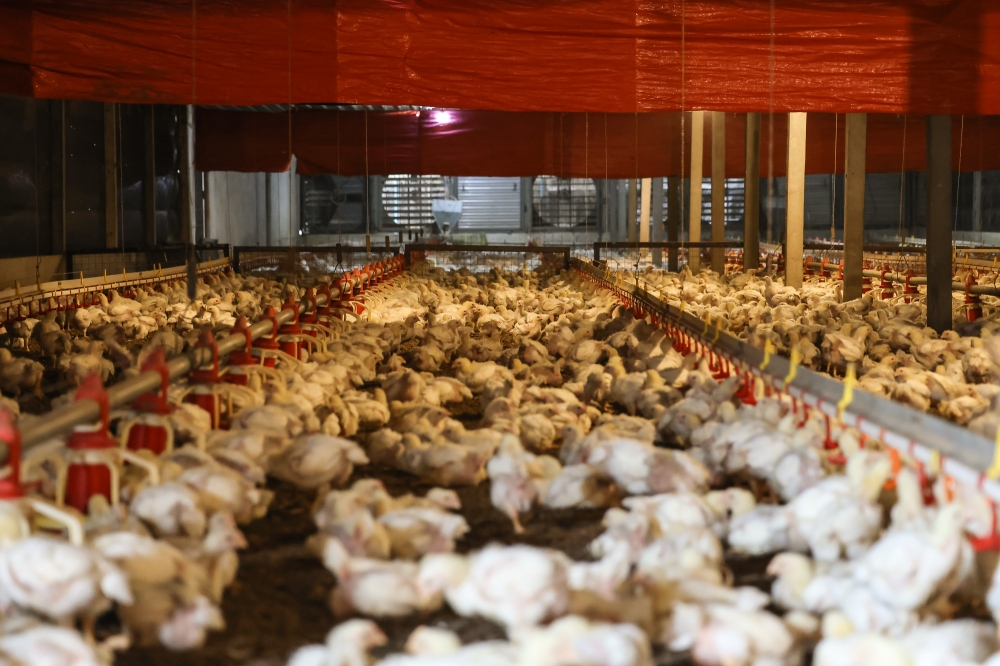
Large exhaust fans inside Mohd Muzamri Shoib’s closed-house chicken farm. — Picture by Yusof Isa
What about egg production?
Laying hens can also experience reduced productivity during prolonged heat.
When temperatures rise, hens eat less, reducing the nutrients and energy available for egg production.
Prolonged heat exposure can also increase stress hormone levels and interfere with reproductive processes and egg development.
This can result in fewer and smaller eggs, as well as poorer eggshell quality.
“Laying hens can lose egg production quickly as they reduce their feed intake,” Zulkifli said.
While laying hens are generally more heat tolerant than heavier broilers, prolonged heat can still have a significant effect on their productivity.
Could this affect Malaysia’s chicken supply?
Potentially, but the impact would not be immediate.
For broilers, slower growth could mean birds take longer to reach market weight, while higher mortality could reduce the number available for sale.
For eggs, lower production could reduce the quantity entering the market.
If these effects occur across a large number of farms at the same time, overall supply could come under pressure.
Zulkifli said prolonged and widespread extreme heat could therefore affect supply, but the extent would depend on how severe the conditions are and how effectively farmers can mitigate the heat stress.
Mohd Muzamri Shoib, a broiler farmer and chairman of the Selangor Poultry Farmers Association, likewise cautioned against directly linking hot weather to a chicken shortage.
“I would be cautious about saying that hot weather causes a shortage of broiler chickens.
“It would be more accurate to say that excessive and prolonged heat stress can affect broiler production performance, particularly if temperature, drinking water, nutrition and ventilation cannot be properly managed,” he said.
For Muzamri, the key issue is therefore not simply how hot temperatures become, but whether farms can maintain conditions that allow chickens to continue growing normally.
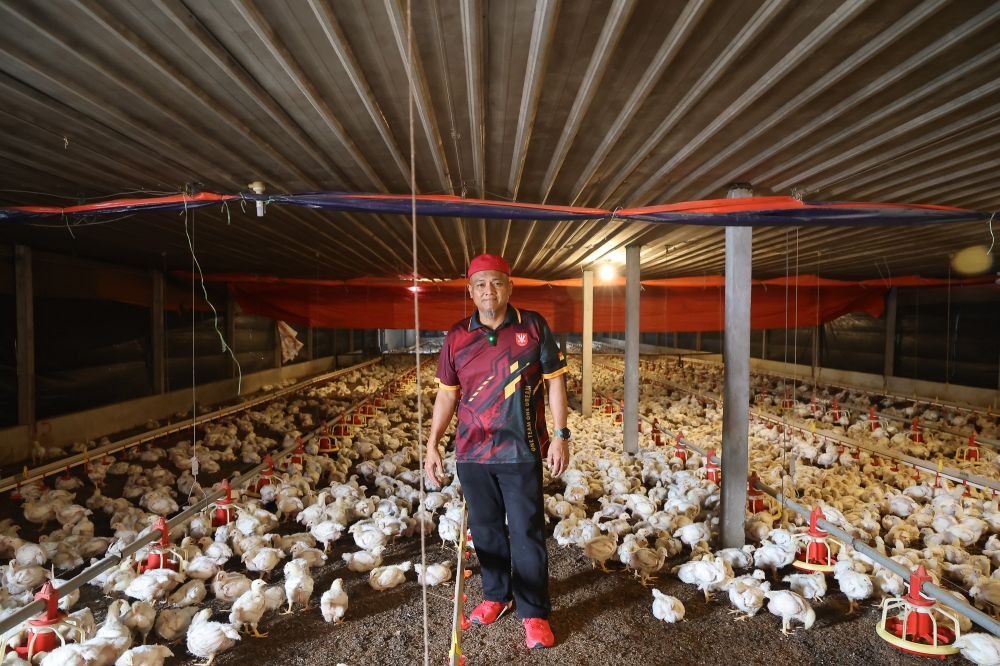
Muzamri inside his closed-house chicken farm in Jalan Kebun, Shah Alam. — Picture by Yusof Isa
Why farm preparedness matters
Zulkifli said farms with better environmental controls should be better equipped to withstand prolonged heat.
Closed-house systems with environmental controls provide greater control over ventilation, temperature and cooling, although they are more expensive to build and operate.
Backup generators are also important, particularly for closed-house farms, where a power failure could stop ventilation and cooling systems.
Nutritional strategies such as probiotics, prebiotics and some phytogenic feed additives may also help chickens cope with heat stress, although these should complement rather than replace proper cooling, ventilation and water supply.
Muzamri said farmers should begin preparing before their chickens show signs of heat stress.
“If El Niño conditions result in a prolonged period of hot weather, in my view, farmers need to make preparations early rather than waiting until the chickens begin showing signs of heat stress.
“Fans, cooling pads, water pumps, sensors, generators and water supplies need to be inspected and maintained more frequently,” he said.
He said his farm also incurs additional costs to purchase ice to help cool the poultry houses during the hottest part of the day, between 11am and 3pm.
So, should consumers expect a chicken shortage?
Not necessarily.
A short heatwave is unlikely to seriously disrupt Malaysia’s national chicken and egg supply.
The bigger concern is a prolonged and widespread period of extreme heat that affects production across multiple farms.
Even then, the extent of any impact on supply would depend on the severity and duration of the heat and how well poultry farmers are able to manage the conditions.
In short, Super El Niño does not automatically mean a chicken shortage, but prolonged heat stress could put pressure on poultry production if farms are unable to keep losses under control.
KioskNews shows a cleaned-up reading view extracted from the publisher’s page — the original always lives on their site, not ours.