33 Years After Cheers, Sitcoms Are Still Learning The Wrong Lesson From Sam & Diane


Arielle Port started as a TV producer, developing content for Netflix (Firefly Lane, Brazen) and Hallmark (The Santa Stakeout, A Christmas Treasure) before transitioning into entertainment journalism. Her love of story went from interest to lifelong passion while at The University of Pennsylvania, where she fell in with a student-run web series, Classless TV, and it was a gateway drug. Arielle Port has been a Writer for Screen Rant since August 2024. She lives in Los Angeles with her boyfriend and more importantly, her cat, Boseman.
Sign in to your ScreenRant account
Cheers established multiple sitcom benchmarks that television has spent decades trying to recreate: the perfect place to hang out, an ensemble that feels like family, and perhaps most influentially, the will-they, won't-they romance. Cheers famously struggled in the ratings during its first season and finished near the bottom, but NBC renewed it due to critical acclaim.
The show subsequently became one of the defining American sitcoms. Sam and Diane’s will-they, won’t-they relationship became the blueprint sitcom romances have followed ever since. Sam’s laid-back charm and Diane’s intellectual intensity are the perfect example of opposites-attract chemistry. Every interaction was an argument, and every argument was a flirtation.
Sam and Diane became shorthand for the will-they, won’t-they sitcom romance, even as the ending of their relationship faded from the cultural memory. Their relationship ended halfway through Cheers’ 11-season run when Diane left Boston to pick up her writing career, promising Sam she would return but never coming back after the season 5 finale.
No sitcom has turned the bittersweet combination of physical attraction and romantic incompatibility into comedy quite like Cheers. The audience desperately wanted Sam and Diane to be together because of Ted Danson and Shelley Long’s incredible chemistry, but at every point the writing demonstrated they would not make a healthy long-term couple.
Cheers did something surprisingly rare: it distinguished what the audience wanted emotionally from what made sense for the characters. For more than 30 years since Cheers’ finale, sitcoms have taken the wrong lessons from Sam and Diane’s relationship.
Unlike Cheers, Modern Sitcoms Force A Happy Ending

The lesson modern sitcoms took from Cheers was to keep two characters apart for as long as possible. The Office stretched Jim and Pam's mutual attraction across three seasons, while New Girl spent nearly two seasons building toward Nick and Jess's coupling, but Cheers didn’t make audiences wait that long.
Sam and Diane kissed in the season 1 finale and were fully in a relationship by the beginning of season 2. Getting together wasn't the culmination of their story; it allowed Cheers to ask whether incredible chemistry was enough to make a relationship work. “Will they, won’t they” is a storytelling device, but “Should they?” is a character question.
Sam and Diane’s relationship repeatedly brought out the worst in both of them. Diane made Sam feel intellectually inadequate, while Sam made Diane feel pretentious and irritating. After their first breakup, Sam, a recovering alcoholic, relapsed and started drinking again, while Diane checked herself into a psychiatric hospital, bringing Frasier Crane to Cheers in the most problematic way.
Cheers could exaggerate the fallout for comedy, but the point was remarkably consistent: as irresistible as Sam and Diane were together, the relationship wasn't particularly good for either of them. Their attraction kept pulling them back toward each other, while their fundamental incompatibility kept demonstrating why they shouldn't stay there.
Admittedly, Diane's original departure wasn't entirely a creative choice. Shelley Long decided to leave Cheers after her five-year contract ended, cutting the Sam and Diane story short. Yet six years later, Cheers had the perfect opportunity to give its defining couple the conventional happy ending.
Diane returned in the Cheers finale, and she and Sam immediately rekindled their romance after some posturing hijinks. They nearly flew away together to start over in Los Angeles before realizing that loving each other didn't mean they should build a life together.
|
How Sitcom Will They, Won’t They Couples Ended |
||||
|---|---|---|---|---|
|
Sitcom |
Couple |
Romance Begins |
Break Up? |
Endgame? |
|
Cheers |
Sam & Diane |
Season 2 |
Yes |
No |
|
Friends |
Ross & Rachel |
Season 2 |
Yes |
Yes |
|
The Office |
Jim & Pam |
Season 3 |
No |
Yes |
|
New Girl |
Nick & Jess |
Season 2 |
Yes |
Yes |
|
Brooklyn Nine-Nine |
Jake & Amy |
Season 3 |
No |
Yes |
Friends famously made the opposite choice. Rachel literally got off the plane, abandoning a new life in Paris to reunite with Ross. Chemistry became compatibility simply because audiences had spent a decade invested in their romance. Cheers understood the difference.
Audiences desperately wanted Sam and Diane together, but the series never confused that desire with evidence that they belonged together. Modern sitcoms learned how powerful it is to make viewers wait for a couple to get together, but too often forgot that getting together doesn't have to answer whether they should stay that way.
Cheers Got Even Bigger After Diane Left Halfway Through
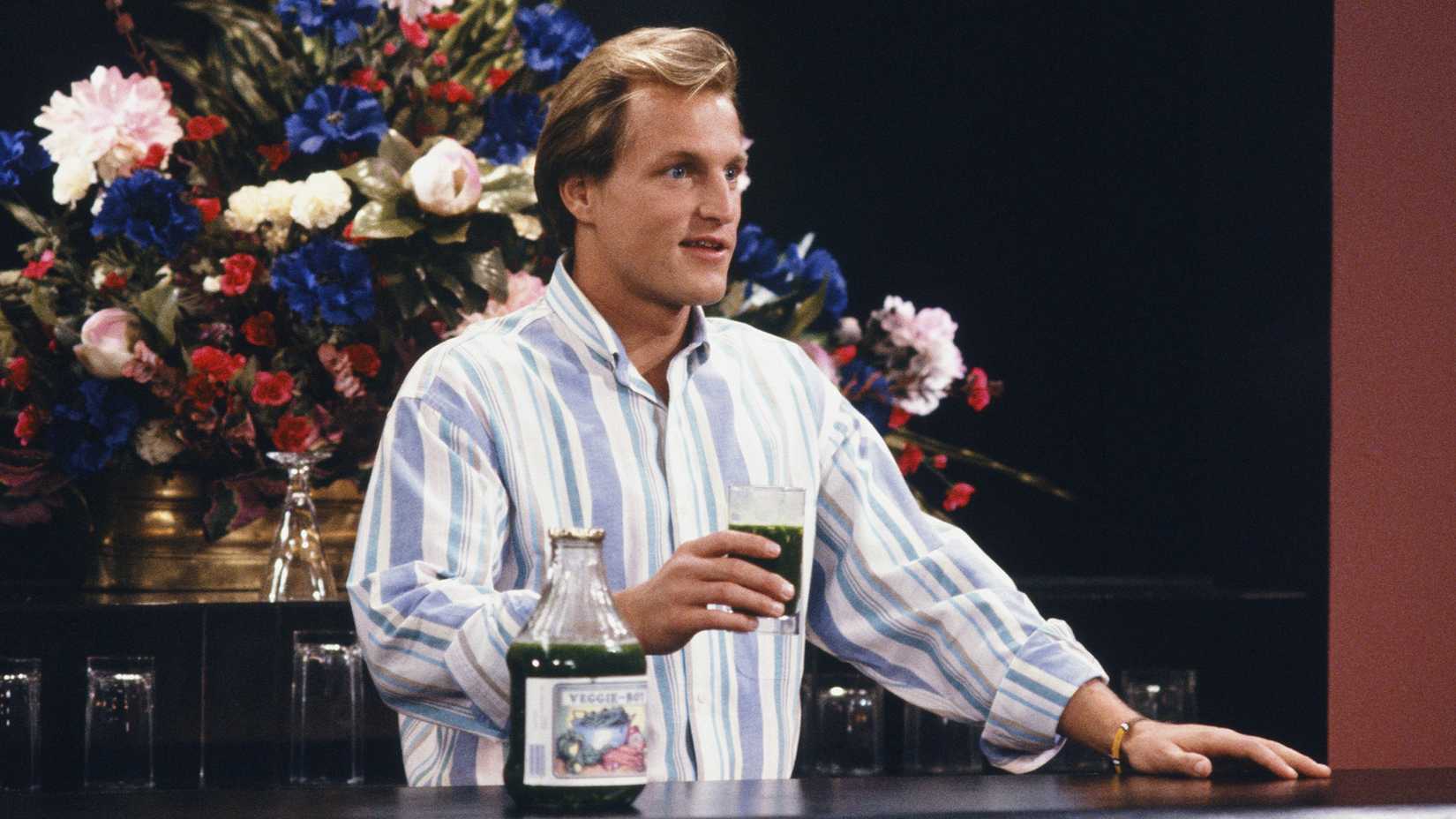
Diane left Cheers after season 5, which turned out to be less than halfway through the sitcom’s remarkable 11-season run. Losing Shelley Long could have been disastrous. Sam and Diane’s relationship had been the show’s biggest ongoing storyline since the pilot, and suddenly Cheers had to continue without one half of the pairing that helped make it a phenomenon.
However, Cheers had already proven it could successfully refresh its cast. After Nicholas Colasanto died during season 3, Woody Harrelson joined Cheers in season 4 as Woody Boyd, effectively filling the role in the ensemble left by Coach while creating a completely distinct character.
Following Long’s departure, Kirstie Alley joined as Rebecca Howe in season 6. Crucially, Cheers didn’t simply make Rebecca the new Diane. Although there was some romantic tension between Rebecca and Sam, their dynamic was fundamentally different, and Rebecca developed into a major character in her own right.
Without Sam and Diane’s will they, won't they relationship driving the story, Cheers increasingly leaned into the strength of its ensemble. The series ultimately ran for another six seasons after Diane left, proving that the relationship that helped make Cheers famous wasn’t necessary for the show to remain great.
Filmed Before a Live Studio Audience
American Sitcom
Trivia Challenge
☕FriendsI’ll be there for you
💼The
OfficeThat’s what she said
🥣SeinfeldNo soup for you!
🏠Modern
FamilyWe’re a family
🎥ClassicsGolden era
01
For ten seasons, six friends gathered at a Manhattan coffee shop with a famously orange couch. The group — Ross, Rachel, Monica, Chandler, Joey, and Phoebe — made this spot their second living room. What is the name of this iconic café?
✓ Correct! Central Perk is the coffee shop where the Friends gang spent most of their free time. With its iconic orange couch and Gunther behind the counter pining for Rachel, it became one of the most recognizable fictional locations in TV history.
✗ Cue the sad trombone! The answer is Central Perk. MacLaren’s Pub is from How I Met Your Mother, Monk’s Café is from Seinfeld, and The Coffee Bean is a real chain. Central Perk is where Phoebe played “Smelly Cat” and six friends became family.
02
The American version of The Office follows the employees of Dunder Mifflin’s Scranton branch, led by their well-meaning but painfully awkward regional manager. Which actor played the beloved Michael Scott?
✓ Correct! Steve Carell turned Michael Scott into one of the most iconic sitcom characters ever. His mix of cringe-worthy humor and surprising heart anchored The Office for seven seasons. “That’s what she said” became an inescapable pop culture catchphrase.
✗ Cue the sad trombone! The answer is Steve Carell. Rainn Wilson played Dwight Schrute, Ed Helms was Andy Bernard, and Ricky Gervais created the original British version and played David Brent. Carell’s Michael Scott is the heart and soul of the American Office.
03
Often called “the show about nothing,” this groundbreaking 1990s sitcom followed a fictionalized version of a stand-up comedian and his three friends in New York City as they obsessed over life’s minor annoyances. Which show is it?
✓ Correct! Seinfeld (1989–1998), created by Jerry Seinfeld and Larry David, revolutionized the sitcom with its observational humor about everyday life. From “The Contest” to “No soup for you!”, it produced some of the most quoted moments in TV history.
✗ Cue the sad trombone! The answer is Seinfeld. Frasier was a Cheers spin-off, Everybody Loves Raymond focused on family dynamics, and Curb Your Enthusiasm is Larry David’s later show (which is essentially a spiritual sequel). Seinfeld is the original “show about nothing.”
04
In this CBS sitcom, a father in the year 2030 tells his children the winding, years-long story of how he met their mother. Along the way, audiences meet Barney Stinson, whose catchphrase “Legen — wait for it — dary!” became iconic. Which show is this?
✓ Correct! How I Met Your Mother (2005–2014) starred Josh Radnor as Ted Mosby and Neil Patrick Harris as the suit-obsessed Barney Stinson. The show’s creative framing device and running gags made it a 2000s staple — though its controversial finale still divides fans.
✗ Cue the sad trombone! The answer is How I Met Your Mother. New Girl featured Jess and the loft gang, Happy Endings was a short-lived cult favorite, and The Big Bang Theory focused on Pasadena physicists. Only HIMYM gave us Barney’s Playbook and the blue French horn.
05
Modern Family ran for 11 seasons on ABC, following three interconnected families. One fan-favorite character is a goofy, magic-loving real estate agent married to Claire Pritchett, played by Ty Burrell. What is this character’s name?
✓ Correct! Phil Dunphy, the self-proclaimed “cool dad,” is Modern Family’s lovable goofball. Ty Burrell won two Emmy Awards for the role. Phil’s terrible magic tricks, his book of “Phil’s-osophy” wisdom, and his devotion to Claire made him a modern sitcom icon.
✗ Cue the sad trombone! The answer is Phil Dunphy. Jay Pritchett is the family patriarch played by Ed O’Neill, Cameron Tucker is Mitchell’s partner played by Eric Stonestreet, and Manny Delgado is Gloria’s son. Phil is the magic-loving, “cool dad” real estate agent.
06
This 1980s sitcom is set in a Boston bar “where everybody knows your name.” It starred Ted Danson as an ex-baseball player turned bartender and ran for 11 seasons, spawning the spin-off Frasier. Which classic sitcom is this?
✓ Correct! Cheers (1982–1993) is one of the most beloved sitcoms ever made. Ted Danson’s Sam Malone, Shelley Long and Kirstie Alley as his love interests, and a legendary ensemble made it a ratings juggernaut. Its finale was watched by over 80 million viewers.
✗ Cue the sad trombone! The answer is Cheers. Taxi was a late-70s/early-80s sitcom, Night Court was set in a courtroom, and Wings was actually created by Cheers writers but set at an airport. Only Cheers gave us Sam and Diane, Norm’s barstool, and one of TV’s all-time great theme songs.
07
Andy Samberg stars as a childish but brilliant detective in this comedy set in a New York City police precinct. The show was saved by NBC after Fox cancelled it, thanks to a massive fan campaign. Which sitcom is this?
✓ Correct! Brooklyn Nine-Nine (2013–2021) starred Andy Samberg as Detective Jake Peralta alongside Andre Braugher’s scene-stealing Captain Holt. When Fox cancelled it in 2018, fan outrage was so loud that NBC picked it up within 24 hours for three more seasons.
✗ Cue the sad trombone! The answer is Brooklyn Nine-Nine. Parks and Recreation was set in Pawnee’s government offices, Scrubs took place in a hospital, and Superstore was set in a big-box retailer. Only B99 featured the 99th Precinct and the legendary Jake-Holt dynamic.
08
In this beloved 1990s NBC sitcom, a street-smart teenager from West Philadelphia is sent to live with his wealthy aunt and uncle in Bel-Air. The show launched its star into global superstardom. Who played the titular Fresh Prince?
✓ Correct! Will Smith played a fictionalized version of himself in The Fresh Prince of Bel-Air (1990–1996). The show’s theme song is one of the most recognizable in TV history, and the series launched Smith’s career from rapper to one of the biggest movie stars in the world.
✗ Cue the sad trombone! The answer is Will Smith. Martin Lawrence had his own show Martin, Eddie Murphy was already a film star, and Jamie Foxx had The Jamie Foxx Show. Only Will Smith flipped his life upside down and moved to Bel-Air to become the Fresh Prince.
Season Finale Your Laugh Track Record
/ 8
Are you a showrunner — or still binge-watching reruns on the couch?
Like The Office decades later, Cheers survived losing a central cast member by allowing the ensemble and its dynamics to evolve rather than trying to perfectly recreate what had been lost. Diane eventually returned for the Cheers series finale, giving Sam and Diane one final chapter. Fittingly, the episode became one of the most-watched television broadcasts in American history.

- Release Date
- 1982 - 1993-00-00
- Network
- NBC
- Showrunner
- James Burrows, Glen Charles, Les Charles, Ken Estin, Sam Simon, David Angell, Peter Casey, David Lee, Bill Steinkellner, Cheri Steinkellner, Phoef Sutton, Tom Anderson, Dan O'Shannon
- Directors
- John Ratzenberger, George Wendt, Michael Zinberg
- Writers
- David Lloyd, Kathy Ann Stumpe, Jonathan Stark, Tracy Newman, Andy Cowan, Janet Leahy, Sue Herring, Tom Leopold, Chris Cluess, David Pollock, Elias Davis, Elliot Shoenman, Jeff Abugov, Daniel Palladino, Katherine Green, Jeffrey Duteil, Michael J. Weithorn, Joanne Pagliaro, Eugene B. Stein, Kimberly Hill
-

Billie Bird
Lillian Miller
-

Kirstie Alley
Rebecca Howe
Cheers is an American sitcom set in a Boston neighborhood bar where owner and former baseball player Sam Malone, waitress Diane Chambers, and a rotating group of employees and regular patrons form the core ensemble.
KioskNews shows a cleaned-up reading view extracted from the publisher’s page — the original always lives on their site, not ours.