Bronx Zoo rescues parrots confiscated at the U.S.–Mexico border
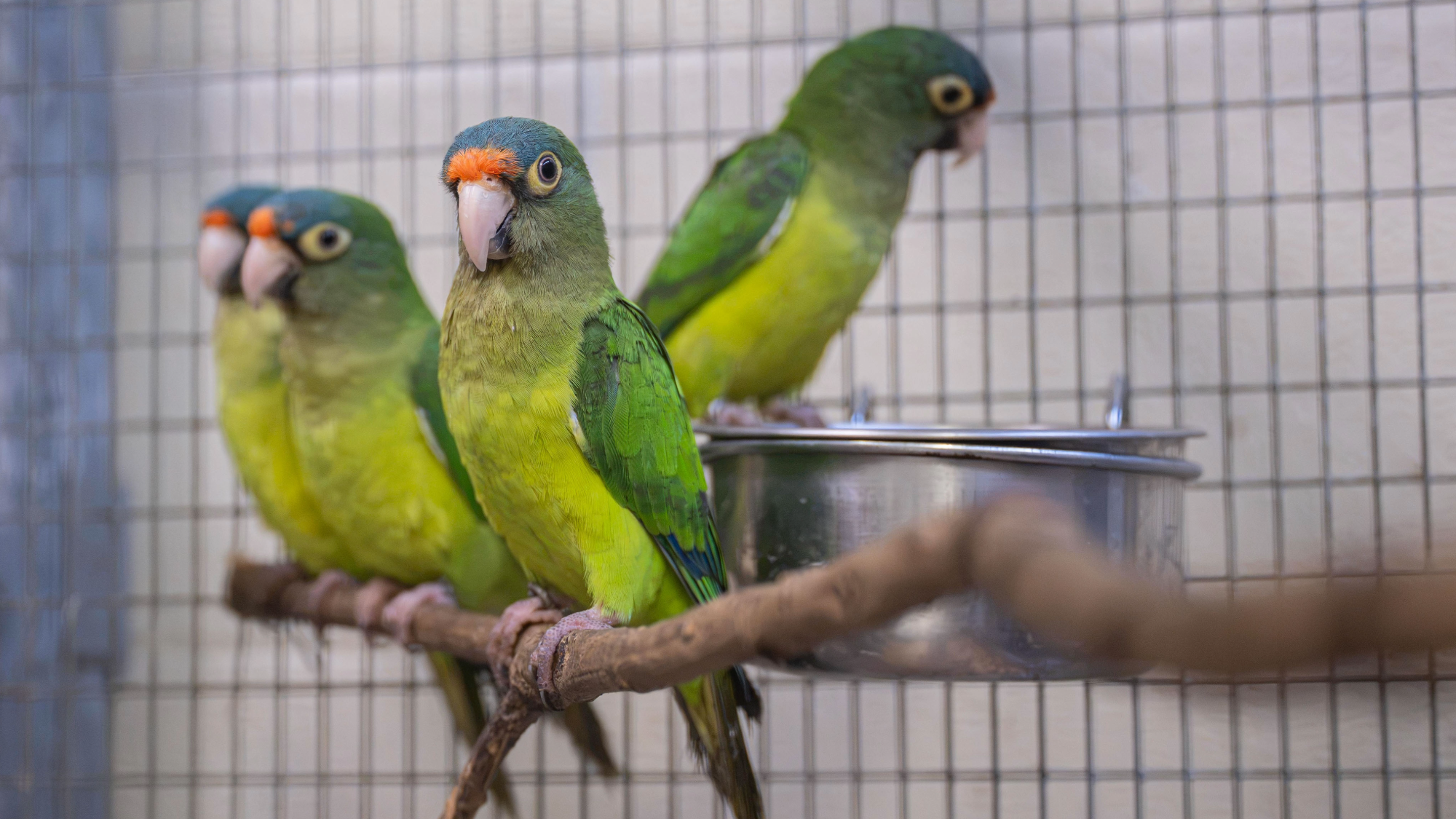
Over the past 17 months, the Wildlife Conservation Society’s Bronx Zoo in New York City has rescued dozens of parrots from the illegal pet trade. They include white-fronted Amazons (Amazona albifrons) and orange-fronted conures (Eupsittula canicularis).
The United States Fish and Wildlife Service (USFWS) confiscated the orange-fronted conures during three separate operations over the last 17 months, and the white-fronted Amazons in the last several months. All of the birds were discovered at the U.S.–Mexico border.
“These animals were stolen from the wild and are victims of the illegal wildlife pet trade, and our responsibility is to give them the best possible chance for a healthy future,” Chuck Cerbini, WCS Bronx Zoo Curator of Ornithology, said in a statement. “Working with the U.S. Fish and Wildlife Service, our veterinary and animal care teams provide specialized expertise to assess, treat, and care for confiscated wildlife.”
When confiscated wildlife arrives at the Bronx Zoo, the veterinary and animal care teams first conduct a health check, provide any necessary medical treatment, and then help find long-term placements for those that can’t be released into the wild.
White-fronted Amazons are native to parts of Mexico and Central America and represent the smallest Amazon parrot. They are also one of the few parrot species in which males and females feature visibly different plumage. Both sexes have a white foreheads, red faces, and yellowish bills, but males have red shoulders and females have green shoulders.
Orange-fronted conures, also known as half-moon conure or Petz’s conure, are also native to parts of Mexico and Central America, where they live in open woodlands, forest edges, and savannas. They have an orange forehead and green and blue feathers.
The IUCN Red List categorizes both birds as a species of Least Concern, but that still doesn’t justify trafficking them in the illegal pet trade. Parrots throughout Latin America are subject to both the loss of forest habitat and poaching.
Birds in particular l are especially threatened by trafficking because they are valued in the pet trade and the collector trade.
KioskNews shows a cleaned-up reading view extracted from the publisher’s page — the original always lives on their site, not ours.