What is smog and why does it blanket Delhi every winter?
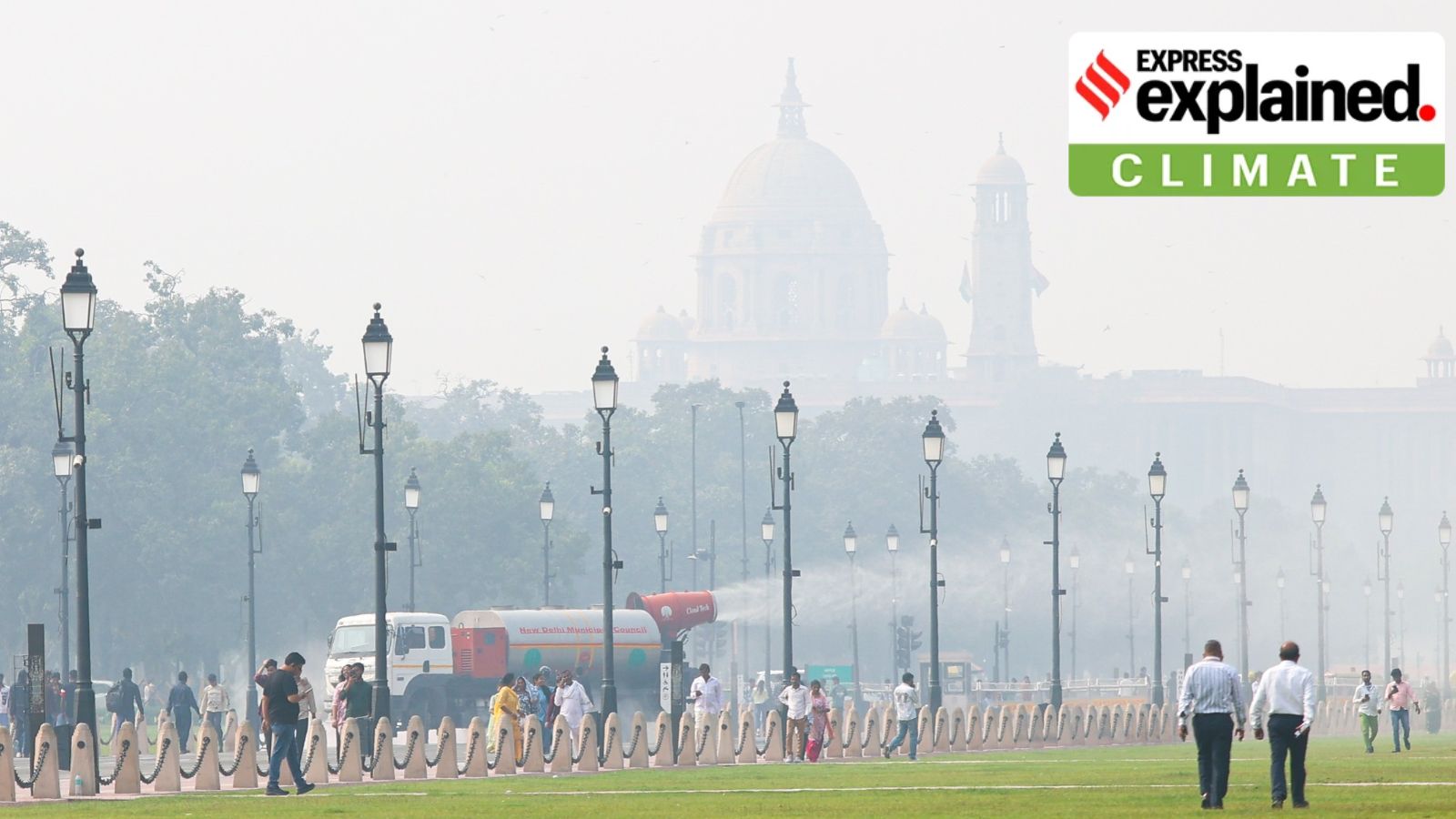
Days after Diwali, the Delhi-NCR region remains blanketed in smog, the thick haze that returns every winter as pollutants accumulate in the air. This year, firecrackers added to the problem, accounting for over 71% of Delhi’s fine particulate pollution in the early hours following Diwali, according to an assessment by the Indian Institute of Tropical Meteorology (IITM), Pune.
But what causes this recurring winter phenomenon, how is smog different from fog, and why is Delhi particularly vulnerable?
Smog, derived from ‘smoke’ and ‘fog’, occurs when pollutants accumulate in the air, often reducing visibility. These include fine particulate matter, such as PM2.5 and PM10, and gases released by vehicles, industries and other sources.
Some pollutants, including nitrogen oxides and volatile organic compounds, can also react in sunlight to form ground-level ozone. This process produces what is known as photochemical smog, which is more common in sunny conditions.
Delhi’s winter smog, however, is particularly associated with the accumulation of fine particulate matter under weather conditions that prevent pollutants from dispersing.
PM10 refers to particles measuring 10 micrometres or less in diameter, while PM2.5 refers to finer particles measuring 2.5 micrometres or less. These particles can include dust, soot and smoke, as well as substances formed through chemical reactions involving gases in the atmosphere.
Fog, on the other hand, consists of tiny water droplets suspended close to the ground. It forms when moist air cools and water vapour condenses into droplets, reducing visibility.
Story continues below this ad
Unlike fog, smog contains harmful pollutants that can affect human health. Fog and smog can also occur together.
Why does smog worsen in Delhi during winter?
Delhi’s winter smog results from a combination of pollution, geography and weather conditions that prevent pollutants from dispersing. The problem worsens as temperatures fall and wind speeds decline.
During warmer months, rising air and stronger winds help disperse pollutants. In winter, however, cooler temperatures and weaker winds reduce the movement and mixing of air, allowing pollutants to accumulate closer to the ground.
Another important factor is temperature inversion, a phenomenon in which a layer of warmer air forms above cooler air near the surface. Under normal conditions, warm air rises and carries pollutants upwards. During an inversion, the warmer layer acts like a lid, trapping colder air and pollutants close to the ground.
Story continues below this ad
Delhi’s location in the Indo-Gangetic Plain, where pollution from several states can accumulate, adds to the problem. These conditions can persist for days, allowing pollutants to build up and produce the thick smog that regularly blankets the region during winter.
Where does Delhi’s air pollution come from?
Delhi’s air pollution comes from several sources, including vehicle exhaust, industrial emissions, construction activity, road dust and the burning of waste and biomass. These contribute to pollution throughout the year, although their relative shares vary with the season, weather conditions and location.
During the post-monsoon months, smoke from agricultural residue burning in neighbouring states can add to the pollution already present in Delhi’s air.
Before Diwali, other sources such as biomass and waste burning, vehicle emissions and secondary organic aerosols contributed substantially to Delhi’s PM2.5 pollution.
Story continues below this ad
After Diwali, however, firecrackers became the dominant contributor. Using real-time scientific data, IITM Pune’s analysis showed that firecrackers contributed 71.1% of the PM2.5 concentration in Delhi’s air between 1 am and 9 am on November 9 (Monday), immediately after the celebrations wound down. Their contribution was lower, at 43.4%, during the same hours on November 8, and just 5.6% on November 7.
Why does smog linger, and what makes it dangerous?
Smog can persist for several days when pollutants continue to accumulate in the atmosphere, even after temporary sources of emissions, such as firecrackers, have subsided.
One of the biggest concerns is particulate matter, particularly PM2.5. These particles, measuring 2.5 micrometres or less in diameter, are small enough to penetrate deep into the lungs. Some can also enter the bloodstream, affecting organs beyond the respiratory system.
Exposure to polluted air can cause irritation of the eyes and throat, coughing and breathing difficulties. It can also aggravate asthma and other respiratory conditions. Long-term exposure to fine particulate pollution is associated with an increased risk of cardiovascular disease, stroke, lung cancer and chronic respiratory illnesses.
Story continues below this ad
Children, older people, pregnant women and those with pre-existing heart or lung conditions are particularly vulnerable. However, prolonged exposure to high levels of pollution can affect otherwise healthy people too.
KioskNews shows a cleaned-up reading view extracted from the publisher’s page — the original always lives on their site, not ours.