GES investigates SHS heads accused of selling prospectus items to parents
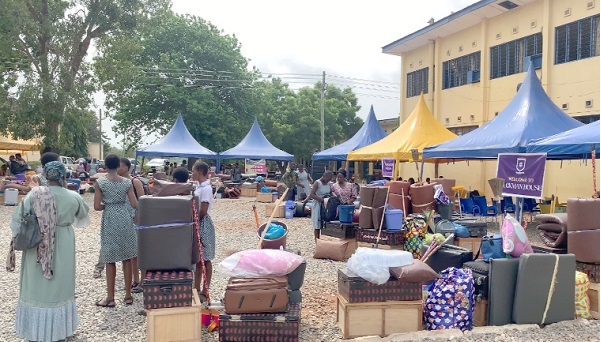
The Ghana Education Service (GES) has said it is investigating some head teachers in some senior high schools over allegations that they were selling items listed in the national harmonised prospectus to parents.
Some school heads have already been contacted and warned as part of the investigations, which are at a preliminary stage.
The Public Relations Officer (PRO) of the GES, Mr Daniel Fenyi, made this known during a radio interview on Woezor TV on Tuesday, September 22, 2026.
He said the Service was conducting background checks and engaging some heads before deciding whether further administrative action was necessary.
“Some schools are already under our radar. Some schools are already under investigation,” he said.
Mr Fenyi said the initial approach of the Service was to engage and warn heads, but persistent breaches could lead to their removal from office.
The disclosure comes amid concerns over the implementation of the 2026/2027 SHS admission requirements following the release of the National Harmonised Prospectus on September 3, 2026.
The prospectus lists items required by students entering public senior high schools (SHSs) and senior high technical schools (SHTSs), covering both boarding and day students.
The items include clothing, footwear, toiletries and school bags, as well as specified materials for use at school.
GES clarification
Mr Fenyi said the release of the prospectus did not give school heads the authority to sell the listed items to parents.
He said most of the items were available on the open market and parents should be allowed to buy them from suppliers of their choice.
The 2026/2027 prospectus requires students to provide items such as two checked dresses where applicable, school-specific footwear and belts, as well as some cleaning materials for school use.
Mr Fenyi said schools could clarify requirements specific to their institutions, including the colour of checks, shoes or belts, but should not compel parents to buy the items from the schools.
He said the GES had received complaints from parents who claimed that some items sold by schools cost more than the same items on the open market.
“Allow them, let them go to the open market,” he said.
Mr Fenyi said although a school head could choose to sell an item, parents should not be forced to buy it from the school.
The GES position follows a directive issued to heads of SHSs and SHTSs on September 18, 2026, after reports that some schools were imposing unauthorised charges and compelling parents to purchase items such as trunks, chop boxes, uniforms and cutlasses directly from the schools.
The latest disclosure by Mr Fenyi, therefore, is that some schools are now under investigation over the alleged breaches.
No child should stay home
Mr Fenyi said no child should be prevented from attending school because a parent could not afford an item.
He said the position applied to uniforms, furniture, personal protective equipment and other requirements.
He stressed that access to senior high school remained free and heads were not expected to demand money from students as a condition for accessing education.
Mr Fenyi said the GES did not want a situation where a child remained at home because the family could not afford an item being sold by a school.
He warned that where investigations established that a head had gone beyond the managerial role of running a school and turned the institution into a commercial operation, the GES could take further action, including removal from office.
He said some cases were still at the preliminary stage, where the Service could engage the affected heads, issue warnings or stop the practice before stronger sanctions became necessary.
Uniform delays
Meanwhile, the National Vice-President of the Conference of Heads of Assisted Secondary Schools (CHASS), Togbe Foe Tsali, has raised concerns over delays in the supply of uniforms to some schools.
He said some second-year students were still wearing checks because their school uniforms had not been supplied.
He questioned the practicality and hygiene implications of students relying on a single check throughout the school week while waiting for the government-provided uniforms.
Togbe Foe Tsali called for uniforms to be supplied before students reported to school so they could begin classes in the appropriate school attire.
He also suggested that schools should be allowed to keep a small number of uniforms in reserve for students whose parents, due to financial difficulties, were unable to provide the required clothing.
Mr Fenyi acknowledged that there had been delays in supplying uniforms to some schools, particularly for second-year students.
He said supplies had begun, with some schools having received their uniforms while others were still waiting.
CHASS
Togbe Foe Tsali, while welcoming the clarification from the GES, urged school heads to take the warnings seriously.
He said heads were expected to work within the rules of the GES and should not allow a child to remain out of school because a parent could not pay for an item.
He also urged heads to handle the ongoing admissions process in accordance with established guidelines.
The General Secretary of the National PTA Council, Mr Raphael Kofi Gapson, called for stronger engagement among the GES, school authorities and parents.
He said clearer communication could help prevent misunderstandings over admissions and the requirements placed on families.
DISCLAIMER: The Views, Comments, Opinions, Contributions and Statements made by Readers and Contributors on this platform do not necessarily represent the views or policy of Multimedia Group Limited.
Tags:
DISCLAIMER: The Views, Comments, Opinions, Contributions and Statements made by Readers and Contributors on this platform do not necessarily represent the views or policy of Multimedia Group Limited.
KioskNews shows a cleaned-up reading view extracted from the publisher’s page — the original always lives on their site, not ours.