Thai PM calls for international cooperation to tackle cross-border pollution
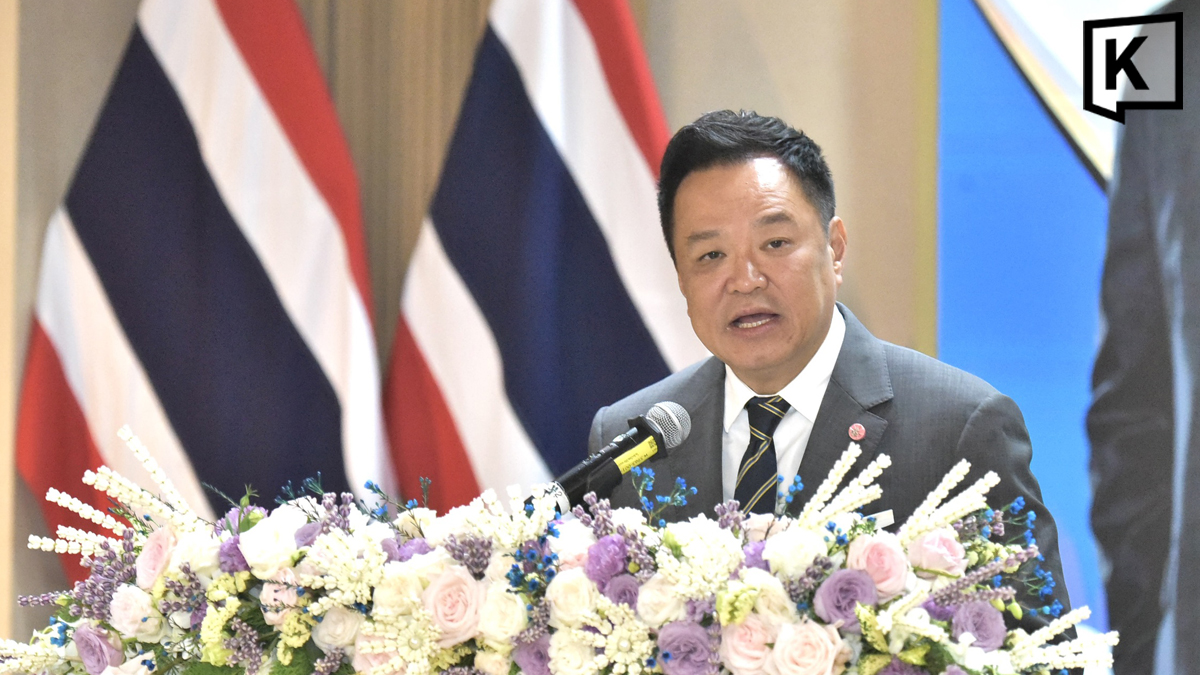
BANGKOK — 23 November 2026, Prime Minister Anutin Charnvirakul said Thailand must rely on international cooperation, scientific evidence and technology to address cross-border pollution affecting rivers in Chiang Rai, as the sources of contamination lie beyond the country’s jurisdiction.
Anutin, who also serves as interior minister, made the remarks while presiding over the opening ceremony of the 19th National Security Management Programme at the National Intelligence Agency at approximately 10:30.
The event was attended by Minister Attached to the Prime Minister’s Office Supamas Isarabhakdi, National Security Council Secretary-General Gen. Chaiyaphruek Duangpraphat, National Intelligence Agency Director Kitiphon Ruensamrit and representatives of relevant agencies.
Delivering a special address titled “The Government’s Perspective on National Security,” Anutin said the programme was intended to prepare future national leaders and senior administrators to understand and respond to increasingly complex security challenges.
Chiang Rai river pollution highlights cross-border challenges
Anutin cited concerns over contamination in the Kok and Sai rivers in Chiang Rai as an example of how national security issues now extend beyond conventional military threats.
He said environmental pollution, economic stability, public health and social conditions were interconnected, with problems affecting large numbers of people potentially becoming national security concerns.
The contamination of northern rivers, he said, demonstrated the challenges of managing pollution that crosses international borders.
Addressing the issue requires cooperation with upstream countries, supported by scientific data, technology and medical research.
Anutin also noted that communication about environmental risks must be handled carefully because inaccurate or unclear information could cause wider economic damage.
He said such challenges showed that threats to national security did not necessarily begin with armed conflict but could significantly affect people’s daily lives and livelihoods.
Thailand needs alternative water sources and monitoring
Anutin said Thailand could establish water monitoring stations, assess water quality and provide medical assistance to affected residents.
However, he acknowledged that the sources of contamination were located outside Thailand’s control, making international cooperation essential.
He called for preparations to develop additional alternative water supplies and improve public understanding of water safety.
Authorities should also conduct regular water quality tests and clearly explain whether measured contaminant levels fall within acceptable safety standards, he said.
The prime minister stressed that addressing the issue required both domestic measures and discussions with countries where the affected rivers originate.
PM outlines four areas of national security
Anutin urged participants in the programme to focus on four main dimensions of national security: political, military, economic and technological security.
He said political security involved more than maintaining domestic stability or ensuring the continuity of a government.
It also included the state’s ability to maintain public confidence, protect national interests and make decisions amid changing international circumstances.
Government stability, he added, could support continuity in public administration and policy implementation.
Geopolitical competition shapes modern security
Anutin said growing competition among major powers and challenges to international rules had made geopolitics an increasingly important consideration for national leaders.
He described the concept as involving developments within a country’s territory and surrounding region that could affect national interests and international relations.
With information now travelling rapidly across borders, governments must use intelligence and international engagement to identify risks and develop cooperation, he said.
Anutin pointed again to contamination in the Kok and Sai rivers as an example of a geopolitical issue requiring coordination beyond Thailand’s borders.
KioskNews shows a cleaned-up reading view extracted from the publisher’s page — the original always lives on their site, not ours.