Mexico City launches drive to plant a million native trees in underserved boroughs by 2030
Not regarded as one of the country’s top tree cities, Mexico City has begun an urban reforestation drive that aims to turn sidewalks, medians and other “gray” spaces into 1 million new shade points by 2030.
The program is built around the international 3-30-300 guideline: Residents should be able to see at least three trees from each window of their homes; all neighborhoods should include at least 30% tree canopy covering; and households should have a park or green area within 300 meters, about 1,000 feet.
Launched Tuesday by Mayor Clara Brugada at a housing complex in Iztacalco — which has the fewest trees of any of Mexico City’s 16 boroughs — the program calls for planting 200,000 native trees annually across the capital.
Officials said the plan calls for 100,000 trees to be planted this year, with priority for the eastern boroughs, where green-space shortages are most acute: Iztacalco, Iztapalapa, Venustiano Carranza, Gustavo A. Madero and Tláhuac.
The initiative will focus on streets, medians, sidewalks and other urban sites, separate from tree-planting efforts in nature, and neighborhood residents are expected to participate.
The project will rely on native species selected for their suitability to the capital’s climate and streets, such as having root systems that are less likely to damage sidewalks.
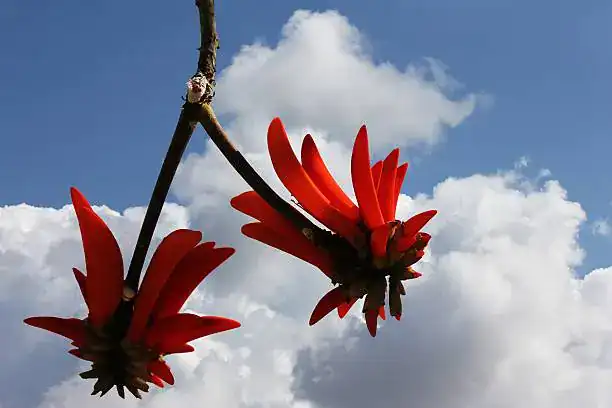
These include sweetgum, cazahuate, colorín (a coral tree), guaje, guamúchil, palo verde, ash, macuil and ceiba (also known as kapok).

The selected trees also don’t require a lot of maintenance, aren’t as vulnerable to pests and disease as nonnative ornamental trees, and can support air quality and pollination, Julia Álvarez Icaza, head of Mexico City’s Environment Ministry (Sedema), said in a press release.
The trees are expected to be young, nursery-grown saplings rather than mature or full-grown trees. “The tree will be the size of the child,” Brugada said in urging schoolchildren to care for a tree as it grows.
Brugada said the 1 million trees could capture at least 20,000 tons of carbon dioxide and remove pollutants equivalent to taking 4,000 cars off city streets annually. She also said that “where today [rain]water runs over cement, there will be soil that absorbs the water.”
The government plans neighborhood meetings before planting days to recruit residents to care for trees near their homes. Schools also will be invited to participate.
“We need to raise environmental awareness, and it is children and young people who are sometimes the most aware of the need to plant trees,” Brugada said.
With reports from El Universal, Chilango.com and Talla Política
KioskNews shows a cleaned-up reading view extracted from the publisher’s page — the original always lives on their site, not ours.