Malaysia calls for science‑based cooperation and long‑term Asean funding to tackle transboundary haze
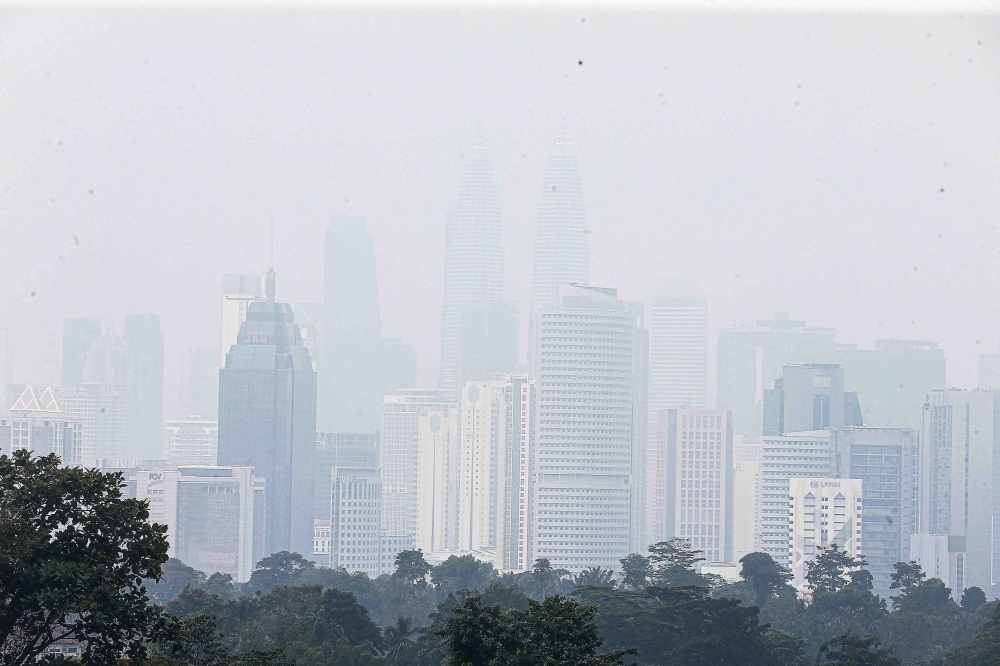

Malaysia has proposed a science‑driven framework and long‑term funding mechanism to strengthen Asean’s efforts in addressing transboundary haze under the Asean Agreement on Transboundary Haze Pollution. — Picture by Sayuti Zainudin
By Malay Mail
First Published: Wednesday, 23 Sep 2026 11:05 AM MYT
KUALA LUMPUR, Sept 23 — Malaysia has proposed a science‑driven framework and long‑term funding mechanism to strengthen Asean’s efforts in addressing transboundary haze under the Asean Agreement on Transboundary Haze Pollution (AATHP).
The science‑driven framework refers to Science Diplomacy, which would allow Asean countries to jointly use scientific data, research and expertise, while the long‑term funding mechanism involves a Sustainable Haze Fund to support monitoring, fire prevention, research and haze‑control activities.
The proposals were raised by Natural Resources and Environmental Sustainability Minister Datuk Seri Arthur Joseph Kurup at the 27th Sub‑Regional Ministerial Steering Committee on Transboundary Haze Pollution meeting in Bali recently, according to the New Straits Times.
“The approach is expected to strengthen regional cooperation and support science‑ and evidence‑based policy and decision‑making,” Arthur said.
He said Science Diplomacy would help translate shared scientific findings into coordinated regional policies and operational decisions, while the Sustainable Haze Fund would provide continuous financing for long‑term haze‑mitigation efforts.
He said the meeting agreed that the Asean Secretariat should study the feasibility of Science Diplomacy and explore ways to increase contributions to and use of the Asean Haze Fund under the AATHP.
Arthur said long‑term solutions required sustained cooperation and commitment from all member states under the agreement, which was signed 24 years ago.
He said the AATHP emphasised cooperation, mutual respect, national sovereignty and consensus‑based decision‑making rather than punitive measures.
Arthur said each member state must fulfil its responsibilities, particularly in preventing and controlling fires within its borders to avoid affecting neighbouring countries.
He said Malaysia would present a stronger position on haze management at the Committee Meeting and Conference of the Parties to the Asean Agreement on Transboundary Haze Pollution in Vietnam this November.
Arthur said environment ministers and senior officials from all Asean member states attended the annual meeting to review the haze situation and preventive measures.
He said the Asean Coordinating Centre for Transboundary Haze Pollution Control (ACC THPC) would be established to help member states manage the impact of peatland and forest fires.
Arthur said all 11 Asean member states had agreed that the region should have a dedicated coordination centre for haze management.
He said Indonesia, as host country, was preparing for the centre’s operation by drafting the host country agreement, standard operating procedures, rules and procedures, business plan and work programmes.
Arthur said Indonesia had proposed to lead the initial phase of the ACC THPC, including appointing an Indonesian national as its first executive director.
He said the proposal reflected Indonesia’s role as host country and its experience in managing haze, forest fires and peatland fires.
KioskNews shows a cleaned-up reading view extracted from the publisher’s page — the original always lives on their site, not ours.