[READOUT] As Q3 GDP slows to 2.1%, what are businesses seeing?

Already have Rappler+?
to listen to groundbreaking journalism.
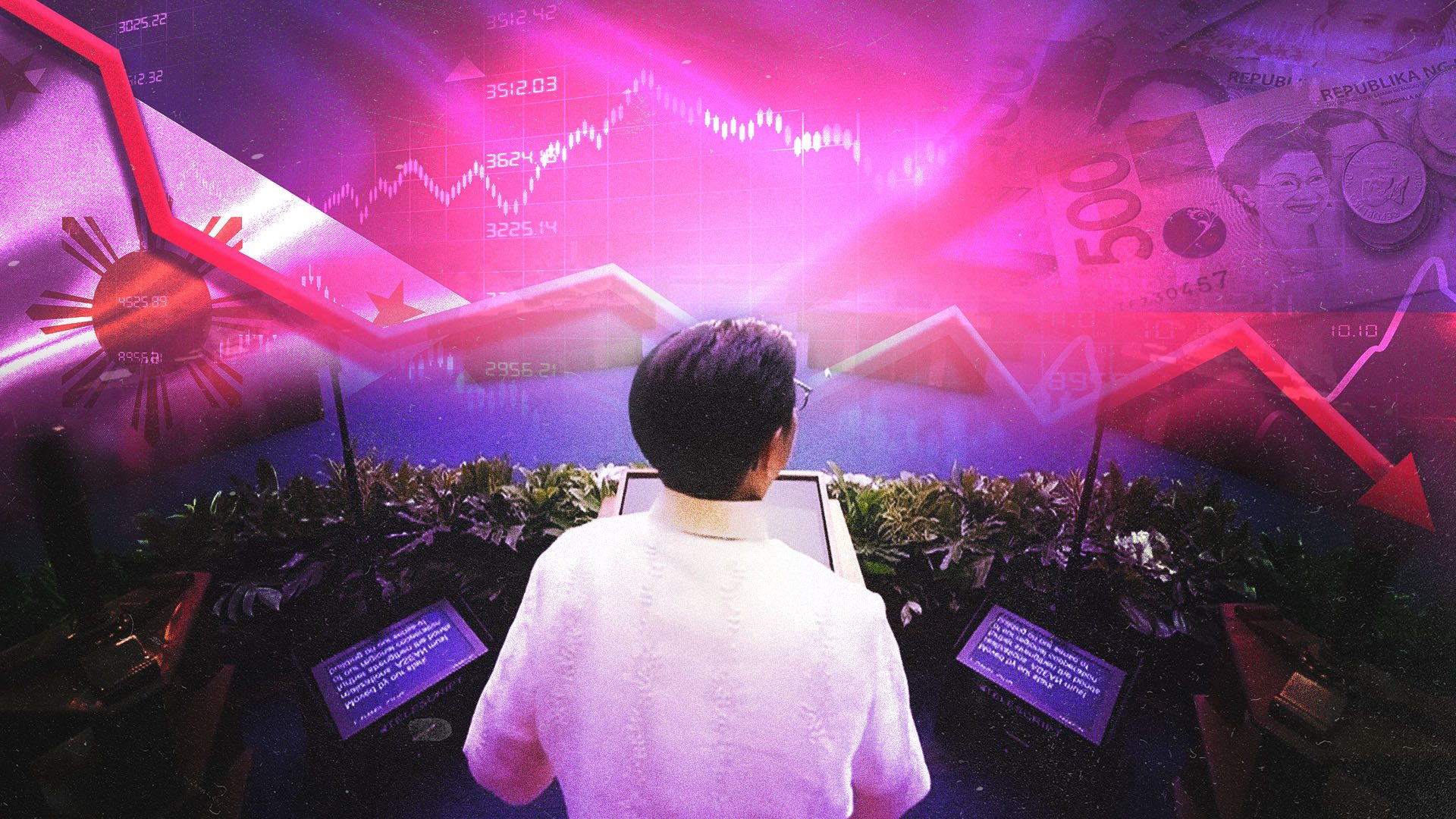
Marian Hukom/Rappler
Despite worsening economic figures, the country's biggest retailer and airline say demand is surprisingly resilient
AT A GLANCE
- Philippine economic indicators show rising inflation at 7.8%, increasing unemployment at 5.4%, and a slowdown in economic growth to 2.1%, marking the weakest pace since 2009.
- Despite the grim economic outlook, some businesses report resilience, with stable mall traffic and continued consumer spending on travel, although concerns about consumer spending recovery persist.
- The government emphasizes the need for increased foreign direct investment to support economic growth and innovation, as net FDI inflows have significantly declined.
This is AI-generated. Read the article for full context. Report any errors.
The latest Philippine economic numbers paint a grim picture, with inflation rising, unemployment worsening, and economic growth slowing to its weakest pace since 2009, outside the pandemic.
But just as these figures were released, Rappler had the chance to speak with executives from some of the country’s biggest businesses about how they’re digesting the slowdown. Their responses suggest a more uneven picture, with some industries holding up better than others.
First, let’s recap the three big numbers:
- Inflation rose 7.8% year on year in October, accelerating from 7.2% in September.
- Unemployment climbed to 5.4% in September from 5.3% in August, leaving an estimated 2.86 million Filipinos unemployed.
- The Philippine economy grew by just 2.1% in Q3 2026, down from 2.4% in the previous quarter and 4% a year earlier. This marked the weakest pace since 2009, excluding the pandemic years. Growth averaged only 2.5% in the first nine months of the year.
That leaves the Marcos administration on track to miss its annual growth target for the fourth year in a row. Economic growth would need to soar to 6.3% in the final quarter just to hit the lower end of its already reduced 3.5% to 4.5% target — a feat even the country’s chief economist admitted would be “very, very challenging.”
Department of Economy, Planning, and Development Secretary Arsenio Balisacan also warned that businesses should not expect consumer spending to recover quickly.
“I don’t expect consumer spending to rebound strongly soon,” he told reporters on November 9, citing the lingering effects of inflation.
Household consumption grew just 2.4% in the third quarter. BPI lead economist Emilio Neri Jr. pointed out that spending actually rose 8.5% in nominal terms, suggesting much of that went toward covering higher prices rather than buying more goods and services.
Nevertheless, two leaders of the SM Group didn’t seem too concerned about the latest macroeconomic numbers.
SM Supermalls president Steven Tan said mall foot traffic was still stable, with food-and-beverage sales even growing by double digits in October. Shoppers were also spending more time in malls, possibly consolidating trips as fuel prices rise.
But though retail remained strong, SM Prime president Jeffrey Lim acknowledged weaker residential demand and said the company would prioritize more stable income sources such as malls, hotels, and conventions.
“We’re not putting our expansion plans on hold. We are simply being more deliberate about how we spend,” Lim said.
Cebu Pacific is similarly seeing Filipinos continue to spend on travel, according to its president Xander Lao. Despite higher fuel costs and ticket prices, the airline expects to surpass last year’s record of 26.9 million passengers.
“Travel remains resilient regardless of the economic data that’s coming out,” Lao said.
Of course, these experiences do not erase the strain felt by consumers. A recent Organic Intelligence study found that 45% of surveyed urban Filipinos said inflation had drained their motivation to get ahead.
Meanwhile, Maharlika Investment Corporation president and CEO Joel Consing sees opportunities even amid the tough economic situation.
READ: The Maharlika fund that Joel Consing leaves behind
Speaking to reporters at the Fourth ASEAN Investment Forum, Consing said weaker economic growth could cause asset repricing and create attractive opportunities for investors to enter.
“We are not impacted by the weakness of GDP in terms of our investment strategy,” he said, explaining that Maharlika’s infrastructure investments address long-term needs regardless of short-term economic performance.
Consing also explained how the fund aims to invest in sectors where private companies may be reluctant to move first, eventually attracting more capital.
That need is pressing. Net foreign direct investment (FDI) inflows fell 23.9% in the first seven months of 2026 to $4.07 billion.
It’s no wonder then that after presenting the third quarter’s disappointing growth figures, Secretary Balisacan underscored that the Philippines needs more FDIs, not only for the money but also for the technology, expertise, and innovation foreign investors bring.
We hope this readout helps inform your next strategy or boardroom decision. And as always, feel free to tell us what to tackle next, dear business leader. – Rappler.com
Readout is a new content series from data consultancy The Nerve, bringing you insights that bridge the gap between quick news headlines and dense technical reports. Readout tracks and explains business shifts in different Philippine industries. Crafted from on-the-ground reporting and data-driven analyses, Readout provides a clear read on where market and consumption are headed, what’s shaping demand across different sectors, who the key players are, and why it all matters.
KioskNews shows a cleaned-up reading view extracted from the publisher’s page — the original always lives on their site, not ours.