CBS’s 2-Season Sitcom Got Cancelled After Breaking Its Own Formula

Jen Vestuto is a TV Features Writer for Collider. A born and raised New Yorker, she started her career on set as a production assistant for shows like Law & Order: SVU and Person of Interest. In LA, she worked in the writers' rooms for The Vampire Diaries and Nancy Drew. Along with her writing partner, she joined the writing staff of Nancy Drew in Season 2 and stayed on the run of the show, which ended in 2022 with Season 4.
Jen grew up on Long Island in a loud Italian family. She's been writing creatively since she was in elementary school and would often make her younger sister act out scenes from her favorite movies with her. Jen is also a massive sports fan and was an athlete herself growing up.
Writing features for Collider gives her the opportunity to share her passion for great storytelling and compelling characters.
Sign in to your Collider account
After the massive success of The King of Queens in the late '90s and early 2000s, Kevin James returned to CBS in 2016 with another multi-camera sitcom, Kevin Can Wait. To the network, it likely felt like a safe bet with a familiar star, a traditional format, and a network audience that had embraced him for nearly a decade. While the show received some pretty gnarly criticism in its first season, it performed well enough to earn a second.
Ten years after its debut, that second season remains the show’s defining misstep. It was between Seasons 1 and 2 that Kevin Can Wait made a creative decision that would ultimately define its legacy. Rather than simply refining what was already working, the series took a sharp turn, fundamentally altering its premise in an effort to retool the show. What followed wasn’t just a tonal adjustment but a drastic overhaul that quickly alienated viewers, led to declining ratings, and turned Kevin Can Wait into a cautionary tale about nostalgia-driven television decisions.
What Was 'Kevin Can Wait' Originally About?
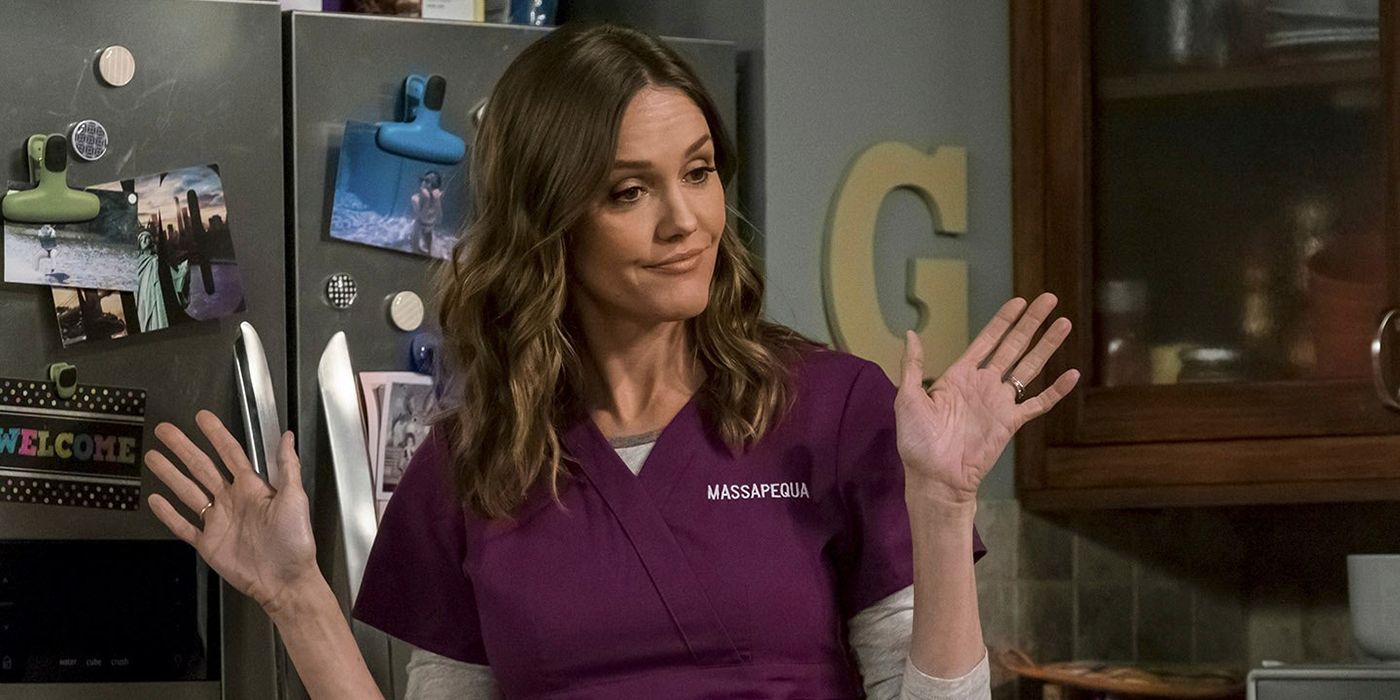
Kevin Can Wait began as a fairly traditional sitcom, especially for CBS. Kevin James played Kevin Gable, a recently retired police officer adjusting to life at home with his wife, Donna (Erinn Hayes), and their three children. The early episodes leaned into familiar sitcom territory, not entirely unlike The King of Queens, with storylines centered on family dynamics and domestic disruptions. Those included Kevin struggling to adapt to retirement and their oldest daughter, Kendra (Taylor Spreitler), announcing her engagement to a boyfriend the family barely knew, alongside broader, occasionally more absurd comedic plots.
Hayes’ Donna was positioned as a grounded counterbalance to James’ broad comedic style. She served as the show’s emotional anchor, portraying a smart, patient woman who was often the most level-headed person in the room. Donna was ultimately a supportive wife, even when Kevin engaged in objectively “man-child” behavior alongside his friends. Despite mixed reactions to the series overall and criticism that it never reached the heights of The King of Queens, Donna quickly became a fan favorite.
Collider Exclusive · 8 Questions · 2 Minutes Which Iconic Fandom Should You Join? Harry Potter · Lord of the Rings · Star Wars · Star Trek
Eight honest questions about how you actually are: what you put on when you need cheering up, how deep you go into the things you love, what you argue about, what you keep on your shelf. Answer them and we will tell you where you belong. Four of the biggest fandoms on earth are taking new members, and they could not be more different from one another.
⚡Harry Potter(Wizarding World)
💍Lord of the Rings(Middle-earth)
⚔️Star Wars(A Galaxy Far Away)
🖖Star Trek(The Final Frontier)
01
What do you put on when you need cheering up? Nobody is brave about this one.
02
How deep do you go into something you love? There is no shallow end here, only different deep ends.
03
What do you and your friends actually argue about? Every fandom has one argument it has been having for years.
04
How do you feel about a room full of strangers? Every one of these comes with a very big room.
05
Where would you rather spend a week? Pick on instinct rather than on budget.
06
What do you believe about people, mostly? All four of these stories have an answer, and they disagree.
07
What is actually on your shelf? Look over at it before you answer.
08
What do you actually want from a story? Eight questions in, this is the one that picks your fandom.
Membership Confirmed Your Fandom Is…
Four of the largest communities on the planet, and four completely different reasons to belong to one. Here is yours, what it would give you, and the argument you would be having within a week.
Harry Potter
You belong to the fandom that is really about comfort. Hogwarts works on people because it is a place rather than a plot, and the pull is not the wizard war so much as the corridors, the food, the weather and the sense that somebody is expecting you.
- You are drawn to belonging, which is why this fandom sorted itself into houses within about five minutes and has never stopped.
- This is the most social of the four, and the one most likely to know which type every single person in your life would be.
- The books are built to be reread rather than analysed, and rereading is exactly what you do with things you love.
- The new HBO series is bringing the whole thing back one book at a time, which means the arguments are about to start all over again.
Lord of the Rings
You belong to the deepest fandom on this list, the one where somebody has always read further than you and is quietly delighted to say so. Middle-earth rewards patience more than any other world in popular culture.
- You like the sense that the story you are reading is only the visible part of something enormous, which is precisely how Tolkien built it.
- This fandom takes adaptation seriously to a degree that other fandoms find slightly alarming, and it has good reasons for that.
- Your favourite thing about the books is probably the bit that is not action at all, which is the walking, the songs and the long goodbyes.
- Nobody here thinks heroism belongs to the powerful, and the whole story exists to make that argument.
Star Wars
You belong to the loudest and largest tent of the four, the one where three generations are all watching the same thing and none of them agree about any of it. That disagreement is not a flaw in this fandom, it is the main activity.
- You want something you can share with absolutely everybody, from a six year old to a grandparent, and this is the only one on the list that really does that.
- Nobody argues like Star Wars fans argue, and the argument has been running since roughly 1980 with no sign of resolution.
- The pull here is sensory before it is narrative, since it is the sound design, the score and the look of a used and dented galaxy.
- You would be first in the queue, in costume, with strong opinions and a genuinely good time.
Star Trek
You belong to the thinking fandom, the one that turns up for the argument rather than the explosion. Trek has always been a series of ethical problems in space, and the people who love it love being asked what they would have done.
- You are an optimist in a way that is currently unfashionable, and this is the only major franchise still willing to say the future might be better.
- The best episodes are the ones where nobody fires anything, which is a sentence that makes perfect sense to this fandom and to nobody else.
- Starfleet Academy brought the franchise back to a classroom in 2026, which is appropriate, because Trek has always been a bit of a seminar.
- You would want the conversation afterwards more than the episode itself, and here you will always find somebody willing to have it.
Leah Remini appeared briefly in the two-part Season 1 finale in a guest role as Vanessa Cellucci, Kevin’s former police partner. At the time, the cameo felt like a playful nod to King of Queens fans rather than a signal of things to come. But as Season 1 ratings declined over time, it became clear the creative team was looking for a major reset that would soon lean heavily on that familiar chemistry and dramatically alter the show’s original premise.
'Kevin Can Wait's Radical Overhaul Changed Everything for the CBS Sitcom
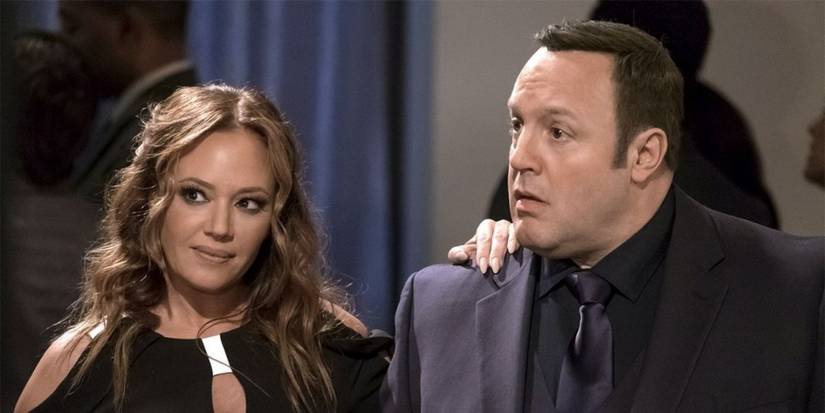
Between Seasons 1 and 2, Kevin Can Wait made a decision that stunned viewers. Erinn Hayes was let go from the series, and Donna Gable was abruptly written out through an off-screen death. When the show returned, it had jumped forward in time, with Kevin suddenly a widower and the series almost entirely retooled. Leah Remini was promoted to a series regular, effectively stepping into the female lead role as the show shifted direction. While the intent behind the overhaul was publicly framed as a creative choice, the reasoning quickly became a point of contention.
Kevin James defended the decision at the time, saying the change gave the series “weightier” material and a new narrative drive. For many viewers, however, the pivot felt calculated rather than organic, particularly given how abruptly Donna was written out. Hayes, though disappointed to leave the show, urged fans not to direct their frustration toward Remini. Still, the larger strategy was hard to ignore: CBS and the creative team were clearly attempting to recapture the dynamic that made The King of Queens a long-running success by reuniting James and Remini at the center of the series.
The backlash was swift. Ratings declined throughout Season 2, and criticism mounted over the decision to discard a popular female lead. Despite the drastic reset, Kevin Can Wait never recovered its momentum and was cancelled after its second season. What might have been remembered as a modest sitcom instead became defined by its controversy. The creative gamble didn’t align with what audiences wanted, and its treatment of Donna would later be examined in unexpected ways.
'Kevin Can Wait's Controversy Inspired the AMC Series 'Kevin Can F**k Himself'
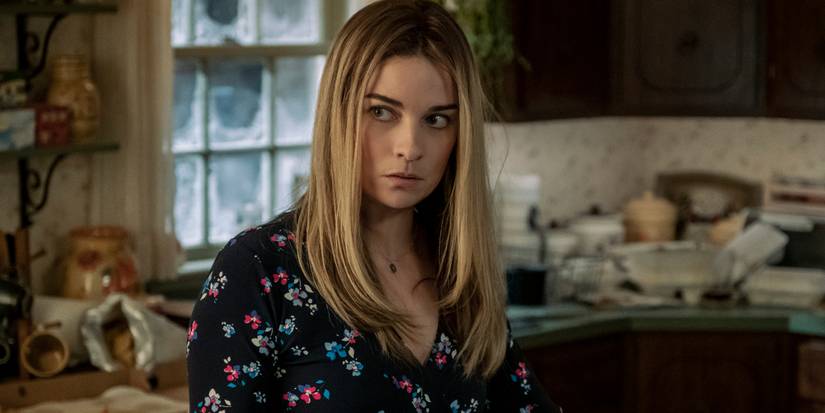
In 2021, AMC’s Kevin Can F**k Himself took the familiar sitcom framework that Kevin Can Wait inadvertently embodied and deconstructed it entirely. Creator Valerie Armstrong has linked the title to Donna’s death, though the show’s inspiration extended beyond one sitcom. While not a direct parody, the series examined the misogyny and tonal imbalance baked into many traditional American sitcoms centered on “lovable” men. Starring Annie Murphy, fresh off her Emmy win for Schitt’s Creek, the show follows Allison McRoberts, a woman struggling to redefine her life inside an unhappy marriage to her husband Kevin (Eric Petersen), a character modeled after the “man-child” sitcom archetype seen in shows like The Honeymooners, The King of Queens, and, unmistakably, Kevin Can Wait.
The series’ bold dual-format structure, shifting between brightly lit multi-cam sitcom scenes and stark single-camera drama, made its critique explicit. It highlighted how female characters in these comedies are often sidelined, erased, or emotionally burdened to prop up male leads. Given Kevin Can Wait’s own creative overhaul, it was impossible not to see the CBS sitcom as part of that lineage. Adding another layer of resonance, Erinn Hayes later appeared on Kevin Can F**k Himself as Kevin’s new girlfriend, a casting choice that added another connection between the two shows.
Kevin Can Wait may not have started on especially strong footing, but the drastic creative swing only made its shortcomings more visible. Sitcom audiences have changed since The King of Queens, and the series might have earned more goodwill had it allowed itself to evolve rather than look backward. Leah Remini’s involvement was never the problem, as she is consistently fantastic. In this case, however, the shift felt less like inspired casting and more like a creative team running out of ideas. In that way, Kevin Can F**k Himself did not just comment on familiar sitcom tropes. It also turned Kevin Can Wait into a cautionary tale of a sitcom misfiring.

- Release Date
- 2016 - 2018-00-00
-

Kevin Gable
-

Taylor Spreitler
Kendra Gable
-

Ryan Cartwright
Chale
-

Gary Valentine
Kyle
KioskNews shows a cleaned-up reading view extracted from the publisher’s page — the original always lives on their site, not ours.