The 10 Greatest Sci-Fi Cult Classic Movies, Ranked


William likes watching movies and writing about those movies. Anything else is minutae.
Sign in to your Collider account
When it comes to cult films, the science fiction genre has a galaxy's worth of movies. The genre attracts a certain amount of creative ambition that often results in films that don't necessarily appeal to mainstream audiences or critics. They may not have found success at the box office, but they all found rabid fanbases, some of which have grown so large that the films themselves have become canonized, and even launched whole franchises. Even with that kind of success, these films all still proudly wear their cult classic status as a badge of honor.
Most of the filmmakers behind the greatest sci-fi cult classics are well-versed in belated success. Their collective careers are almost defined by how many films they made that wouldn't be properly appreciated until years later. Cult films exist in a different space in the current era of streaming, where fandoms can develop almost overnight. All the films on this list developed their cult followings slowly, based on word-of-mouth and smaller critical defenses, mostly in the era of physical media. It remains to be seen which of the more recent sci-fi cult films will join them as classics, but these ten sci-fi cult classics will always be the greatest.
10 'Tron' (1982)

1982 was a huge year for sci-fi movies, and more than one film released during it will be mentioned on this list. Tron premiered in July 1982, and despite becoming Disney’s highest-grossing live-action film at the time, it was still considered a financial disappointment. It also received mostly mediocre reviews from critics, who felt it prioritized visual effects over its plot and characters. To add insult to injury, those visual effects weren’t even nominated for an Academy Award due to a bias towards the film’s use of computer technology that seems ridiculous in retrospect.
Tron starts with Jeff Bridges as programmer Kevin Flynn, who breaks into the headquarters of his former employer, Encom, to prove the games he originally designed were stolen from him. In the process, he gets zapped into the virtual world known as the Grid, where he finds himself fighting for his life alongside other programs. Despite being known mostly for its use of computer-generated imagery, Tron uses traditional animation techniques to accomplish the majority of its groundbreaking effects and iconic visuals are what drove the film’s success on home video.
9 'Strange Days' (1995)

The characters of Kathryn Bigelow’s sci-fi noir thriller Strange Days also find themselves jacking into a virtual world, but it’s not brightly colored and doesn’t feature a single light cycle. It’s a dark, dystopian vision of a future where the police are corrupt, and most humans would rather vicariously experience the lives of others through a digital intermediary. Ralph Fiennes plays Lenny Nero, a former cop turned black market dealer of SQUID recordings, which allow a person to experience the memories and sensations of another person that have been recorded directly from their cerebral cortex. When Lenny comes into possession of a recording that shows an assassination, he finds himself being hunted by various police and criminals.
Strange Days was originally written by James Cameron and later developed further with Bigelow, who added elements of social commentary after being inspired by events like the Rodney King assault and the resulting L.A. riots. The film also features elements of voyeurism and sexual assault, which made it too tough a watch for most audiences in 1995. It’s since garnered retrospective acclaim, both for its socially relevant themes and Bigelow’s kinetic direction.
8 'Dark City' (1998)

The sci-fi noir film Dark City had a far more heightened aesthetic than Strange Days, but its atmospheric style wasn’t enough to help it at the box office, where it got caught in the wake of Cameron’s Titanic. Directed by Alex Proyas, the film took the same set-bound approach as his prior film, The Crow, but with an even more arch style that echoed '40s and '50s detective films. The film also received divided reviews, though it did have one major champion in Roger Ebert, who compared it to visionary classics like Metropolis and 2001: A Space Odyssey.
Set in a city of perpetual night, the film stars Rufus Sewell as John Murdoch, a man who awakens in a hotel bathtub with no memory and pursued by strange pale men. Far from a simple case of amnesia, Murdoch discovers the dark truth involving the architects of the city and his own strange abilities. Visually arresting, the film is layered with eye-catching influences from everything from German expressionism through mid-century noir and Art Deco design. The greater issues were addressed in the superior director's cut, more patient and methodical, allowing for more time to soak in the intoxicating atmosphere.
7 'Starship Troopers' (1997)

Paul Verhoeven had already directed two ultraviolent sci-fi blockbusters by the time he took a crack at adapting Robert A. Heinlein’s Starship Troopers. His approach to the material was to satirize its militaristic themes and what he viewed as an endorsement of fascism. The screenplay by Ed Neumeier combined elements of the novel into an original, more action-oriented script that was molded to Verhoeven's sensibilities. The result is an incredibly effective sci-fi satire seemingly lost on most audiences and critics in 1997, who were perhaps expecting a more traditional war movie instead.
Playing like a piece of pure propaganda, the film follows young square-jawed Johnny Rico (Casper Van Dien), who follows his high school girlfriend into the military. When Earth declares war on a race of alien bugs called Arachnids, Johnny and his fellow soldiers get dropped into a violent war that spills lots of human blood and bug guts. Verhoeven always has a deft hand with tone management, even when it's applied very heavily. It's honestly astonishing that more critics were oblivious to the fact that Starship Troopers was meant as a parody. It's a blunt and hilarious film that seems almost subtle now.
Collider Exclusive · Sci-Fi Personality Quiz Which Sci-Fi Hero Are You Most Like? Paul Atreides · Captain Kirk · Princess Leia · Ellen Ripley · Max Rockatansky
Five iconic heroes. Five completely different ways of facing an impossible universe. One of them shares your instincts, your values, and your particular way of refusing to back down. Eight questions will tell you which one.
🏜️Paul Atreides
🖖Capt. Kirk
✊Princess Leia
🔦Ellen Ripley
🔥Max Rockatansky
01
How do you lead when the stakes couldn't be higher? The way you lead under pressure is the most honest thing about you.
02
What is your greatest strength in a crisis? The quality that keeps you alive when everything else fails.
03
What is the thing you'd sacrifice everything else for? Your deepest motivation is your truest compass.
04
How do you relate to the people around you? Who you are to others under pressure is who you really are.
05
You're facing a threat that no one else believes is real. What do you do? How you respond when you're the only one who sees it defines everything.
06
What has your heroism cost you personally? Every hero pays. The question is what — and whether they'd pay it again.
07
How do you feel about the rules of the world you're in? Every hero has a relationship with the system. What's yours?
08
When everything is on the line, what keeps you going? The answer is the most honest thing about you.
Your Hero Has Been Identified Your Sci-Fi Hero Is…
Your answers point to the iconic sci-fi hero who shares your instincts, your values, and your particular way of facing the impossible.
Paul Atreides
You carry a weight most people would crumble under — the knowledge of what you're capable of, and the burden of what you might have to become.
- You see further ahead than others and you plan accordingly, even when the vision frightens you.
- You are driven by loyalty to your people and a sense of destiny you didn't ask for but can't escape.
- Paul Atreides is not simply a hero — he is someone who understands the cost of power and chooses to bear it anyway.
- That gravity, that willingness to carry what others won't, is exactly you.
Captain Kirk
You lead with instinct, warmth, and an absolute refusal to accept a no-win scenario — because you've always believed there's a third option nobody else has thought of yet.
- You take the mission seriously without ever taking yourself too seriously.
- Your crew would follow you anywhere, not because you demand it, but because you've earned it.
- Kirk's genius isn't tactical — it's human. He reads people, bends rules with purpose, and wills outcomes into existence through sheer conviction.
- That combination of warmth, audacity, and relentless optimism is unmistakably yours.
Princess Leia
You are the kind of person who holds the line when everyone else is losing faith — not because you're fearless, but because giving up simply isn't something you're capable of.
- You lead through conviction. Your voice carries because your belief is unshakeable.
- You gave up everything ordinary the moment you chose the cause, and you've never looked back.
- Leia is not a supporting character in her own story — she is the moral centre of the entire rebellion.
- That same fierce, principled, unbreakable core is what defines you.
Ellen Ripley
You are not reckless, not grandiose, and not particularly interested in being anyone's hero — you just refuse to stop when it matters.
- You see threats clearly, you document the truth even when no one listens, and when the time comes you handle it yourself.
- Ripley's heroism is earned, not performed. She doesn't have a speech — she has a flamethrower and a plan.
- You share her composure under the worst possible pressure, and her refusal to pretend the monster isn't there.
- When it counts, you don't flinch. That's everything.
Max Rockatansky
You have been through fire that would break most people — and what came out the other side is something the world underestimates at its peril.
- You don't ask for help, don't need validation, and don't wait for anyone to tell you the rules no longer apply.
- Your loyalty, when it finally arrives, is absolute — but it's earned in silence and tested in action, not in words.
- Max is not a nihilist. He is someone who lost everything and found, against his will, that he still has something worth protecting.
- That bruised, stubborn, ultimately human core is exactly yours.
6 'Galaxy Quest' (1999)

A satire that critics did respond heartily to in the '90s was the affectionate Star Trek parody Galaxy Quest. Its cult status started almost immediately thanks to the embrace of Star Trek fans who appreciated its loving homages and good-natured jokes. What makes Galaxy Quest such a brilliant comedy is its equal ability to engage with both die-hard and non-Trek fans by keeping its focus on its characters. The casting is immaculate from top to bottom, featuring a mix of major genre stars, rising comedic talent and acclaimed character actors.
Tim Allen plays the Shatner-coded commander, supported ably by Sigourney Weaver, who gets to poke fun at the unbalanced gender dynamics of sci-fi media, and Alan Rickman as the overqualified British thespian trapped in a role requiring constant alien makeup and the repeated recitation of a loathed catchphrase. Throw in an understated Tony Shalhoub who romances an alien played by Missi Pyle and Sam Rockwell as a redshirt turned plucky comedic relief, and there are few comedy casts that can compare to the amount of talent. Galaxy Quest is made with genuine enthusiasm for the genre it's spoofing, and it predicted the rise of mainstream convention culture and the spreading effect of fandoms on pop culture.
5 'Repo Man' (1984)

If there were ever a poster child for what the average cult film looked like, it would be Repo Man. As the feature directorial debut of rebel filmmaker Alex Cox, it's a film that defies easy categorization, doesn't conform to genre conventions, features a hardcore punk rock soundtrack, and is an essential '80s Los Angeles movie. As an outrageous satire of the Reagan era played with a distinctly dark sense of humor, Repo Man definitely won't appeal to every sensibility, but for those who can get on its anarchic wavelength, it's a wild sci-fi ride.
Emilio Estevez plays Otto, a rudderless young man who finds himself taken under the wing of Bud (Harry Dean Stanton), who brings him into the repossession business. Business booms when the crew tries to repo a Chevy Malibu that has an alien glow emanating from its trunk, and which everyone from the government to a televangelist wants to get their hands on. Cox has produced different follow-ups and successors in different forms of media, but there is something so specific to Repo Man, tied to a specific place and time yet somehow timeless about it, that cannot be replicated.
4 'Brazil' (1985)
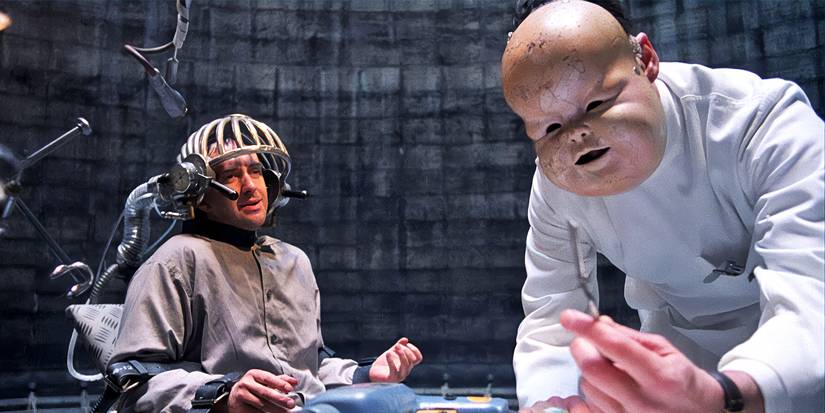
Like Cox, Terry Gilliam is an individualistic filmmaker who has often come into conflict with the studio system. A former member of Monty Python, Gilliam never found traditional mainstream success, but his films were often critically acclaimed, and all found their own audiences over time. His sci-fi dystopian satire Brazil, part of his "Imagination Trilogy" which also includes Time Bandits and The Adventures of Baron Munchausen, is Gilliam's masterpiece, perfectly combining his imaginative visuals with a darkly comic plot about the absurdities of bureaucracy.
In an Orwellian future, Jonathan Pryce plays lowly government records employee Sam Lowry, whose discovery of a paperwork error that led to the death of an innocent man accused of terrorism leads him on his own odyssey of self-discovery and rebellion. The film continually mixes Lowry's fantasy with his harsh reality before they come colliding together in the bleak ending. Brazil is the purest distillation of Gilliam as a filmmaker. Its cult status belies its larger cinematic impact and the inspiration it served for dozens of filmmakers working inside and out of the sci-fi genre.
3 'The Iron Giant' (1999)
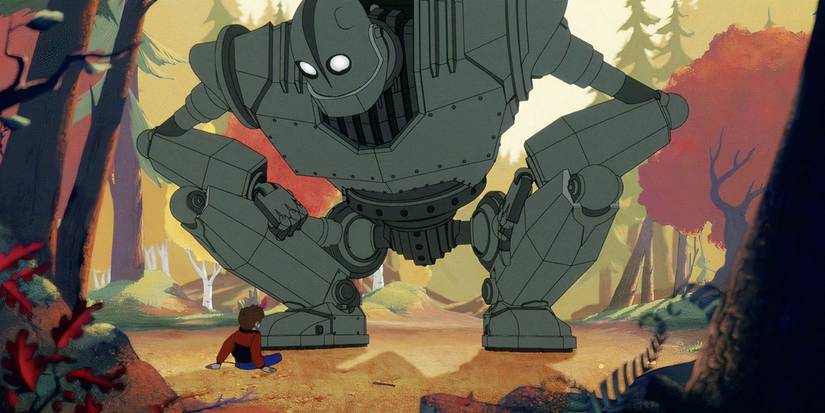
Director Brad Bird is set to return with the retrofuturistic animated detective movie Ray Gunn, which is a cause for celebration for any fan of animation or sci-fi. The director found success in the genre with his superhero blockbuster The Incredibles, but before that he made the even more affecting The Iron Giant. Released under the failing animation division of Warner Bros., the film was given lackluster promotion, which contributed to its box office failure. It later found an audience of both young and adult viewers who appreciated its beautiful hybrid animation style and nostalgic appeal.
In a small town in Maine, young latchkey child Hogarth Hughes (Eli Marienthal) makes a new best friend in the form of an alien robot that crash-lands nearby. It's a similar plot to E.T. the Extra-Terrestrial, as Hogarth has to hide his new friend from the American government, but Bird kicks it up a notch with some sci-fi action in the film's final act. Everything that made Bird's later films special is all present in The Iron Giant, from the mid-century setting to the retrofuturistic designs to the fast-paced action. Bird hit the ground running as a director; it just took audiences some time to catch up.
2 'Blade Runner' (1982)

Once considered the quintessential cult film, Blade Runner has become such a totemic figure in science fiction cinema that it has elevated well beyond its initial cult status. Infamously released in theaters in 1982 with an added narration and a tacked-on happy ending, the film failed to connect with audiences and critics but quickly gained reappraisal after the release of Ridley Scott's director's cut. Beyond its own reclamation, the film's cyberpunk designs and aesthetic have had a rippling influence throughout the film industry, inspiring an entire generation of filmmakers.
Harrison Ford lends his gritty gravitas to his third most iconic genre character, Rick Deckard, a former cop who specialized in retiring replicants, androids built for labor, pleasure and combat. He gets called back into action to track down a group of rogue replicants led by the violent Roy Batty (Rutger Hauer), who is both tragic and terrifying. The impact of the film and its visuals has expanded across multiple mediums, including video games and anime, before getting a miraculous legacy sequel with Blade Runner 2049, which itself became a box office disappointment, further proving that the film's ultimate appeal is still more cult than mainstream.
1 'The Thing' (1982)

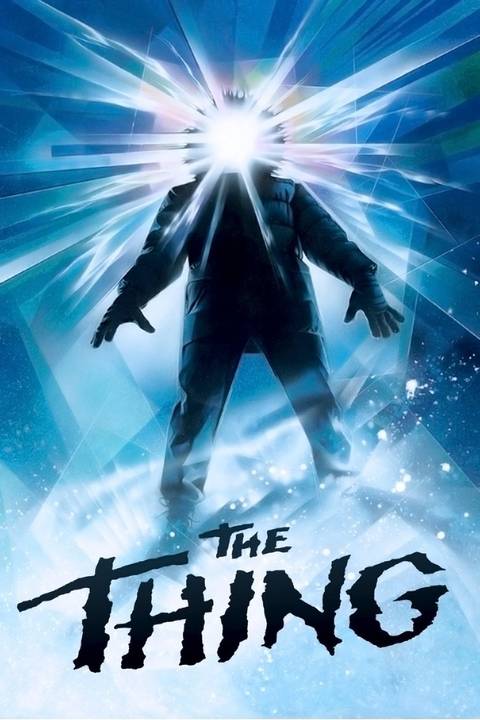
The final cult film from the consequential year of 1982 is John Carpenter's sci-fi horror masterpiece The Thing. It wasn't just a box office failure; it received downright hostile treatment from most critics, who lambasted it for its level of gore and nihilistic tone. It's a movie that would've been more suited to the cynical '70s than the escapist '80s, but which also benefits from the major advances in practical effects that came to fruition in the latter decade. Like many of Carpenter's most beloved films, The Thing found its audience on home video, and it's since been canonized as one of the greatest horror films of all time.
Based on the John W. Campbell Jr. novella Who Goes There?, the film features a team of Antarctic researchers contending with an alien that has crash-landed in their frozen hell. The original film features a Frankenstein-esque vegetable monster, whereas Carpenter's film more directly adapts the source material by having a creature that can imitate any lifeform. That imitation is brought to life through the landmark practical effects designed by Rob Bottin, which have become the gold standard for genre movies. All the elements add to the paranoid atmosphere of the film, and it's just as effective now as it was in 1982.
The Thing
- Release Date
- June 25, 1982
- Cast
- Kurt Russell, Keith David, Wilford Brimley, T.K. Carter, David Clennon, Richard Dysart, Charles Hallahan, Peter Maloney, Richard Masur, Donald Moffat, Joel Polis, Thomas G. Waites, Norbert Weisser, Larry Franco, Nate Irwin, William Zeman, John Carpenter, Adrienne Barbeau
- Runtime
- 109 minutes
- Director
- John Carpenter
- Writers
- Bill Lancaster, John W. Campbell Jr.
KioskNews shows a cleaned-up reading view extracted from the publisher’s page — the original always lives on their site, not ours.