Sell family jewels for latest iPhone? In India, craze dials up debate
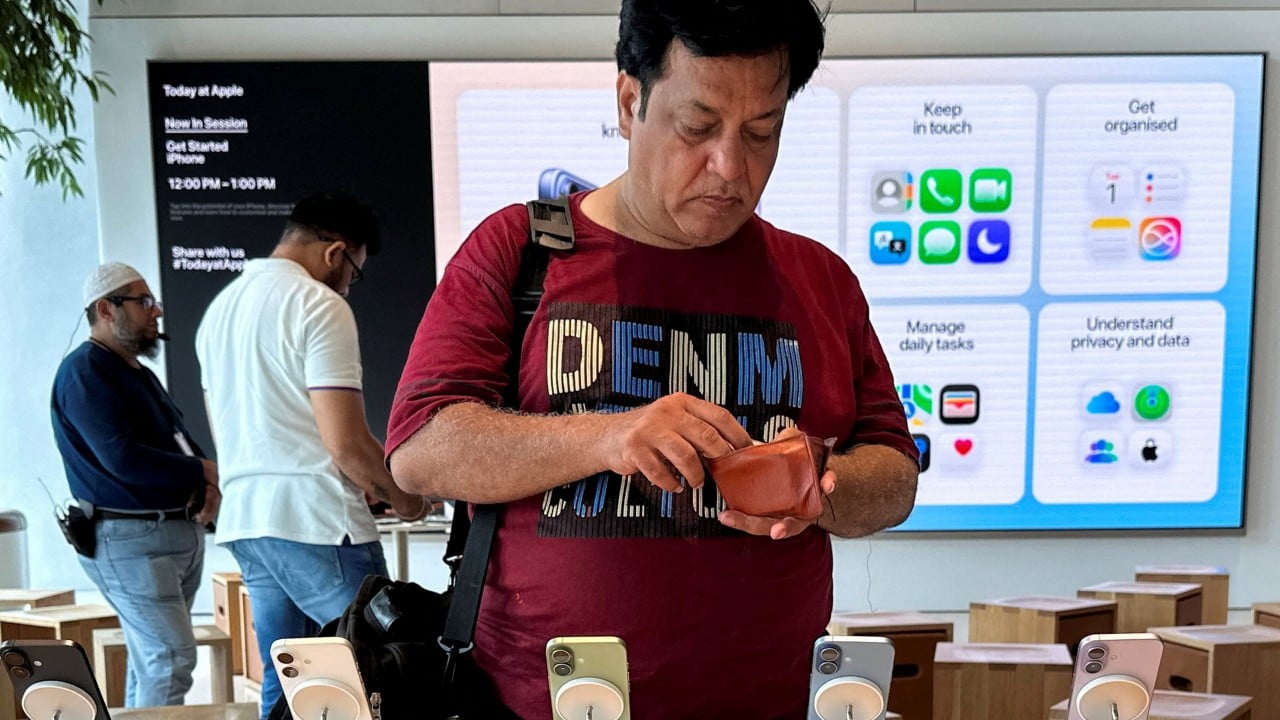
Tens of thousands of people thronged Apple stores in India this month to snap up the newest iPhone models – the 18 Pro and Pro Max – but the frenzy has kicked off public debate in the country about affordability and consumer debt.
The iPhone 18 Pro starts at 164,900 rupees (US$1,700) and goes up to 179,000 rupees, while the iPhone 18 Pro Max starts at 179,900 rupees and maxes out at 329,900 rupees.
Apple also unveiled the iPhone Duo, its first-ever folding smartphone, essentially setting a new price benchmark with the top-end variant at 449,000 rupees (US$4,700), breaching the psychological threshold of 400,000 rupees for the first time in the Indian market.
The excitement among consumers – with some standing in line for hours – underscored how India, the world’s second largest smartphone market by volume, has emerged as one of the fastest growing sales sources for Apple.
There are no official sales figures for iPhone 18 Pro and Pro Max yet, said Navkender Singh, an India-based analyst for IDC.
Pre-orders for the Duo will start on October 16 and Singh forecast that it would sell well in India despite its price tag. “It is a huge signal of wealth and affluence,” he said, pointing to what he called the “brand halo” of the tech giant.
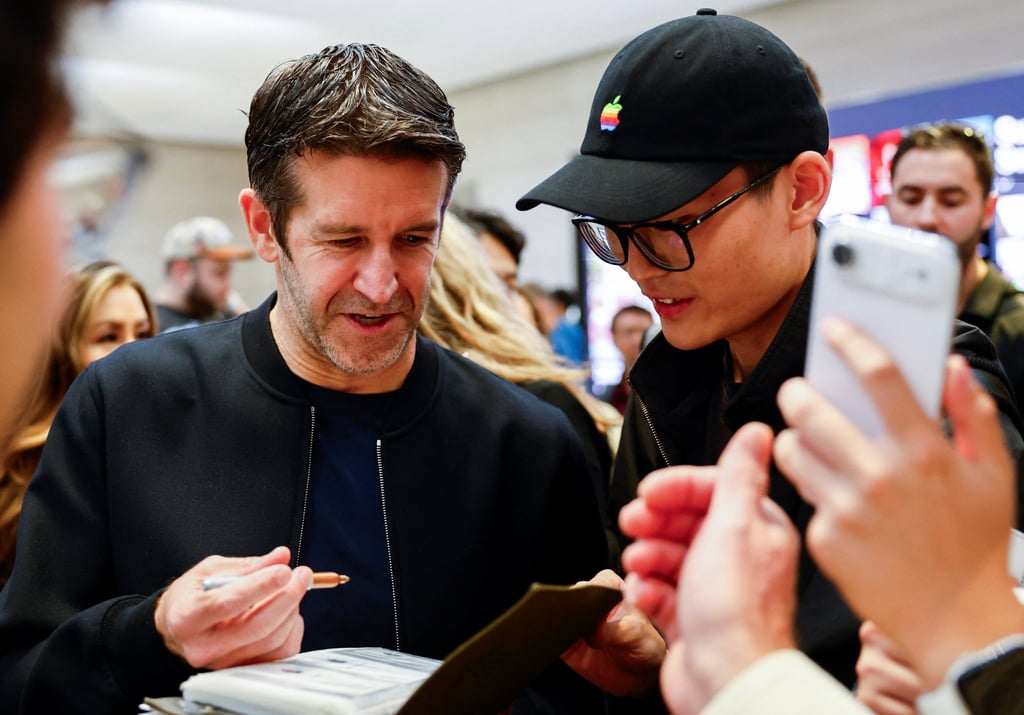
The model was priced high because it was not being locally produced and was a luxury or aspirational product, he said. “It will tell the world that you have arrived – that you are rich enough to buy such an iPhone.”
Interest in the luxury devices has prompted scrutiny on social media over how young Indians with moderate incomes are increasingly relying on long-term, zero-cost monthly instalments to normalise spending beyond their means.
A man from New Delhi went viral on Monday after saying he had sold jewellery he inherited from his great-grandmother and grandmother to buy his wife an iPhone 18 Pro. In the interview outside an Apple Store in Noida, where he was queuing, he said he did it because he believed in enjoying life.
Social media users have also circulated memes juxtaposing the cost of an iPhone Duo against major financial milestones such as buying a car.
“An iPhone Duo top variant in India is priced around [450,000 rupees]. Just to put this into perspective, for this much amount, you can: fund a foreign family trip; front-load your Systematic Investment Plans which will give you 11-12 per cent returns; a couple of years of kids school fees; 30 grams (1oz) of gold; upgrade your house with four to five good quality white goods; house rental for a year in Tier 2 cities,” Kapil Vats Prince posted.
Another user, Aakash Yadav, pointed out that unless an individual earned at least an annual salary of 13 million rupees (US$135,400), buying the created a “substantially larger labour burden than it does for the average US worker”.
Price difference
Some questioned what the price disparity between the phones sold in India and those in the United States. An iPhone 18 Pro sells for between US$1,199 and US$2,399 in the US.
IDC’s Singh said part of the reason was India’s 18 per cent goods and services tax. Prices in the US do not show taxes, which vary from state to state in the country.
Also, a Duo is likely to cost about 70,000-80,000 rupees more in India than in the US because it is imported as a fully built unit, according to Singh.
Apple’s average selling price for phones had stayed above US$800, while India's overall smartphone average price sat between US$150 and US$250, Singh said. “That gap is the clearest evidence of Apple’s pull in India.”
02:11
Apple unveils its first foldable phone, the iPhone duo
And yet, despite the gripes about price, sales of iPhones keep growing, reflecting their utility. “This is one of the most important things we use every day,” Singh said. “We may forget our hankies or sunglasses when leaving our house but we can never forget our phones. It is part of our personality now.”
The price difference was part of the criticism against the phone’s affordability, said Samit Sinha, founder of Delhi-based Alchemist Brand Consulting. “It is causing more heartaches than the absolute price.”
India is Apple’s second-largest production base for iPhones globally, ranked only after China, but that does not automatically mean more competitive pricing in the Indian market, according to Sinha.
Given the size of the Indian market – estimated at 1.5 billion consumers – widely divergent reactions are likely. Buyers were those who had been iPhone users or had aspired to one for a long time, while critics were likely to be those who had not been users, he said.
The top 5 per cent who could afford the luxury gadget still amounted to around 75 million people. “That is a pretty large market and that is where luxury brands operate,” he said.
‘Emotional aspect’
The desire for the latest iPhone did not have to make sense, Sinha said. “Frankly, I don’t think an iPhone or any Apple product is bought strictly for rational reasons. There is certainly an emotional aspect to it. You sort of resonate with your own self-image.”
The affordability debate came into stark focus last month after a teenager who reportedly bought an expensive iPhone but was unable to afford the repayments jumped off a cliff. Both his parents, who had refused to give him the money for his repayments, followed him down the hilltop.
Apple always managed to create a sense of excitement about its products, said Lloyd Mathias, a Delhi-based angel investor and business strategist. That was why people were willing to go to great lengths to buy an iPhone.
They want the bragging rights and they tend to go to crazy extremes
“People who may be even conservative about their mode of transport are willing to strengthen their chequebook for an iPhone. They want the bragging rights and they tend to go to crazy extremes.”
India also has a large and growing market for used and refurbished iPhones – which adds longevity to the products more than in other markets, according to Mathias.
“There is always a consumer who says they want the joy of holding an Apple iPhone. India has a long track record of trading in second-hand phones. There is somebody who finds value in this.”
Some, though, said they did not get the hype. Rajender Nager, a Delhi-based real estate consultant, said he felt there was no need for anything more than an Android phone that costs under 40,000 rupees.
“That also lasts two to three years, so why should I spend so much? There is no limit to your spending if all you want is a status symbol,” he said.
Radhakrishnan Swaminathan, a recent college graduate who works as an intern at a motor and switchgear trading firm, said many of his friends were interested in getting the latest iPhone, but he was content with his iPhone 15 and a MacBook.
“I can get an iPad for 50,000 rupees and an Apple Pencil. People want to upgrade to the latest technology. What I feel is that if you are rational and you know what you want to achieve in life, you will not be blinded by luxury appeal,” he said.
KioskNews shows a cleaned-up reading view extracted from the publisher’s page — the original always lives on their site, not ours.