‘More Box Hills’: Councils warn levy changes would create suburbs without footpaths
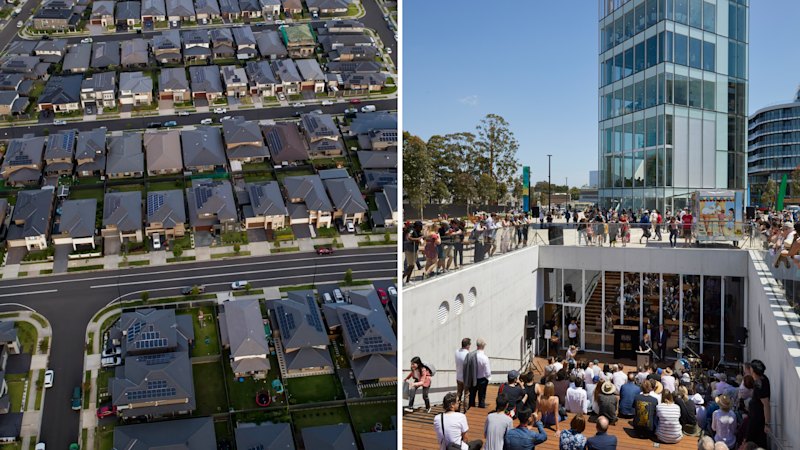
Residents moving into new Sydney developments risk arriving without parks, roads or community facilities, under controversial changes to the way developers fund critical infrastructure, councils have warned.
The City of Sydney, western Sydney councils, and the peak organisation representing local government have criticised the Minns government’s election promise to delay when developers have to pay infrastructure contributions, with one expert arguing it would cost councils a combined $850 million.
But developers who long lobbied for the timing of the levies to be pushed back have argued the changes would speed up the construction of homes. The levies are now paid to councils when projects are approved.
Sydney Lord Mayor Clover Moore seized on the proposed changes at a council meeting this month, using a mayoral minute to attack the deferral as a short-sighted move that shifted financial risk onto local councils.
She pointed to the council’s Green Square development, where more than $550 million was invested upfront to ensure essential infrastructure was delivered alongside nearly 20,000 homes.
“Receiving contributions from developers before construction has enabled the city to plan and deliver essential community infrastructure like streets, footpaths, parks and playgrounds alongside new housing before people have moved in,” she said.
The Hills Shire Liberal Mayor Michelle Byrne said it was easy to blame councils for missing infrastructure but warned “this is hypocrisy at its best”.
“[The state government] is not delaying their own contributions payments … you can’t have your cake and eat it too,” Byrne said.
The proposed changes set the stage for a drawn-out fight between the NSW government and 128 local councils over infrastructure funding in the run-up to the state election in March.
Developers are required to pay councils to build infrastructure, such as parks, open space, sporting facilities, libraries, roads and drainage systems, to support the population surge from new residential developments.
Under the existing rules in NSW, developers must pay councils this fee before construction begins so facilities are built around the time the dwellings are completed and residents move in.
However, under new rules, which Labor would introduce if re-elected, developers would only have to pay the levies when they received an occupancy certificate, at the end of the development process.
A 2012 cap on how much councils can claim from developers led to anger from councils on the city’s fringes over their inability to adequately build community facilities such as pools and libraries in new growth areas.
Premier Chris Minns said the shift would help developers by reducing the upfront cost of building new homes.
Opposition Housing spokesman Chris Rath has previously vowed the NSW Coalition, if elected, would introduce a similar policy.
Urban Development Institute of Australia NSW chief executive Stuart Ayres said permanently shifting the payments would increase housing supply by reducing financing costs and improving project feasibility.
“It’s a deferral … not a non-payment,” Ayres said.
“If you’re paying $100 on Monday and you pay $100 on Friday instead, the council is still receiving $100. It’s a revenue neutral position, and it will facilitate more homes being built earlier.”
But infrastructure contributions expert Jonathon Carle, who is founder of consultancy InfraGrowth, estimated NSW councils would lose a combined $850 million that could be put towards infrastructure under the changes.
“It’s not one week, it’s two years,” Carle said of Ayres’ remarks, and of the average time it takes to build an apartment block in Sydney. “It’s like paying an annual salary two years late.”
Byrne, who is also the Liberal state candidate for Kellyville, said the decision would create “a lot more Box Hills” – a reference to the north-west Sydney greenfield suburb notorious for having few community facilities.
Local Government NSW president Darcy Byrne, who is the Labor mayor of the Inner West Council, said delaying payment of the levies increased the risk they would not be paid at all.
“It will create a giant loophole for dodgy developers to mysteriously go belly up at the time they should be paying their developer contributions,” he said.
“What we will see at the end of this, is new homes with people living in them with no footpath outside.”
Collapsed developer Bathla was allowed to delay its payments to Blacktown Council until the occupancy certificate stage under temporary COVID-19 measures. The council is now owed $1 million in unpaid contributions.
Planning Minister Paul Scully said: “When we announced these reforms we made it clear we would work alongside councils to manage the potential financial impacts and make sure they can still deliver the infrastructure their communities need … The reality is if nothing is built there will be no contributions at all.”
Carle said the state government’s attacks on councils that struggled with the flawed infrastructure levies system amounted to “a form of victim blaming”.
“They created this broken system that hasn’t been indexed. They index their own contributions every three months.”
Separately, Byrne will use his opening address at the Local Government NSW annual conference on Monday to argue that councils have for years grappled with the need for capital investment in the basic roads, footpaths, water and drainage in their suburbs and towns that were a prerequisite for easing the housing crisis.
“The days of local government being maligned and mistreated, scapegoated and scolded – those days must come to an end. We are partners, not punching bags,” Byrne says in his speech.


KioskNews shows a cleaned-up reading view extracted from the publisher’s page — the original always lives on their site, not ours.