At cross purposes
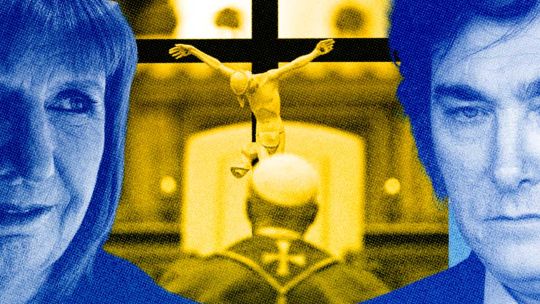
A state of limbo not only applies to next month’s papal visit now jeopardised by the shock news of the lung tumour – it also spreads to political scenarios and investment panoramas. Absurdly premature to speak of any crossroads with still more than a year to go for the elections but the presidential addiction to single-issue politics is confronted by opposition on multiple fronts, as evidenced by Thursday’s protests outside Congress over university funding, the land law and the disabled with household arrears also a major issue inside the parliamentary chambers. A multiplicity which is also President Javier Milei’s best chance of re-election because it costs the opposition the credibility stemming from a single leadership and a convincing agenda as opposed to the uncompromising clarity of the Milei model. A model whose current results are a stuttering growth falling short of a crisis often imminent in recent years and today’s troubled world – a state of limbo.
This state of limbo is perhaps best personified by Senator Patrica Bullrich heading the government caucus in the upper house with one foot in government and the other in the opposition – the new darling of the “red circle” establishment, judging from the undercurrents at the recent IDEA business symposium, as an avenue of continuity without the abrasive personality of the Milei siblings and the rough end of austerity. Those making the opinion polls their guide (something the senator would seem to do, judging from many of her stances) will also note that she consistently tops President Milei in the favourable ratings of these surveys. A popularity in some ways making her an ideal running-mate for a president with faltering support, covering his weak spots, but her dissent over such issues as the disabled and household arrears disqualifies her in many libertarian eyes. Should the latter criteria prevail and were a deal to be cut with current City Mayor Jorge Macri for his re-election, she would have little choice but to bid for the presidency herself unless content to remain in the Senate until the age of 75 – something which could also give her leverage to blackmail the Milei siblings into granting her one of the two above candidacies.
Were the wet dreams of the establishment in having the best of both worlds in terms of policy and candidacy or a crisis in government popularity to lead to a presidential bid, she would need to come up with something better than knee-jerk echoing of opinion poll viewpoints. One case in point is the burning issue of household arrears. Here she at least toes the government line in resisting calls for the debtors to be bailed out by the taxpayer in the form of public funds but she finds more political margin in following the historic Argentine tendency of blaming the lender rather than the borrower whenever it comes to debt, placing the onus on the banks and virtual wallets to renegotiate “larcenous” interest rates and not ruling out state intervention as totally as Milei.
Yet Bullrich is only one out of 329 parliamentarians and the approach of Congress as a whole to this complex issue is a greater concern. The sector covers a wide range stretching from the truly vulnerable to those who could not resist the temptations of a North American World Cup way beyond their means – any solution geared to one end of this spectrum is always going to be the wrong answer when applied to the other. Regardless of whether the debtors are people who need to borrow to eat or living irresponsibly beyond their means, they number millions and are thus impossible for elected politicians to ignore, placing the opposition at cross purposes with a government shrugging off a “private problem” (Milei dixit). The latter not entirely true since the abrupt pre-midterm escalation of interest rates to halt a run on the currency and a policy of steep increases in public service billing to correct relative prices have been significant factors in these difficulties.
Around 50 bills have been submitted in Congress to tackle this problem, ranging from the extreme of the state footing the bill (a blank cheque for anybody to incur any expense with the assurance that somebody else will pay) to condoning debt and capping interest rates in some form but almost none of these bills recognise the complexity of the issue or individual responsibility – somebody else is always to blame.
Anyway this and all other issues will be on pause for a week should the papal visit transpire. But will it?
KioskNews shows a cleaned-up reading view extracted from the publisher’s page — the original always lives on their site, not ours.