Jharkhand DGP hiring rules in conflict with landmark verdict: Supreme Court
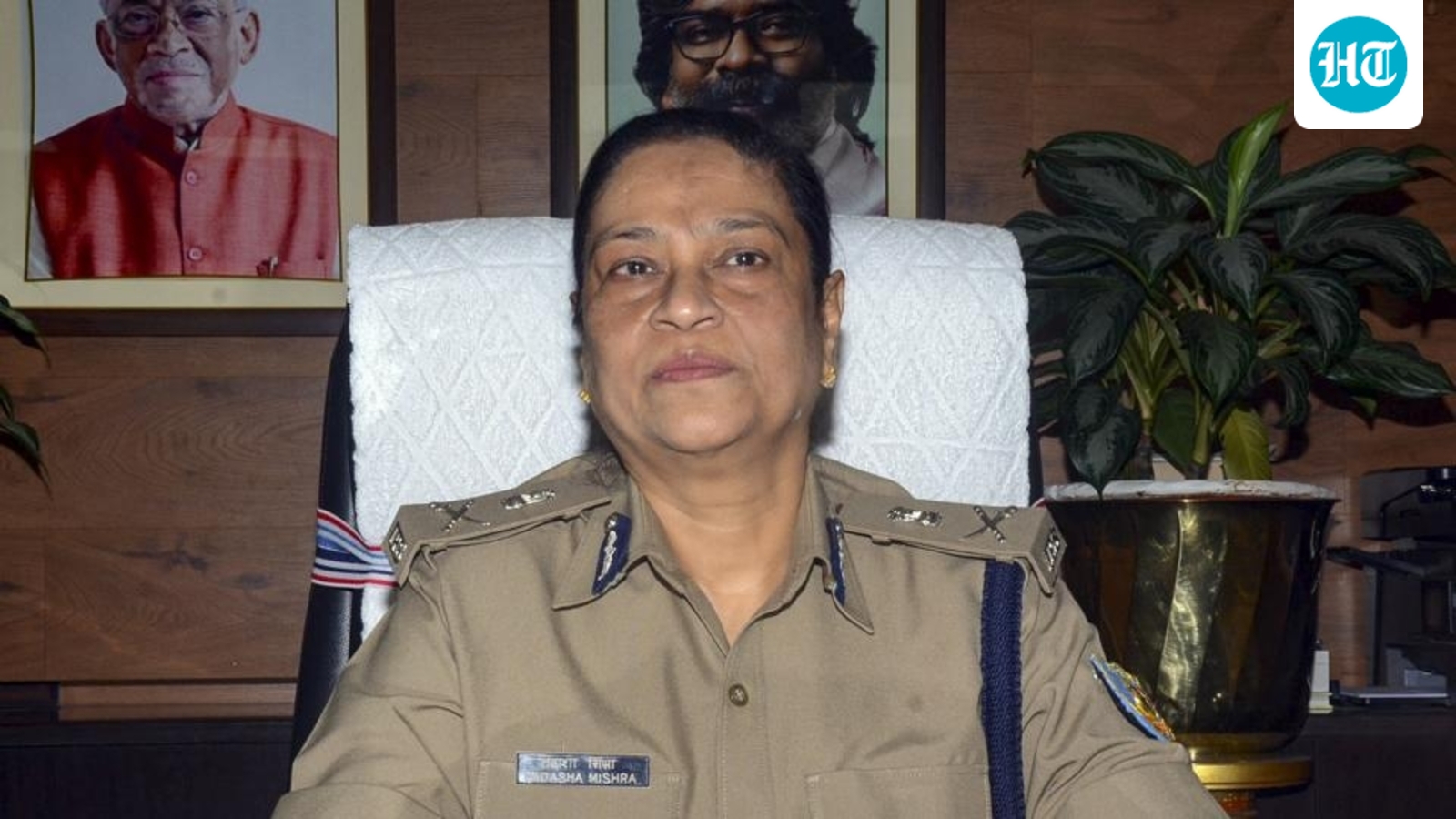
The Supreme Court on Thursday said the appointment of Jharkhand director general of police (DGP) Tadasha Mishra is in violation of its landmark judgment in Prakash Singh case that required a residual tenure of at least six months for an officer to be considered for appointment as DGP, and sought a response from Mishra, who was appointed as the state police chief a day before her retirement.
A bench, comprising Chief Justice of India Surya Kant and justices Joymalya Bagchi and V Mohana, was hearing the Centre’s application challenging the legality of Mishra’s appointment made under the Selection and Appointment of Director General and Inspector General of Police, Jharkhand (Head of the Police Force) Regulation, 2025.
“Such a provision by which an officer is made eligible for appointment as DGP of state even if total service before date of appointment is less than six months seems to be directly in teeth of our judgment in Prakash Singh case (2006),” bench said.
In the event of the rules being annulled, appointment of Mishra as DGP of Jharkhand would be required to be set aside, the court said, directing the state government to issue her a notice to respond in the case. “The state of Jharkhand will be at liberty to revisit the offending rules,” it said, posting the matter on November 3.
Also Read | SC to hear Centre’s contempt plea against appointment of Jharkhand DGP
The Prakash Singh case relates to the Supreme Court’s monitoring of police reforms, in which it has issued a series of directions since 2006 aimed at insulating the police from undue political interference and ensuring transparent, merit-based appointments and fixed tenures for senior police officers. Under the landmark judgment, an officer must have at least six months of residual service to be considered for the post of DGP to ensure stability and merit.
The Centre has objected to the manner in which the State amended its regulations to facilitate Mishra’s appointment as DGP on December 30, 2025, a day before she was due to retire. According to the application, a December 29 resolution removed the requirement of six months’ residual service for appointment as DGP, paving the way for Mishra’s appointment under the 2025 regulations.
Appearing for the Union government, solicitor general Tushar Mehta said the Centre kept writing to the Jharkhand government that its DGP appointment is in violation of the top court’s 2006 judgment. “The Union of India does not choose any state. This has come to our notice so we have filed an application. If they can point out any other state law or rules that is bad, that should also go,” he said.
Also Read | Tadasha Mishra appointment as Jharkhand DGP ‘illegal’: Centre files appeal in Supreme Court
Senior advocate Kapil Sibal, representing the Jharkhand government, objected to the Centre’s intervention when the rules are already under consideration. “Why should the solicitor general be so enthusiastic to challenge our Rules. There are much worse statutes in Bihar which are pending consideration in this court,” Sibal said.
Sibal pointed that in West Bengal, the incumbent DGP who was to retire on October 31 has recently been granted a six-month extension to continue on the post till April 2027. “Maybe the Centre would like to file an application on this too,” he said.
The bench remarked, “Our intention is not to see which is the state involved but the limited issue before us is to find out if there is a law in derogation of the Prakash Singh judgment.”
The court directed the amicus to apprise it of all such laws and rules and the consequent appointments made based on those rules. The court directed the UPSC to respond in this regard. “If we find there is a state which has a rule violative of our order, we will hear them too”.
KioskNews shows a cleaned-up reading view extracted from the publisher’s page — the original always lives on their site, not ours.