Every Stephen King Book, Ranked

Jeremy has more than 2800 published articles on Collider to his name, and has been writing for the site since February 2022. He's an omnivore when it comes to his movie-watching diet, so will gladly watch and write about almost anything, from old Godzilla films to gangster flicks to samurai movies to classic musicals to the French New Wave to the MCU... well, maybe not the Disney+ shows.
His favorite directors include Martin Scorsese, Sergio Leone, Akira Kurosawa, Quentin Tarantino, Werner Herzog, John Woo, Bob Fosse, Fritz Lang, Guillermo del Toro, and Yoji Yamada. He's also very proud of the fact that he's seen every single Nicolas Cage movie released before 2022, even though doing so often felt like a tremendous waste of time. He's plagued by the question of whether or not The Room is genuinely terrible or some kind of accidental masterpiece, and has been for more than 12 years (and a similar number of viewings).
When he's not writing lists - and the occasional feature article - for Collider, he also likes to upload film reviews to his Letterboxd profile (username: Jeremy Urquhart) and Instagram account.
He has achieved his 2025 goal of reading all 13,467 novels written by Stephen King, and plans to spend the next year or two getting through the author's 82,756 short stories and 105,433 novellas.
Sign in to your Collider account
If you ever wondered how many Stephen King books there were, technically, it’s 81. There you go. This includes his novels, including a few that he co-wrote, plus his short story and novella collections (officially, there are a dozen), plus those books he wrote under a pseudonym, and then also including a couple of works of non-fiction that he’s put out.
What it doesn’t include are some decently sized novellas that have sometimes been published on their own, but if something like The Mist can be found in a novella or short story collection (and it is), then it’s being considered alongside the other stories it’s compiled with. Anyway, Stephen King is almost a genre unto himself, and his work more or less speaks for itself, so enough with the introduction, and on with the (very lengthy) ranking of every single Stephen King book ever published.
81 'Lisey's Story' (2006)

Things are going to get positive before too long. There are far more good Stephen King novels than bad ones, and of those good ones, some are genuinely masterful, but going from worst to best requires addressing, you know, the worst. And Lisey’s Story is the worst. It’s King’s favorite, though, which might make putting it here seem like a hot take, or something done to stir up controversy, but that’s not the intent.
Lisey’s Story is personal to an agonizing extent, and you can see it plainly. It’s one where the words on the page meant a lot to the author, and there are so many autobiographical elements here that are visible if you're a reader, and likely so many more than only King – and those who know him personally – would pick up on. It’s heartfelt, and good on the writer being happy with it and all, but reading Lisey’s Story is torturous. It’s long, sappy, repetitive, and also filled with some really annoying creative decisions… mostly, the slang. “Babyluv,” “bool,” and “smucking...” it's so painful. Only tackle this if you don’t mind very sentimental books, or just feel obligated to read everything Stephen King’s ever put out.
80 'The Regulators' (1996)

Also included in this ranking are those books Stephen King wrote under the name of Richard Bachman, which was a pseudonym of his originally so he could get more works published (and so he could write books that were a little different genre-wise from his usual thing). Later on, the pseudonym got found out, but even post-outing, there have been a couple more Bachman books, including The Regulators.
This one is messy and hard to even make much sense of, even by the standards of King’s messy works. If you skip to the end of this list, you'll see some messy, sprawling novels of his that are chaotic, but in good ways. The Regulators is just a muddled mess of nothing, though. Other King books start well and end poorly, while The Regulators starts incoherently and then continues to devolve further. You're better off sticking to the still-flawed, but more engaging Desperation, which King wrote under his own name, and which came out the same year as The Regulators (both have the same characters, or at least characters who share names; one novel is intended to oddly mirror/reflect the other).
79 'Bag of Bones' (1998)

Some of the same complaints made about Lisey’s Story also apply to Bag of Bones, since it’s another Stephen King novel that seems to rely a bit too heavily on certain staples of his. The main character is an author, some of the settings are familiar, there are supernatural elements that intensify at predictable points in the story, there’s a thoroughly unconvincing romance that develops, and also, everything takes much longer than it needs to.
If you fall into the familiarity of it all, and find it a bit comforting in some way, then more power to you, but every component of Bag of Bones has been done before, and better, in King’s past works. It’s a repetitive and disappointing read, and though you don’t always see it considered among the worst of King’s work (again, said body of work has much more good stuff than bad), it probably should be a little more often.
78 'Duma Key' (2008)

It was probably a hot take to rank Bag of Bones so low, and it might be an even hotter one to put Duma Key just one spot higher. It starts decently enough, at least, and the setting is a change-up, because King’s main state of Maine ain’t where this one takes place. It’s largely set off the Florida coast, and the main character is a building contractor who paints in his spare time, so not an author, which is another nice change.
King puts all these promising things in Duma Key early on, but then falls back on old and tired tricks as things progress. This novel might well have the most annoying of all of Stephen King’s comedic relief sort of characters, and the inevitable supernatural stuff ends up being underwhelming, too. Duma Key has a few decent chapters early on, and then becomes a slog to finish, being one of those Stephen King novels where you can really feel the sense of him starting a story well before figuring out how to finish it.
77 'Holly' (2023)

Debuting in a 2014 book that’s much better (so it’ll be talked about a while from now), Holly Gibney is a character Stephen King clearly has a lot of love for, and his readers… well, they're not always as enthusiastic. But Holly’s been a supporting character in a few pretty good crime-focused (with a little horror) books of King’s, while Holly – which is one, obviously, all about her – is quite far off from pretty good.
It's not that Holly doesn’t work as a protagonist. She might be better in a supporting role, sure, but it’s also the story around her here that lets everything down. Holly’s a story with silly villains, repetitive writing, and generally weak dialogue. There are things here, concerning the characters and the world they're trying to get by in (the early 2020s; lockdown times) that are reiterated so many times it becomes agonizing. Holly feels stretched out, like a novella painfully extended to the length of a novel, and very little about it feels interesting or gripping, which really isn't what you want when you're trying to get through a crime/thriller book.
76 'Just After Sunset' (2008)
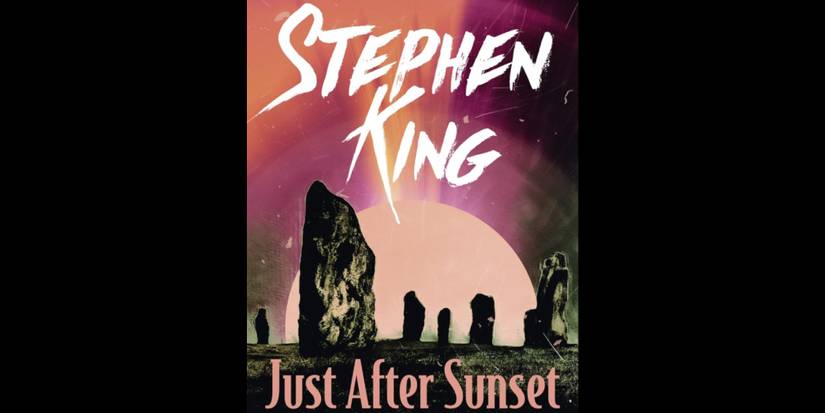
You won’t find a ton of outright hostility toward Just After Sunset online, though it is a pretty unremarkable collection of short stories by Stephen King. Most were written during the mid to late 2000s, which wasn’t a totally terrible period for King, but it was a stretch that included novels which can be called, uh, divisive. Yeah, let’s go with divisive.
If you're a defender of any of King's more divisive works from around this era, then maybe you'll be able to get around some of the stories here. If you feel the stuff King wrote around the middle of the 2000s was a bit dire, though, you should steer clear of Just After Sunset. Hell, the one story here that was written much earlier (“The Cat from Hell,” first published in 1977) isn't very good, either, even if the idea of it – a professional hitman tasked with killing a mysterious and strangely powerful cat – might sound as though it could be entertaining.
75 'Thinner' (1984)

Thinner was the last book Stephen King wrote under the Richard Bachman pseudonym without everyone knowing King was also Bachman. This was the one where, not long after publication, the secret got exposed. Bachman had a good run in the dark, though it sort of came to a stop quality-wise with Thinner, too, since this is a fairly plodding read.
Basically, Thinner is about a man who gets cursed, and that curse involves him losing weight at a dangerous speed. The progression seems like it would be compelling at first, especially the whole exploration of the curse feeling like a blessing at first, but it grinds to a halt at a point. You can feel the desperation here, of having an idea and then forcing it to an ending, and it results in a read that gets disappointing, at a point. There’s a tiredness to King’s writing here that you thankfully don’t often feel with his other books (especially those he wrote when he was still in his 20s/30s).
74 'The Tommyknockers' (1987)

Ah, The Tommyknockers. If you're including the Richard Bachman books, you could probably call Thinner the author’s first real misfire, but if you're talking just those under Stephen King’s name, then this was his biggest writing misstep of the 1970s and 1980s. It’s a story about… um… well. How do you summarize this? There’s a strange object with potentially extraterrestrial origins, and when it’s discovered near a small town in Maine (oh Maine, you’re so crazy), people start behaving strangely.
The Tommyknockers is an absolute behemoth of a novel, with a page count of almost 1000 in some editions; depending on the formatting and all. Of all the Stephen King novels around this length, The Tommyknockers probably has the least reason to be so long. There are sequences that are readable and a little interesting, but there is just too much here, to the point where, while reading it, one might wonder if it even had an editor at all.
73 'The Colorado Kid' (2005)

The Colorado Kid was an almost admirable attempt on Stephen King’s part to write a full-on mystery/crime novel, and one without any real supernatural, fantastical, or sci-fi elements. There’s this sense of King being out of his element throughout, and therein lies the “almost admirable” part. He tries to make a mystery book all about the mystery, and intentionally without any real answers, but it’s done in a frustrating way.
You can get to the end of a chaotic and paranoia-inducing book like Don DeLillo's Libra and not feel like you know what happened, or who’s to blame, and that unsettling feeling seems intentional and visceral. Here, with The Colorado Kid, you can almost feel King pausing during the writing process, every few sentences, and shrugging at no one in particular. It goes nowhere, and was never really supposed to go anywhere, but still… why? Anyway, King’s since written two other books for Hard Case Crime, and they're both better than this one.
72 'Dreamcatcher' (2001)

If you read The Tommyknockers and Dreamcatcher back-to-back, your mind will probably melt, and even if it doesn’t, you'll come away from the whole experience not really sure where one ended and the other began. At the risk of oversimplifying things, both represent King doing extra-terrestrial-related sci-fi stuff, all across an overwhelming number of pages, though in Dreamcatcher’s defense, it is a little shorter.
It's still a mess, though. You can see how messy the story is by watching the also infamous film adaptation instead, which won’t take you as long, so that’s a plus. It’s not a very good film, but it’s also adapting a novel that’s not very good. It’s a more interesting kind of messiness, rather than a continuously frustrating messiness (it’s even sort of fun for about 100 pages or so), though it isn't really worth reading in full unless you're a Stephen King completionist.
KioskNews shows a cleaned-up reading view extracted from the publisher’s page — the original always lives on their site, not ours.