5 of the Greatest Sci-Fi Book Series, Ranked by Goodreads

Michael Hein has been covering entertainment, fandom news, and trending topics since 2016 on outlets including Rogues Portal, PopCulture.com, and ComicBook.com. He has provided live coverage of red carpet premieres, conventions, and up-fronts, and has interviewed major stars including Charles Dance, Patrick Stewart, and Chloe Sevigny. An avid fiction reader and writer, Michael has been diving deep into all the biggest book-to-screen adaptations of the last decade, from Game of Thrones to Foundation.
There's something so exciting about realizing you're hooked on a series when you still have two novels to go — or ten, for that matter. Likewise, finishing a long series of doorstoppers is so much more satisfying than wrapping up a single book, no matter how beautifully it was written. Science fiction has some of the longest, most engrossing series in literature, second only to perhaps fantasy. There's a lot to be said for brevity, but not all readers want the story and the worldbuilding to be succinct. In fact, sci-fi is one of the best genres to capitalize on great worldbuilding by letting a story stretch to fill thousands of pages.
The biggest drawback to a long sci-fi series is how daunting it can look before you get started. Every day, readers around the world ask librarians, friends, and social media groups if a massive book series is "worth it." Word of mouth is more important than ever for readers, and thankfully there are sci-fi series recommendations for everyone. Below are the top five sci-fi novel series of all time according to GoodReads users.
5 'Hyperion Cantos' by Dan Simmons
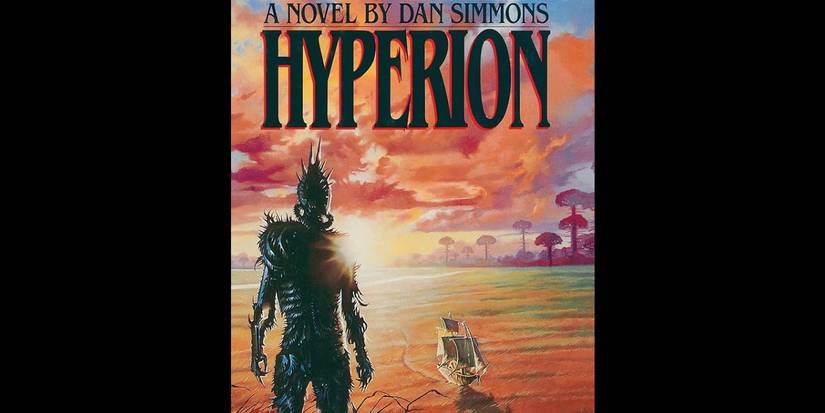
Just barely making the top five, Dan Simmons' Hyperion Cantos series explores an incredibly unique sci-fi setting full of adventure, exploration, and horrors beyond human comprehension. The books take us to a future where humanity has colonized much of the galaxy with the help of advanced artificial intelligence, which helped them create portal technology known as "farcasters" along with other great advancements. By the time of the current story, the A.I. beings have secured independence. They live alone in an undisclosed part of space, but they maintain diplomatic relations with humans. Meanwhile, human splinter groups known as "ousters" are also regarded as a threat to the main body civilization, called "The Hegemony of Man."
The first novel in the series was published in 1989, and it was modeled after the classic medieval story The Canterbury Tales by Geoffrey Chaucer. A group of pilgrims are on their way to a mysterious site known as the "Time Tombs" on the planet Hyperion, and as they travel they all share the story of how they ended up here. The sequel novels drop this framing device but continue to explore Simmons' incredibly rich futuristic setting, with many more mysteries to uncover. There are four books in total, with the last published in 1997.
Sadly, Simmons passed away earlier this year at the age of 77, but that makes this a great time to explore his writing. Many fans treat the first book in the series as a stand-alone work, but the whole series builds to an extremely satisfying crescendo. Hyperion Cantos is often up for grabs in Hollywood, and many fans are hoping it may finally be adapted sometime soon. At the time of this writing, the rights still seem to be held by Bradley Cooper, but there has been no word on an adaptation for several years now.
4 'Ender's Game' by Orson Scott Card

Despite being one of the newest series on this list, Ender's Game has had a very recognizable impact on science fiction today. The first novel in the series follows Andrew "Ender" Wiggin, a child soldier who is indoctrinated into a military training school at a young age. In this series, humanity is at war with an alien race that resembles insects, and they are barely defending earth. Ender and other gifted children like him are sent to Battle School in earth's orbit so that they can learn to live in zero-gravity while their minds are still pliant, hopefully giving humanity a chance at winning this fight away from home.
The series is exciting to read, and it's clear to see how its school setting and Machiavellian politics influenced later sci-fi — particularly the young-adult section. However, it's worth noting that author Orson Scott Card is an outspoken political activist, and some of his actions have led to boycotts from wide swaths of the sci-fi fandom. Card has campaigned against rights for the LGBTQ+ community for decades, and has continued to use his platform to support conservative politics as recently as 2020. With that in mind, some readers are unwilling to support him by buying or discussing his books.
3 'The Hitchhiker's Guide to the Galaxy' by Douglas Adams
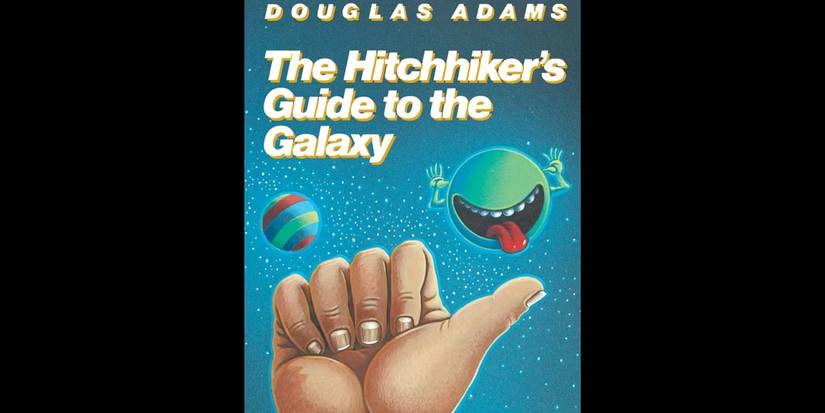
The Hitchhiker's Guide to the Galaxy by Douglas Adams was first published in 1979, though many fans were already familiar with the story by then. Adams first created the series as a radio sitcom broadcast on BBC Radio 4, and in many ways the audio medium has always been its true home. This makes it a particularly interesting read these days, as the prevalence of audiobooks has grown.
Adams wrote five novels in the Hitchhiker's series before he passed away in 2001. A sixth and final novel was written by Artemis Fowl author Eoin Colfer, and published in 2009. Of course, many fans know the series best for its 2005 film adaptation starring Martin Freeman and Mos Def. Those that loved the movie should definitely seek out the books, but all sci-fi fans should have this one on their TBR list.
2 'Foundation' by Isaac Asimov

Isaac Asimov's Foundation series is iconic in the world of science fiction, and its impact on the genre is difficult to measure. Before starting the series in 1942, Asimov's conceit was simple — he wanted to write about the collapse of an empire on a galactic scale. Taking the Roman Empire as a model, Asimov began building his massive Milky Way-spanning empire in the process of collapse. The heroes of his story use advanced sociological calculations and other sciences to try and minimize the damage of the collapse and hopefully prevent a dark age from falling.
Asimov published the first Foundation novel in serialization, concluding in 1950. He then wrote two sequels in quick succession before putting the series aside for a while. In 1982, a more mature Asimov returned to the series and began tying it in with his Robot series. The result is a magnum opus any author might be jealous of. Foundation concluded with seven novels in 1993, but it's not a bad idea to read the four volumes of the Robot series while you're at it.
1 'The Dune Chronicles' by Frank Herbert

Finally, it looks like GoodReads users are big fans of Frank Herbert's Dune Chronicles. Again, this is a series where many people read the first volume and treat it like a stand-alone novel, but diving deep into the sequels can be incredibly rewarding. Dune is set in a distant future where humanity has colonized much of the galaxy, but one thing that sets Herbert's future apart from the beginning is his extreme interest in its history and culture. He fills the 22,000-year gap with major events that have shaped all the societies in the meantime, and he looks at the resulting world from every conceivable angle.
Herbert wrote six Dune novels himself from 1965 to 1985. He passed away in 1986, apparently leaving behind notes and drafts for a seventh, final novel in the series. Years later, his son Brian Herbert collaborated with author Kevin J. Anderson to bring those notes to life. Since then, the duo have written 15 more novels together, greatly expanding the Dune setting and timeline. These prequels have not measured up to Herbert's novels with critics or fans, but they're not necessary to get the full story. However, those that stopped after the original Dune should definitely consider going back to finish all six of Herbert's novels, at least.
There are many other excellent sci-fi series worth reading. Depending on your taste, some may even deserve the top spot over these five chosen by GoodReads. Hopefully this is a useful jumping-off point for your TBR list. All of the books listed here are available now in print, digital, and audiobook formats.
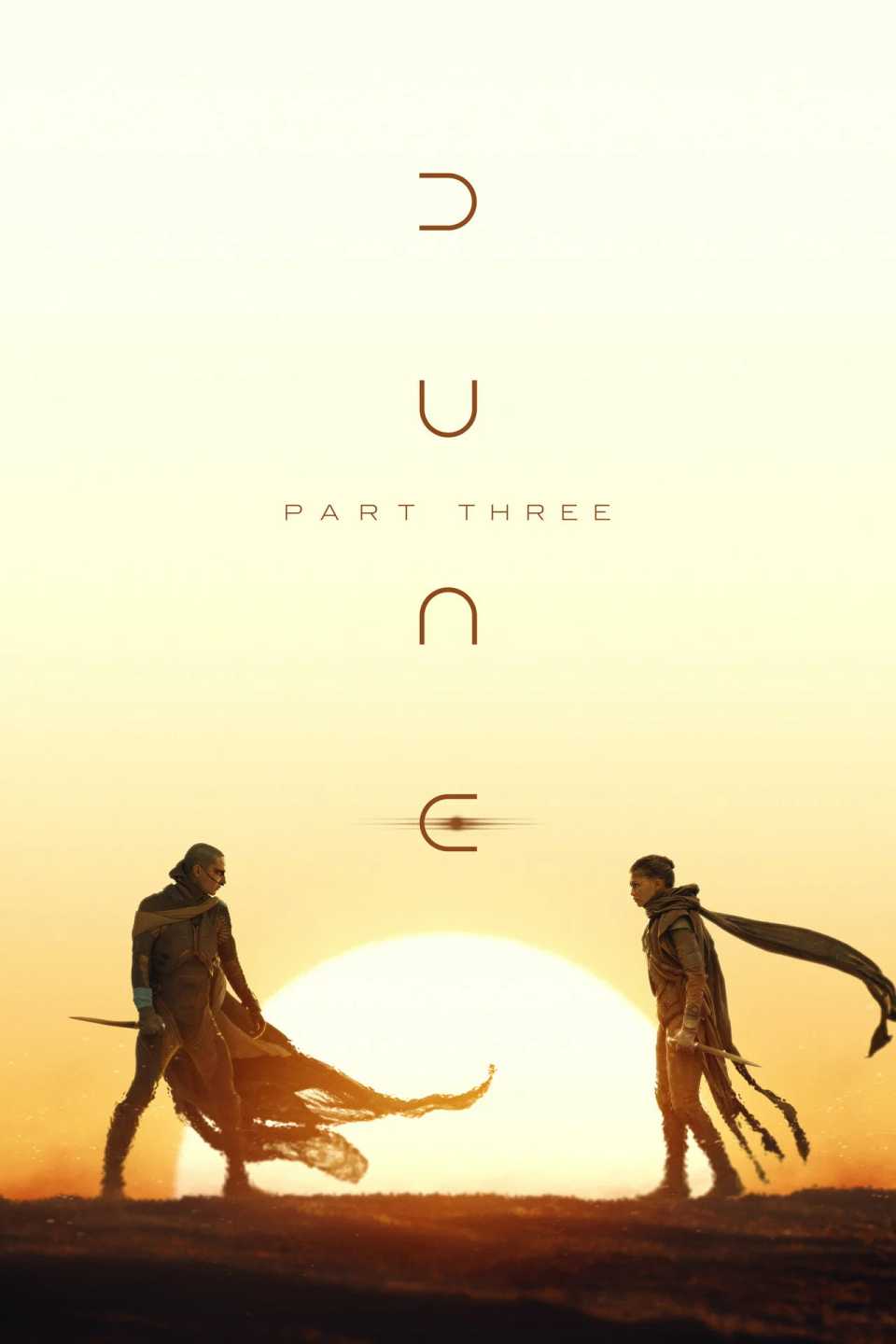
- Release Date
- December 18, 2026
- Runtime
- 140 Minutes
- Director
- Denis Villeneuve
KioskNews shows a cleaned-up reading view extracted from the publisher’s page — the original always lives on their site, not ours.