Capt Amarinder to Rahul Gandi, why Congress returns to anti-drugs plank for Punjab polls
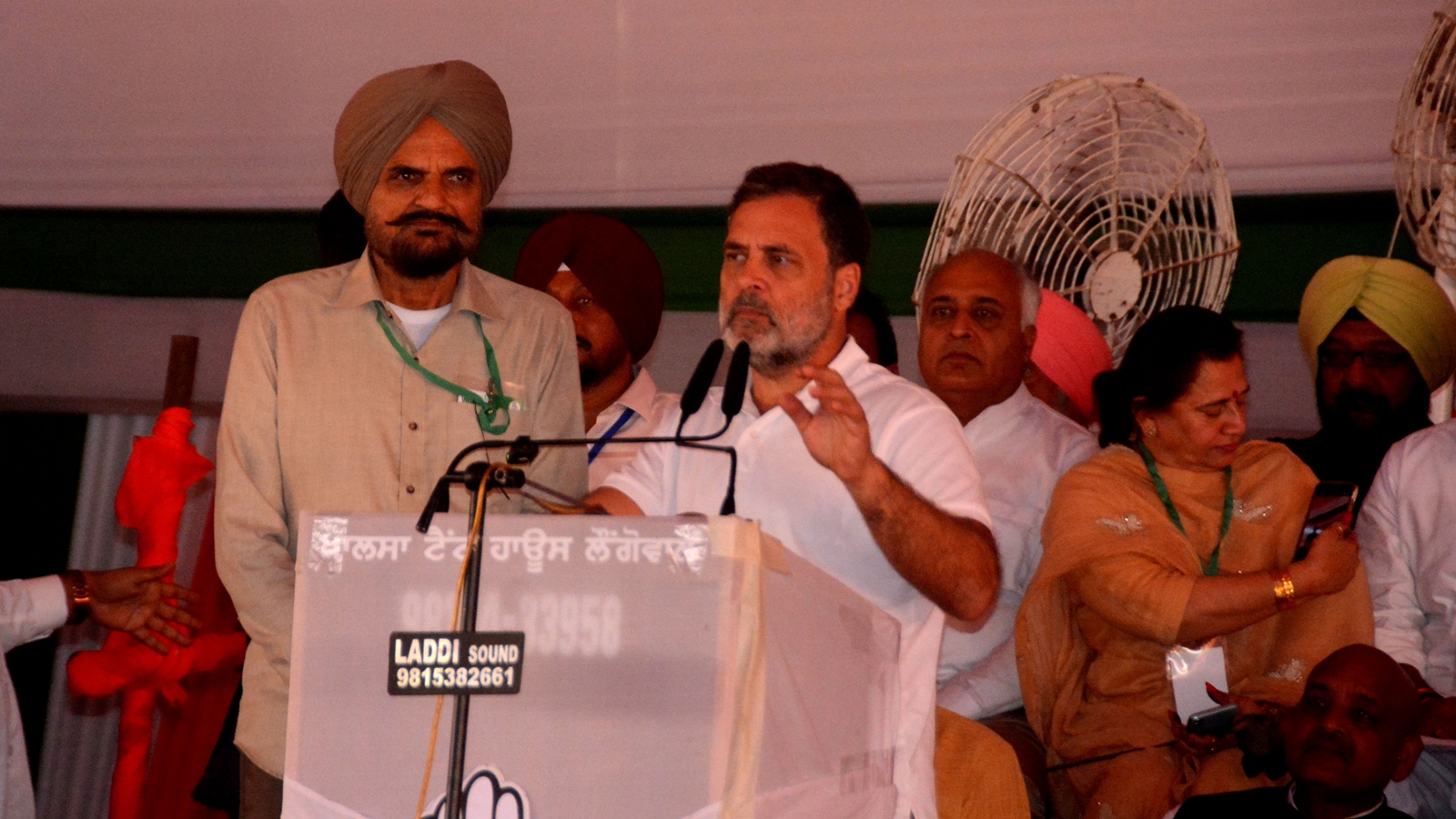
Accusing the AAP of failing to tackle the menace of drugs despite having made the pledge to eradicate it during its campaign for the 2022 Assembly elections, Rahul even alleged that Bhagwant Mann used to smell of alcohol when they were together in Parliament earlier.
“You need someone who will fight for Punjab, someone who genuinely feels the pain caused by drugs, someone who carries the pain of Punjab in his heart,” the top Congress leader told the gathering.
While Rahul flagged Punjab’s drug crisis as the Congress’s key plank in the upcoming polls, the issue was similarly raked up by the party in the run-up to the February 2017 Assembly elections.
On December 15, 2015, at a rally near Takht Sri Damdama Sahib in Talwandi Sabo, then Congress leader Capt Amarinder Singh held a Gutka Sahib (Sikh holy prayer book) and took a pledge to wipe out drugs in Punjab within four weeks of forming the government if the Congress came to power. He had then taken charge as the Punjab Pradesh Congress Committee (PPCC) president.
While Amarinder became the CM after the Congress clinched the 2017 polls, the party-led government could not eradicate the drug menace in the state during its five-year tenure.
Amarinder quit the Congress after the party leadership replaced him with Charanjit Singh Channi as the CM barely five months before the 2022 Assembly polls, which were swept by the AAP. In September 2022, Amarinder merged his breakaway outfit Punjab Lok Congress with the BJP, where he has been lying low now.
Story continues below this ad
Cut to Rahul’s Sangrur rally. Eleven years after Amarinder’s pitch, the same promise still resonates within the Congress, with its several leaders at the rally highlighting the dual challenges of drugs and gangsterism looming before the state.
Rahul accused the AAP of failing to fulfil its poll promise to wipe out drugs from Punjab despite nearing its five-year tenure.
This was the same position taken by the AAP leaders, including party supremo Arvind Kejriwal and Mann, in the run up to the 2022 Punjab polls. In rally after rally then, the AAP leaders had mocked Amarinder and the Congress for failing to tackle the drug problem in the sensitive border state.
Now, the BJP has also been undertaking its own anti-drug campaigns, with Union Home Minister Amit Shah making it clear that the BJP will make “chitta-mukt Punjab” the main issue of its campaign for the 2027 elections. He has also set a deadline of December 31, 2029 for making the state “chitta-mukt”.
Troubled past
Story continues below this ad
Punjab’s drug crisis has been simmering for several years. It had intensified under the Shiromani Akali Dal (SAD)-BJP government over its two terms (2007–2017) that continued to rage through the tenures of successive governments led by the Congress (2017–2022) and the AAP.
The anti-drug campaign launched by the SAD-BJP government after the defeat of senior BJP leader Arun Jaitley from Amritsar in the 2014 Lok Sabha polls could not make a dent in the state’s drug network. The state police’s focus remained mainly on making arrests of drug peddlers and small-time dealers, and publicising the seizure of narcotics.
This pattern has been repeated under the AAP government’s Yudh Nasheya Virudh (war on drugs), but the availability of drugs has not gone down in the state despite big seizures and many arrests and convictions.
The incumbents have blamed their previous governments while projecting their own battles against drugs, setting deadlines and claiming progress.
Some senior Punjab Police officials say that the large number of drug cases and arrests reflect the scale of the crisis rather than its resolution and that “chitta” (drugs) and pharmaceutical opioids remain available across the state, causing overdose deaths.
“When we launch a drive against chain snatchers, vehicle thieves and other criminals, their presence in the district goes down. Why are drug dealers not decreasing when such large numbers of them have been put behind bars,” asked a senior police official.
Police sources say the drug supply chain underlines the complexity of the challenge, which could not be explained by political narratives of “governance failure”. Traditional cross-border smuggling from Pakistan coexists with growing inflows of pharmaceutical drugs from other states, including the BJP-ruled ones, they say.
Story continues below this ad
“Demand for drugs is driven by unemployment, social factors, and addiction dynamics that law enforcement alone has not solved across successive regimes,” says another police officer.
Organised crime networks, inter-state supply, historical factors from the militancy period, diaspora connections, and demand-side addiction are not solely products of the current government’s policy, say officials.
“Purely economic solutions like influx of more industry and creating more jobs will not dismantle entrenched trafficking without sustained enforcement and increasing the treatment infrastructure,” says a doctor involved in the state-run de-addiction centres.
Observers say the effectiveness of Rahul’s pledge would depend on whether the Congress can unveil a credible, detailed roadmap to crack down on the drug menace which is also linked with gangsterism.
KioskNews shows a cleaned-up reading view extracted from the publisher’s page — the original always lives on their site, not ours.