Exclusive | An Indian In Bundesliga? FC Augsburg Reveal Realistic Pathway To Europe
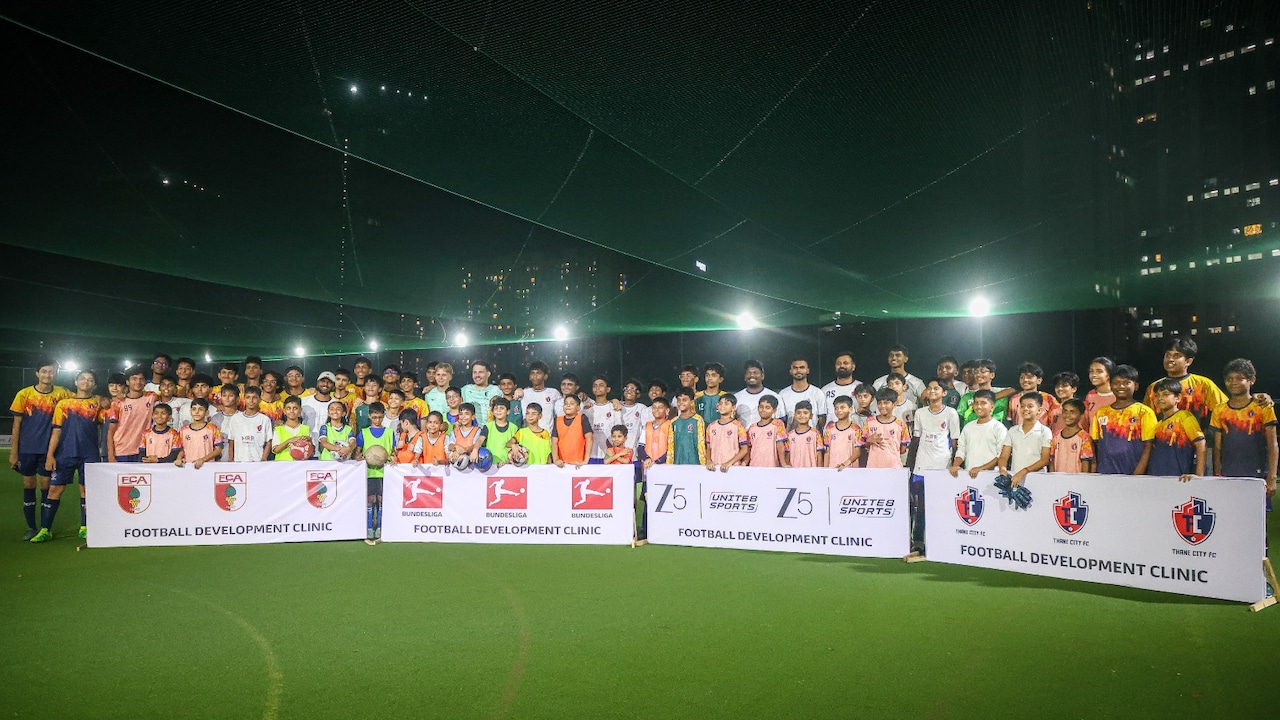
The German Bundesliga is one of the most lucrative football leagues in the world. The league has given platform to many players from Asia, particularly Japan, to hone their skills and make a name for themselves in the global footballing spectrum. But, we are yet to see an Indian footballer making it to a German side's first team. The project does seem ambitious, yet FC Augsburg's recent youth clinic in Thane outlined a realistic pathway to make it happen. Speaking exclusively to NDTV after working with local talent and coaches, FC Augsburg representatives Jan Luca Krause, Philip, and Internationalization Manager Julian Heichele noted that while India has abundant passion, reaching Europe requires systemic grassroots reform -- prioritising small-sided games like 3v3 and 4v4, focusing on long-term development over immediate results.
This Thane clinic is a key part of Zee's five-year partnership with the Bundesliga, an alliance extending beyond broadcasting into active grassroots development across India. Following an initial camp in Kochi with Borussia Dortmund, Augsburg's visit marks the second chapter in bringing German expertise to Indian soil, allowing young players and local coaches to learn directly from the distinct coaching styles each Bundesliga club offers.
Q1: After working with young Indian players for two days, what is the biggest difference you notice between them and players of the same age in Germany?
Philip: First of all, it was our first time in India, and we had a really good experience and a great exchange in Thane. It was a warm welcome for us. I think the biggest differences are in technical skills and the overall football environment. In Germany, young players usually have more regular training sessions and more opportunities to play competitive matches.
When it comes to football skills, we noticed some differences during our training sessions, especially in technical abilities such as ball control, dribbling, and the first touch. However, we saw a lot of passion, energy, and motivation among the Indian players. They really want to learn and improve.
Q2: What was the primary motive or focus behind this coaching clinic? What did you want to achieve or see from the children participating?
Philip: Since it was our first time, we couldn't completely imagine what we would see in India. Our primary focus was to observe the kids and evaluate their skills, especially technical abilities, and see what we could do in our two training sessions to help them improve.
Jan Luca Krause: It was important for us to get a first impression of where Indian youth skills currently stand. Based on this impression, we can try to identify key areas where Indian football can develop in the future.

Q3: Over those two days, did you see any qualities in the Indian players that surprised you, or made you think they have the potential to one day play at a higher level or for a big club?
Jan Luca Krause: Yes, definitely. I was especially impressed by their passion for football and their ability to learn during the training sessions. When we gave them coaching points, they understood them quickly and tried to implement them directly on the pitch.
Even though we only had two sessions with each group, the progress they made in such a short time was very impressive. I strongly believe that regular training would help them develop significantly over time. Their willingness to learn and their ability to put feedback into immediate practice are very important qualities for young players.
Q4: It was a short clinic, but what in your opinion is the biggest factor holding back the development of young Indian players right now? Is it coaching, competition, physical development, or something else?
Philip:We think it's probably a combination of several different factors rather than just one single problem. Of course, it's difficult to make a comprehensive assessment based on just one weekend, but I believe a few key aspects would make a major difference.
First, regular training and giving players as many touches on the ball as possible are crucial. Second, having qualified, quality coaches is essential. We did coaching workshops, and while there is already a good foundation in India, coaches also need to be open to learning and developing themselves, just like the players.
Lastly, making football accessible is key. Football shouldn't only exist through organized clubs or structured training. Children need more opportunities to play freely in their neighborhoods and free time without always needing organized structures.
Q5: What sort of structure do you think a country like India needs to follow at the grassroots level to progress?
Jan Luca Krause:We need to bring football closer to the children. More children should have the opportunity to play regularly and develop their passion. We should focus on grassroots football, qualified coaches, and good training environments.
Long-term development requires a strong infrastructure -- including pitches, proper facilities, and regular youth competitions. But the most important thing is that children must enjoy playing. Development takes time, so we need to be patient. If we create the right conditions and give children enough opportunities to play, we can build a strong foundation for the future of Indian football.
Q6: When I spoke to Marcel Schmelzer recently, he mentioned that at the youth level, players don't need 11v11 matches. He suggested a focus on 3v3 or 5v5 formats. What is your opinion on that?
Philip: We agree completely; it is the same in our football school. In our training sessions, we focus on small-sided, game-based activities like 3v3 and 4v4.
Small-sided games give players significantly more ball contacts, more tackles, and force them to make many more quick decisions. The development rate is much higher in these formats at a young age compared to playing 11v11 on a large pitch. For us, small-sided games are clearly the better option.
Q7: How important is regular exposure to stronger international competition, like playing against European academies, for accelerating the progress of young Indian players?
Jan Luca Krause:International experience can be very important, especially for players who are already competing at a high level domestically. However, the immediate priority should still be focusing on grassroots football and improving the quality of local competitions and regular local training.
For the most talented players aiming to reach an elite level, international matches are highly beneficial. Playing against international teams exposes them to different playing styles, helping them see where they stand and what they need to improve to reach that level.
Julian Heichele:I can add to this. In general, development is driven by competition. If my teammates challenge me in training, I have to improve, and the same applies to matches. If a player is already dominant at the local level and no longer faces opponents who challenge them, it makes total sense to look abroad for the next challenge.
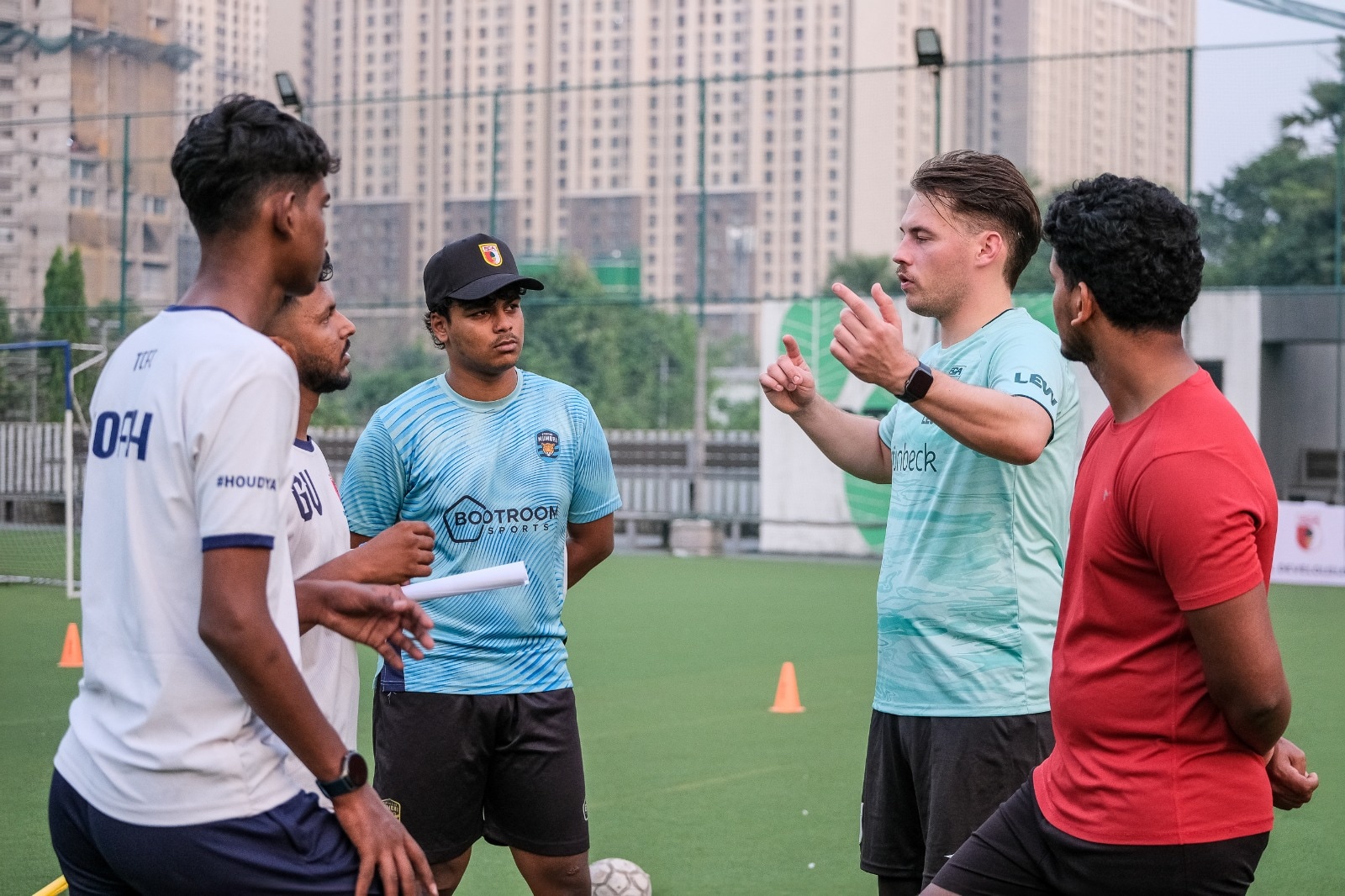
Q8: You also worked with 25 Indian coaches during this camp. How would you assess their level, and what can they incorporate from the German academy system?
Philip:We were very impressed by the motivation and openness of the Indian coaches. It is hard to fully evaluate their training implementation based on a short weekend, but one important area is the practical organization of sessions.
In Germany, we focus heavily on game-relative exercises, high-intensity ball contact, and small-sided games. These formats keep players highly involved. As coaches, we should create environments where players are guided to make their own decisions on the pitch, rather than the coach dictating every single answer.
Additionally, player development must always be the highest priority. The focus should be on helping individual players improve their skills and understanding of the game; winning matches and getting results should simply be a natural consequence of successful development, not the main objective.
Q9: Is there one specific aspect of the German youth ecosystem that India could easily adapt and incorporate into their own style without entirely copying the Bundesliga model?
Philip:Indian football can benefit greatly from adapting the German focus on long-term player development. It is crucial to establish a clear philosophy and a common understanding of how you want to develop young players. This philosophy should be visible, understandable, and accessible to everyone involved in football in India, regardless of their location or background.
That being said, every country has its own unique culture and environment. India should develop its own footballing identity and find solutions that uniquely work for Indian football.
Q10: If FC Augsburg were to sign a youth academy player from India in the next five years, what specific qualities or attributes would that player need to possess?
Jan Luca Krause: First, football talent is not limited to any single country, so it is absolutely possible. At FC Augsburg, we look for players with strong technical skills, high game intelligence, speed, and a strong mentality.
However, talent alone is never enough. A player must possess discipline, a constant willingness to learn, and the ambition to improve every single day. If an Indian player has those qualities, they can certainly compete at a high level and play for FC Augsburg.
Julian Heichele: To add to that from an administrative perspective, signing young international players is tricky due to FIFA regulations. An Indian player can only officially join our club once they turn 18. That is why we focus on club partnerships and youth cooperations.
Since technique is the foundation of everything we teach, our goal through these international cooperations is to identify players on a similar level as our academy players. We can then bring them to Germany regularly for training blocks of several weeks to evaluate them firsthand, and guide their development alongside their local club over several years. Once they approach 18, if they are still performing at the level of our players, we have a very realistic chance of bringing them in.
Q11: If you return to India in five years to run another coaching clinic, what changes would you hope to see to prove Indian football is moving in the right direction?
Philip: First, I would want to see far more children playing football, better training environments, and more coaches actively seeking to develop themselves. We would also love to see more Indian players competing internationally.
Success is about helping players reach their full potential. It would be wonderful to see the country achieve its goals, such as seeing the Indian National Team participate in the Under-17 World Cup. We hope our projects and collaborations in Thane play a small, positive part in supporting that journey.
Jan Luca Krause: As Philip said, when we look toward the future in five years, I want to see many, many children playing football in India. They have a lot of good facilities. Also, when we were there, they told us their goal is to participate in the Under-17 World Cup in 2031, I think. I hope they can reach this goal. I'm really looking forward to it, and I also hope that projects like the clinic we had in Thane will have a positive impact on the development of Indian football."
Q12: Julian, managing internationalization for FC Augsburg, what is your overall perspective on the Indian market? How can the Bundesliga and Augsburg build the same passion among Indian fans that leagues like the Premier League enjoy?
Julian Heichele: We know that the Premier League is currently much more popular than the Bundesliga in Southeast Asia and India due to various historical and commercial reasons. However, football interest is growing rapidly among young people in India.
As a family-driven, community-oriented club, we might not be one of the giant international brands, but we can make a unique difference through authentic youth programs and grassroots collaborations. By giving back to the country and helping develop young players from a grassroots level, people can connect with us on a deeper, more personal journey. If we start from the ground up, we can build genuine popularity. And of course, if there is one day an Indian player playing in the Bundesliga, it will drive massive attention and passion toward the league.
Featured Video Of The Day
MS Dhoni Appointed Chennai Super Kings Mentor Ahead Of IPL 2027, Marks End Of Playing Career
KioskNews shows a cleaned-up reading view extracted from the publisher’s page — the original always lives on their site, not ours.