Xi’s pledge to ‘uproot sick trees’ aired weeks ahead of major party conclave
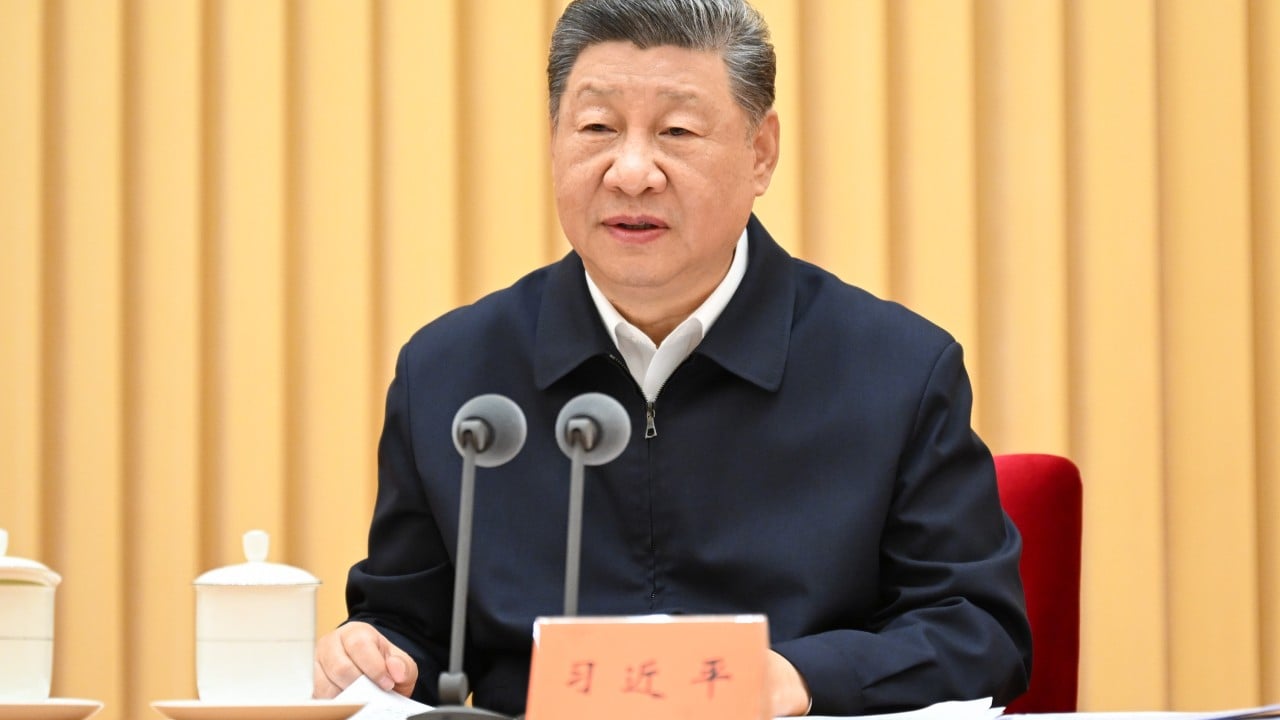
President Xi Jinping has pledged to “uproot sick trees” in the anti-corruption fight, according to a speech transcript published by the party’s flagship magazine ahead of a major party conclave later this month.
The warning appeared on Thursday in the magazine Qiushi, which carried fresh details of a speech Xi delivered in January at the fifth plenary session of the Central Commission for Discipline Inspection (CCDI), the party’s top anti-corruption watchdog.
The speech contained a series of blunt warnings to the party.
“The fight against corruption is a major battle that we cannot afford to lose and must never lose. We cannot stop for a moment or retreat even half a step … [We must] uproot or cut down ‘sick trees’ wherever necessary,” Xi said.
The metaphor of “sick trees” comes from ancient Chinese poetry, suggesting that new life will flourish beyond decaying trees, with the new replacing the old.
“Corruption is the greatest risk, threat and challenge facing our party. It is a roadblock and stumbling block to the development of the party and the country,” Xi said.
He also emphasised that corruption remained widespread and prone to recurring within the party, and that the anti-corruption campaign continued to face a grim situation.
The edited transcript was published less than two weeks before the fifth plenary session of the party’s 20th Central Committee, taking place in Beijing from October 26 to 29, when senior party officials are expected to discuss and adopt a major document aimed at “deepening party self-governance”.
The plenum is expected to focus on tackling systemic corruption, strengthening political oversight within the party and closing institutional loopholes across the bureaucracy and government departments.
The plenum also comes at a time when work is under way on the power reshuffle that will be finalised during the party congress next autumn, when a new Central Committee will be formed and major leadership changes announced.
The anti-corruption campaign has already taken a heavy toll on the Central Committee, with 34 of its 205 full members either under investigation or stripped of their seats in the National People’s Congress, China’s top legislature.
On Tuesday, the CCDI announced a corruption investigation into former Chongqing mayor Huang Qifan, long regarded as a political survivor, eight years after his retirement.
Thursday’s article also quoted Xi as calling for efforts to prevent officials from becoming idle before handing over power or rushing to deliver quick results after taking office, as local governments and party committees undergo leadership transitions this year.
“[We must] step up investigations into corruption involving ‘principal leaders’, young cadres and others,” Xi said.
01:36
Former PLA generals expelled from China’s Communist Party for factionalism and disloyalty
Principal leaders in government departments and younger cadres are typically among the key candidates for personnel reshuffles and promotions during leadership transitions.
Personnel changes at the regional level have picked up pace recently. Since September, Beijing has appointed new top and second-ranking officials in six provinces.
Xi also said some of the party’s internal regulations were too broad and vague, while loopholes remained in how different rules and regulatory systems fitted together.
He called for improvements to the party’s internal regulatory framework, saying “[we must] promptly establish regulations in areas where gaps exist, and revise and supplement those that are incomplete or outdated … to prevent using a cattle pen to confine a cat”.
The Chinese phrase “using a cattle pen to confine a cat” describes safeguards with gaps so wide, or rules so lax, that they fail to impose effective restraints.
Xi also said the party should place greater emphasis on harnessing big data and other technologies to improve the effectiveness of supervision, disciplinary enforcement and law enforcement.
But he cautioned that the use of new technologies within the party must be accompanied by stronger ethical regulation and data security safeguards, and strictly comply with party disciplinary rules and the law.
KioskNews shows a cleaned-up reading view extracted from the publisher’s page — the original always lives on their site, not ours.