Malaysia, Kazakhstan should deepen higher education cooperation through five‑pillar knowledge partnership, Zambry says
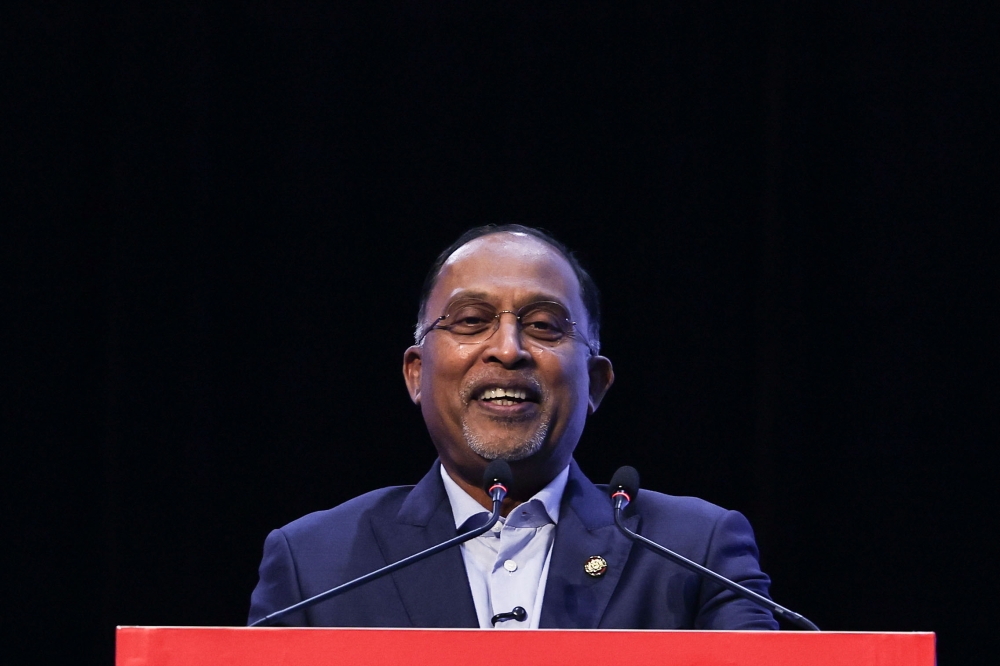

Higher Education Minister Datuk Seri Zambry Abd Kadir said Malaysia and Kazakhstan should forge a comprehensive knowledge partnership to strengthen higher education cooperation between the two countries. — Bernama pic
First Published: Saturday, 26 Sep 2026 11:19 AM MYT
ASTANA, Sept 26 — Malaysia and Kazakhstan should forge a comprehensive knowledge partnership to strengthen higher education cooperation between the two countries, said Higher Education Minister Datuk Seri Dr Zambry Abd Kadir.
He said the partnership could be built on five key pillars, namely student mobility, research collaboration, digital and technological education, civilisation and cultural studies, as well as human development.
Zambry said closer cooperation in these areas would enable universities in both countries to play a greater role in connecting Central Asia and Southeast Asia through what he described as “education diplomacy”.
“Diplomacy can create agreements; education creates understanding. Diplomacy can open an embassy, but education opens minds.
“Governments establish formal relationships, while students and scholars build relationships that can last for generations,” he said during his public lecture at the L.N. Gumilyov Eurasian National University, here, yesterday.
Zambry, who is on a three-day working visit to Astana until Sunday, was conferred an honorary professorship by the university, which he described as more than an honour bestowed on an individual, but a symbol of friendship between Malaysia and Kazakhstan, their academic communities and two nations shared belief in the power of knowledge.
The visit is also being held in conjunction with the Malaysia-Central Asia Higher Education Forum 2026 (MAHEF2026), organised by Education Malaysia Global Services (EMGS), which brings together higher education stakeholders from Malaysia and Central Asia to strengthen cooperation in areas including student mobility, transnational education, Technical and Vocational Education and Training (TVET) and digital skills.
On student mobility, Zambry said more than 1,400 Kazakh students are currently pursuing their studies at Malaysian universities, although the figure had exceeded 10,000 before the Covid-19 pandemic.
He said Malaysia remained keen to welcome more Kazakh students while encouraging reciprocal mobility involving Malaysian students pursuing academic programmes in Kazakhstan.
According to him, potential areas for cooperation include joint postgraduate programmes and research laboratories, artificial intelligence (AI), digital education, climate and sustainability research, energy transition, food security, agricultural technology, Islamic finance, the halal industry, governance and entrepreneurship.
“We should now ask what our institutions can build together. We could develop joint postgraduate programmes and research laboratories. Above all, we should pursue research that addresses the real problems in people’s lives. The value of our collaboration should be seen in its contribution to society, as well as in its academic achievement,” he said.
Zambry also proposed greater focus on “geo-intellect”, alongside the traditional understanding of geopolitics, by bringing together intellectual talent and expertise to drive development and progress.
He said Malaysia’s strategic position in Southeast Asia and Kazakhstan’s location at the heart of Eurasia offered complementary strengths that could be harnessed through cooperation among universities, researchers and students.
“Malaysia and Kazakhstan are separated by distance, but knowledge knows no borders. Where knowledge travels, friendship follows. And where friendship grows, peace has a place to begin,” he said.
Malaysia and Kazakhstan established diplomatic relations in 1992, with bilateral ties spanning political, economic, educational, cultural and people-to-people cooperation.
Meanwhile, Zambry also expressed his condolences to the government and people of Kazakhstan over the deaths of 14 servicemen who were swept into the Caspian Sea during a military exercise in the Mangystau region on Thursday following a sudden deterioration in weather conditions.
“As you all mourn, we also share your feelings. May God grant the souls the highest possible place in heaven,” he said. — Bernama
KioskNews shows a cleaned-up reading view extracted from the publisher’s page — the original always lives on their site, not ours.