Have you done this before? Hong Kong firefighter recalls mid-air rescue chat
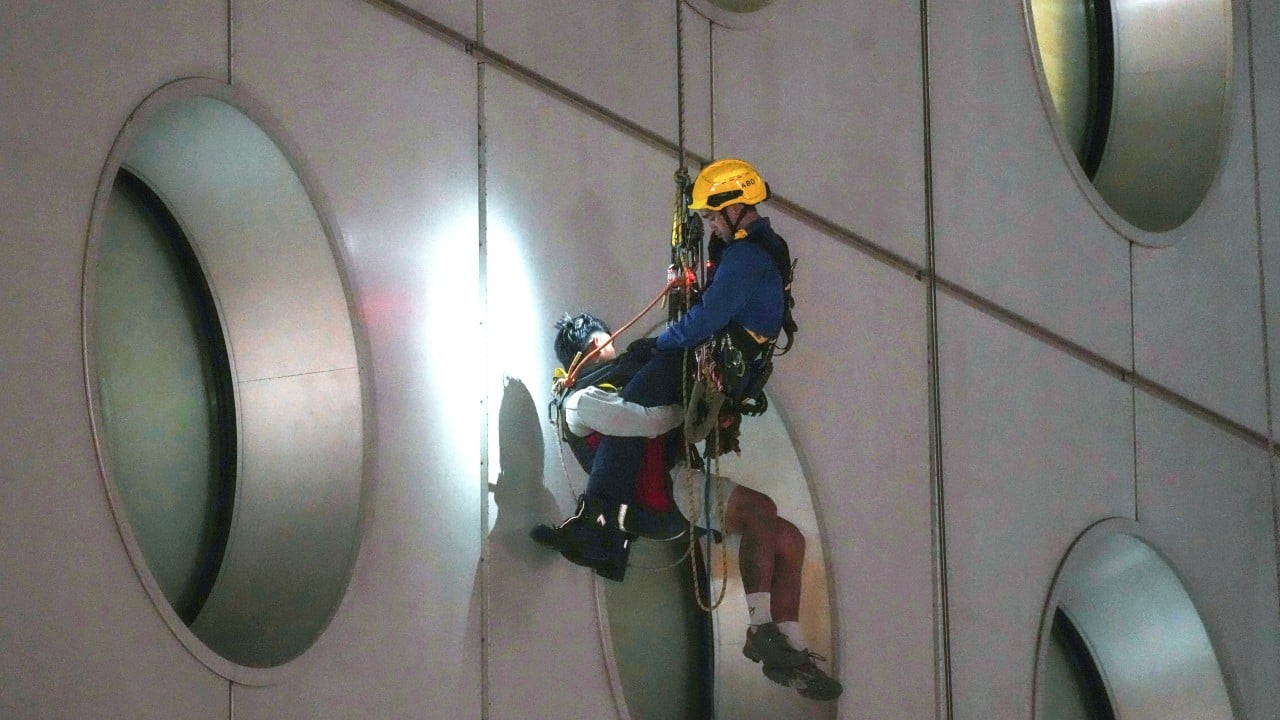
Hong Kong firefighter Yuen Chung-hang did not expect to have to explain his work experience while dangling from a rope to rescue one of two workers left hanging in mid-air outside a skyscraper after their gondola malfunctioned.
As Yuen tried to keep the man calm with small talk during their descent from the 35th floor of Jardine House in Central late last month, he was asked whether he had handled similar situations before.
“I didn’t expect that, but I understand it because the worker was very nervous. I don’t think he had ever dangled in mid-air in his three years in his line of work,” the 32-year-old said.
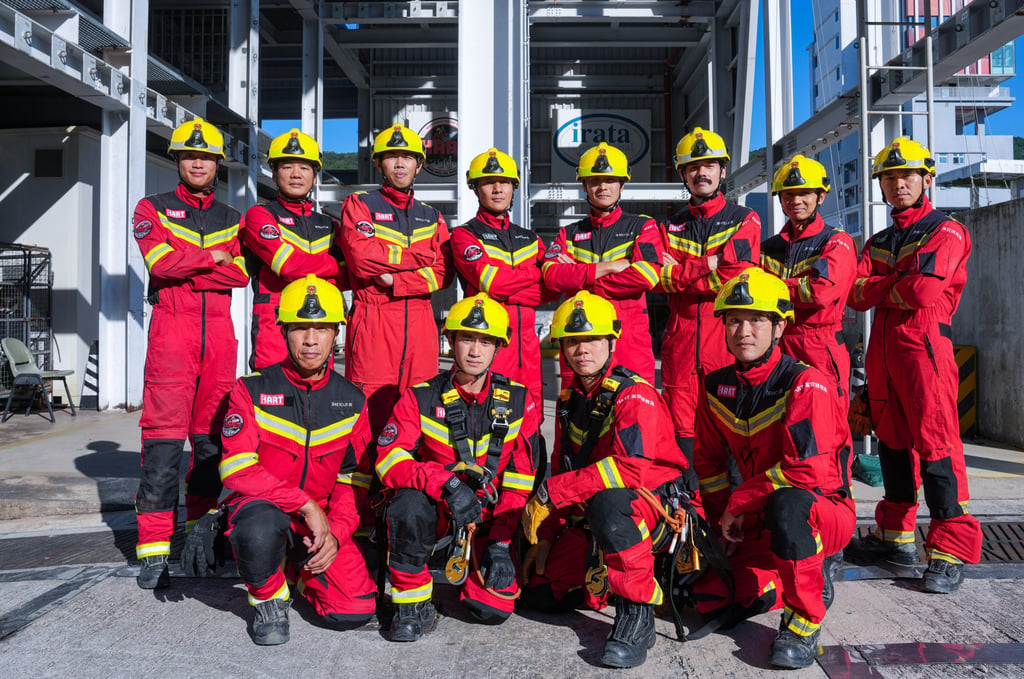
Yuen, who is based at Aberdeen Fire Station, is among a team of about 120 specialists in the Fire Services Department’s High Angle Rescue Team (Hart), which carries out missions in both urban and rural areas.
The 178.5-metre-tall Jardine House held no fear for Yuen, who has trained on high-rise buildings, Ngong Ping 360 cable cars and Hong Kong’s hills to prepare for rescues ranging from lift shafts to cliffs.
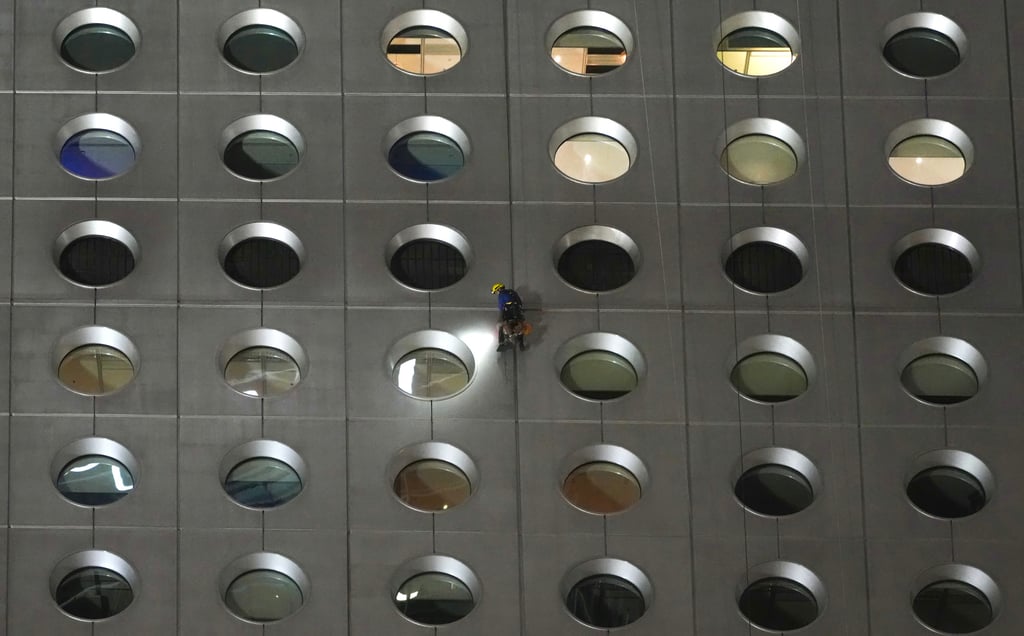
Last month’s rescue mission at the landmark Central skyscraper, known for its circular windows, was Yuen’s fourth involving a malfunctioning gondola.
“Of all my missions, [the one at Jardine House] was quite high, but because we have trained at the ICC before, I think we’ve all become used to it,” Yuen said, referring to the 484-metre International Commerce Centre in West Kowloon, the city’s tallest building.
Yuen was among the first responders to the Jardine House call on October 26. The two workers were left dangling outside the building at the 35th and 43rd floors after the suspended working platform they were using dropped to within a few metres of the ground.
“When I was looking for a spot to descend, I actually couldn’t spot the workers at first because they were standing in window sills,” Yuen said.
After Yuen and his teammates reached the building’s rooftop, he prepared a 200-metre rope for his descent. Within three minutes, he had lowered himself from the rooftop of the 52-storey building to the 35th floor to reach the worker, he said.
The circular windowsill on which the worker stood was just wide enough for the ball of one foot, Yuen recalled. The worker gripped the sides to maintain his balance, while his harness kept him upright.
After connecting the man’s harness to his own, Yuen removed him from his original safety equipment and transferred his weight before they began their descent, which took about 10 minutes.
Yuen had to report to officers on the rooftop as the pair descended three to four floors at a time, so they could assess whether his 200-metre rope would be long enough to reach the ground.
Yuen said the greatest risk in the mission was not the height of the descent but the possibility of the rescue ropes becoming tangled.
Juk Shan-heng, a senior station officer with the team who was also at Jardine House, said firefighters had decided to pull the other stranded worker from the 43rd floor up to the roof because it was a shorter distance.
Officers used an electronic power ascender to pull up the worker and his rescuer. The machine is commonly used in urban areas, but not in countryside missions as it weighs 13.3kg. The machine can lift objects up to 220kg.
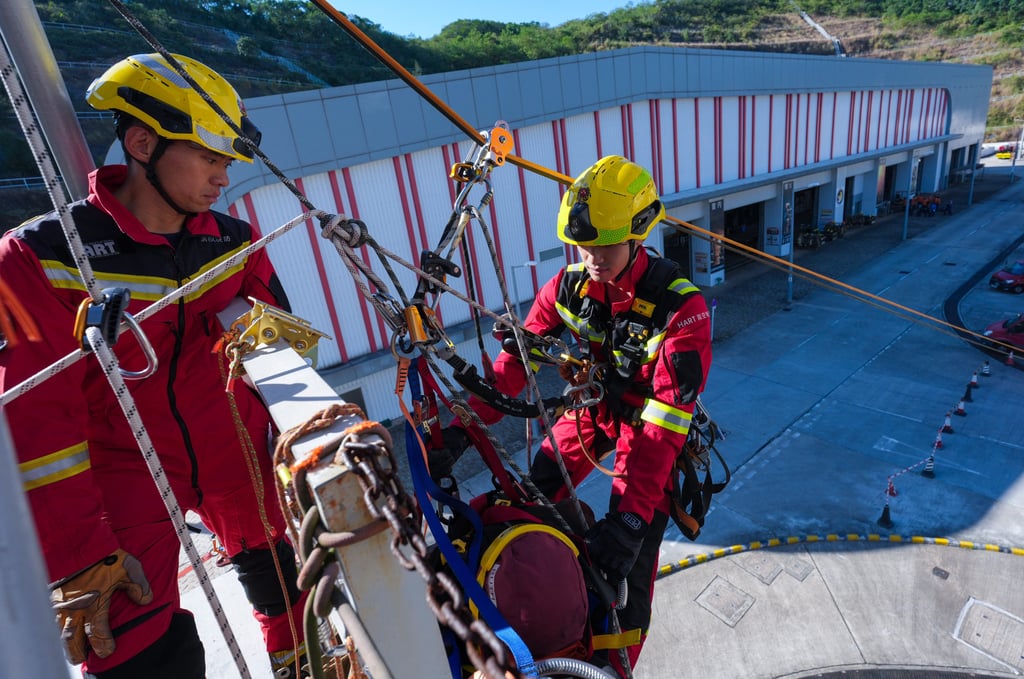
Established in 2011, the team focuses on high-angle rescue missions. Personnel are divided between trainers and staff stationed at the Fire and Ambulance Services Academy in Tseung Kwan O and first responders based at four fire stations across the city – Aberdeen, Tin Sum, Kowloon Bay and Penny’s Bay.
Hart is deployed for incidents including people stranded at height or to rescue those who have fallen down slopes, as well as accidents concerning gondolas, lift shafts, amusement park rides, Ferris wheels and cable cars. The team may also be called out for complicated tree-cutting operations where ladder vehicles cannot reach a target spot.
Over the past two years, the team has conducted an average of 24 missions annually, with people stranded at height being the most common category. For the first 10 months of this year, it has conducted 16 missions.
Juk said the team recruited members every year, with an average of 10 to 20 competing for eight places.
Candidates are tested on whether they can descend from a height of 10 storeys and complete a task midway, as well as on teamwork.
Recruits need to complete five weeks of training, including obtaining an internationally recognised qualification on industrial rope use and advanced rescue skills.
Juk said ideal candidates were team players who could remain calm at dizzying heights.
“You may only see one or two of us in high-risk frontline positions during our missions, but there is always a large group of colleagues at the back supporting us,” Juk said.
KioskNews shows a cleaned-up reading view extracted from the publisher’s page — the original always lives on their site, not ours.