EU’s quantum sovereignty push shuts out China but welcomes US firms
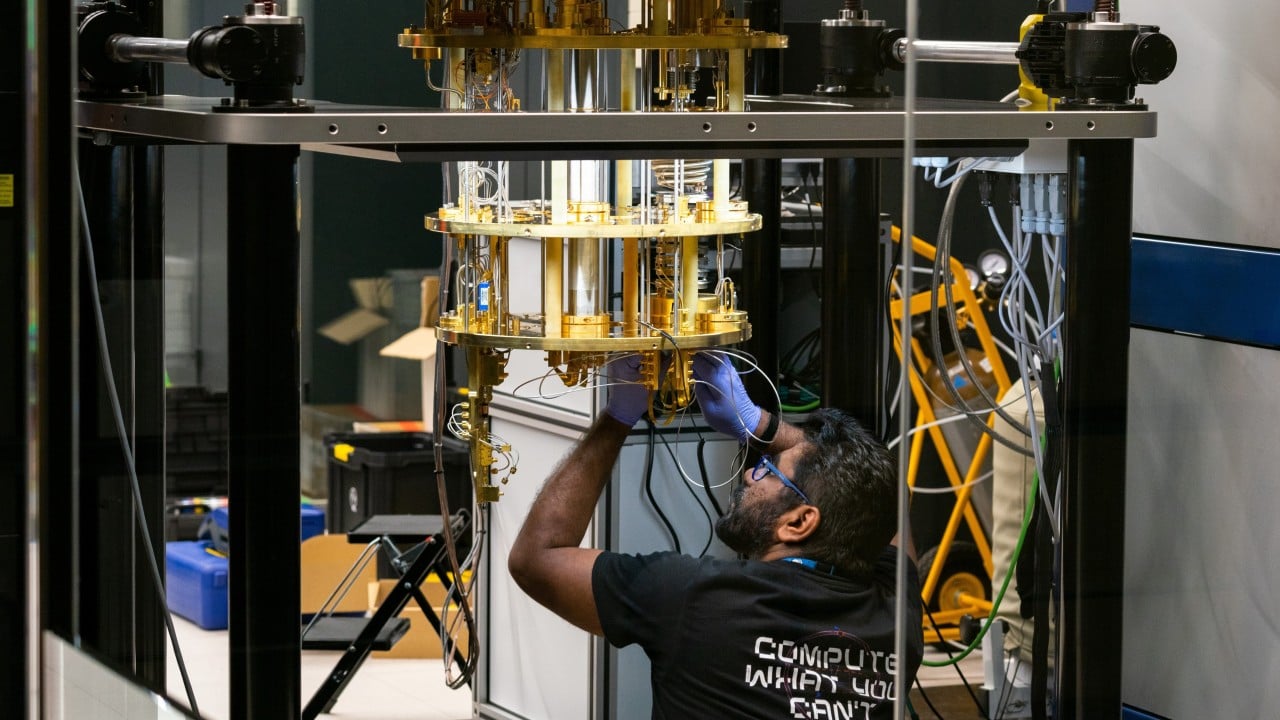
Chinese companies are set to be excluded from EU quantum computing procurement markets under legislation unveiled on Wednesday, as the bloc looks to ramp up its capabilities in the next-generation technology while cutting its dependency on the Asian giant.
The procurement tenders to provide the expensive machines required to power the EU’s quantum future will be open to signatories to the World Trade Organization’s agreement on procurement – of which China is not one.
Firms from the United States will, however, be welcome to bid to sell hardware such as computers, simulators and medical imaging systems to governments, even as parts of Europe look to unwind their technological reliance on Washington too.
02:05
Emboldened EU readies China company ‘kill switch’ as Beijing warns Brussels not to ‘fantasise’
While Hong Kong remains an independent signatory to the WTO’s Agreement on Government Procurement (GPA), EU officials said Chinese-controlled entities operating out of the special administrative region could be excluded on national security terms.
“Those countries who are in are, in principle, treated like [European] Union-controlled entities. Those countries who are out are not treated like union-controlled entities,” said a senior EU official, who was speaking on condition of anonymity.
“Quantum is security-relevant … in case of doubt, if there is a security-relevant technology, there are possibilities as well, individually, to restrict procurement calls,” the official said.
The security carve-out shows the EU’s compartmentalised approach to China, even as it re-engaged with Hong Kong through an official dialogue on financial services in Brussels on November 20. It was the first major new forum established between the sides since July 2020, when the EU’s foreign ministers banned new negotiations with Hong Kong following the imposition of the national security law.
The commission did not respond to questions over whether the dialogue meant the ban had been discontinued.
On Wednesday, the commission unveiled the Quantum Act, a framework aimed at converting Europe’s quantum research into products and services.
The act is intended to bolster European quantum research and industrial capacity, galvanising investment – while favouring European companies – in public procurement, and securing supply chains to protect critical infrastructure against quantum-enabled threats.
Alongside this, Brussels unveiled plans for a sovereign technology fund it hopes will reach €50 billion (US$53.3 billion) and mobilise hundreds of billions more in private investment.
Combined, it is hoped the package will stop European start-ups and researchers from going elsewhere to realise and commercialise their technological innovations, including in the field of quantum computing.
“Europe hosts around one-third of the world’s quantum companies, and these companies often find the capital they need in order to grow, to scale up, outside Europe, as we have recently seen in some cases like Pasqal,” a second senior EU official said.
SCMP Plus is a new premium news platform that gives you an
all-inclusive edge to stay ahead on China news.
To access our exclusive content you’ll need to subscribe.
Already a subscriber?
LOG IN
French quantum computing champion Pasqal turned to US capital markets to finance its expansion and floated on the Nasdaq exchange in August following a merger with a US investment entity. A month later, it was excluded from French state defence projects.
“This is largely due to Europe’s market failure in the provision of strategic growth capital and equity,” the second official said.
“Europe’s fragmented and underdeveloped capital markets contribute every year to an estimated €300 billion of European savings flowing outside the EU. This means funding other countries’ growth, other countries’ economies, other countries’ tech champions.”
The EU is home to 32 per cent of the world’s quantum companies, higher than the US (25 per cent) and China (5 per cent). It trails, however, in terms of quantum patents, with the bloc accounting for just 6 per cent compared to 23 per cent in the US and 46 per cent in China, according to a report last year from the European Commission.
06:24
Munich 2026: Washington warns of ‘civilisational erasure’ as Beijing pitches ‘stability’
The quantum dynamic shows the dilemmas that will dominate Europe’s technological future. Leaders frequently discuss their plans in terms of “tech sovereignty”, but still rely on foreign capital and manufacturers to realise them.
While Europe is at loggerheads with the US over trade, digital laws, and even territorial issues, under President Donald Trump, it is prepared to welcome American firms to take part, understanding that it cannot do it alone. China, on the other hand, is expected to be excluded from the outset.
“European technological sovereignty doesn’t mean European technological autarky. … Technological interdependence is there to stay,” the second EU official said.
KioskNews shows a cleaned-up reading view extracted from the publisher’s page — the original always lives on their site, not ours.