1,300-year-old industrial hub uncovered during bus terminal construction in Ramat Gan
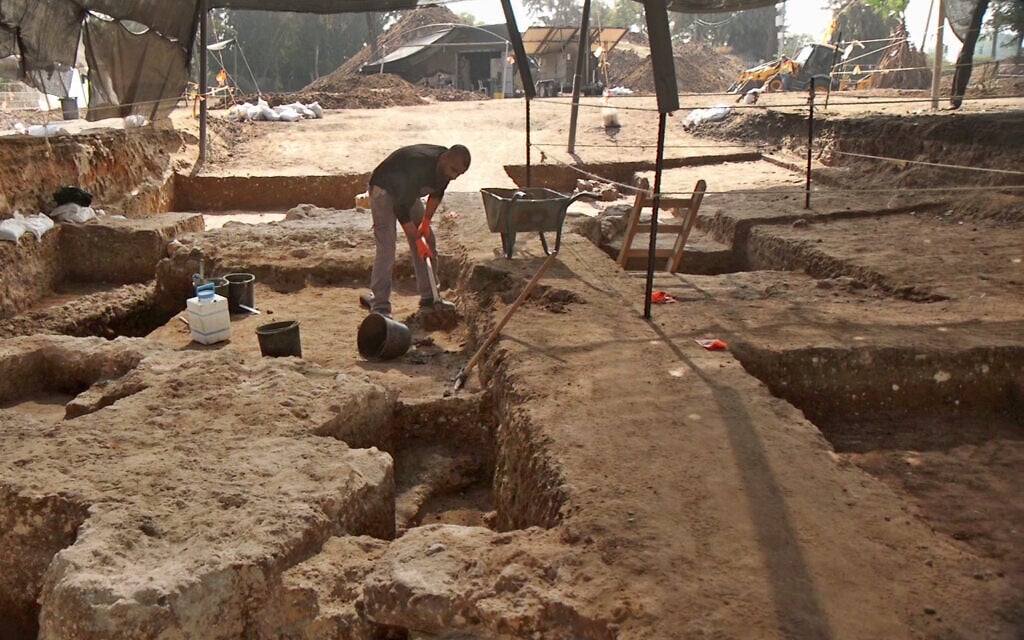
A routine salvage excavation ahead of the construction of a new bus terminal in Ramat Gan revealed a surprising find: an industrial and commercial complex dating back some 1,300 years.
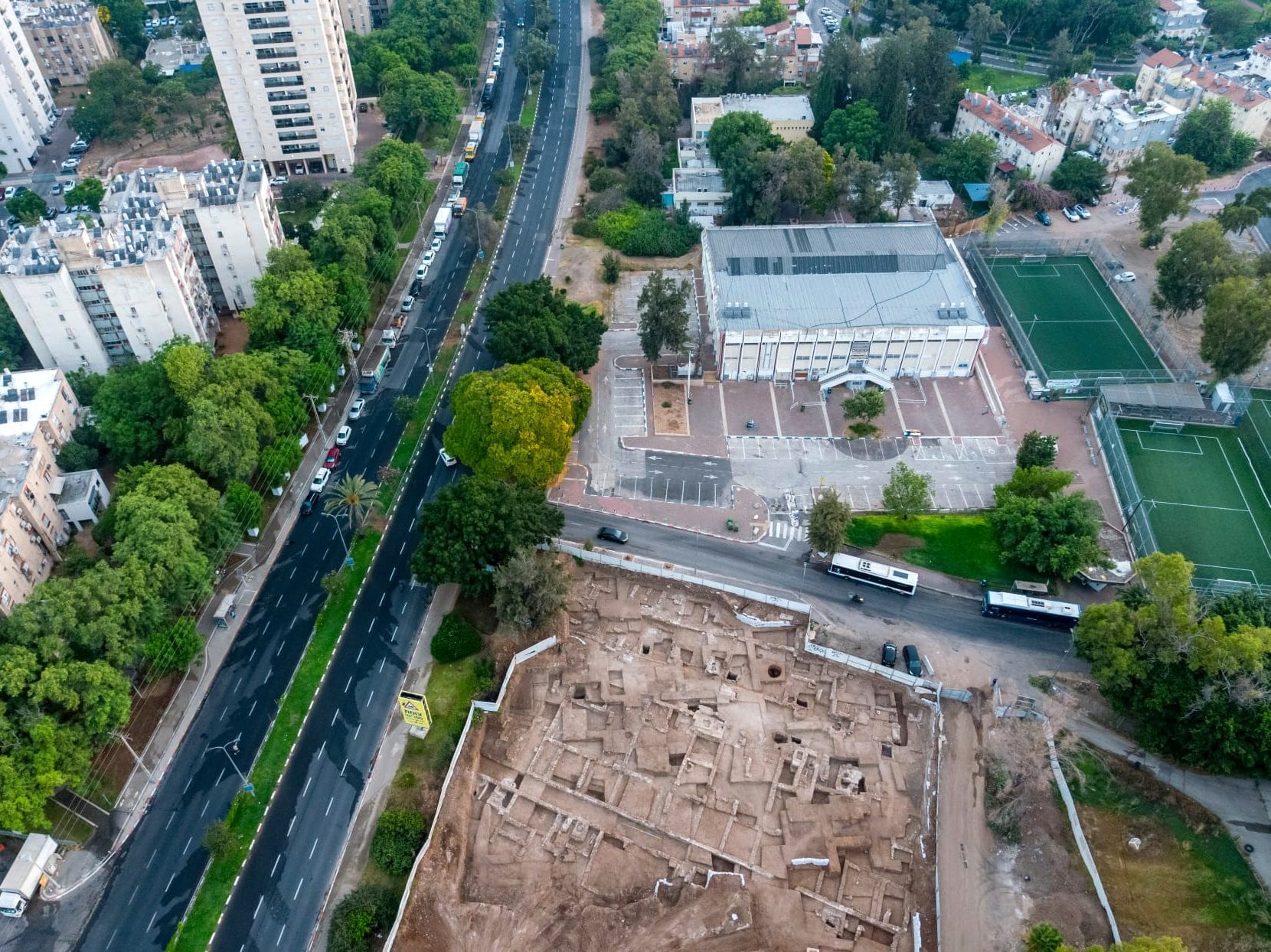
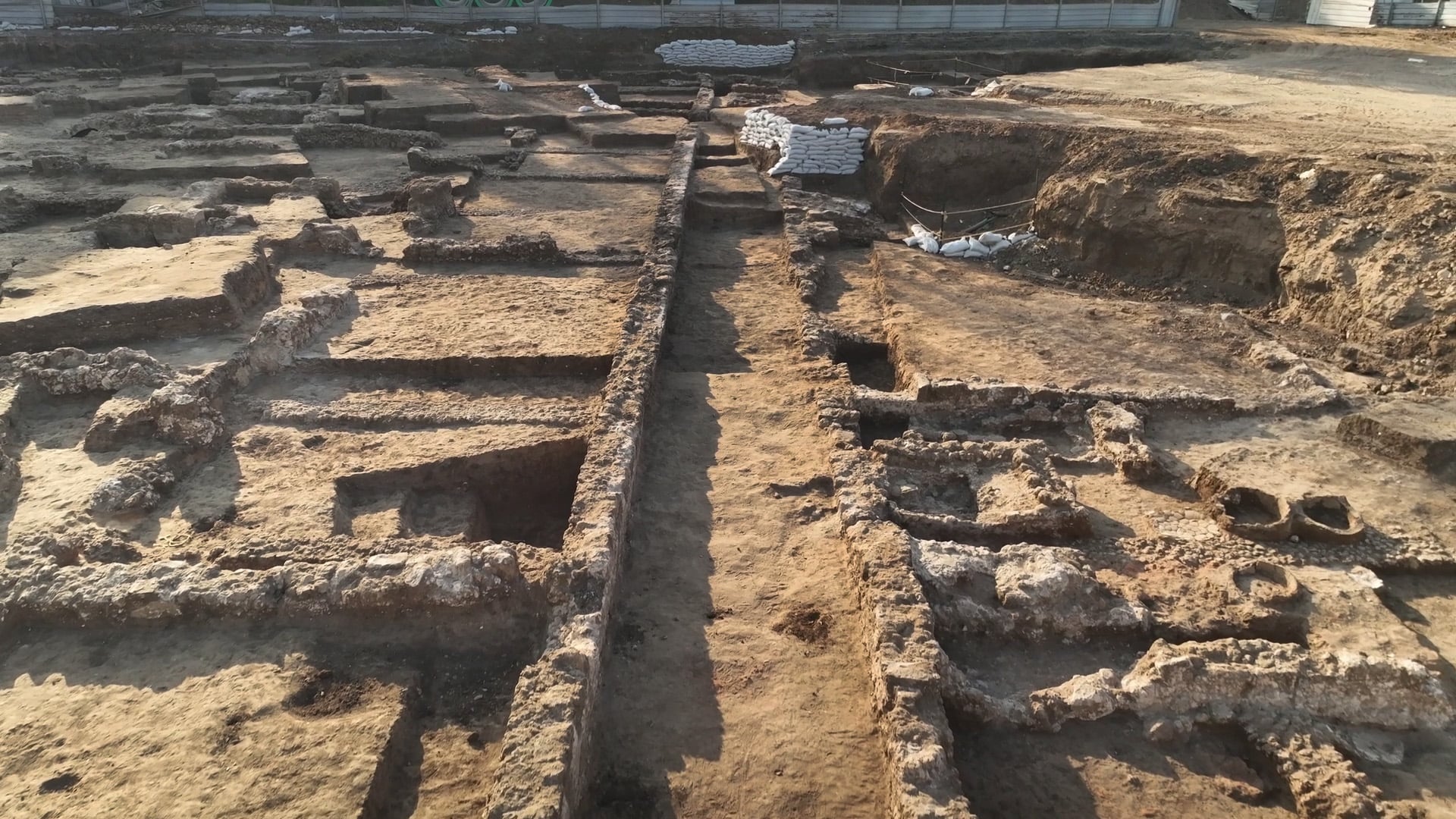
Digging for several months in the parking lot of the city’s Winter Stadium, archaeologists from the Israel Antiquities Authority (IAA) uncovered a network of straight, intersecting streets lined with shops, warehouses, large pottery kilns, and a series of industrial installations that once produced liquids on a considerable scale.
The find offers a rare glimpse into the economic workings of Israel during the early Islamic period, Yoav Arbel, one of the site’s excavation directors, told The Times of Israel.
“This find was quite unexpected, and exceeded our expectations,” Arbel said in a phone interview. “We expected to find archaeology here, but we did not expect to find an entire commercial and industrial complex from the seventh and eighth centuries CE. The whole thing is so well organized, it is clear that engineers planned it in advance, and that the government probably was involved as well.”
The complex featured straight streets that intersected at 90-degree angles, lined with a series of rooms that served as shops or warehouses, along with plastered industrial facilities, pottery kilns and more, said Arbel, who led the excavation along with Lior Rauchberger. In addition to pottery, several installations were used for industrial production of liquids that have not yet been identified by researchers.
Get The Times of Israel's Daily Edition by email and never miss our top stories
By signing up, you agree to the terms
“It was so orderly that in some cases, we were able to predict where we were going to find new walls because that’s what made sense,” Arbel noted.
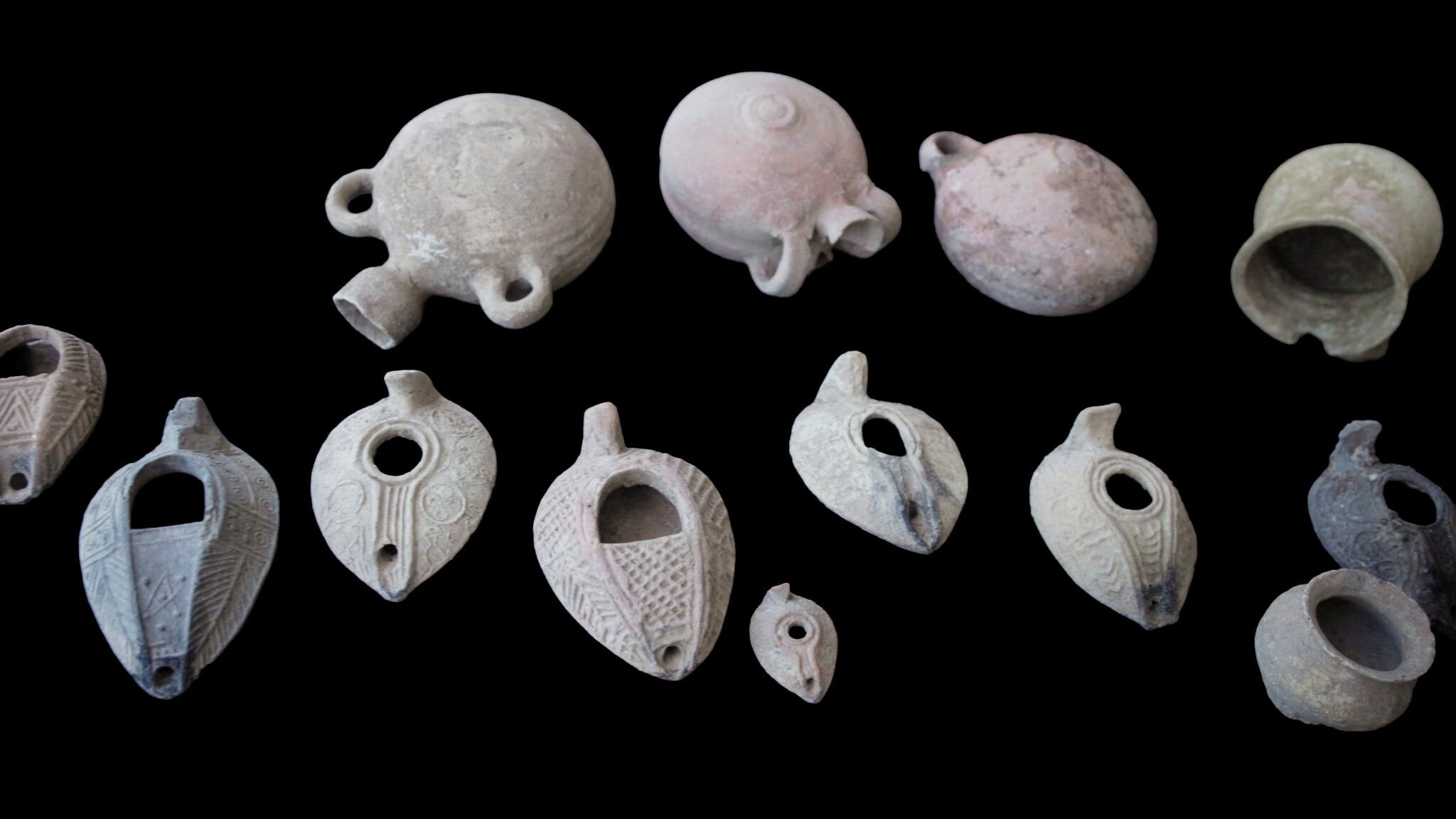
In addition to the building remnants, dozens of pottery vessels and intact oil lamps were found, along with coins, fragments of glass vessels, and numerous bronze tableware and cosmetic implements. Iron pickaxe heads, a sickle and numerous nails found at the site help provide insight into the period’s culture, trade and economy, IAA noted.
These artifacts helped researchers date the excavation with a high level of confidence, Arbel noted. Scientific dating results such as radiocarbon are not yet available, he said.
Archaeologists believe this industrial quarter flourished for about 150 years in the Umayyad and Abbasid periods before being abandoned in the second half of the 9th century CE, for reasons that are not yet understood, Arbel said.
About 30–40 years later, the complex was resettled in the 10th century, during the Fatimid period, and took on a more domestic character, with residential buildings and tabun ovens for baking installed over the ruins of the earlier industrial complex.
This later settlement survived until the late 11th century CE, just before the Crusader conquest, after which the site was abandoned again and never resettled, Arbel said.
Similar industrial facilities have been discovered around Israel, as well as in Syria and Lebanon, but they are usually found in big cities, Arbel noted. This complex was situated along a main road that connected Jaffa, Ramla — then the district capital — and Jerusalem, or on a secondary road branching off that route. That highway, a crucial artery of the early Islamic period, would have brought a constant stream of travelers, merchants, and goods past the site.
The center “definitely” was designed to serve those travelers, Arbel said, but it is not yet known whether there was also a distribution plan for shipping products elsewhere in the region.
It is also not known who owned and operated the facilities.
“We know that the government at the time was Muslim, but the population of Israel at the time was very heterogeneous,” Arbel said. “There were Muslims, but also a lot of Christians, Samaritans, and Jewish communities as well. We don’t know who was there at the time, and we have not found any houses of prayer or other indications to identify them.”
Ramla, the district capital, had a Muslim community at the time, while the Yarkon region was probably home to many Samaritans — descendants of a large population that flourished in the area during the Byzantine period, which preceded the Muslim conquest in the 7th century CE, IAA said.
Digging at the site was concluded just two weeks ago, Arbel said. Excavations began in November 2025 as part of the construction process for the planned bus terminal, with a break of several months during the winter season.
That limited the scope of the dig, and Arbel is convinced that much more remains buried beyond the protective fences. “The site extends west, north and south and possibly to the east as well,” he said. “So we only have a part of it.”
Following the site’s scientific documentation, it will be covered to ensure preservation as the bus terminal is constructed.
Other IAA excavations in the vicinity have already turned up additional remains, Arbel noted. Taken together, they suggest that the newly discovered complex may be just one node in a much larger economic landscape linking fields, workshops, and road networks in early Islamic central Israel.
“It is a possibility that it does belong to a much larger story that we don’t have,” Arbel said. “We only have pieces of it so far.”
Help us report truthfully on social media

As a multimedia journalist, my job is to take the quality, fact-based journalism produced by The Times of Israel newsroom and make it accessible across every platform — from Instagram posts to podcasts to short-form videos.
This is how many, especially young people, consume news these days. But misinformation is rampant on social media. Our team at ToI produces accurate, responsible short-form reporting on Israel and the Jewish world.
If you believe in the importance of factual social media journalism, please consider joining our reader support group, The Times of Israel Community. Your financial support is essential to sustain responsible multimedia reporting.
— Gabriella Jacobs, multimedia journalist
Support our work Support our work Already a member? Sign in to stop seeing this
KioskNews shows a cleaned-up reading view extracted from the publisher’s page — the original always lives on their site, not ours.